
For physician groups, surgery centers and anesthesia
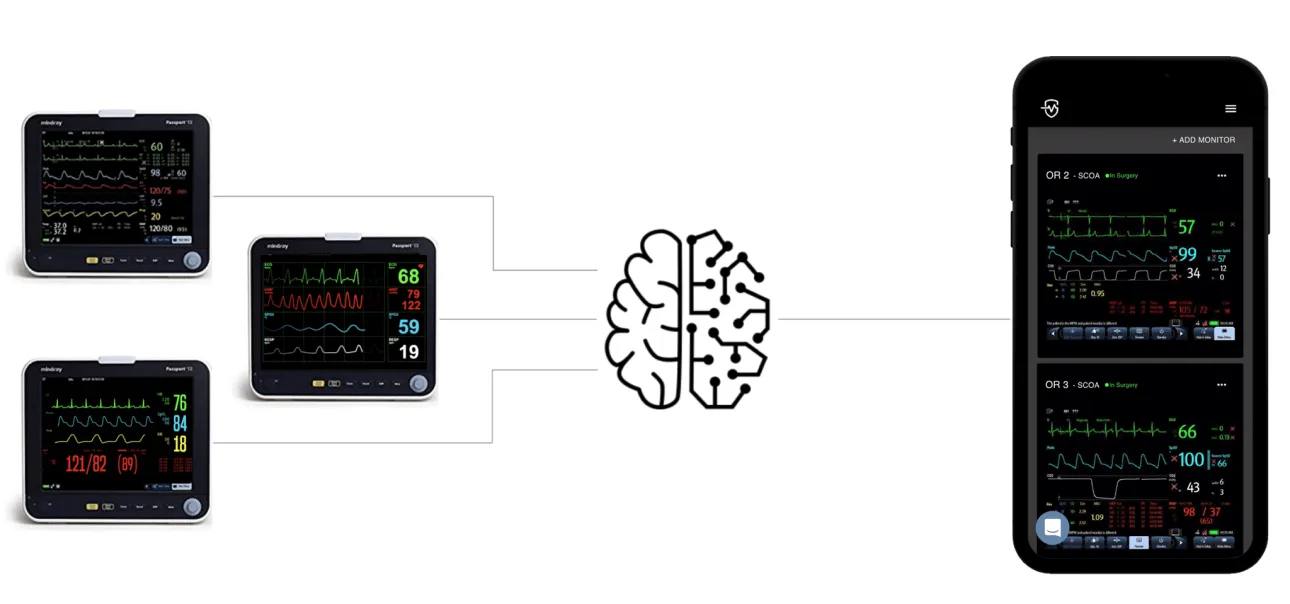
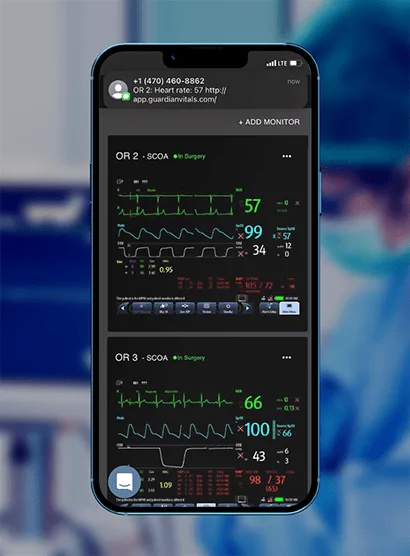
Digital Scientists builds the software physician groups, ambulatory surgery centers and anesthesia companies can't buy off the shelf: scheduling across sites, data from hospital EHRs you don't own, and products your facility clients will pay for. We built Guardian with an anesthesiologist, Justin Scott, M.D., FASA: a computer-vision model that reads any OR monitor at 99.9% transcription accuracy and puts the vitals on the anesthesiologist's phone. Most groups start with a 4 to 6 week Blueprint that maps their data and proves the hardest connection first.
Updated
Guardian transcription accuracy reading OR monitors
Providers on the risk adjustment coding we built
Patients on NeverAlone across six states
Clinical scheduling we run in production
Have you built software for anesthesia teams?
Yes. Guardian started with an anesthesiologist's problem: one clinician, several patients in different operating rooms, and no continuous view of any of them.
Justin Scott, M.D., FASA, spent more than 21 years in the OR before he founded Vigilant Medical Solutions. He had a working prototype and a clear clinical idea. We built the rest: a computer-vision model trained on more than a million monitor images, the mobile app that puts every patient's vitals on one screen with configurable alerts, and the cloud infrastructure behind it.
The decision that mattered most was what not to integrate. Monitor integrations need a hospital IT project at every site, and every monitor vendor has its own data pipeline. Guardian reads the screen of any monitor brand through a small edge device, so a new OR goes live without an IT project. It reached 99.9% transcription accuracy and refreshes from OR to phone in under two seconds.
Guardian is used by anesthesia teams across the country and was evaluated by the Geneva Foundation for forward military medical care. Read the Guardian case study.
Vital-sign transcription accuracy
Monitor images the model trained on
Refresh from the OR to the phone
Monitor brand, no hospital IT project
What problems do physician groups, surgery centers and anesthesia companies bring us?
Six come up again and again. Most are data problems first: the information exists, it just sits in systems you don't control.
Data locked in EHRs you don't own
Your clinicians work inside hospitals and surgery centers that run their own EHRs. Case times, staffing and outcomes come back as late exports, partial reports or not at all.
Scheduling that lives in one person's head
One or two schedulers hold every credential, preference and coverage rule across sites. When they're out, the spreadsheet stops making sense.
Coverage and credentialing across facilities
Who's credentialed where, who's licensed in which state, and which room needs which clinician. Getting it wrong costs a case or a survey finding.
One clinician, several rooms
Anesthesia teams supervise patients in parallel. The legacy model assumes the clinician is in the room, which is the gap Guardian closed.
Revenue lost between the case and the claim
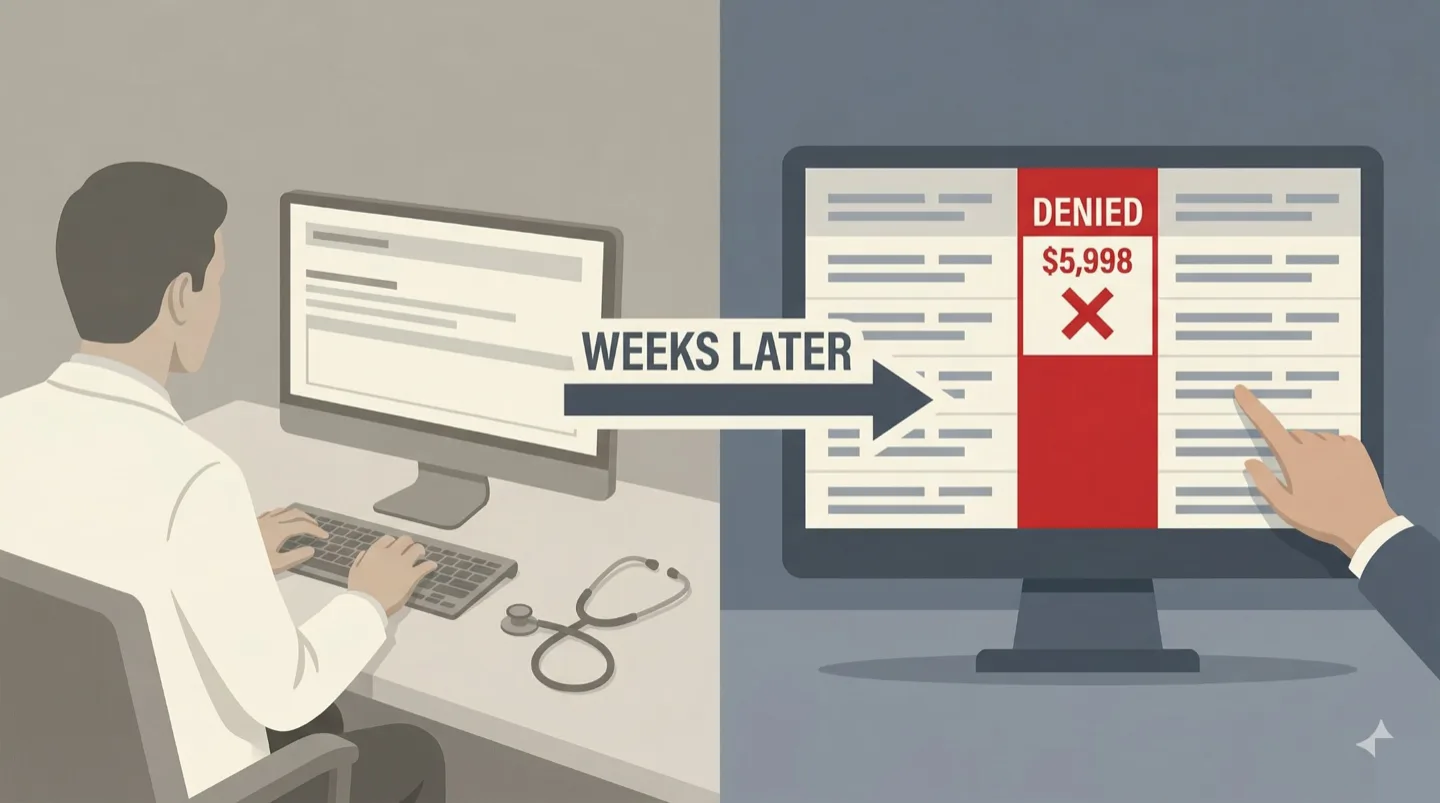
Anesthesia time, documentation and coding problems show up as denials weeks later, after the people who could fix them have moved on.
Clients asking for something you can sell
The hospitals and centers you serve want perioperative reporting and coverage data. You have the data and the relationship. You don't have the product yet.
Should a surgery center buy ambulatory surgery center software or build its own?
Buy the core and build the gaps. Most ambulatory surgery centers should run a proven ASC EHR and surgery center software for charting and billing. We build what those products don't cover.
If you're searching for an ASC EHR, surgical scheduling software or anesthesia software, you probably want a product you can license next month, and we'll tell you so. A good product runs one center well. The trouble starts at the edges: cases booked from a dozen surgeon practices, anesthesia coverage shared with hospital ORs, data your partners keep in hospital EHRs, and reports no product produces.
That's the work we take on. We connect the ASC to the systems around it, build the scheduling and staffing logic that spans sites, and add the analytics and revenue checks your owners and hospital partners ask for. We integrate with any system that has an API, a standard interface or a reliable export, and we prove the hardest connection before the build depends on it.
Surgical scheduling across sites
Block time, case sequencing and OR flow across centers and hospital ORs
Anesthesia records and staffing
Coverage, supervision ratios and records your group already keeps
Surgeon practice systems
Case bookings, consents and H&Ps from the practices that send you cases
Hospital EHRs you don't own
Case data through the facility's API, interface or scheduled export
Revenue cycle
Anesthesia time, documentation and coding checks before the claim goes out
Reporting for owners and partners
Utilization, turnover and coverage reports across every site
Can you build physician scheduling software that covers many sites?
Yes. We already run clinical scheduling in production for NeverAlone: multi-state provider licensing, on-call rotation and credential-aware shift assignment, around the clock, for 30,000 patients across six states.
Physician scheduling software breaks on the rules, not the calendar. Which anesthesiologist is credentialed at which facility. Who's licensed in which state. Who's on call, who's over hours, and which room needs an anesthesiologist rather than a CRNA. Commercial tools handle one site well and flatten everything else.
We start by writing the rules down with the people who build the schedule today. Then we build the rules engine, connect it to credentialing and payroll, and put the schedule on the phones of the clinicians who work it. See workforce intelligence and intelligent scheduling.
Patients on NeverAlone across six states
Calls a year, answered around the clock
Live and run by our team since March 2021
Where do physician services companies usually start with us?
With the problem that costs the most today, scoped in a Blueprint before anything gets built. Here are the common first steps.
Common first steps, by situation
| Where you are | What's usually true | Common first step | Time and investment |
|---|---|---|---|
| You need data from the facilities you serve | Your clinicians work in hospital ORs and surgery centers on EHRs you don't own. Case times, staffing and outcomes arrive late, partial or not at all. | Blueprint: map each metric to the data points behind it, find the gaps, and prove one facility connection. | 4 to 6 weeks. $25K, or from $50K with a prototype |
| Scheduling and staffing run on spreadsheets | Credentials, licenses, call and coverage rules live with one or two schedulers. | A Blueprint to write the rules down, then an MVP scheduler for one region or service line. | MVP in 8 to 16 weeks. $75K to $250K |
| A product your facility clients would pay for | Hospitals and surgery centers ask you for perioperative reporting or coverage data you already hold. | A Blueprint with a working prototype you can put in front of a facility client, then an MVP. | From $50K for the Blueprint |
| Revenue leaks between the case and the claim | Anesthesia time, documentation and coding problems surface as denials. | One AI workflow in production next to your coders, scoped in the Blueprint. See revenue cycle AI. | Scoped from the Blueprint |
| A system already running, with work slipping | An internal app or vendor platform with an integration, report or AI feature that keeps getting pushed. | Build with Us: a senior architect in your codebase from week one. | $10K for the first two weeks, then $20K a month |
These are common starting points, not rules. Many clients combine them or change course, and the first conversation is where we work out the right one. Prices from our published Blueprint, MVP and Build with Us pages.
What do you build, connect and run for physician services companies?
Software, integrations and AI that sit between your clinicians, your facilities and your billing. We build it, connect it to the systems around it, and run it when you want us to.
Products and apps
Clinician apps, scheduling tools and analytics products your facility clients log into. See healthcare product development and healthcare app development.
Integrations and EHR data
Feeds from hospital and ASC EHRs, surgeon practices, credentialing and payroll. In production we run PointClickCare and Netsmart (GEHRIMED) data with cross-EHR patient matching. See healthcare integrations and EHR integrations.
AI in the workflow
Models and agents that do one job inside a real workflow, with a person reviewing the output. Guardian's vision model is one. Back-office agents for intake and follow-up are another. See healthcare AI development.
Ambient documentation
HealthContext, the ambient scribe we built into NeverAlone, cut clinical note time from 45 minutes to 5. See ambient scribes.
Revenue cycle AI
Coding and documentation checks before the claim goes out. For CommuniCare we built AI-assisted risk adjustment coding that covered 245 providers and delivered $10M+ in RAF improvement at 90%+ accuracy. See revenue cycle AI.
Run it, securely
Security and PHI from day one, platform operations with L2 and L3 support for what we build, and healthcare IT consulting for system selection. For CommuniCare Advantage we audited 60+ systems and ran an 11-vendor EHR selection.
Work for clinicians, coders and care teams
Guardian · Vigilant Medical Solutions
99.9% accuracy
An anesthesiologist's prototype turned into a national OR monitoring platform: computer vision trained on 1M+ monitor images, a mobile app and the cloud behind it.
See the work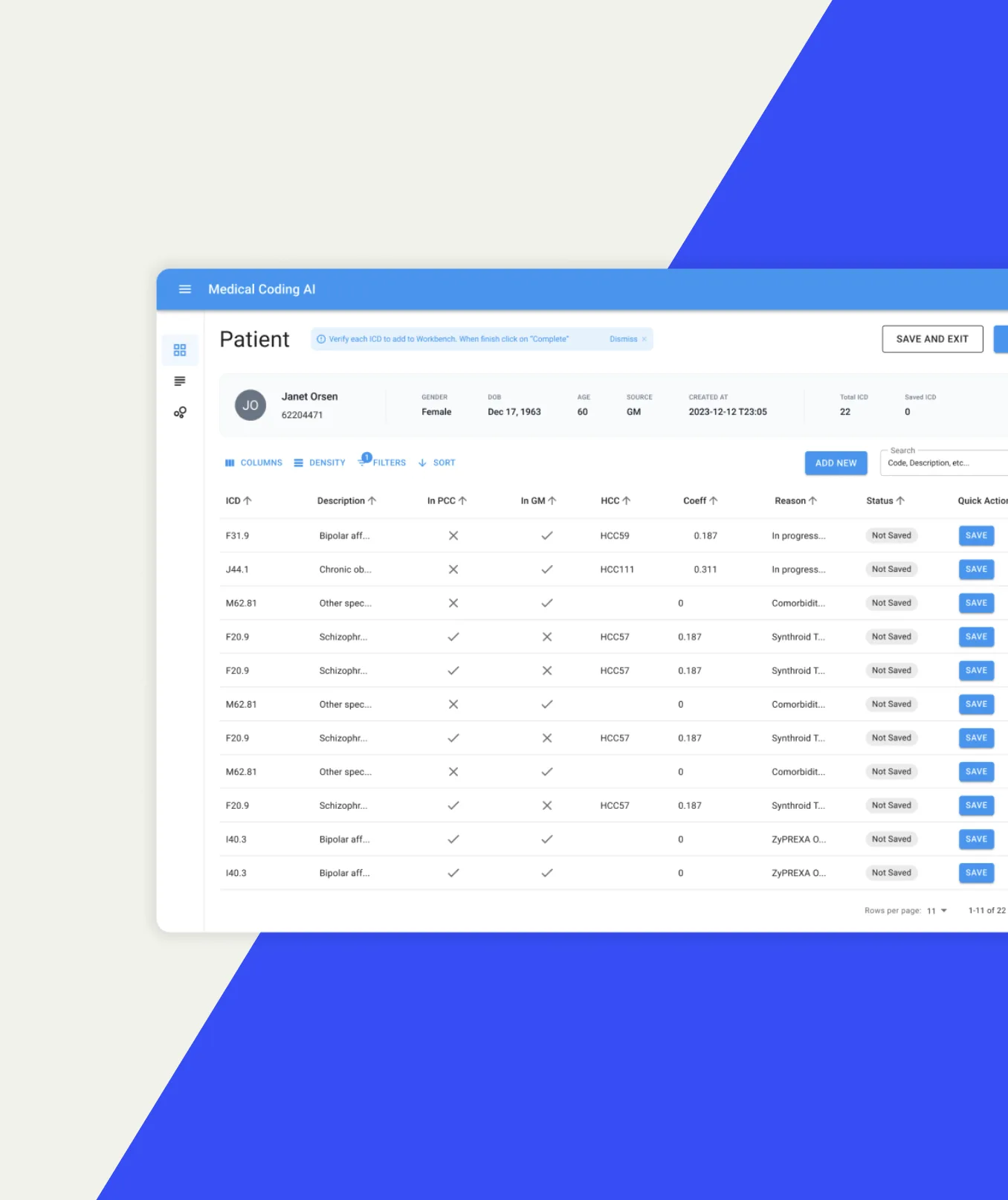
Risk adjustment · CommuniCare
$10M+ RAF improvement
AI-assisted HCC coding at 90%+ accuracy, rolled out to 245 providers and 20K+ patients across 7 states, with Gehrimed, PointClickCare and Acclivity data.
See the work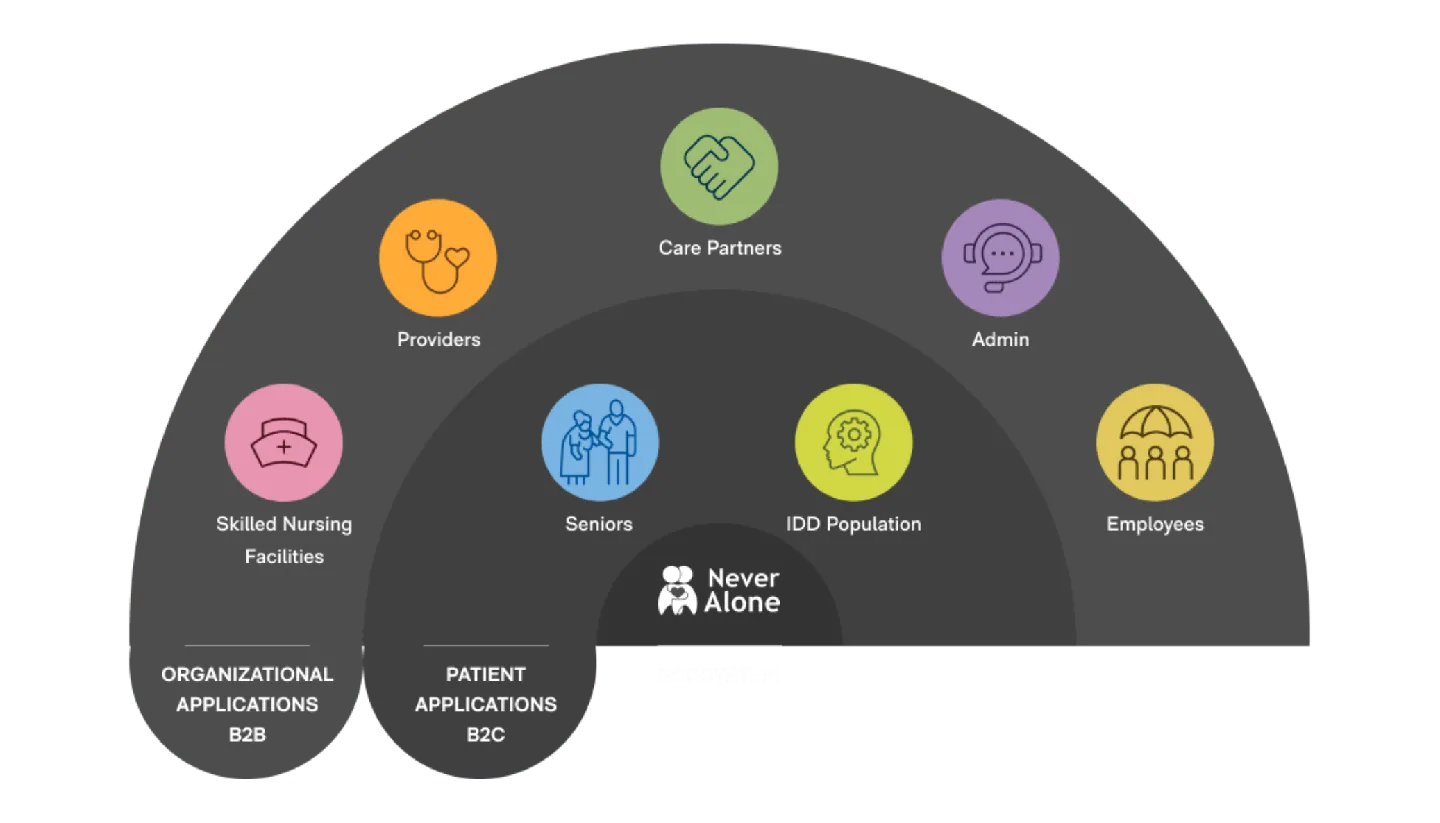
NeverAlone · CommuniCare
30,000 patients, six states
A 24/7 virtual care platform with multi-state provider licensing and clinical scheduling we run in production. It began as a 90-day MVP in 2021.
See the workTrusted by healthcare leaders.
“By applying a robust machine learning model to our app, DS helped us create a scalable and accurate solution to improve the operating room experience for the anesthesia team and the patient. They are true collaborators.”
Justin Scott, M.D., FASA
CEO, Vigilant Medical Solutions
“I have worked with many technology teams during my career, and Digital Scientists is one of the best. They take the time to understand the customers' needs, deliver innovative solutions, are always professional, and work with your team as a true partner to achieve success.”

Amy Severino
Chief Innovation Officer, NeverAlone
Related work for physician services
Workforce intelligence
Scheduling, credentialing and labor cost in one view across facilities.
Workforce intelligence →Healthcare data engineering
Pipelines that pull data from the facilities you serve into one model.
Healthcare data engineering →Revenue cycle AI
Coding and documentation checks before the claim goes out.
Revenue cycle AI →EHR integrations
Connections to the EHRs your clinicians and partners already run.
EHR integrations →Health systems
Software and integrations for hospitals and health systems.
Health systems →Health tech companies
For groups turning their operations data into a product they sell.
Health tech companies →

Questions physician groups, surgery centers and anesthesia companies ask
Can you get data from hospital EHRs we don't own?
Often, yes, but always through the hospital. Access depends on what the facility agrees to: an API or FHIR endpoint it enables, a standard interface, or a scheduled export. In the Blueprint we map each metric you need to the data points behind it, find the gaps, and prove one facility connection before the build depends on it. We'll tell you which EHRs we've run in production, PointClickCare and Netsmart (GEHRIMED), and which we'd be connecting for the first time.
Can this become a product we sell?
Yes. You own the code, the IP and the roadmap, so what starts as an internal tool can become a product your facility clients pay for. NeverAlone began as CommuniCare's internal project and became a multi-tenant product licensed to facilities outside its own network. See healthcare product development.
Should our surgery center build its own ASC EHR?
Usually not. A proven ASC EHR and surgery center software handle charting and billing for a single center well. We build what they leave out: surgical scheduling across sites, anesthesia staffing, connections to surgeon practices and hospital systems, and the reports your owners and partners ask for.
Do you build anesthesia software?
Yes. We built Guardian with Vigilant Medical Solutions, founded by anesthesiologist Justin Scott, M.D., FASA. It reads any OR monitor with a computer-vision model at 99.9% transcription accuracy and sends vitals to the anesthesiologist's phone. For anesthesia groups we also build coverage, staffing and reporting tools around the records you already keep.
How do you handle patient data from the facilities we serve?
We sign a BAA before we touch PHI. Our security plan is mapped to NIST CSF 2.0, and each client gets a project security addendum. Encryption, access controls and audit logging are decided in the Blueprint. See security and PHI.
Who runs the software once it's live?
We do, or your team does. We support platforms we built, with L2 and L3 support from our team, and hand everything over on a build-operate-transfer plan when you're ready. We work alongside your IT provider or MSP, not in place of it.
Talk it over
Tell us what you are trying to do. A senior person from our Atlanta team replies within one business day, and you can book a 30-minute call right after you send this.
- We tell you if we're the right fit, and if we're not, who is.
- Most work starts small, so you see how we work before you commit to more.
- We sign a BAA before we touch patient data.