
Ambient AI scribe and clinical documentation, built for the setting your clinicians work in
Digital Scientists builds ambient AI scribes and clinical documentation automation for settings where an off-the-shelf medical scribe AI doesn't fit: telehealth and phone calls, behavioral health, post-acute care and practices with their own note formats. We built HealthContext.AI, the ambient scribe and call summarization inside NeverAlone, the virtual care platform we run. It documents NeverAlone's 100,000+ telehealth calls a year and cut note time from 45 minutes to 5, with every note reviewed by a clinician. Most clients start with a Blueprint that maps the setting, the note and the EHR.
Updated
Minutes of note time per call with HealthContext.AI
NeverAlone telehealth calls a year
Patients across six states on NeverAlone
NeverAlone in production and run by us since




Has anyone run a custom ambient AI scribe in production?
Yes. We built HealthContext.AI and run it inside NeverAlone, the 24/7 virtual care platform Digital Scientists built for CommuniCare. It documents NeverAlone's telehealth calls and cut note time from 45 minutes to 5.
NeverAlone connects seniors, post-acute residents and people with intellectual and developmental disabilities to a licensed provider by video. That's 100,000+ calls a year across six states. Every call needs a record, and the provider on the call is the one who would otherwise write it.
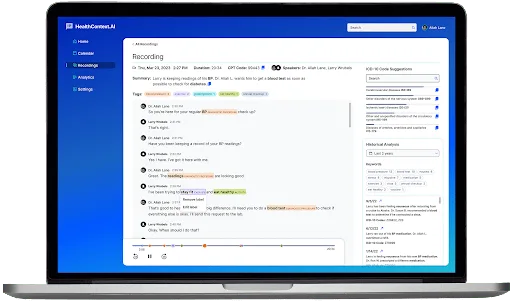
HealthContext.AI captures the call audio, transcribes it with speaker labels, drafts a structured note and a call summary, and suggests ICD-10 and CPT codes. The provider reviews, edits and approves. Nothing is final on the model's say-so. It isn't a pilot; it documents real calls every day. Read the HealthContext.AI case study.
Note time per call
NeverAlone calls a year
Where NeverAlone runs
AI that documents while clinicians care.
Clinical documentation automation starts with an ambient AI scribe. It listens during the visit or the call and drafts the documentation: visit notes, call summaries, care plan updates and suggested codes. Clinicians review and approve instead of typing from scratch.
This isn't generic transcription. The scribe is built around your note templates, your workflows and your compliance rules, and approved notes go where your team needs them. We tune the templates from what clinicians change.
The difference from off-the-shelf tools: we build with your clinical teams. We watch the work before we write code, so the note matches how your people actually document.
What does an ambient scribe produce in each care setting?
A different note in each one. A primary care visit, a therapy session, a skilled nursing check-in and a 2 a.m. telehealth call all need different records, so the setting decides what the scribe writes, not the software.
Most commercial scribes are tuned for a scheduled outpatient visit with one clinician and one patient in a room. The further your setting is from that, the more the note format, the speakers and the review step change.
The table shows what the scribe produces in each setting, what makes that setting harder, and the related work we've done there. If your setting isn't on it, the questions are the same: who speaks, what the note has to hold, and who signs it.
What an ambient AI scribe produces by care setting
| Setting | What the scribe produces | What's different | Our related work |
|---|---|---|---|
| Practices and outpatient clinics | Visit note in SOAP or your template, suggested ICD-10 and CPT codes, patient instructions | The standard case. Off-the-shelf scribes cover most of it | We build only where your note or workflow is your own |
| Behavioral health | Session note in your format (DAP or SOAP, for example), treatment plan updates, safety items for the clinician to confirm | Long, sensitive conversations. Stricter consent and access rules, plus 42 CFR Part 2 where substance use records are involved | Behavioral health added to NeverAlone by August 2023 |
| Post-acute: skilled nursing, home health, hospice | Shift and visit notes, change-of-condition notes, care plan updates, documentation that supports MDS and OASIS | Many roles document, from CNAs to physicians, and the documentation drives reimbursement | NeverAlone across skilled nursing; MDS AI on PointClickCare data with $10M+ recovered to date |
| Telehealth and phone calls | Transcript with speaker labels, call summary, structured note, suggested codes | Remote audio, several speakers, calls at any hour, and a provider who often hasn't seen the patient before | HealthContext.AI in production on NeverAlone video calls; phone audio scoped per project |
Common patterns, not rules. DAP and SOAP are examples; we build to your templates.
What's inside a custom ambient scribe?
Six parts: capture, transcription, note generation, coding suggestions, clinician review and the infrastructure it runs on. The model is one piece. Most of the engineering is in the parts around it.
In HealthContext.AI, audio streams from the browser during an Amazon Chime video call. OpenAI Whisper transcribes it with speaker labels, AWS Comprehend Medical pulls out diagnoses, medications and procedures, and GPT-4 drafts the note and call summary. Transcripts, notes and codes live in separate database schemas with an event log, so every note traces back to the conversation it came from. We packaged the capture and transcription screen as a reusable component, so it embeds in other apps.
For a new build, everything runs inside your own AWS account under a BAA. Where a step needs a language model, we use Claude on Amazon Bedrock in that account, so patient audio and notes stay in your environment.
Capture
Audio from video calls (Amazon Chime), phone audio or a device in the room
Transcription
OpenAI Whisper with speaker labels on HealthContext.AI
Note generation
GPT-4 drafts SOAP notes and call summaries on HealthContext.AI
Coding suggestions
ICD-10 and CPT, each tied to the transcript
Clinician review
Edit, approve and sign before anything is final
Where it runs
Your AWS account, under your BAA
How accurate is an ambient AI scribe, and who checks the note?
Accurate enough to draft, never trusted to file on its own. Every HealthContext.AI note goes to the clinician for review before it's final, and we build every scribe that way.
Speech recognition is very good on clean audio. Clinical notes still go wrong in predictable places: drug names and doses, negations such as "denies chest pain", who said what, and things the patient mentioned that the clinician ruled out. We design the review step around those failure points instead of hoping the model avoids them.
We test drafts against notes your clinicians wrote themselves before launch, and we keep measuring after it.
Clinician sign-off
The scribe drafts. The clinician edits, approves and signs. Suggested codes need the same approval before billing.
Trace to source
Suggested codes and key findings link back to the part of the transcript they came from, so a reviewer checks in seconds.
Measured edits
We track how much clinicians change each draft. Rising edits flag a template or model problem early.
Gated changes
New prompts, templates and models are tested and reviewed before they reach production, not learned on the fly.
Should we build an ambient scribe or buy one?
Buy one for standard outpatient visits. Build when the setting, the note format or the workflow is yours: telehealth calls, post-acute care, behavioral health, or a scribe that's part of a product you sell.
We'll tell you to buy when buying fits. Off-the-shelf medical scribe AI is good at a scheduled visit with one clinician and one patient, a seat license is fast to start, and the vendor carries the model.
It stops fitting when clinicians spend their time fixing notes the tool wasn't built to write, when the audio comes from calls instead of an exam room, or when the scribe has to sit inside your own platform. That's why we built HealthContext.AI: NeverAlone's calls don't look like a clinic visit.
Off-the-shelf ambient scribe versus a custom scribe
| Question | Buy an off-the-shelf scribe | Build a custom scribe |
|---|---|---|
| Where does it fit best? | Scheduled outpatient visits with standard notes | Telehealth and phone calls, post-acute, behavioral health, your own templates |
| How fast can we start? | Days to weeks, once the license is signed | Longer: a Blueprint, then a pilot on your audio and your notes |
| Who shapes the note? | The vendor's templates, with some settings | Your templates and your clinicians |
| Where do audio and notes live? | In the vendor's cloud | In your AWS account |
| How does cost scale? | Per clinician seat | With minutes of audio and the infrastructure you run |
| Who owns it? | You rent it | You own the code |
Common patterns, not rules. Some clients license a scribe for clinic visits and build only for the setting it doesn't cover.
What drives the cost and the return of an ambient scribe?
Audio volume, note complexity, integration and the review workflow drive the cost. Clinician time returned, and what that time turns into, drives the return. We measure both with your numbers before you commit.
We don't quote a payback period on a web page. It depends on how long your clinicians spend documenting today, how many encounters you run, and what the recovered time becomes: more visits, fewer late charts, less overtime or more complete coding.
HealthContext.AI cut note time from 45 minutes to 5 on NeverAlone's calls. Your result depends on your starting point, so the Blueprint measures that first, on a sample of your own encounters, and the business case uses only those numbers.
What drives the cost and the return of a custom ambient scribe
| Factor | Cost or return | What drives it | What we measure first |
|---|---|---|---|
| Audio volume | Cost | Encounters a month and how long they run | Minutes of audio per month |
| Note complexity | Cost | How many settings and templates, and how structured the output is | Your current note templates |
| Integration | Cost | Where approved notes have to land: your platform, an EHR, a billing system | The target system's API or export |
| Review workflow | Cost | Who reviews, how fast, and what needs a second signature | Today's charting and sign-off steps |
| Clinician time | Return | Minutes spent documenting each encounter today | A time study on a sample of encounters |
| Throughput and overtime | Return | What the freed time turns into | Visits per day and after-hours charting |
| Documentation and coding quality | Return | Missed details, late notes, undercoded encounters | An audit of a sample of current notes |
No invented averages. Every figure in your business case comes from your own encounters.
Clinical documentation AI we built and run
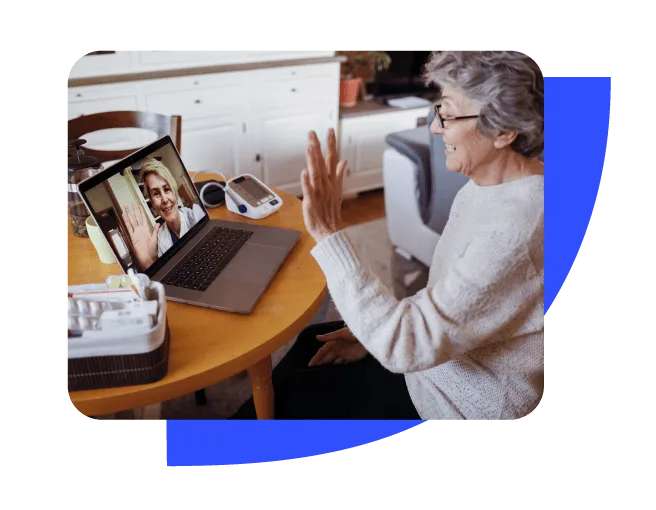
HealthContext.AI
Note time from 45 minutes to 5
The ambient scribe and call summarization we built and run inside NeverAlone, drafting notes from telehealth calls for clinician review.
See the work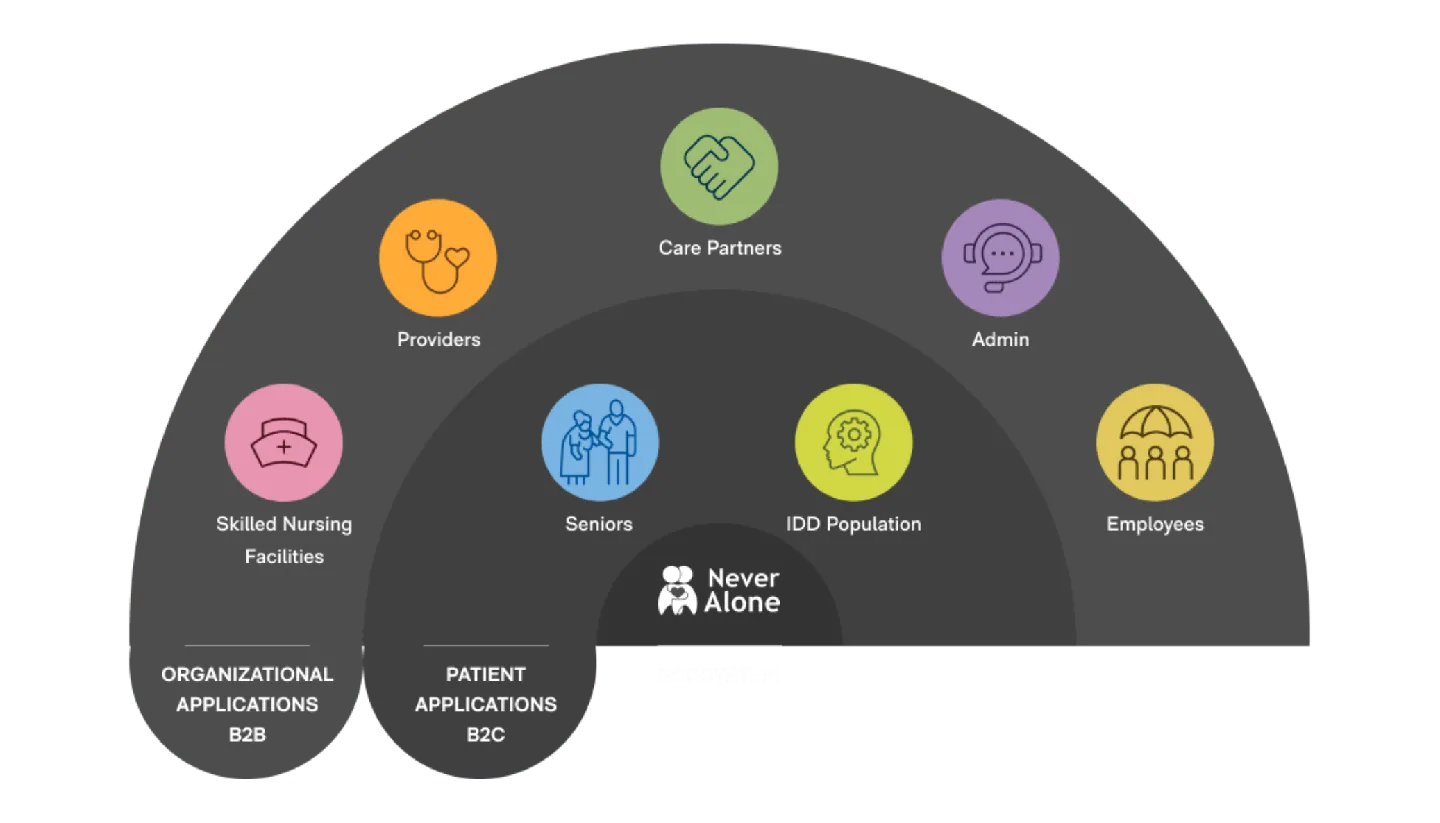
NeverAlone · CommuniCare
100,000+ calls a year
The 24/7 virtual care platform the scribe runs in: 30,000 patients across six states, live since March 2021, and still run by us.
See the work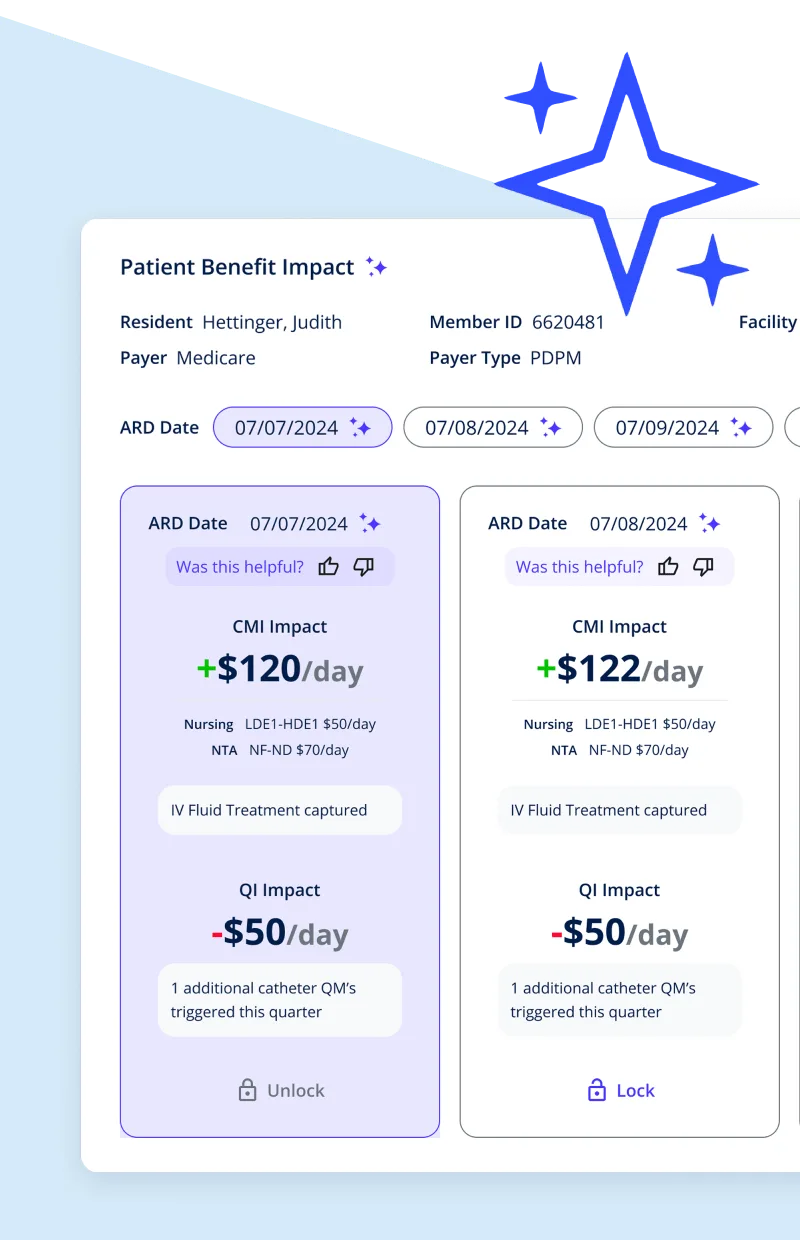
MDS · CommuniCare
$10M+ recovered
Documentation to reimbursement: AI that reads what nurses already document in PointClickCare and flags MDS items for coordinators to confirm, with $24M+ in forecast PDPM revenue.
See the workTrusted by healthcare leaders.
“I have worked with many technology teams during my career, and Digital Scientists is one of the best. They take the time to understand the customers' needs, deliver innovative solutions, are always professional, and work with your team as a true partner to achieve success.”

Amy Severino
Chief Innovation Officer, CommuniCare Health Services
“NeverAlone has transformed how we deliver care at CommuniCare Health Services, enabling us to provide better patient care and achieve stronger clinical outcomes. By supporting over 130 skilled nursing facilities 24/7, their solution ensures we can meet patients' needs more effectively.”

Dr. Matthew Wayne
Chief Medical Officer, CommuniCare Health Services
Related services
Healthcare AI development
AI that runs on patient data, inside your cloud, with review built in.
Healthcare AI development →Telemedicine and virtual care
The platform HealthContext.AI runs in, built and run by us.
Telemedicine and virtual care →MDS and PDPM optimization
From nursing documentation to reimbursement in skilled nursing.
MDS and PDPM optimization →EHR integrations
Getting chart data in and approved notes out.
EHR integrations →Behavioral health software
Platforms and tools for behavioral health providers.
Behavioral health software →AI and machine learning
Our AI work across industries.
AI and machine learning →Latest thinking on clinical documentation AI
Questions about ambient AI scribes
What is an ambient AI scribe?
An ambient AI scribe listens to a clinical conversation, in the room or on a call, and drafts the documentation: a structured note, a summary and suggested codes. Unlike plain transcription, it understands medical context and writes in your note format. The clinician reviews and approves the draft instead of typing from scratch.
Should we build or buy an ambient scribe?
Buy one for standard outpatient visits; off-the-shelf medical scribe AI handles a scheduled visit with one clinician and one patient well. Build when the setting, the note format or the workflow is yours: telehealth and phone calls, post-acute care, behavioral health, or a scribe inside a product you sell. We built HealthContext.AI because NeverAlone's telehealth calls didn't fit a clinic-visit scribe.
Does it work on video and phone calls?
Yes on video. HealthContext.AI documents NeverAlone's video calls on Amazon Chime in production. A phone call is audio too, so the scribe handles it the same way once we can get the audio from your phone system or telephony provider, with the right consent. Phone audio is usually noisier, so we test transcription on a sample of your real calls before you rely on it.
Can it write notes into our EHR?
It depends on your EHR, and we confirm it before we build. Today HealthContext.AI notes go to clinician review inside NeverAlone. Writing a signed note back into an EHR depends on the vendor's write API, its partner program and your contract. We work with PointClickCare and Netsmart (GEHRIMED) data in production on platforms we run, and we can integrate with any system that has an API, a standard interface or a reliable export.
How accurate are ambient AI scribes?
Accurate enough to draft, not to file unreviewed. Errors cluster in drug names and doses, negations and speaker mix-ups, so we test drafts against notes your clinicians wrote, link suggested codes to the transcript, track how much clinicians edit, and keep the clinician's approval as the last step every time.
How is clinical documentation automation different from transcription?
Transcription gives you the words. Clinical documentation automation gives you the note: structured to your template, with diagnoses, medications and plans pulled out, codes suggested and the draft routed for sign-off. It's built around your documentation standards and workflow, not a generic one.
Where does patient audio go?
On a custom build, into your own AWS account under a BAA. Transcription, note generation and storage run there, and where a language model is needed we use Claude on Amazon Bedrock in the same account. Our security plan is mapped to NIST CSF 2.0, and each client gets a security addendum.
Tell us where AI should be doing the work
No commitment. No sales deck. We respond the same day, and you talk to senior leadership.
Our risk adjustment AI delivered a $10M+ improvement at 90%+ accuracy and reviews patients 50x faster.