
For behavioral health and substance use treatment providers
Digital Scientists builds behavioral health software for therapy, mental health and substance use treatment providers: custom EHRs, telehealth for counseling and group sessions, patient apps and the integrations behind them, designed for 42 CFR Part 2 from the first week. For Fathers' UpLift, a Boston mental health program for fathers, we went from Blueprint to a working custom EHR in eight weeks. Most providers start with a Blueprint that maps one workflow and proves the hardest connection before the build.
Updated
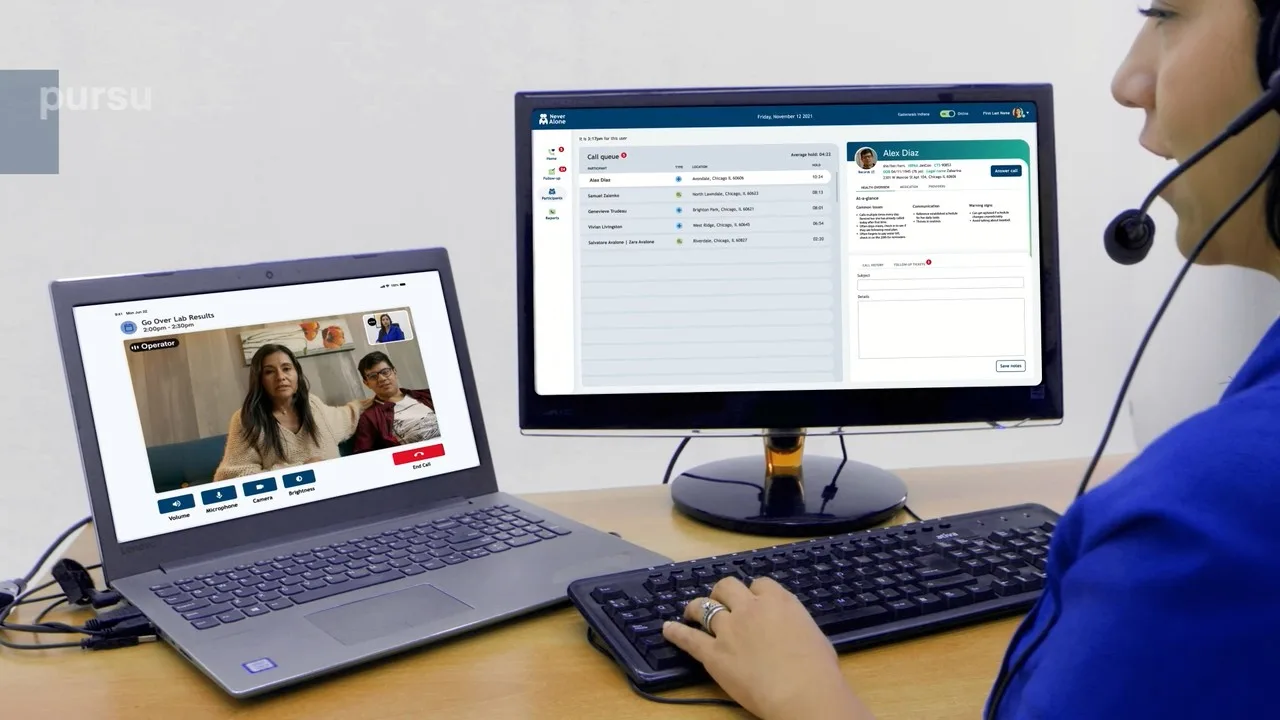
Fathers' UpLift, Blueprint to custom EHR MVP
Behavioral health added to NeverAlone
Patients on NeverAlone across six states
NeverAlone calls a year, on video we built and run
What does this look like for a behavioral health provider?
It looks like Fathers' UpLift. They needed an EHR built around their care model, and they had it in eight weeks.
Fathers' UpLift is a Boston mental health organization that has served more than 16,000 fathers since 2011. Licensed clinicians work alongside trained coaches, and many clients are navigating the justice system. Their tools didn't fit that model. Providers documented in Tebra, an EHR built for medical offices, tracked clients in Google Sheets and ran intake through JotForm. Sessions went unbilled because documentation was hard. After two years with another partner, the board had stopped believing software would help.
We started with a Blueprint: workshops with leadership, clinicians, coaches and admin staff, five user roles mapped, and a clickable prototype providers tested before we wrote code. Then we built the UpLift Tracker, a custom EHR with notes, service plans, a full caseload view, charge capture synced to Tebra for billing, Zoom sessions from inside the record, and AI summaries that compare assessments before a check-in. Blueprint and MVP took eight weeks together. See the custom EHR case study.
Blueprint and MVP, together
Fathers served by Fathers' UpLift since 2011
User roles designed for, from clinicians to coaches
Notes, caseload, charge capture and video in one place
What problems are behavioral health providers trying to solve?
Most come with one of six. Each one is a care delivery problem first and a software problem second, which is why we start with the workflow, not the feature list.
Our EHR wasn't built for how we deliver care
Coaches, peer specialists, groups and family sessions don't fit a medical-office EHR. Staff work around it in spreadsheets, and the record stops being the record.
Clinicians spend their evenings on notes
Progress notes, treatment plan updates and assessments pile up after the last session. That time comes out of caseloads and retention.
Sessions go unbilled
When documentation is hard, charges get missed. Fathers' UpLift saw this before we tied charge capture to the encounter.
We want telehealth that knows the chart
Counseling, intensive outpatient and group sessions by video, without staff copying links and attendance between two systems.
Patients drift between sessions
Reminders, check-ins and assessments between visits keep people engaged, especially after a step down from residential care.
SUD records carry rules most software ignores
42 CFR Part 2 consent and redisclosure limits have to live in the data model, the integrations and any AI that reads the record.
Behavioral health and care platforms we built
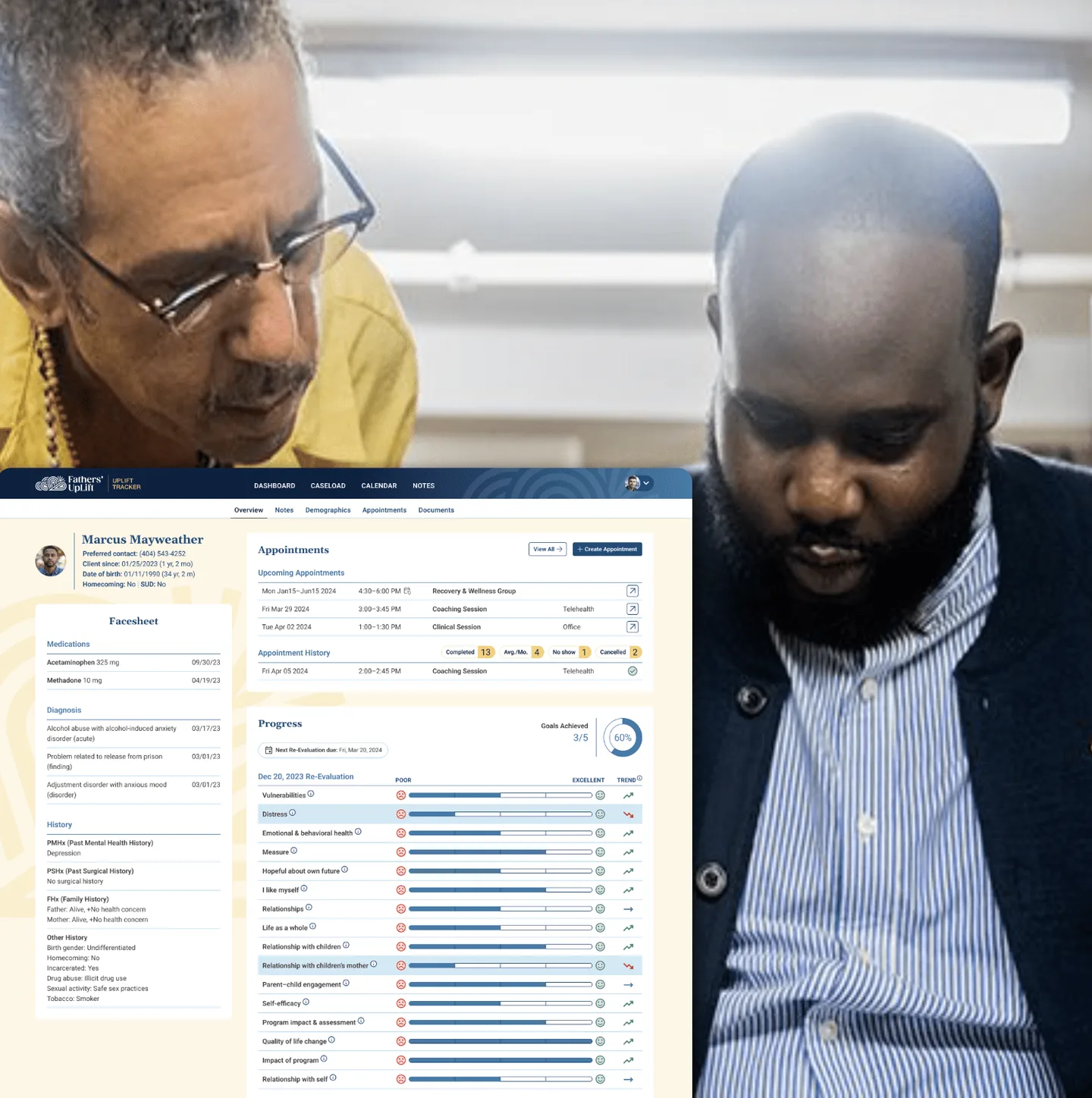
Fathers' UpLift
8 weeks to a custom EHR
A Blueprint and MVP for a Boston mental health program that pairs clinicians with coaches: notes, caseloads, charge capture synced to Tebra, and Zoom sessions in one hub.
See the work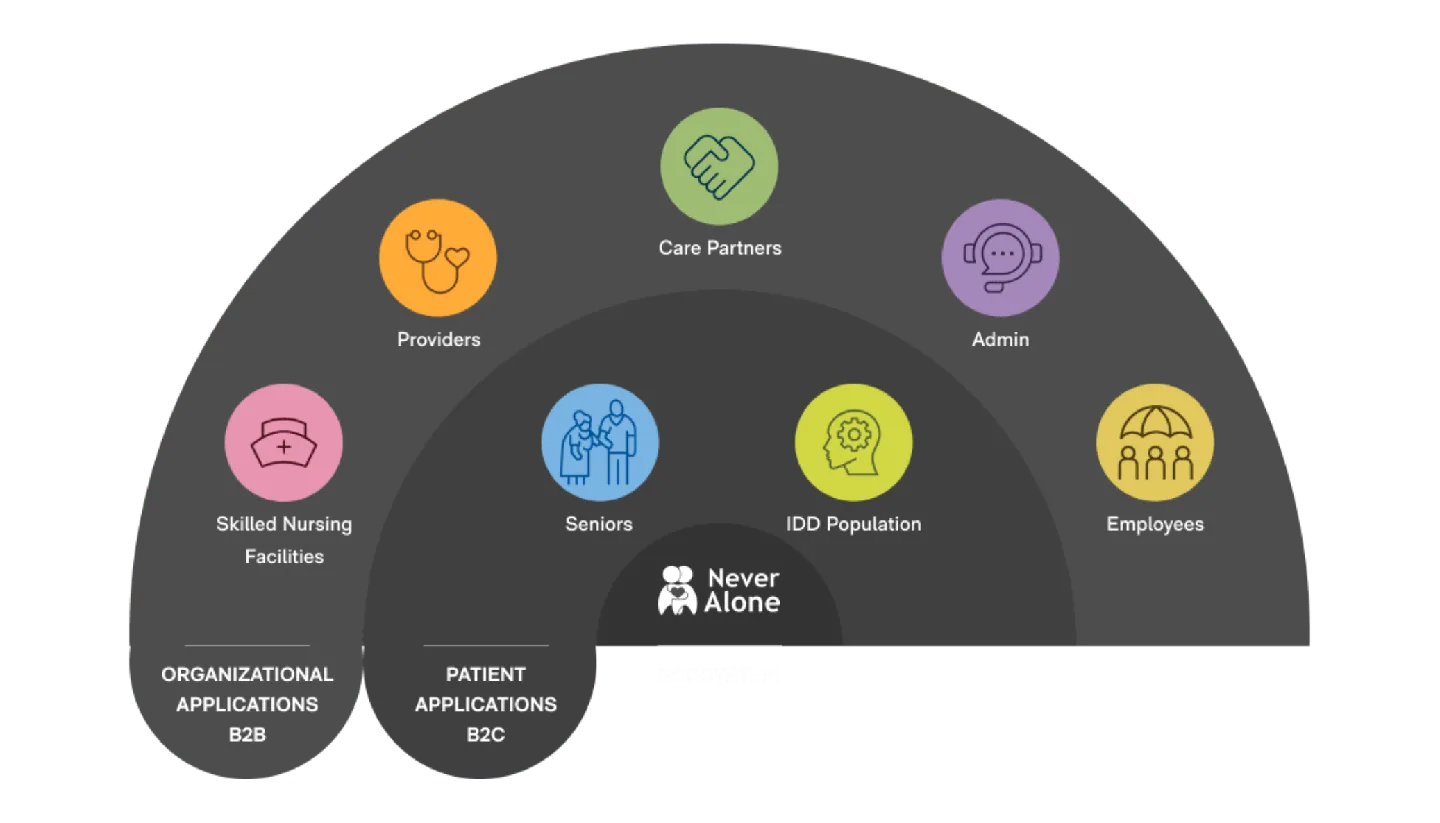
NeverAlone · CommuniCare
Behavioral health added by August 2023
A 24/7 virtual care platform that began as a 90-day MVP, now supports 30,000 patients across six states and added behavioral health settings. We still run it.
See the work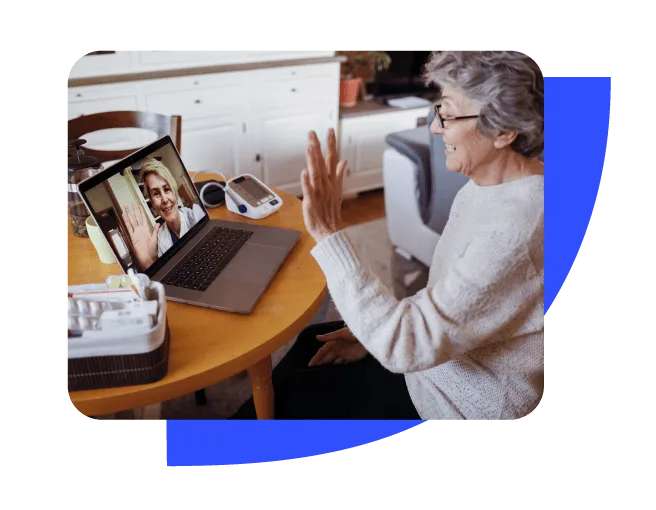
HealthContext
Note time from 45 minutes to 5
An ambient scribe we built into NeverAlone that turns a visit into a draft clinical note for the clinician to review and sign.
See the workWhere do behavioral health providers usually start with us?
Usually with a Blueprint scoped to one workflow: intake, telehealth sessions, notes or billing. It ends with a scope, an architecture and a budget, and it proves the riskiest connection before you commit to the build.
We're trying to pull risk forward. In behavioral health that's usually the EHR connection, the consent model for SUD records, or a care model that no off-the-shelf product fits. We work those out in the first weeks, with your clinicians in the room.
From there the paths differ. Some providers need a custom EHR. Others keep their EHR and need telehealth, a patient app or AI notes that sit on top of it. The table shows where we've seen people start.
Common starting points for behavioral health and SUD providers
| What's going on | Common first step | What comes next |
|---|---|---|
| Your EHR doesn't fit your care model, and staff track work in spreadsheets | Blueprint: map roles, the client journey and billing, then test a clickable prototype with providers | A custom EHR MVP. Fathers' UpLift did Blueprint and MVP in eight weeks |
| You want telehealth for counseling, IOP or groups, tied to your EHR | Blueprint that proves the EHR connection and the consent rules first | Video sessions built into your workflow, with attendance and notes flowing back to the chart |
| Patients disengage between sessions or after discharge | Blueprint for a patient app or portal: reminders, check-ins, assessments | An MVP in front of real patients, then measured and extended |
| Clinicians lose hours a day to notes | Blueprint scoped to one note type and one program, with Part 2 rules set | An ambient scribe or note assistant inside your own cloud account |
| A partner or payer wants your data, and some of it is SUD records | Blueprint that tags Part 2 records and designs consent checks on every outbound feed | The integration, built to your counsel's reading of Part 2 |
These are common starting points, not rules. Many providers combine them or change course, and the first conversation is where we work out the right one. Blueprints run 4 to 6 weeks.
What do we build, connect and run for behavioral health providers?
We build the product, connect it to the systems you already run, and keep it running after launch. Each card links to the capability page with the detail.
Custom EHRs and practice tools
Records, service plans, caseloads and charge capture shaped around clinicians, coaches and peer staff. See healthcare product development.
Telehealth for therapy and SUD treatment
One-to-one and group video sessions for counseling and intensive outpatient programs, inside the clinical workflow. See telemedicine app development.
Mental health apps and patient portals
iOS, Android and web apps for scheduling, reminders, check-ins and assessments. See healthcare app development and patient portals.
Behavioral health EHR integration
Connections to the EHR you run today, built to standards like FHIR where the other side supports them. See behavioral health EHR integration and healthcare integrations.
AI notes for clinicians
Ambient scribes and note assistants that draft from the session, with the clinician signing off. See ambient scribes.
Running it after launch
L2 and L3 support for platforms we built, a BAA before we touch PHI, and Part 2 designed in. See platform operations and security and PHI.
How do you handle 42 CFR Part 2 in the software?
We design for it in the Blueprint. 42 CFR Part 2 is the federal rule that protects records from federally assisted SUD treatment programs, and it sits on top of HIPAA.
The platform has to know which records are Part 2 and what each patient agreed to, before anything leaves it. On NeverAlone we maintain HIPAA and 42 CFR Part 2 compliance documentation, so security questionnaires get answered from records. Your counsel decides how Part 2 applies to your program. We build the software to match that decision. The full rule-by-rule design is on our security and PHI page.
Consent as data
Scope, date and revocation stored on the record. Every disclosure, export and feed checks it first.
Redisclosure notice
The notice travels with each consented disclosure, and outbound feeds filter on consent scope and the recipient.
Segmentation
Records tagged at intake by source program. Tags follow the data into reports, integrations and AI prompts.
Counseling notes and audit
SUD counseling notes get their own consent check, and every access to Part 2 records lands in the audit log.
Can you connect to Kipu and the other systems we run?
We've built and tested a FHIR R4 gateway for Kipu, and it's waiting on production credentials. It isn't live yet, and we'd rather tell you that than round it up.
The gateway sits on the open-source HAPI FHIR stack. We built it for NeverAlone, tested the workflows end to end against emulators, and it goes live when the production credentials arrive. Here's what we have in production today: NeverAlone pulls patient data from PointClickCare and Netsmart (GEHRIMED), including matching the same patient across both EHRs, and runs real-time video on AWS Chime. For Fathers' UpLift we synced the custom EHR to Tebra for demographics, claims and charge capture.
We can integrate with any system that has an API, a standard interface or a reliable export. For an EHR we haven't connected to in production, we prove the connection in the Blueprint before the build depends on it.
Behavioral health EHR
Kipu: FHIR R4 gateway built and tested, waiting on production credentials
Post-acute EHRs
PointClickCare and Netsmart (GEHRIMED), in production on NeverAlone
Practice management and billing
Tebra, synced for Fathers' UpLift
Video
AWS Chime on NeverAlone; Zoom inside the Fathers' UpLift EHR
Messaging
Twilio SMS and SendGrid email for reminders and assessments
Anything else
Any system with an API, a standard interface or a reliable export
Trusted by healthcare leaders.
“Thank you to the Digital Scientists team, this has been a long time coming! We finally have something that will be useful for our team so I want to take this opportunity to thank you for your hard work and your diligence. You took an idea and made it come to life!”

Dr. Charles Clayton Daniels Jr.
CEO & Founder, Fathers' UpLift
“I have worked with many technology teams during my career, and Digital Scientists is one of the best. They take the time to understand the customers' needs, deliver innovative solutions, are always professional, and work with your team as a true partner to achieve success.”

Amy Severino
Chief Innovation Officer, NeverAlone
More for behavioral health providers
EHR and practice management
Custom EHRs and practice tools built around your care model.
EHR and practice management →Behavioral health EHR integration
Connections to behavioral health and SUD EHRs, with Part 2 rules designed in.
Behavioral health EHR integration →Security and PHI
BAAs, a NIST CSF 2.0 security plan and 42 CFR Part 2 design.
Security and PHI →Post-acute and senior care
Where NeverAlone started, and the care settings it grew into.
Post-acute and senior care →Rural and community health
Software for community programs, rural providers and grant-funded care.
Rural and community health →Healthcare software development
Everything we design, build, integrate and run in healthcare.
Healthcare software development →Related reading
Questions behavioral health and SUD providers ask
Do you integrate with Kipu?
Not in production yet. We've built a FHIR R4 gateway on the open-source HAPI FHIR stack for a Kipu integration and tested it end to end against emulators. It's waiting on production credentials. If Kipu is your EHR, we'll show you where that work stands and prove your specific data flows in the Blueprint before the build depends on them.
How do you handle 42 CFR Part 2?
We design for it in the Blueprint. Consent is stored as data with scope, date and revocation, and every disclosure checks it first. Part 2 records are tagged at intake, the redisclosure notice travels with each consented disclosure, SUD counseling notes get their own consent check, and every access is logged. Your counsel decides how Part 2 applies to your program; we build to that decision.
Can therapy run by video and phone?
Video, yes. NeverAlone runs real-time video on AWS Chime, more than 100,000 calls a year, and we built Zoom sessions into the Fathers' UpLift EHR. Phone access for sessions is scoped per project: we work out the carrier, recording and consent rules in the Blueprint rather than assume them.
Should we build a custom EHR or keep the one we have?
Keep it if it fits your care model and the problem is a missing piece, like telehealth, a patient app or notes. Build when the model doesn't fit, as with Fathers' UpLift, where coaches and clinicians share a caseload no medical-office EHR was built for. Even then we keep what works: their billing stayed in Tebra, synced from the new EHR.
Do you build mental health apps?
Yes. We build iOS, Android and web apps for scheduling, reminders, check-ins, assessments and video sessions, connected to the provider's record. We sign a BAA before we touch PHI, and encryption, access controls and audit logging are decided in the Blueprint, not added at the end.
Who runs the software after launch?
We do, or your team does. Digital Scientists supports platforms we built, with L2 and L3 support from our team, and hands everything over on a build-operate-transfer plan when you're ready. We work alongside your IT provider or MSP rather than replace them.
Talk it over
Tell us what you are trying to do. A senior person from our Atlanta team replies within one business day, and you can book a 30-minute call right after you send this.
- We tell you if we're the right fit, and if we're not, who is.
- Most work starts small, so you see how we work before you commit to more.
- We sign a BAA before we touch patient data.