
Healthcare software we build, connect and run
Digital Scientists is a healthcare software development company in Atlanta. We build new products, connect the systems you already run, and put AI into production on your data, for health tech companies, providers, payers and the companies that serve them. We built NeverAlone, a 24/7 virtual care platform that started as a 90-day MVP, and we still run it for 30,000 patients across six states. Most work starts small.
Updated

Patients on NeverAlone, which we run
Recovered with our MDS platform
RAF improvement, risk adjustment AI
Senior team in Atlanta





NeverAlone: Scalable Virtual Care for Patients, Providers & Peace of Mind
Digital Scientists partnered with CommuniCare Health Services to build NeverAlone, a one-touch virtual care platform that connects frontline staff to medical professionals in real time, 24/7.
VIEW CASE STUDY
What does Digital Scientists do in healthcare?
Four things: we build new products, connect and modernize the systems you already run, put AI into production on your data, and run what we build or hand it to your team.
Product development
New patient, clinician and payer products, from a 4 to 6 week Blueprint to an MVP in 8 to 16 weeks to the full platform. See product development.
IT services
Integration with the EHRs and systems you run, data engineering, HIPAA cloud, and IT consulting for teams with one or two people in IT. See integrations and IT consulting.
AI in production
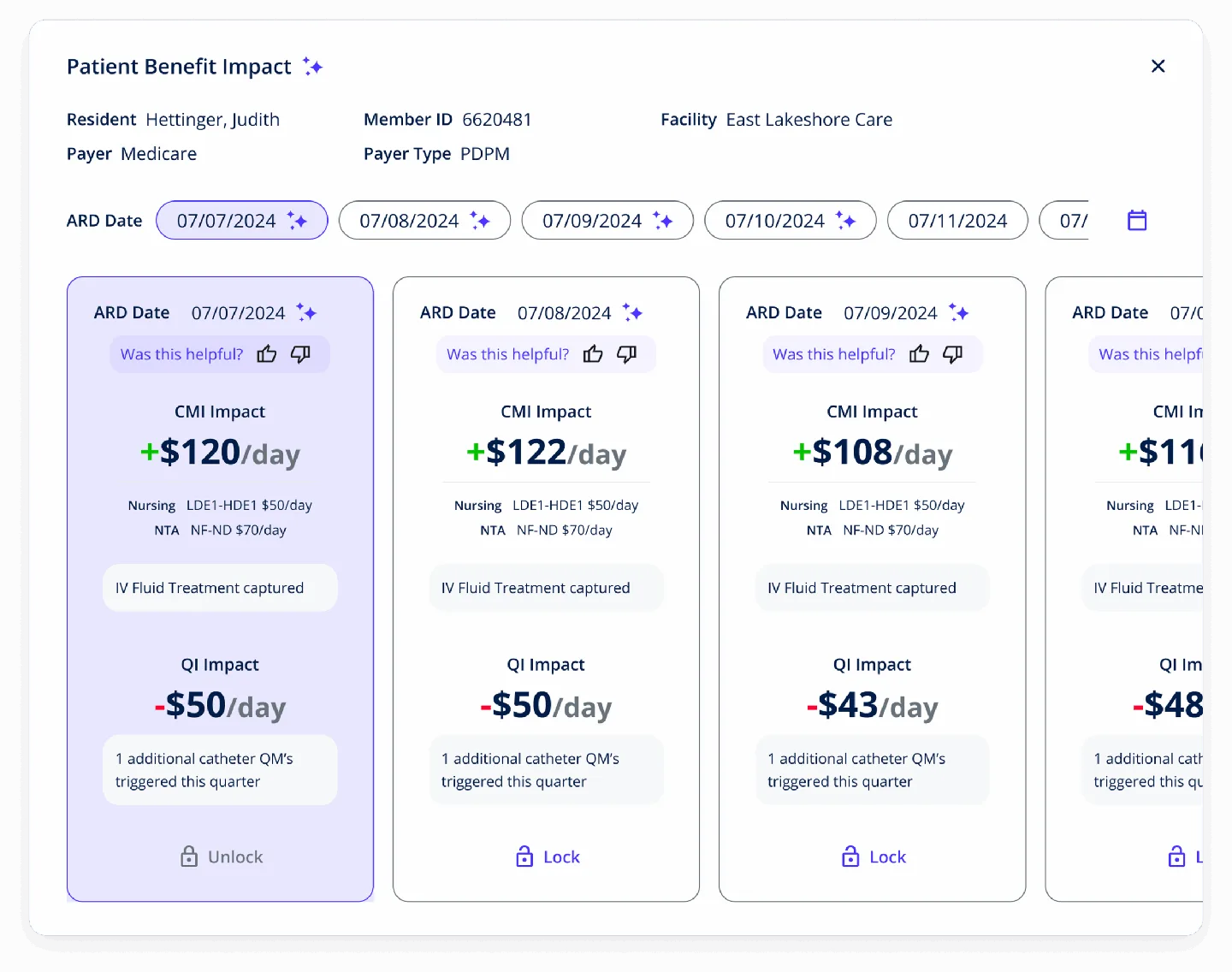
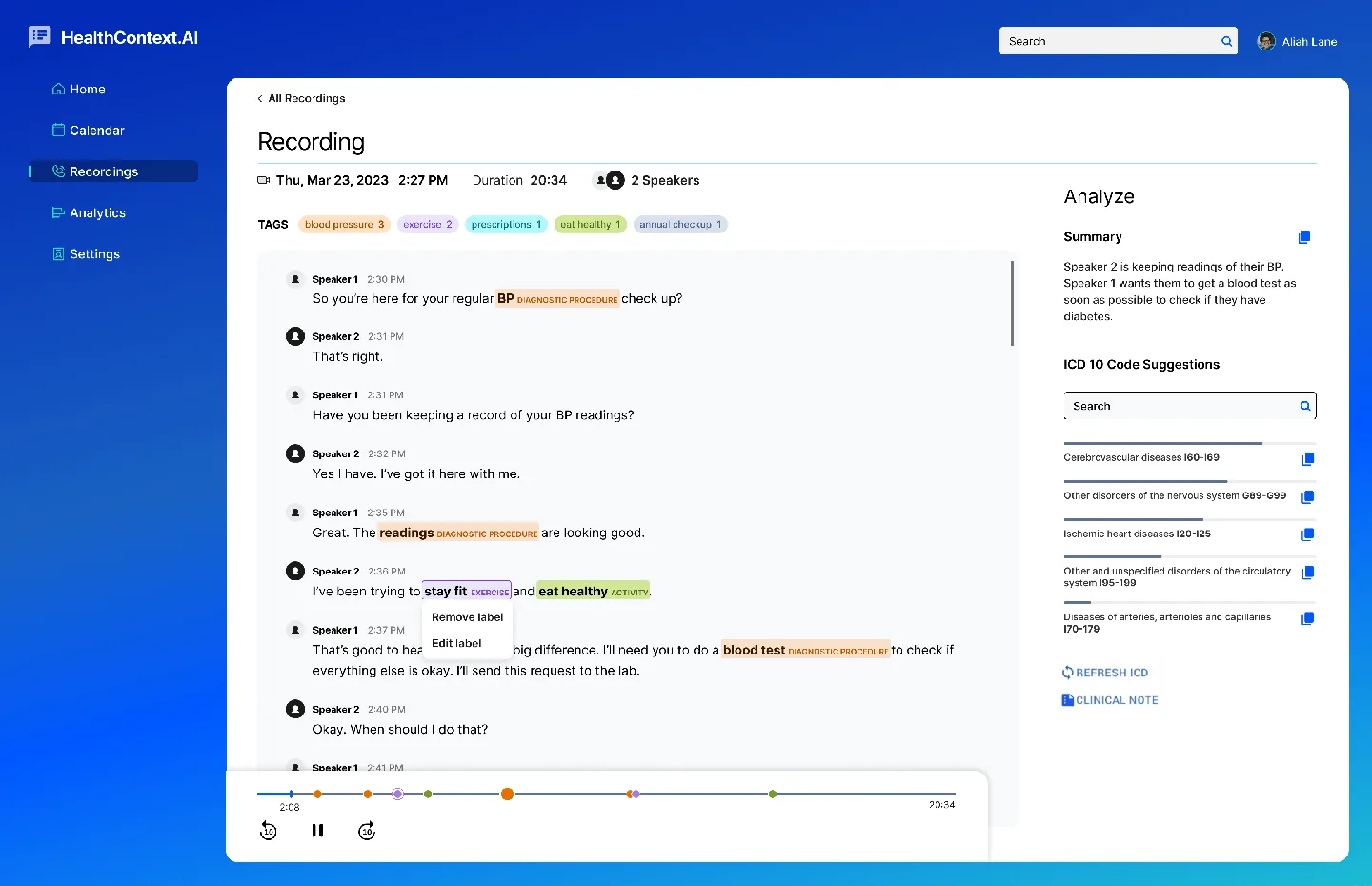
Coding and risk adjustment, MDS and PDPM, ambient documentation and back-office agents, with clinicians reviewing what the AI suggests. See healthcare AI development.
We run what we build
We operate platforms we built, take L2 and L3 support, and can hand everything to your team on a build-operate-transfer plan. See platform operations.
Which best describes you?
Pick your kind of organization. Each one goes to the page closest to your situation, with the work we've done that fits it.
Hospitals and physicians
Hospitals, physician practices and specialty care.
- Behavioral health and addiction
- Hospitals and health systems
- Physical therapy
- Physician groups
- Rural hospitals
- Surgery centers and anesthesia
Post-acute and community care
Care delivered where people live.
- Community and public health
- Home health and hospice
- IDD providers
- Pharmacies
- Senior living
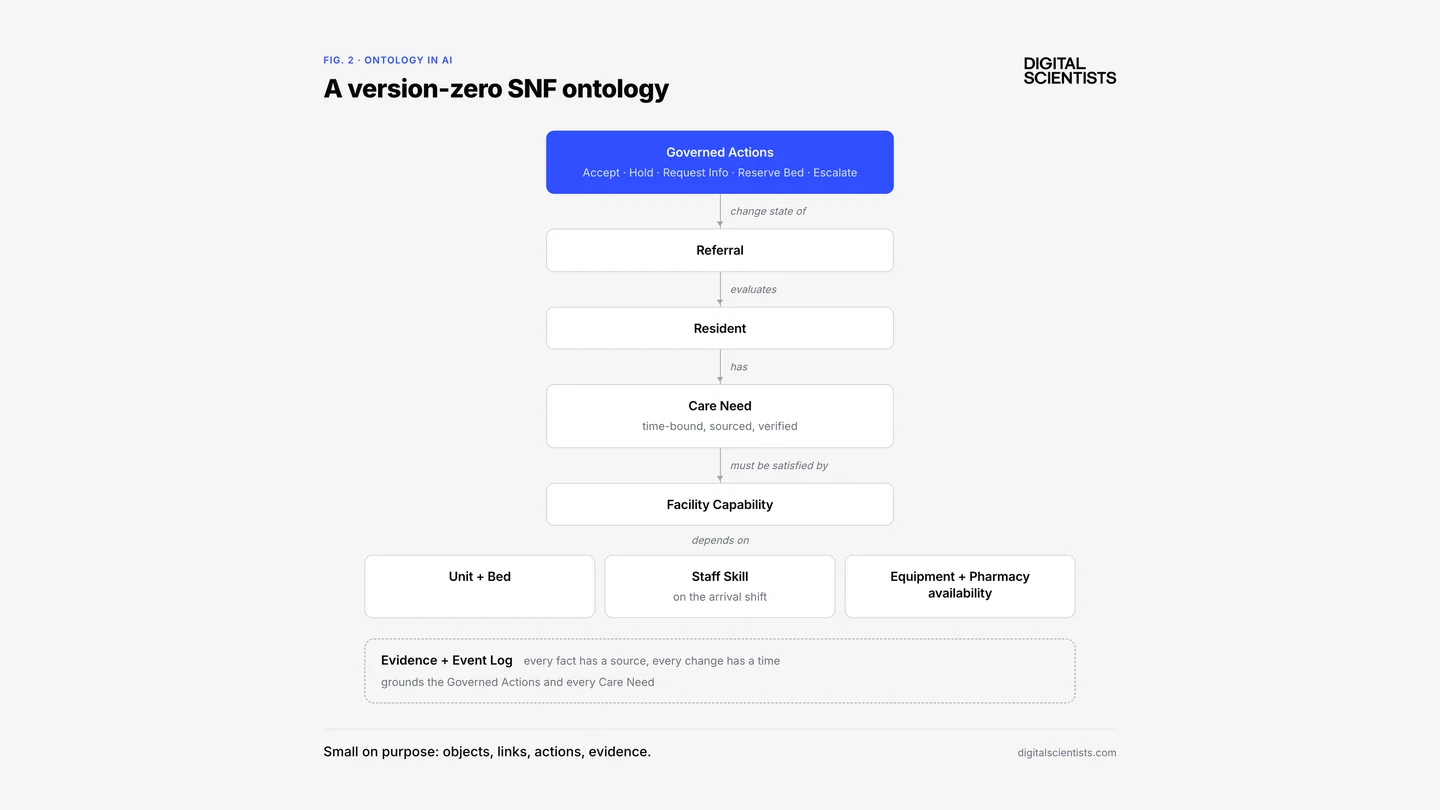
- Skilled nursing (SNFs)
Plans and risk-bearing groups
Organizations paid on outcomes and risk.
Proof$10M+ risk adjustment improvement at 90%+ accuracy →Companies
Companies building or selling into healthcare.
- Digital health startups
- Healthcare software companies
- Labs and diagnostics
- Life sciences and research
- Medtech and devices
- PE portfolio companies
- Pharma and medical supply
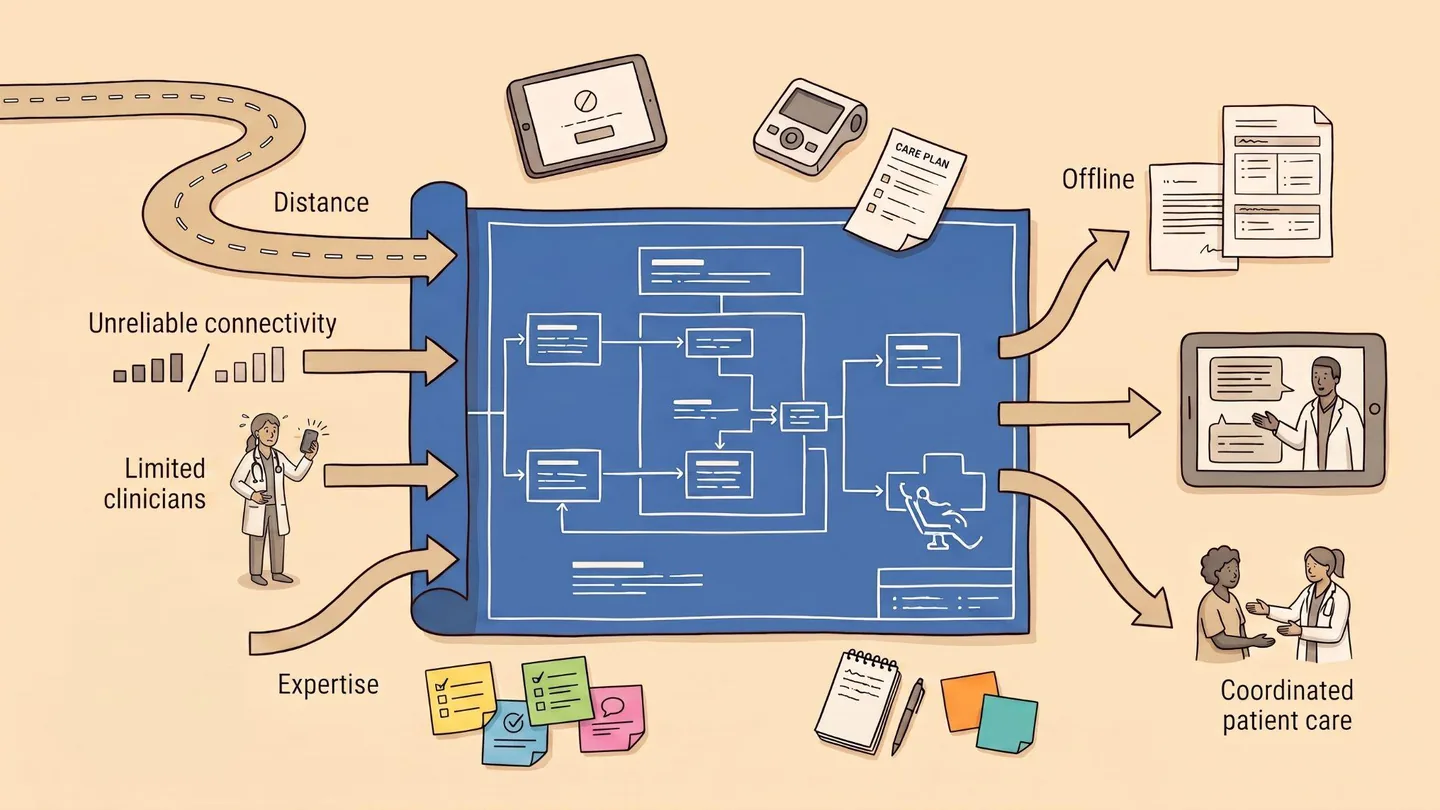
Delivering a Rural Health Transformation award?
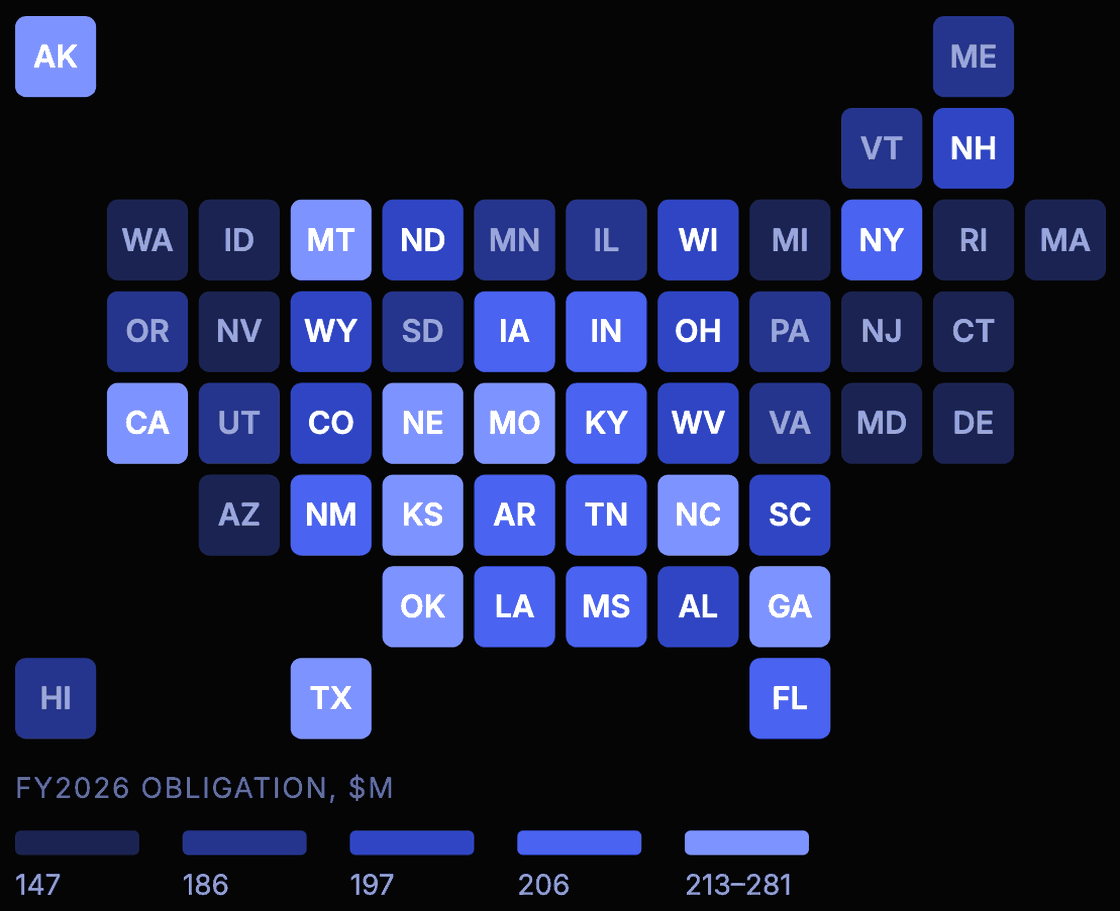
All 50 states hold an RHTP award, with $10 billion obligated for FY2026, and each one committed to scored technology outcomes that someone now has to build against a spend clock. Digital Scientists is the technology partner that designs, builds and runs those systems with you.
We build what states and awardees committed to: virtual care and treat in place, interoperability with the state exchange, clinical AI and documentation, revenue cycle work that keeps a program alive after 2030, and multi-tenant platforms a group of small awards can share. Planning, architecture and training are approved uses of funds, so most of the early work can be paid for by the award.
States holding an award
Obligated for FY2026
When the federal money stops
You hold an award
A hospital, health center, EMS agency or ACO with subaward money and a scope to deliver, usually without an engineering team.
You buy on behalf of many
A state office of rural health, hospital association, HIE or innovation center serving a group of small awardees. No single award funds a platform; together they do.
You're writing the next application
Technical sections get written weeks before a deadline. A Blueprint makes yours defensible.
95% of healthcare AI never reaches production.*
Meanwhile, you're drowning in administrative burden, workforce shortages, and margin pressure.
*MIT Project NANDA, "The GenAI Divide: State of AI in Business 2025"
Documentation per visit
Clinicians spend more time on paperwork than patients. What nurses taught us about building human-centered AI →
Revenue cycle length
Cash tied up in A/R while denial rates hit 12%. How AI helped generate $12M+ →
Administrative overhead
Back-office costs eating into margins.
Strategic partnerships reach deployment at 2x the rate of internal builds.
“Pilots built via strategic partnerships were 2x as likely to reach full deployment as those built internally. Employee usage rates were nearly double for externally built tools.”
“Most fail due to brittle workflows, lack of contextual learning, and misalignment with day-to-day operations.”
Partner success
vs. internal builds
We’ve been building with AI for over 10 years. We’re exactly the kind of partner MIT’s research says you need, one team, concept to scale.
Talk it over →Source: "The GenAI Divide: State of AI in Business 2025", MIT Project NANDA
The partner you work with matters as much as the technology you build.
Enterprise consulting firms advise from a distance. We embed, build, and stay.
Large firms deliver strategy. You figure out implementation.
We embed with your team.
The people who scope it build it. Same timezone, same priorities. Based in Atlanta since 2007.
Partners sell, juniors execute on your budget.
You drive the innovation.
We bring the engineering. You bring the vision. Your team gets smarter, not more dependent.
Paid for time, not outcomes. Build and leave.
We’re accountable for results.
We don’t build and leave. We stay until it works. $20M+ verified impact.
AI practice launched post-ChatGPT.
10+ years building production AI.
Not a recent pivot. We’ve been shipping AI to production since before it was a boardroom topic.
Dependency is the business model.
Skin in the game.
30,000 patients on a platform we run today. We build what we believe in.
Strategic partnerships reach deployment at 2x the rate of internal builds.
We’ve been building with AI for over 10 years. We’re the partner MIT’s research says you need, embedded, accountable, and in it for the long run.
Partner success
vs. internal builds
We want to be part of your success story. Not your vendor list.
Talk it over →Source: “The GenAI Divide: State of AI in Business 2025”, MIT Project NANDA
From discovery to outcomes. 10 steps, zero gaps.
Most vendors deliver steps 1-4 and wish you luck. We deliver all 10, that’s why we have a One team, concept to scale when others fail 95% of the time.
Phase I
Discover
What should we do?
Data Foundation
Assess & structure your data
Solution Design
Co-design with care teams
Phase II
Experiment
Does it actually work?
Hypothesis & Scope
Define success criteria
Build & Validate
Working software, your data
Phase III
Engineer
Make it real.
Agile Development
Sprints with clinical feedback
Systems Integration
EHR, claims, lab connectivity
Change Management
Training & adoption support
Production Deploy
Phased rollout with monitoring
Phase IV
Optimize
Make it better.
KPI Accountability
Measure outcomes, prove ROI
Continuous Improvement
Ongoing optimization or handoff
Does the Work
Automation & Agents
Shows What’s Happening
Insights & Intelligence
Built Faster
AI-Accelerated Dev
Most projects fail at steps 5-10. We own the complete value chain.
For new digital health products, we often recommend starting with a healthcare MVP, validate workflow fit and outcome signal before committing to a platform build.
How do most healthcare clients start with us?
Small. One integration, one fix or one Blueprint, priced and scoped up front. Solving a small problem well is how we earn the conversation about the big one.
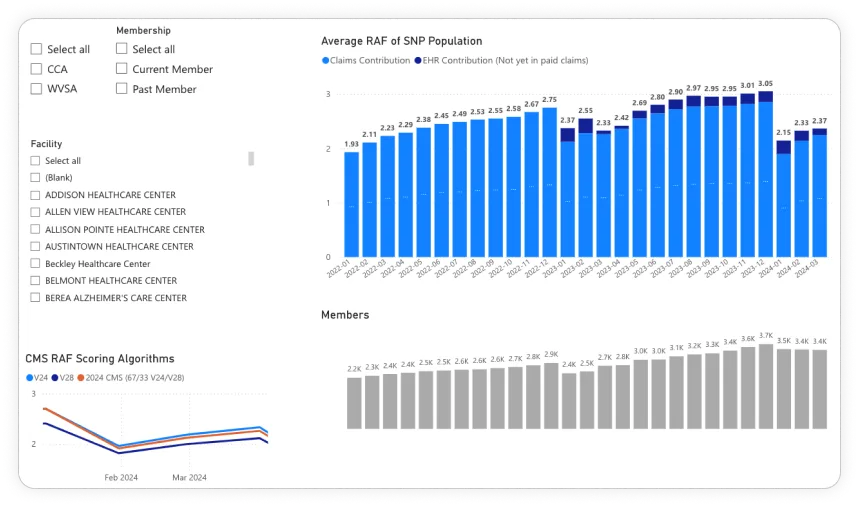
CommuniCare started with a 90-day MVP in March 2021. That became NeverAlone, then an audit of more than 60 systems and an 11-vendor EHR selection for CommuniCare Advantage, then a data platform, then AI for risk adjustment and MDS. Each step was earned by the one before it.
Ways to start
| Common starts | What you get | Time | Investment |
|---|---|---|---|
| Conversation | A senior person from our team, an honest read on fit | 30 minutes | Free |
| Build with Us | A senior architect building in your systems, on your data | Two weeks, then month to month | $10K, then $20K a month |
| Blueprint | Scope, architecture, user stories, plan and budget; optional working prototype | 4 to 6 weeks | $25K, or from $50K with a prototype |
| MVP | A working product in real users' hands | 8 to 16 weeks | $75K to $250K |
Every option ends with a clear recommendation for what comes next, and you decide whether to continue, change course or stop. See ways to start.
Your hospital’s moat is not in Epic. It’s in the layer above it.
Every comparable health system runs the same EHR, the same patient engagement platforms, the same revenue cycle stack. The differentiation is the system of intelligence above them, the layer the institution owns. We build it, in production, across revenue cycle, patient engagement, and clinical workflows.
Explore Forward Deployed Engineering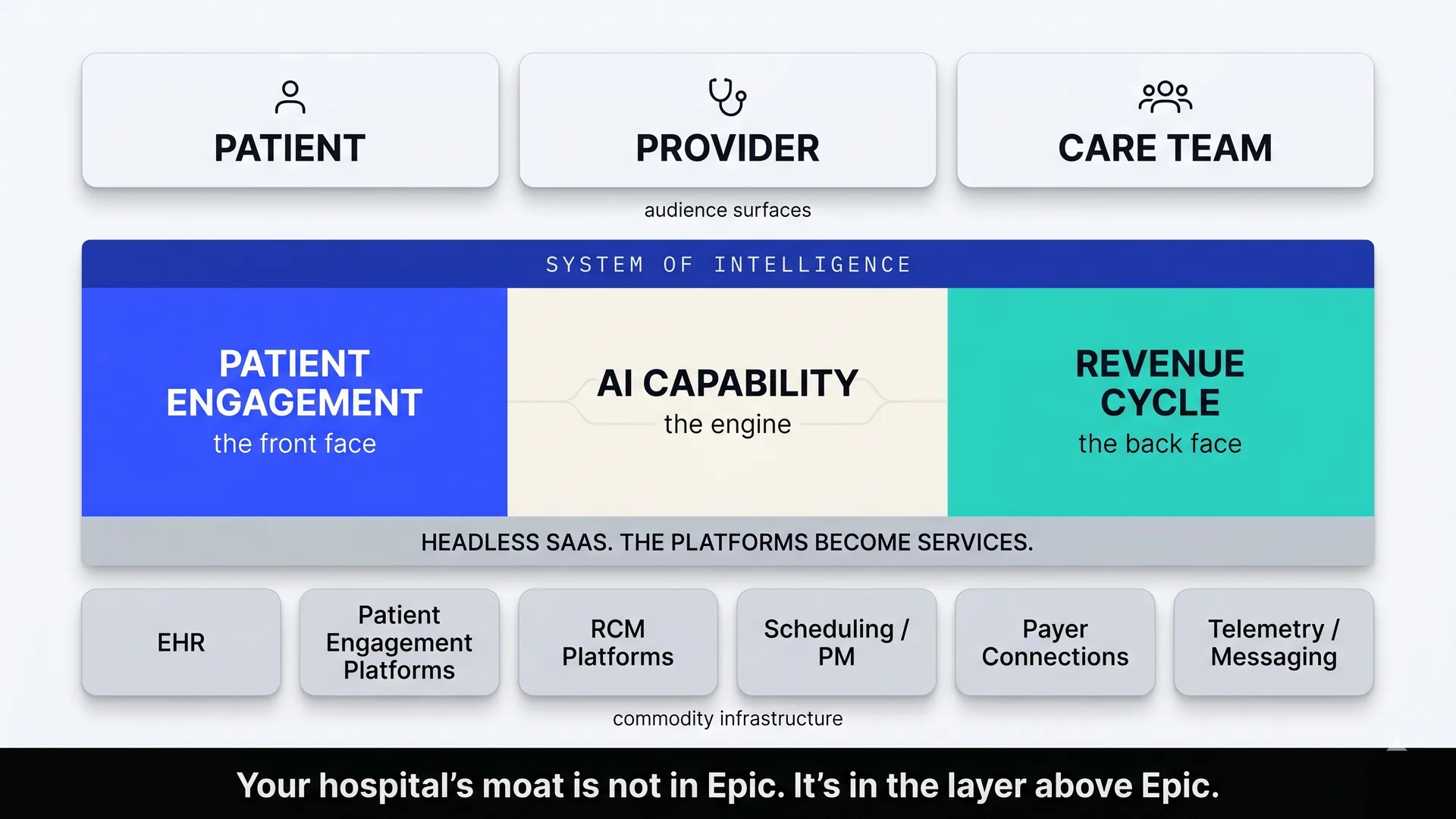
Four high-impact areas. Proven ROI in each.
Systems built for your workflows, trained on your data, integrated with your EHR. Not off-the-shelf tools, solutions that get smarter the longer you use them.
AI Documentation Automation
45 min→5 min per visit. Ambient AI scribes that generate clinical notes, OASIS assessments, and care plans.
Learn More →
Highest ROIIntelligent Back-Office Agents
Revenue cycle from 45→28 days. Denial rates from 12%→4%. 200-300 bps EBITDA improvement.
Learn More →
Proven at ScaleVirtual Care Assistants
3x patient capacity per nurse. 40% reduction in after-hours calls. 25% readmission reduction.
Learn More →
Quick WinIntelligent Scheduling
15% improvement in visit completion. 20% reduction in drive time. Predictive no-show management.
Learn More →
10 AI Implementation Frameworks
View all →Off-the-shelf AI doesn't know your business.
Generic AI Tools
Trained on the internet
Doesn't know your EHR, payer contracts, or workflows
Built for demos
95% of healthcare AI pilots fail to reach production
Static capabilities
Same tool tomorrow as today, never learns your patterns
Features, not revenue
Doesn't understand PDPM, RAF, or value-based care
AI Built for Your Business
Trained on your data
Integrates with your EHR, learns your workflows
Built for production
One team, concept to scale. $20M+ verified impact.
Gets smarter over time
Year 1: learns patterns. Year 2: knows your facilities. Year 3: understands your staff.
Drives real revenue
$24M PDPM revenue forecast. 200-300 bps EBITDA improvement.
Why One team, concept to scale
Do you know our systems?
If it has an API, a standard interface or a reliable export, we can connect to it. We've also done the hard parts in production: PointClickCare and Netsmart (GEHRIMED) data with patients matched across EHRs, video and E911 on a 24/7 platform, and AI that works from CMS risk models and standard code sets.
Healthcare stacks are sprawling. A typical client runs an EHR, a billing system, a CRM, a telephony platform, spreadsheets and a few vendor portals. We start by mapping what you have, then connect it with standard interfaces such as FHIR where the other side supports them, and custom data exchange where it doesn't. For CommuniCare Advantage we audited more than 60 systems and ran an 11-vendor EHR selection. See EHR integration.
EHRs
PointClickCare, Netsmart, Epic
Billing and claims
Clearinghouses, X12, payer portals
Health information exchange
State HIEs, FHIR, HL7
Pharmacy and labs
E-prescribing, orders and results
Phone, video and contact center
Video visits, E911, call routing
CRM and care management
Salesforce, custom platforms
Devices and monitoring
Tablets, wearables, bedside monitors
Scheduling and workforce
Staffing, on-call, credentialing
Data, analytics and AI
Warehouses, dashboards, models
Spreadsheets and vendor portals
Where a lot of the real work lives
How do you handle patient data?
We sign a BAA before we touch PHI, and we build encryption, access controls and audit logging into every system from the first week.
Our security plan is mapped to NIST CSF 2.0, and each client gets a security addendum. Where AI touches patient data, it runs on services covered by a BAA, often inside the client's own cloud account, and a clinician reviews what it suggests. See security and PHI.
Signed with every covered entity before we touch patient data
The framework our security plan maps to
Security addendum written to your controls
Different leaders, different questions.
Same answer: we deliver.
NeverAlone went from a 90-day MVP to a platform serving 30,000 patients across six states. Modern tech stack increases acquisition multiples. Learning systems create sustainable advantage.
states
served
$24M PDPM forecast + $2M Quality Incentives across 5 states. Financial analyst calculated, not vendor estimates. Contractually tied to KPIs. Calendar year returns.
bps EBITDA
improvement
40+ hours shadowing MDS coordinators before writing code. Change management included. Go-live support. Staff adoption guaranteed, not just deployment.
hours with
care teams
One team, concept to scale vs 5% industry average. PointClickCare and Gehrimed in production. Epic integrated in an R&D environment. Data engineering through deployment, you’re not stuck managing another vendor.
step value
chain
Trusted by healthcare leaders.
"I have worked with many technology teams during my career, and Digital Scientists is one of the best. They take the time to understand the customers' needs, deliver innovative solutions, are always professional, and work with your team as a true partner to achieve success."

Amy Severino
Chief Innovation Officer, NeverAlone
"By applying a robust machine learning model to our app, DS helped us create a scalable and accurate solution to improve the operating room experience for the anesthesia team and the patient. They are true collaborators."

Justin Scott, M.D., FASA
CEO, Vigilant Medical Solutions
Everything we do in healthcare
Four ways in. Pick the one that matches your question; every page links to the work behind it.
Who we serve
Find your kind of organization and the work we do for it.
Providers
- Behavioral health and SUD
- Health systems
- Physician services
- Post-acute and senior care
- Rural and community health
Payers
Companies
Product development
New products and platforms, from first Blueprint to production.
Start here
By product
IT services
Integration, data, hosting and operations for the systems you already run.
Strategy
Integration
- Behavioral health EHR integration
- Claims and X12
- CRM integration
- EHR integration
- FHIR and HL7
- Integrations
- Lab integration
- Payer APIs and prior authorization
- Pharmacy integration
Data
Hosting and operations
AI
AI that works inside clinical and financial workflows, in production.
Start here
Clinical
Revenue and operations
- Coding and risk adjustment
- Compliance and quality
- MDS and PDPM
- Revenue cycle AI
- Scheduling
- Value-based care
Patients

Questions healthcare buyers ask
What does Digital Scientists do in healthcare?
We build healthcare software, connect it to the systems you already run, and put AI into production on your data, for health tech companies, providers, payers and the companies that serve them. We also run the platforms we build.
Which healthcare systems do you integrate with?
PointClickCare and Netsmart (GEHRIMED) are in production on platforms we operate, including matching patients across EHRs. We've worked with Epic in a test environment. For other systems we use FHIR APIs where they exist and custom data exchange where they don't, and we plan that work before the build starts.
Do you sign a BAA?
Yes. We sign a BAA before we touch patient data, and our security plan is mapped to NIST CSF 2.0 with a security addendum for each client.
Who supports the software after launch?
We support platforms we built, usually taking L2 and L3 while your team handles first-line questions, and we can hand everything over on a build-operate-transfer plan. We don't do general IT or desktop support.
Where is your team?
Atlanta, Georgia. We've built software since 2007 with a senior US team, and we work across the country.
What is healthcare AI?
Healthcare AI uses machine learning and natural language processing to automate clinical workflows, improve diagnostic accuracy, and optimize operational processes. Common applications include clinical documentation automation, revenue cycle management, predictive analytics for patient outcomes, and intelligent scheduling. Unlike generic AI tools, healthcare AI must be built with HIPAA compliance, clinical validation, and EHR integration from the start. The same constraints shape our broader healthcare app development work, whether the surface is AI, mobile, or platform.
Is AI in healthcare HIPAA compliant?
AI can be HIPAA compliant when built with the right architecture from day one. This includes end-to-end encryption, role-based access controls, audit logging, BAA agreements with cloud providers, and data minimization practices. Digital Scientists builds all healthcare AI systems to meet HIPAA Security Rule, Privacy Rule, and Breach Notification Rule requirements. We architect for HL7/FHIR interoperability standards.
How long does healthcare AI implementation take?
Timeline depends on scope: Build with Us shows whether it can be done in 2 weeks, an MVP takes 8-12 weeks, and a full production system takes 4-6 months. Digital Scientists uses an iterative approach, validating with real users, then scaling to production with proper security, compliance, and integration. This approach reduces risk and delivers measurable value at each milestone.
Talk it over
Tell us what you are trying to do. A senior person from our Atlanta team replies within one business day, and you can book a 30-minute call right after you send this.
- We tell you if we're the right fit, and if we're not, who is.
- Most work starts small, so you see how we work before you commit to more.
- We sign a BAA before we touch patient data.