
ML, & AI Solutions for Healthcare

Medical AI, Machine Learning (ML), Natural Language Processing (NLP), and Artificial Intelligence (AI) enhance diagnostic accuracy, personalize treatment plans, and improve clinical efficiency by leveraging advanced algorithms to analyze medical data with precision.

The use of NLP, AI, and ML in healthcare supports early disease detection and evidence-based decision-making, allowing clinicians to focus more on patient care and achieve better health outcomes.

CONTACT US
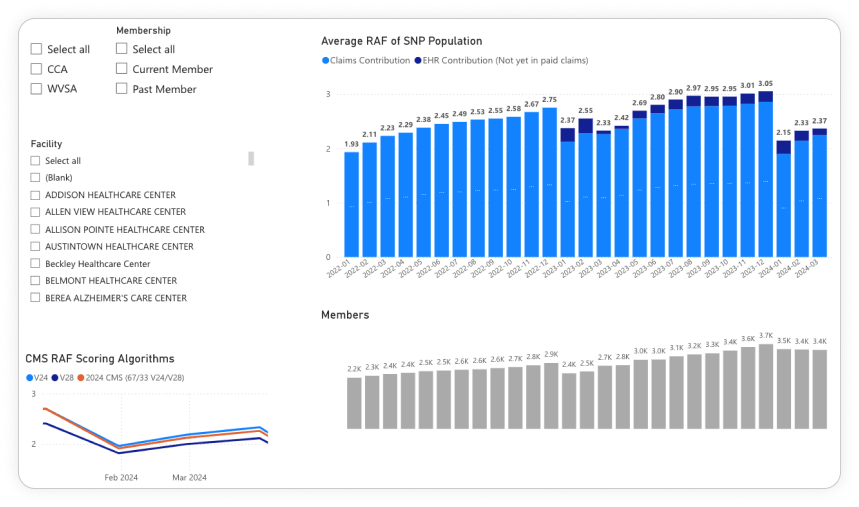
Predicting the trends of RAF based on EHR and claims data

Predicting the trends of RAF based on EHR and claims data. See the case study

Dukehealth -dark
Congruity Health – Black
McKesson
CommuniCare – Black
Guardian – Black
Easterseals – dark

Use Cases for NLP, ML, & Artificial Intelligence in Healthcare

Diagnostic Imaging

Enhancing the interpretation of medical images (e.g., X-rays, MRIs, CT scans) to detect conditions like tumors and fractures with higher accuracy.

Personalized Medicine

Tailoring treatment plans to individual patients based on genetic information, lifestyle, and other health data.

Disease Prediction

Developing models that predict the likelihood of diseases such as diabetes, heart disease, and cancer based on patient data.

Clinical Documentation

Automating the extraction of relevant information from clinical notes, lab reports, and other unstructured data sources to improve documentation accuracy and efficiency.

Predictive Analytics

Forecasting disease progression and patient outcomes using historical and real-time health data.

Medical Image Analysis

Training ML models to recognize patterns in medical images that indicate specific conditions.

Patient Interaction

Enhancing patient communication through AI-powered chatbots that can provide medical information, schedule appointments, and answer health-related questions.

Drug Discovery

Accelerating the identification of potential new drugs by analyzing biological data and predicting molecular interactions.

EHR Data Mining

Extracting valuable insights from electronic health records to inform clinical decision-making and identify trends.

Achieved 95% Treatment in Place with Custom Virtual Care Ecosystem

A large value-based care provider, faced CMS reimbursement challenges due to coding gaps. Complex growth and tech hindered patient care. Addressing gaps was vital for improved patient care and reimbursement.

SEE THE CASE STUDY
Woman using telehealth services at home

Feature Requirements for ML, NLP, & AI Healthcare Solutions

Interoperability & Integration

Seamless integration with existing healthcare systems (e.g., EHRs, EMRs, telehealth platforms) is crucial for efficient data exchange and workflow integration. This ensures that all relevant patient data is accessible for comprehensive analysis and decision-making.

Scalability and Performance

The solution must be scalable to accommodate growing data volumes and user numbers without compromising performance. This ensures that the system can handle increased demand and maintain optimal functionality as the healthcare organization expands.

Security and Data Privacy

Robust security measures, including encryption and access controls, are essential to protect patient information and ensure compliance with regulatory standards such as HIPAA and GDPR. This is crucial for maintaining data confidentiality and integrity.

Real-Time Data Processing

The ability to process and analyze patient data in real-time is essential for providing timely and relevant decision support. This feature ensures that healthcare providers can make informed decisions quickly, directly impacting patient care.

Evidence-Based Recommendations

The system should provide continuously updated, evidence-based recommendations. This ensures that healthcare providers have access to the latest clinical guidelines and research, enhancing the quality of care and clinical outcomes.

Customizable Alerts and Notifications

The solution should allow for customizable alerts and notifications based on individual patient parameters. This ensures timely interventions by healthcare providers when abnormal readings or trends are detected, improving patient safety and care quality.

User-Friendly Interface

An intuitive and user-friendly interface is essential for ensuring that healthcare providers can efficiently interact with the system. This enhances usability and adoption, indirectly improving patient outcomes through better system utilization.

Data Security and Compliance

Ensuring compliance with regulations like HIPAA and GDPR is critical for protecting patient data and maintaining trust. The solution must implement robust security measures to safeguard sensitive health information.

Clinical Workflow Integration

Integrating the solution into existing clinical workflows minimizes disruption and maximizes efficiency. This ensures that decision support tools are effectively utilized in routine clinical practice, enhancing overall care delivery.

Integrating Artificial Intelligence and Machine Learning in Healthcare

  • Enhanced Diagnostics: AI and ML enhance early disease detection and support accurate diagnoses by analyzing medical images and patient data, leading to quicker and more precise identification of conditions.
  • Personalized Treatment: AI develops individualized treatment plans and provides evidence-based recommendations, ensuring that patients receive the most effective and efficient care tailored to their unique needs.
  • Patient Monitoring and Management: Continuous monitoring through AI-powered devices and wearables provides real-time health data, while AI offers insights for proactive management of chronic diseases, reducing hospital readmissions.
  • Clinical Decision Support: AI delivers real-time insights and risk stratification, helping healthcare providers make informed decisions quickly and focus on high-risk patients with targeted interventions.
  • Streamlined Clinical Workflows: NLP automates data extraction from electronic health records, reducing administrative burden, while AI optimizes clinical workflows, improving efficiency and patient satisfaction
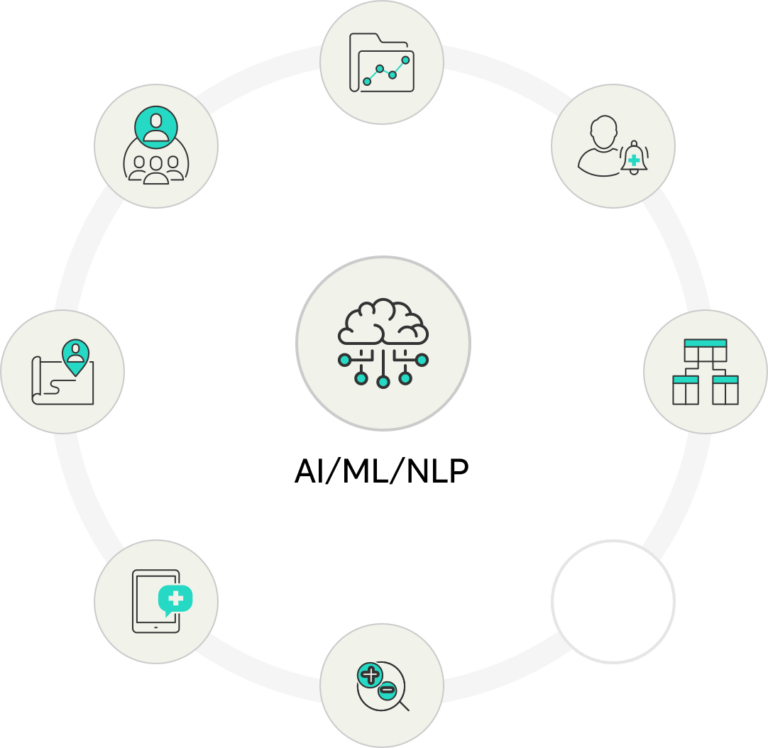
Intergrating Medical AI, ML & NLP into a Value Based Care architecture

Medical AI, ML & NLP Solution Expertise

AI-Driven Data Integration

Expertise in using AI to automate the collection and aggregation of data from EHRs, medical devices, and telehealth platforms. Ensuring accurate data exchange and ethical handling is critical for robust AI models.

ML-Based Data Preprocessing

Proficiency in applying ML to clean and preprocess data, including handling missing data and normalization. This prepares data for advanced AI analysis while ensuring fairness and transparency.

AI-Powered Alerts and Notifications

Skill in developing AI-driven systems that generate real-time, customizable alerts based on patient data. This enables proactive healthcare interventions while addressing ethical considerations to avoid bias.

NLP-Enhanced Dashboards

Capability in using NLP to create user-friendly dashboards that visualize patient data in real-time. These dashboards provide intuitive access to AI-generated reports, ensuring inclusivity and ease of use.

Responsible AI in Security and Compliance

Knowledge in implementing AI-based security measures and ensuring compliance with healthcare regulations like HIPAA and GDPR. Emphasis on responsible AI development, ensuring transparency, accountability, and ethical use of AI systems.

Scalability and Performance

Experience in designing scalable solutions that handle increased data volumes and user numbers without compromising performance. This ensures the CDSS can grow with organizational needs and maintain optimal functionality.

Technologies
Zoom
OpenAI Black
Chime
Bandwidth
Twilio

CDSS Experts

Bob Klein of Digital Scientists

Lean, senior teams

Our experienced teams specialize in creating large-scale digital healthcare products, understanding your unique challenges and user needs to deliver exceptional CDSS solutions without using your investment for training.

Woman on telehealth appointment call

Interoperability

We ensure your CDSS delivers measurable ROI by integrating seamlessly with existing healthcare systems, optimizing data flow, and enhancing operational efficiency to achieve significant business value.

Woman helping man in wheelchair use telehealth services

Clinician-Focused Design

We prioritize user research and product discovery, completing design cycles and prototypes early on. Testing and validation occur at every phase of our process, informing early hypotheses and ensuring that the final clinical AI solution delivers utility for all users.

How to get Started

Hand with checkmark

HIPAA Compliant MVP

Launch a new service or product in as little as 8 weeks

Roadmap

VBC Technology Consulting

Consulting services for technology integration in Value-Based Care.

Growth

Strategic Assessment

An evaluation to guide critical business strategies and decisions.

Our latest insights

Subscribe for Calendar
blog post 18 IoT Applications and Examples Relevant to Business & Industry

18 IoT Applications and Examples Relevant to Business & Industry

You’ve probably heard of “The Internet of Things”, or IoT for short. But what exactly is this relatively new phenomenon? Simply put, the Internet of Things is what it sounds like ─ an “interconnection of everyday physical objects with the internet”. This symbiotic nature of physical object plus internet connection…

View Post
blog post 5 Different Types of Software Used in the Healthcare Industry

5 Different Types of Software Used in the Healthcare Industry

Imagine a world where appointment scheduling takes minutes, medical records are accessible with just the click of a mouse or tap of a finger, and doctors can collaborate remotely from locations halfway across the country for complex cases. That world is already here, thanks in large part to various types…

View Post
1

What is Medical AI?

Medical AI refers to the application of artificial intelligence technologies specifically in the field of medicine. It involves using algorithms and machine learning models to analyze medical data, assist in diagnosis, treatment planning, and patient monitoring, enhancing overall clinical decision-making and patient care.

2

How does Medical AI improve diagnostic accuracy?

Medical AI improves diagnostic accuracy by analyzing large datasets to identify patterns and correlations that may be missed by human providers. It can assist in interpreting medical images, pathology results, and genomic data, providing more precise and timely diagnoses.

3

What types of data are used in Medical AI applications?

Medical AI applications use data from electronic health records (EHRs), medical imaging, laboratory results, genomic sequences, wearable devices, and other healthcare databases. This comprehensive data integration supports accurate and informed decision-making.

4

How can Medical AI enhance clinical decision support systems (CDSS)?

Medical AI enhances CDSS by providing real-time, evidence-based recommendations, identifying at-risk patients, and suggesting personalized treatment plans. This proactive approach enables timely interventions and improves overall patient care.

5

What are the benefits of using Machine Learning (ML) in patient care?

ML benefits patient care by enabling early detection of diseases, predicting patient outcomes, and personalizing treatment plans. It helps in identifying high-risk patients, optimizing resource allocation, and improving overall patient management.

6

What challenges are associated with implementing Medical AI?

Challenges include ensuring data privacy and security, integrating data from multiple sources, maintaining data accuracy and quality, and gaining acceptance from healthcare providers and organizations. Addressing these challenges is crucial for effective Medical AI implementation.

7

How does Medical AI help in managing healthcare costs?

Medical AI helps manage healthcare costs by optimizing resource allocation, reducing unnecessary tests and procedures, and preventing medical errors. This leads to more efficient healthcare delivery and better financial management.

8

What role does Medical AI play in remote patient monitoring?

Medical AI plays a significant role in remote patient monitoring by analyzing data from wearable devices and sensors to track patient health in real-time. It enables early detection of potential health issues and timely interventions, enhancing patient care outside of traditional healthcare settings.

9

How does Medical AI ensure data security and privacy?

Medical AI ensures data security and privacy by implementing robust measures such as encryption, secure APIs, and compliance with regulations like HIPAA. This protects patient data during exchange and storage, maintaining confidentiality and integrity.

10

How does NLP enhance AI healthcare solutions for clinical documentation?

In AI and healthcare, Natural Language Processing (NLP) improves clinical documentation by extracting key information from physician notes, lab reports, and discharge summaries. These AI healthcare solutions reduce administrative overhead and improve data accuracy in real time.

11

How do AI and ML in healthcare support Value-Based Care (VBC)?

Artificial intelligence and machine learning in healthcare help providers predict patient risks, close care gaps, and optimize treatment strategies. These AI solutions for healthcare are essential for delivering proactive, cost-effective care under Value-Based Care models.

12

Are AI solutions for healthcare scalable for large organizations?

Yes, clinical AI solutions are built to scale. They manage increasing patient data volumes, integrate with legacy EHR systems, and support growing user bases—ensuring that artificial intelligence in healthcare continues to perform as organizations expand.

13

What distinguishes AI-powered insights from traditional healthcare analytics?

AI and ML in healthcare go beyond static reporting by using machine learning to adapt to new data inputs. This enables continuous learning and predictive insights, setting artificial intelligence in healthcare apart from conventional analytics methods.

14

How do you ensure ethical use of artificial intelligence in healthcare?

Ensuring fairness and transparency in AI healthcare solutions involves testing for bias, validating models, and maintaining explainability. Responsible development practices in AI and ML in healthcare ensure trust and equity across diverse patient populations.