
How We Engineer
Senior engineers own the architecture, the code review, and the production system. AI tools do volume work inside that process. Engineers make the architecture, business logic, integration, and security decisions.
Talk to an Architect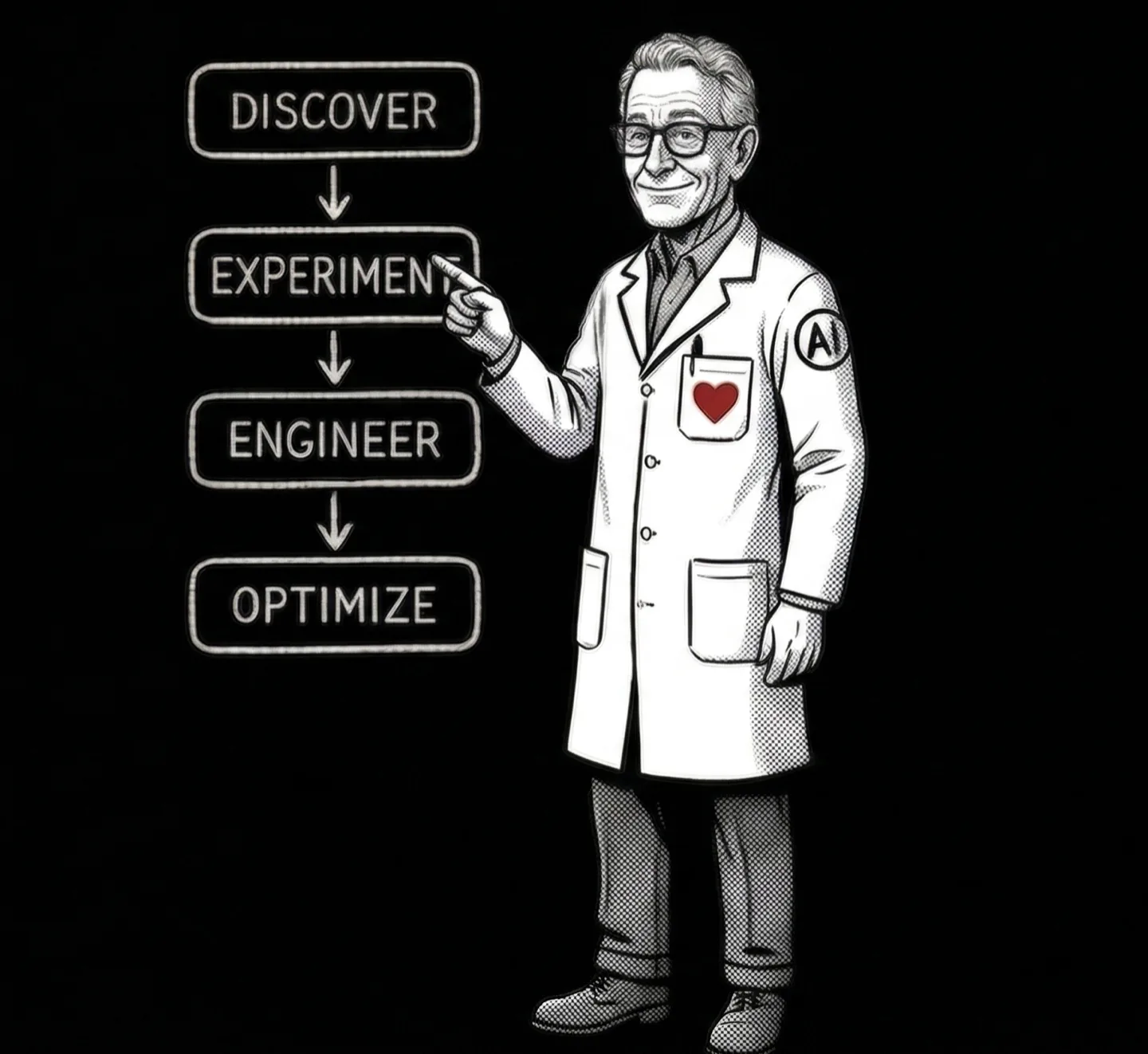
Every engagement follows our method: Discover → Experiment → Engineer → Optimize
Architecture Before Code
We estimate a build against an architecture, not a feature list. That work is the core of a Blueprint, and it is how we avoid the change orders that come from pricing an incomplete spec.
C4 model
Our primary tool for architectural diagramming: context, containers, components, in a visual language the whole team shares.
UML diagrams
Activity, state, and sequence diagrams, and ERDs.
Deployment and security views
Architectural perspectives beyond the application: deployment, security, and more.
Requirements
Functional and non-functional requirements, and user stories.
Integrations mapped
Integration mapped before a line of production code.
Complexity identified early
Complexities identified proactively, before development.
Where AI Does the Work, and Where It Doesn’t
The architects who scope the work lead the build and review every pull request.
AI maps what exists
Codebase analysis, dependency mapping, and recovering architecture documentation from legacy systems. Engineers interpret what it finds.
AI scaffolds prototypes
Proof-of-concept code, fast. Engineers decide what to test and whether it worked.
AI augments the build
Code and test generation, pull-request review assistance, documentation. Architecture, business logic, integration design, and security stay with engineers.
AI watches production
Anomaly detection and performance analysis. Engineers decide what to change.
What goes wrong when that review is skipped: why AI-generated architecture slows startups down · the real cost of it · 25 AI architecture risks
What “Done” Means
Reviewed pull requests
Version control with Git and regular code reviews.
CI/CD
GitHub Actions pipelines build and deploy to AWS, with automated test suites in CI.
Versioned migrations
Database schema changes are versioned migrations (Flyway), reviewed like code.
Mobile pipelines
iOS and Android build-and-deploy pipelines.
Infrastructure Is Code, and It Ships Like Code
Infrastructure as code
Terraform with Terragrunt: reusable modules, with separate configurations for staging and production.
Release pipelines
A pipeline per service, promoting from staging to production. Containers built to a private registry; web front ends deployed to CloudFront.
Runtime
Kubernetes on AWS EKS, deployed through GitOps with Helm, with autoscaling. Managed Postgres, Redis, and object storage; serverless where the workload fits.
Secrets and access
Secrets pulled from a secrets manager at runtime, never committed to code. IAM roles scoped per service, certificates in code, and a web application firewall on public endpoints.
Built for HIPAA and PHI From the First Sprint
Our own information security program is a written Information Security Plan mapped to NIST CSF 2.0, with a HIPAA Annex, PCI DSS mapping, a control register that traces every control to the requirement it satisfies, and an annual attestation from every employee.
Controls
AES-256 at rest, TLS 1.2+ in transit, role-based access with least privilege, and centralized audit logging, aligned to NIST and HIPAA.
Cloud
AWS, on HIPAA-eligible services under an AWS Business Associate Agreement. We execute a BAA with you before anyone touches PHI.
EHR integration
Production integrations with PointClickCare and Gehrimed on platforms we operate. Epic in an R&D environment. Cerner, MatrixCare, Elation, and others through HL7 FHIR APIs and ADT feeds.
Clinical data
PHI handling, data minimization, audit trails, and pre-submission CMS validation on systems that process real patient data.
Taking Over a Codebase, and Handing One Back
Inheriting a system
We start with a code and architecture review, work inside your existing frameworks, and coordinate with the previous team where they are still around. Technical Advisory covers a review on its own.
What you own at the end
All of the code, documentation, and IP, in your repositories: architecture diagrams, API docs, data models, runbooks, the CI/CD pipeline, and structured handoff sessions. In build-operate-transfer, we also help you hire the team that takes it over.
We Choose the Stack That Fits the Problem
Cloud & infrastructure
AWS, Azure, GCP, Kubernetes (EKS), Docker, Helm, Terraform, Terragrunt, GitHub Actions
Application
React, React Native, Node.js, TypeScript, Angular, .NET, Ruby on Rails, Python, Swift, Kotlin
Data & AI
PostgreSQL, Redis, BigQuery, Power BI, Tableau, OpenAI, Anthropic, Hugging Face, TensorFlow, PyTorch
Systems We Built and Still Run
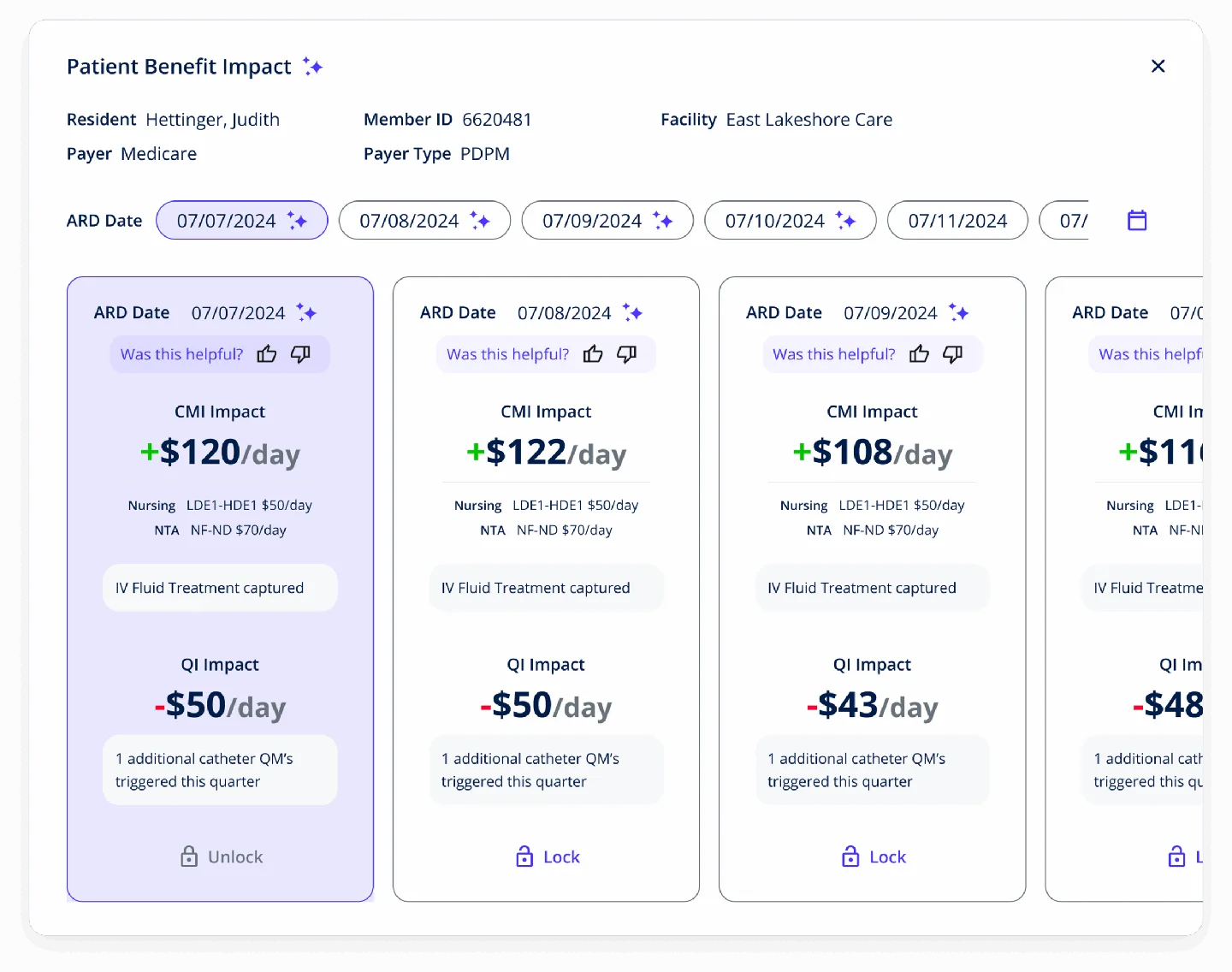
MDS Optimization, CommuniCare
An AI MDS assessment engine integrated with PointClickCare: real-time quality measure tracking, pre-submission CMS validation, and diagnosis capture. Designed after 40+ hours shadowing MDS coordinators.
View Case Study →

NeverAlone
Around-the-clock virtual care connecting seniors and post-acute residents with care partners. We built it in 2021 and still operate it, across pharmacy systems, EHRs, and multi-state provider networks.
View Case Study →