
Healthcare UX That Clinicians Actually Use
Beautiful doesn't matter if no one uses it. Our healthcare UX design consulting and research services are built for busy nurses, overwhelmed MDS coordinators, distracted patients, and low-connectivity environments, research-driven UX that fits clinical workflows and drives adoption.
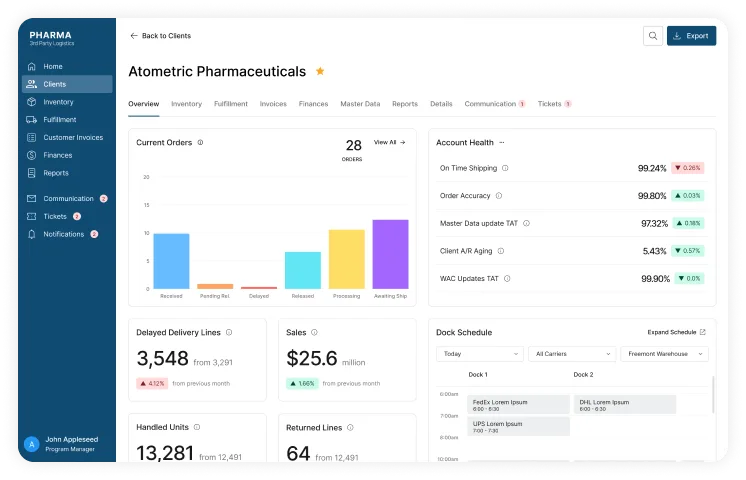
Research-driven healthcare UX design and user experience






In healthcare, bad UX isn't just frustrating. It's dangerous.
Healthcare software fails when it's designed by engineers who've never watched a nurse try to document care at 2 AM, or a 78-year-old patient try to refill a prescription through a portal. The result: providers spending more time on screens than patients, technology that gets worked around instead of adopted, and errors that trace back to interfaces, not people.
in the EHR for every 15 minutes with a patient. Physicians spend 2x more time on documentation than direct care. (AMA/Tebra 2025)
lower odds of physician burnout for every 1-point improvement in EHR usability score. UX literally reduces burnout. (JAMA Network Open)
of patients who activated a portal logged even one session. Nearly half of patient portal users never come back. (ONC)
of physicians believe their EHR contributes to burnout. The software meant to help is making things worse. (Tebra 2025)
Healthcare UX That Starts in the Field
Strategic integration of user research, UX design, and human factors engineering, grounded in real clinical environments, not assumptions about them.

User Research
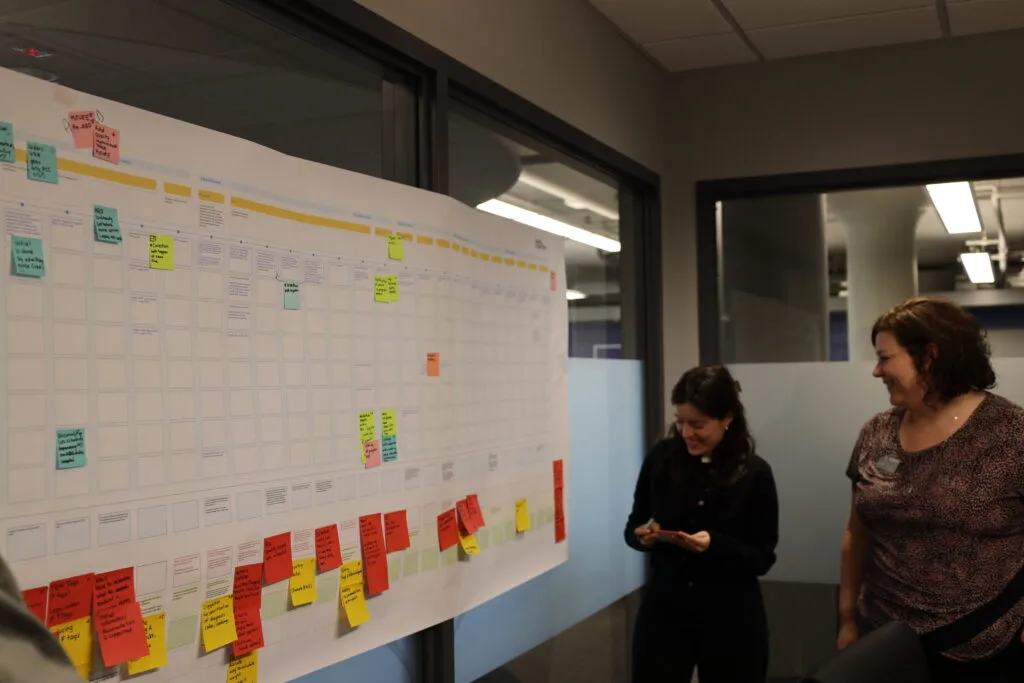
Ethnographic interviews, co-creation workshops, diary studies, workflow shadowing, and usability testing, conducted with real clinicians, patients, and care teams in real clinical settings. We've run seven workshops in a single week with 30+ older adults to co-create healthcare services.
Contextual inquiry, diary studies, co-creation

UX Design
Information architecture, interaction design, and design systems tailored to clinical complexity. WCAG/Section 508 accessibility built in from field experience, not a checklist. We've designed interfaces for EHR systems, telehealth platforms, and patient portals.
Wireframes, prototypes, design systems

Human Factors
Cognitive load analysis, error prevention design, and clinical decision support optimization. IEC 62366 medical device usability engineering for software that may be classified as SaMD by the FDA. Designing for high-stakes, time-pressured clinical environments.
IEC 62366, error prevention, accessibility
We don't design for users. We design with them.
Our cultural biases cause us to perceive older adults as less capable with technology. That prejudice, ageism, shapes how most teams design for seniors: simplified, patronizing, and disconnected from real needs.
We took a different approach. Over four months, we conducted ethnographic interviews, diary studies, and seven co-creation workshops with 30+ seniors designing an in-home care service. We learned that printed slides need high-contrast paper because projectors don't work. That activities need mobility accommodations. That showing genuine interest matters more than any design framework.
The biggest outcome? Our research uncovered an entirely new service option that reshaped the product roadmap. That's what happens when you design with real users instead of personas on a whiteboard.

What Good Healthcare UX Actually Delivers
Clinical documentation time reduction. Designed interfaces that fit the workflow instead of fighting it.
Treat-in-place rate on NeverAlone's virtual care platform, clinicians adopted it because it was designed around their workflow.
Virtual care calls completed in a single year across 130+ facilities. Adoption at scale is a UX outcome.
Increase in patient engagement achievable through UX-driven design improvements.
Improvement in medication adherence from user-friendly healthcare app design.
Net margins at hospitals with "excellent" patient satisfaction vs. 1.8% at lower-rated facilities. UX drives revenue.
Healthcare UX Use Cases
EHR Systems
Intuitive interfaces for quickly accessing and updating patient information. Reduce clicks, surface the right data at point of care, and design for the cognitive demands of clinical environments. EHR integration expertise with PointClickCare, Epic, and custom platforms.
Telehealth Platforms
User-friendly virtual care platforms designed for providers, patients, and families. Low-bandwidth resilience, one-tap join for elderly patients, and clinical workflow integration that drives adoption across facilities.
Patient Portals
View test results, manage prescriptions, communicate with providers. Designed for the 46% of patients who activate but never return, because the UX didn't give them a reason to.
Medical Devices
Interfaces for monitors, wearables, RPM devices, and diagnostic equipment. IEC 62366 human factors engineering for FDA-regulated software as a medical device.
Clinical Decision Support
Evidence-based recommendations and alerts at point of care. Designed to reduce alert fatigue, the #1 reason clinicians override safety warnings.
Clinical Documentation
MDS assessments, clinical notes, care plans. We work closely with MDS coordinators and nursing staff to design documentation interfaces that reduce burden and improve accuracy.
UX Design in Production
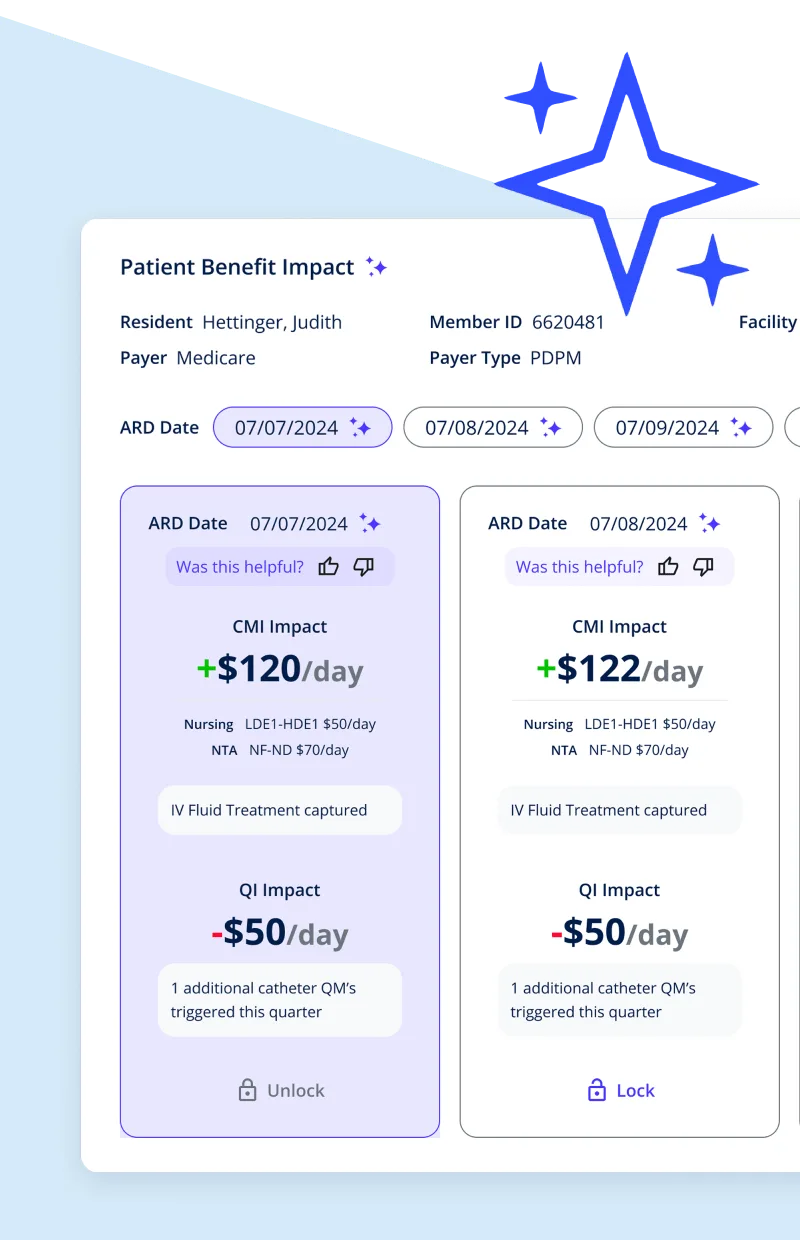
MDS/PDPM Revenue Optimization
AI-powered MDS coding optimization designed for coordinators managing multiple residents across assessment timelines.
PDPM Revenue
Quality Incentives
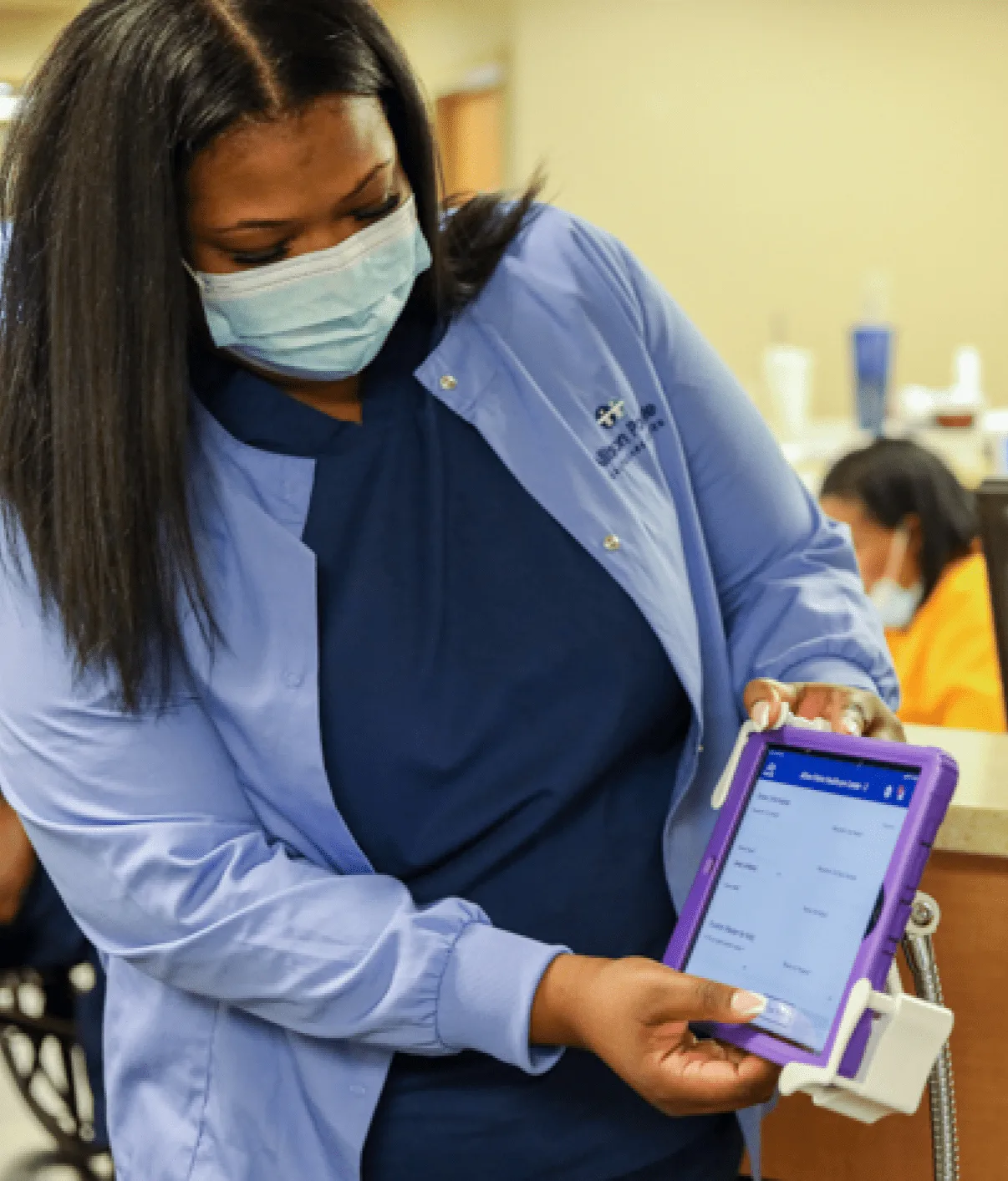
NeverAlone Virtual Care Platform
24/7 virtual care platform designed for post-acute providers, patients, and families across 130+ facilities in 7 states.
Calls Completed
Treat-in-Place
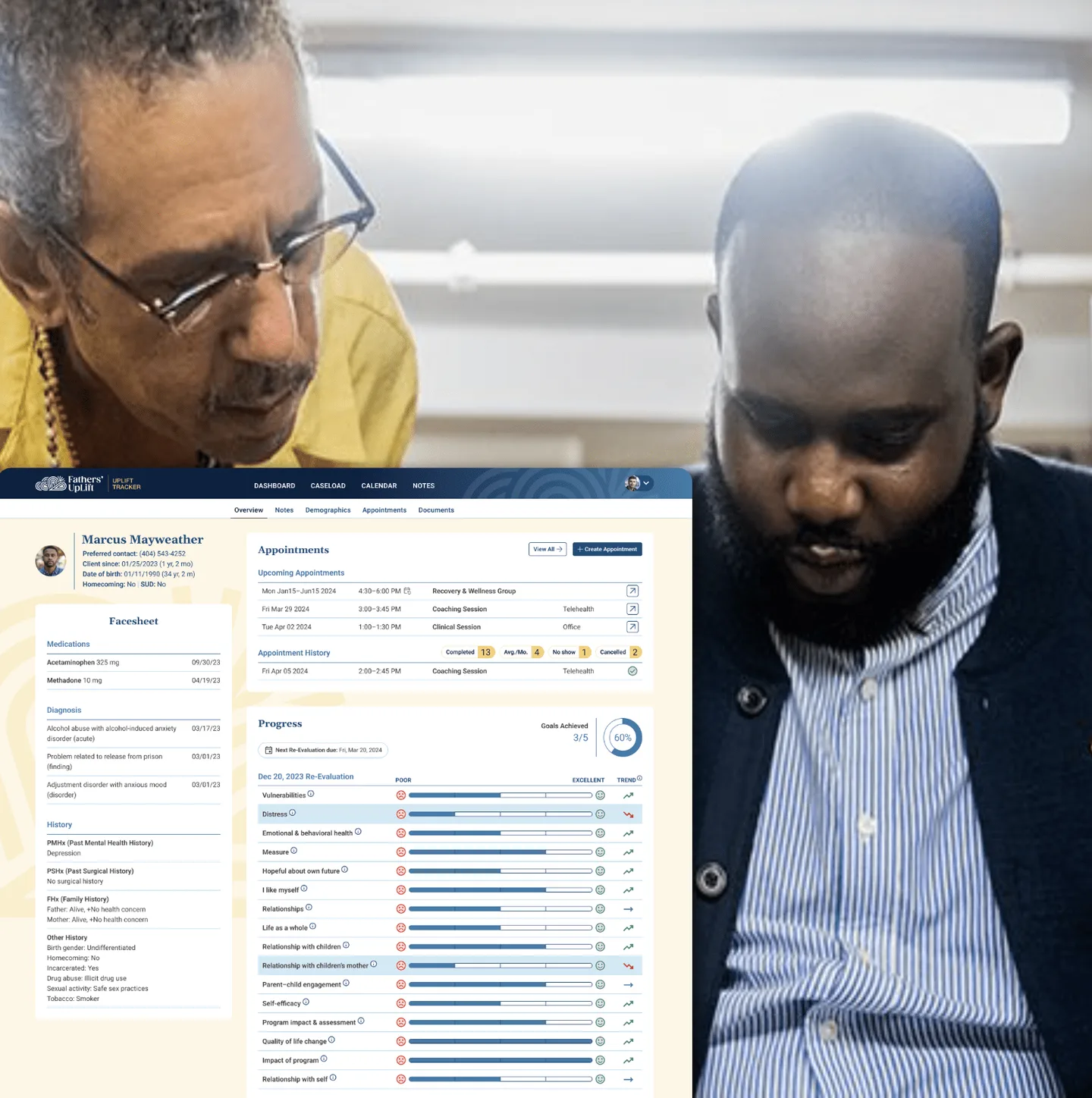
Fathers' UpLift Custom EHR
Custom EHR built from the ground up around clinical workflows for a mental health organization serving fathers and families.
View Case Study →Research-Driven Design, Concept to Scale
Phase I
Discover
Who are the users?
Stakeholder Research
Interviews with clinicians, patients, & admins
Workflow Shadowing
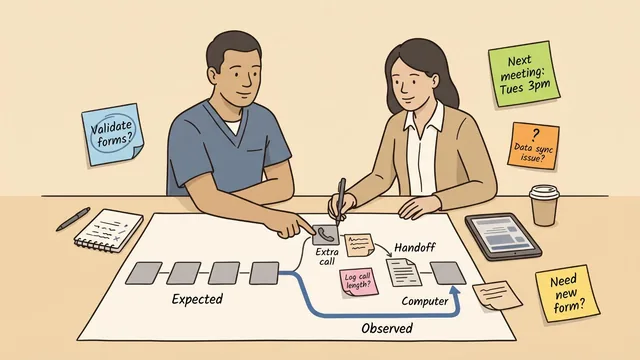
Observe real workflows in clinical settings
Phase II
Experiment
Does this design work?
Wireframes & Prototypes
Low & high fidelity, tested with real users
Usability Testing
Validate with clinicians before code is written
Phase III
Engineer
Build it right.
Design System
Components, tokens, accessibility baked in
UI Development
Pixel-perfect implementation, responsive
Accessibility QA
WCAG 2.1, Section 508, screen readers
Production Deploy
Phased rollout, clinical validation
Phase IV
Optimize
Make it better.
Adoption Tracking
Measure usage, task completion, satisfaction
Iterative Refinement
Continuous usability testing & improvement
We're not learning healthcare on your dime.
Calendar Year ROI. One team, concept to scale, AI-accelerated.
10+ Years Building AI
One team, concept to scale. We deliver all 10 steps from messy data to measurable outcomes.
Verified Healthcare ROI
$10M+ PDPM recovery. $10M+ RAF improvement. Hard dollar returns within the calendar year.
Senior US Team, AI-Accelerated
US-based senior team, AI-accelerated. Same timezone, HIPAA-compliant, partners not vendors.
"I have worked with many technology teams during my career, and Digital Scientists is one of the best. They take the time to understand the customers' needs, deliver innovative solutions, are always professional, and work with your team as a true partner to achieve success."
Amy Severino
Chief Innovation Officer, NeverAlone
"NeverAlone has transformed how we deliver care at CommuniCare Health Services, enabling us to provide better patient care and achieve stronger clinical outcomes. By supporting over 130 skilled nursing facilities 24/7, their solution ensures we can meet patients' needs more effectively."
Dr. Matthew Wayne
Chief Medical Officer, CommuniCare Health Services
"Thank you to the Digital Scientists team, this has been a long time coming! We finally have something that will be useful for our team so I want to take this opportunity to thank you for your hard work and your diligence. You took an idea and made it come to life!"
Dr. Charles Clayton Daniels Jr.
CEO & Founder, Fathers' UpLift
Our UX Toolkit





Design & Prototyping
Figma, Sketch, Adobe XD, InVision, Principle
Research & Testing
Dovetail, UserTesting, Maze, Hotjar, Lookback
Accessibility
axe, WAVE, VoiceOver, JAWS, Contrast Checker
Ready to improve your healthcare UX?
30-minute call. No pitch. Just honest assessment of what's possible for your organization.
Or call: 404.654.3855
HIPAA Compliance & Accessibility
We design for healthcare's unique requirements. HIPAA compliance, WCAG 2.1 accessibility, Section 508, ADA standards, and IEC 62366 for medical devices. Retrofitting compliance costs 3-5x more than building it from the start. Our field experience designing with older adults and clinical teams means accessibility isn't a checklist. It's built into how we work.
Learn more about our security approach →
UX Design Works Best With
Healthcare AI Development
AI that clinicians adopt requires UX designed for clinical workflows.
Data Analytics & Engineering
Dashboards and analytics interfaces designed for clinical decision-making.
Healthcare SaaS Development
Multi-tenant platforms with UX designed for diverse healthcare user roles.
Software as Medical Device
IEC 62366 human factors engineering for FDA-regulated software.
EHR Integrations
PointClickCare, Epic, Gehrimed, designed for how clinicians actually work.
Patient Portal / Digital Front Door
Patient-facing experiences designed for engagement and retention.

Common Questions About Healthcare UX
What is healthcare UX design?
Healthcare UX design is the practice of designing digital products, EHR systems, patient portals, telehealth platforms, clinical decision support tools, and medical devices, so that they actually get used by providers, patients, and care teams. Unlike consumer UX, healthcare UX must account for regulated environments, clinical workflow constraints, life-safety requirements, cognitive load under stress, and multiple user types with competing needs. The foundation is user research conducted in clinical settings with real stakeholders.
How does UX research improve clinical workflows?
UX research reveals the gap between how software was designed to be used and how clinicians actually use it. Through workflow shadowing, contextual interviews, and usability testing with real providers, we identify friction points, unnecessary clicks, confusing navigation, missing information at point of care, that drain time and increase errors. Research from JAMA Network Open shows that every 1-point improvement in EHR usability correlates with 3% lower odds of physician burnout.
What's the difference between healthcare UX and consumer UX?
Consumer UX optimizes for engagement and conversion. Healthcare UX optimizes for accuracy, speed, and safety in high-stakes environments. Healthcare designers must account for HIPAA compliance, clinical terminology, multi-stakeholder workflows (physicians, nurses, MDS coordinators, patients, caregivers), regulatory standards like IEC 62366, accessibility requirements (WCAG, Section 508), and the reality that a usability error can directly impact patient safety.
How long does a healthcare UX audit take?
A typical healthcare UX audit takes 2-4 weeks depending on the complexity of the application and number of user roles. We follow a structured process: heuristic evaluation against healthcare-specific usability standards, stakeholder interviews, workflow analysis, and a prioritized findings report with specific recommendations. The audit identifies quick wins and strategic improvements, giving you a clear roadmap.
What is IEC 62366 and why does it matter for healthcare software?
IEC 62366 is the international standard for applying usability engineering to medical devices, including software as a medical device (SaMD). It requires manufacturers to identify use-related hazards, conduct formative and summative usability testing, and document that the user interface does not introduce unacceptable risks. If your healthcare software could be classified as a medical device by the FDA, IEC 62366 compliance is required, and it must be designed in from the start.
How does UX design improve EHR usability?
EHR usability improves through research-driven interface redesign: reducing clicks per task, surfacing the right information at point of care, simplifying documentation workflows, and designing for the cognitive demands of clinical environments. Digital Scientists has worked with EHR systems including PointClickCare and custom-built platforms, reducing documentation time from 45 minutes to 5 minutes in one engagement.
How do you design for HIPAA compliance and accessibility?
HIPAA compliance and accessibility are built into our design process from day one. For HIPAA, this means designing authentication flows, role-based access patterns, audit-friendly interfaces, and secure data display. For accessibility, we design to WCAG 2.1 AA standards minimum, with Section 508 and ADA compliance, tested with screen readers, keyboard navigation, and high-contrast modes. Our field experience designing with older adults has taught us that real accessibility goes beyond checklists, it means printing materials at large font sizes on high-contrast paper because projectors don't work, accommodating varied mobility, and using non-technical language.