
The AI and UX Behind Medical Device Software
You bring the device concept and regulatory strategy. We bring the AI engine, the clinical interface, and the healthcare workflow integration. Digital Scientists builds the intelligence layer and user experience for SaMD products, with quality partners handling FDA documentation and submission.
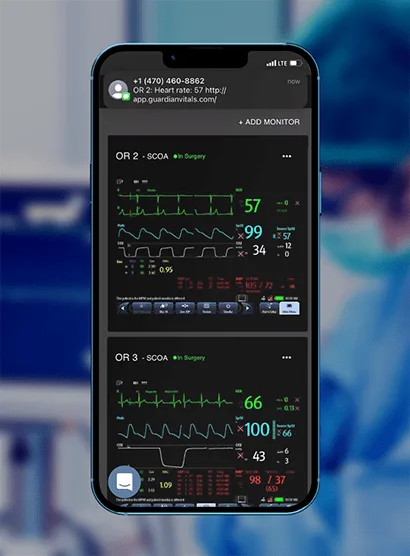
Guardian. AI-powered OR monitoring built with SaMD principles




SaMD needs two things most teams can't do at once: build great AI and navigate FDA.
The SaMD market is projected to reach $167 billion by 2032. The FDA has cleared hundreds of AI/ML-enabled devices. But building SaMD requires two fundamentally different skill sets: the engineering team that builds production AI and clinical-grade interfaces, and the regulatory team that manages QMS, design controls, and FDA submissions. Most companies struggle to find both in one partner. We solve one half of that equation, and bring a quality partner for the other.
The cost multiplier of retrofitting regulatory compliance into finished software. Building with IEC 62304 and design controls from day one isn't optional. It's economics.
Projected SaMD market by 2032 (23.6% CAGR). AI-powered diagnostics, monitoring, and digital therapeutics are driving explosive growth.
of AI/ML-enabled SaMD devices cleared by the FDA. The regulatory pathway exists, the challenge is building software worthy of it.
The AI Engine and Clinical Interface for SaMD
We focus on what we do best: building the intelligence layer and user experience that makes SaMD products work in clinical environments.
AI / ML Development
Diagnostic algorithms, anomaly detection, risk stratification models, image analysis, and predictive analytics. Production-grade AI trained on clinical data with explainable, audit-defensible outputs.
10+ years healthcare AI, $20M+ verified ROI
Clinical UX & Human Factors
IEC 62366 usability engineering, because the interface is as regulated as the algorithm. Workflow-driven design for clinicians, patients, and operators. Accessibility built in.
Formative & summative usability testing
Data & Integration
Data pipelines, EHR integration, cloud infrastructure, and real-time processing. HL7 FHIR, CCDA, and custom API connectors. HIPAA-compliant from day one.
PointClickCare, Epic, Gehrimed, custom
What We Partner On: FDA Regulatory & QMS
For regulatory documentation, QMS (ISO 13485), Design History Files, risk management files (ISO 14971), and FDA submissions (510(k), De Novo, PMA), we work with specialized quality partners. This isn't a gap; it's a deliberate structure. You get deep AI and UX expertise from us, and deep regulatory expertise from a team that does nothing else.
DS Builds
AI/ML, UX, Data, Integration
Partner Handles
QMS, DHF, FDA Submission
You Own
Device Concept, Clinical Strategy
Types of SaMD We Build
Diagnostic Software
AI-powered screening, image analysis, risk assessment algorithms that aid clinical diagnosis. The intelligence layer that makes the device smart.
Monitoring Applications
Real-time vital sign monitoring, anomaly detection, clinical alert systems. Built for RPM and operating room environments.
Digital Therapeutics
Software that delivers clinical interventions for conditions like diabetes management, mental health, chronic pain. The fastest-growing SaMD category.
Clinical Decision Support
Evidence-based recommendations and alerts at point of care. CDSS that supports but doesn't replace clinical judgment.
Medical Device Software in Production
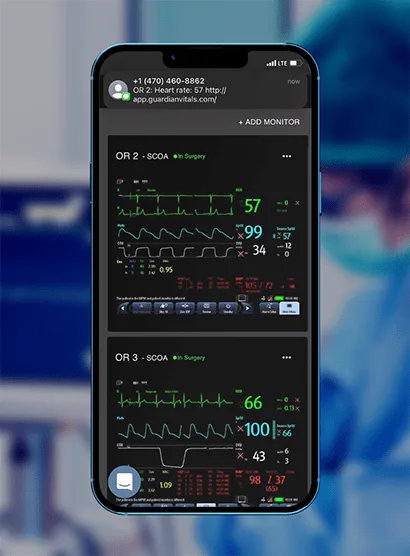
Guardian. AI-Powered OR Monitoring
Real-time monitoring platform for operating room environments with ML-powered anomaly detection, mobile alerts, and medical device integration. Built with regulatory awareness from day one.
Vital Monitoring
Anomaly Detection
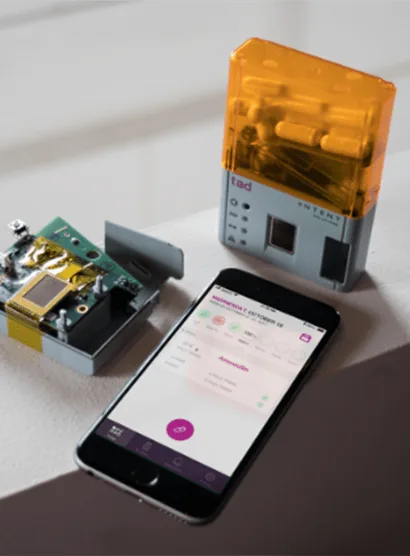
Intent Solutions. Take As Directed
Smart pill bottle with companion mobile app for medication adherence tracking. IoT device integration, patient-facing UX, and caregiver notification system.
View Case Study →We Build With These Standards in Mind
Our development process is designed to produce software that meets regulatory requirements, even when the regulatory submission is handled by our quality partners.
IEC 62304
Medical device software lifecycle. We develop with safety classification, documented requirements, traceability, and verification/validation processes aligned to this standard.
ISO 14971
Risk management. We identify use-related hazards, implement risk controls in the UI and algorithm design, and document residual risks throughout development.
IEC 62366
Usability engineering and human factors. Formative and summative usability testing to ensure the interface doesn't introduce clinical risk.
ISO 13485
Quality Management System. Our quality partners maintain the QMS; we develop within its controls, design inputs, outputs, reviews, and change management.
FDA Cybersecurity
Threat modeling, secure architecture, encryption, access controls, and vulnerability management aligned to FDA premarket cybersecurity guidance.
HIPAA
Any SaMD handling PHI requires HIPAA compliance, encryption, audit trails, access controls, BAA compliance. Built in from day one.
Regulatory-Aware Development
Our standard methodology adapted for SaMD, with design controls, traceability, and verification built into every phase.
Phase I
Discover
What are we building?
Risk Classification
FDA class, intended use, regulatory pathway
User & Hazard Analysis
Clinical context, user needs, use-related risks
Phase II
Experiment
Does the approach work?
Prototype & Validate
AI model POC, UX prototype, usability test
Design Controls
Requirements, traceability, risk file initiated
Phase III
Engineer
Build it right.
IEC 62304 Development
Compliant software lifecycle
V&V Testing
Verification & validation, unit/integration/system
Usability Testing
IEC 62366 formative & summative
Clinical Validation
Performance testing, clinical evidence
Phase IV
Optimize
Maintain & improve.
Submission Support
Technical documentation for FDA filing
Post-Market
Monitoring, updates, change management
Healthcare AI expertise applied to medical devices.
10+ years building production healthcare AI. The same team that built RAF/HCC coding optimization and ambient AI scribes can build the intelligence layer for your SaMD product.
Production AI Expertise
ML models, NLP, computer vision, predictive analytics: all built for regulated healthcare environments.
Healthcare-Proven
The same AI capabilities that power our healthcare solutions can be applied to SaMD products.
Full-Stack Team
AI engineers, UX researchers, mobile developers, data engineers, one team from concept to clinical validation.
"By applying a robust machine learning model to our app, DS helped us create a scalable and accurate solution that met our rigorous clinical requirements."
Justin Scott, M.D., FASA
CEO, Vigilant Medical Solutions (Guardian)
Built for Medical-Grade Software





AI / ML
PyTorch, TensorFlow, OpenAI, custom models, explainable AI
Mobile & Embedded
React Native, Swift, Kotlin, BLE/IoT device integration
Cloud & Security
AWS, Azure, HIPAA hosting, VPC isolation, FDA cybersecurity aligned
Have a medical device software concept?
30-minute call. No pitch. Just honest assessment of how we can help with the AI, UX, and engineering, and connect you with the right regulatory partner.
Or call: 404.654.3855
Regulatory Compliance & Data Security
SaMD requires both FDA compliance and data security. We build with HIPAA, FDA cybersecurity guidance, and awareness of international requirements (MDR, CE marking) from day one. Retrofitting compliance costs 3-5x more than building it in.
Learn more about our compliance approach →
SaMD Works Best With
Healthcare AI Development
The intelligence layer, diagnostic algorithms, predictive models, NLP.
UX Design & Human Factors
IEC 62366 usability engineering for regulated interfaces.
Data Analytics & Engineering
Data pipelines and cloud infrastructure for SaMD backends.
Healthcare SaaS
Multi-tenant cloud platforms for SaMD distribution.
EHR Integrations
Connect SaMD to clinical systems via HL7 FHIR and custom APIs.
Remote Patient Monitoring
Connected device platforms for continuous patient monitoring.
Common Questions About SaMD Development
What is Software as a Medical Device (SaMD)?
SaMD is software intended for one or more medical purposes, diagnosis, treatment, prevention, or monitoring, that performs these purposes without being part of a hardware medical device. It runs on general-purpose platforms like mobile devices, web browsers, and cloud servers. The FDA regulates SaMD based on risk classification (Class I, II, or III).
What does Digital Scientists build for SaMD products?
We build the AI/ML intelligence layer and the clinical user interface. Diagnostic algorithms, monitoring systems, NLP, predictive models, and the UX that clinicians and patients interact with. For regulatory documentation and FDA submission (QMS, Design History Files, 510(k) submissions), we work with specialized quality partners.
What regulatory standards apply to SaMD?
Key standards: IEC 62304 (software lifecycle), ISO 14971 (risk management), IEC 62366 (usability/human factors), ISO 13485 (QMS), FDA cybersecurity guidance, and HIPAA for PHI-handling software. Building with these from day one costs 3-5x less than retrofitting.
How does AI fit into SaMD products?
AI powers diagnostic screening, image analysis, risk stratification, anomaly detection, and clinical decision support in SaMD. The FDA has cleared hundreds of AI/ML-enabled devices. DS brings 10+ years of healthcare AI, the same capabilities that power our RAF/HCC coding and clinical documentation AI.
What FDA classification applies to SaMD?
Class I (low risk, may be exempt), Class II (most common, requires 510(k) or De Novo), Class III (highest risk, requires PMA). The IMDRF framework categorizes by significance of information provided and seriousness of the healthcare situation.
What is IEC 62366 and why does it matter?
IEC 62366 is the standard for usability engineering in medical devices. It requires identifying use-related hazards and conducting usability testing. For SaMD, the interface design is as regulated as the algorithm, a usability error in a diagnostic tool can have the same consequences as an algorithmic error. Our healthcare UX team brings human factors expertise for this requirement.