As Thanksgiving approaches, gratitude becomes more than a seasonal sentiment. It becomes a lens for reflection. Among those who might come to mind when we gather around the table to give thanks might be in fact a lot of our healthcare workers. Especially nurses, whose work blends skill, empathy, and resilience in ways that hold our healthcare system together. They navigate long shifts, emotional moments, and the complexity of caring for others in an environment that is deeply human yet increasingly shaped by fragmented digital ecosystems.
At Digital Scientists, we’ve had the privilege of getting to know this world more closely through our collaboration with Communicare and their MDS (Minimum Data Set) nurses, professionals who assess patient care and quality outcomes in long-term and post-acute care settings. They are the ones turning data into stories, numbers into care plans, and patient experiences into measurable insights. Yet the systems they rely on rarely return the favor.
Understanding the Challenge
Our project began with a simple but urgent question: How might we design AI tools that support nurses instead of slowing them down?
We live in a time when measurement, efficiency, and optimization are often valued above human needs. But in healthcare, those metrics can never replace the relationships, empathy, and intuition that define great care. AI, if used thoughtlessly, can easily become another layer of burden. Used thoughtfully, it can become an ally.
To us, AI isn’t just about prediction or automation; it’s about intent. The intent defines the “why” behind the solution. It reflects user goals, emotions, and context so that the technology aligns with human purpose, not the other way around.
Building With, Not For
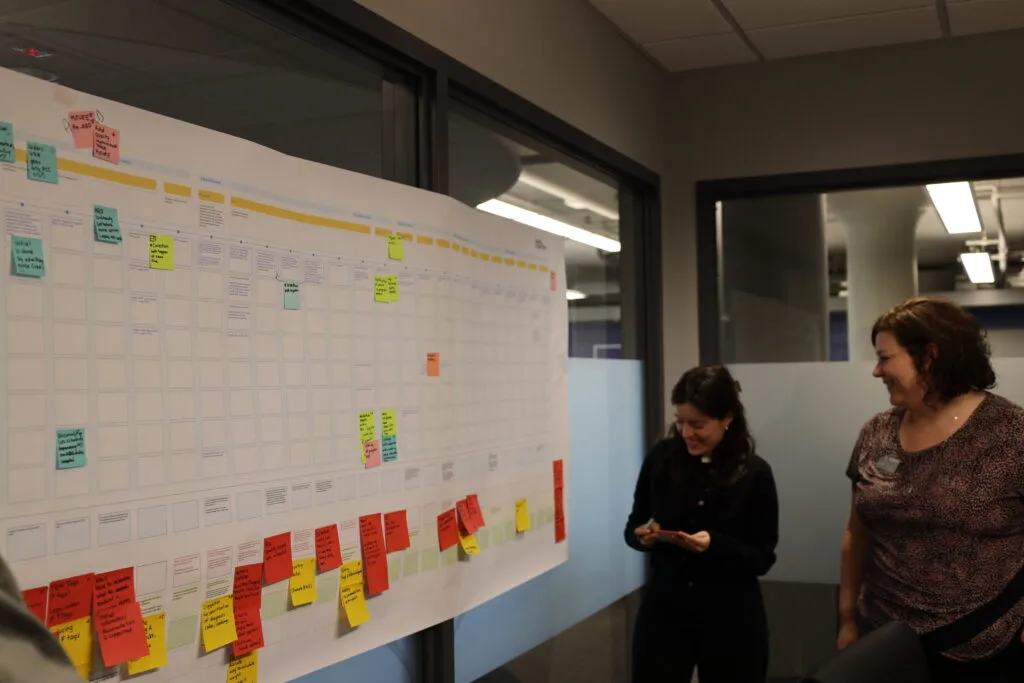
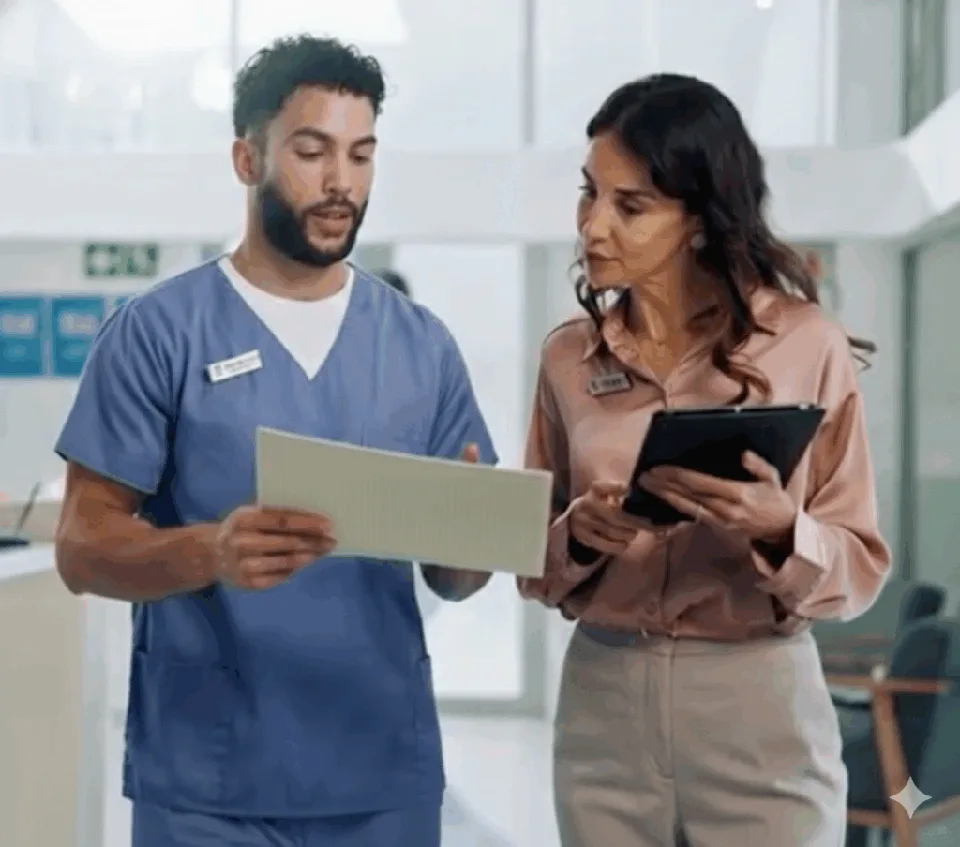
From the start, we worked side by side with MDS nurses. We observed their workflows, shadowed assessments, and listened as they described where digital tools helped and where they quietly got in the way. We learned that any AI solution needed to integrate within their rhythm of care, not outside it.
We started small. Rather than trying to overhaul entire systems, we focused on specific pain points: the moments of friction that consistently caused frustration or delay. Each prototype was built, tested, and refined with their feedback. Over time, what emerged wasn’t just a product but a shared understanding of how technology could amplify their compassion rather than dilute it.
What We Learned
Working on something like this? Call us to talk it over.
Empathy is a data point.
Working with nurses taught us that empathy can be designed for, but only if it’s understood as a measurable factor in workflow success. When systems ease emotional strain by reducing redundant documentation or clarifying decision-support insights, they don’t just improve efficiency; they preserve energy for care itself.
Small wins build big trust.
Introducing AI in healthcare shouldn’t feel like disruption. It should feel like relief. By starting with narrow, high-impact use cases such as automating administrative tasks or surfacing relevant data, we helped nurses see immediate value. Those early wins built momentum and trust for deeper integration later.
Clarity is kindness.
We learned that usability isn’t just a design principle; it’s a form of respect. Complex tools create friction and fatigue. Clear, intuitive ones empower. When interfaces anticipate a nurse’s mental model, they create calm where chaos usually lives.
Moving Forward With Gratitude
When we think about gratitude this season, it extends beyond appreciation for nurses’ compassion. It also encompasses admiration for their ability to navigate both the human and the technical, to care deeply while juggling siloed systems and constant demands.
Our hope is that through our collaboration, they might feel a bit of that gratitude reflected back toward tools that understand their work, toward a process that values their voice, and toward a partnership rooted in mutual respect.
Because designing with gratitude means more than saying thank you. It means building with care, testing with empathy, and improving with intention again and again until the technology we create gives back to the very people who give so much of themselves every day.