
Revenue Cycle AI
Downstream RCM tools are getting better at processing what they receive, that problem is increasingly solved. The unsolved problem is upstream: clinical documentation, coding specificity, medical necessity alignment, and payer policy mismatch. We build the intelligence layer that fixes revenue at the source, including document intelligence that runs inside your network for the charts, faxes, and payer correspondence that never arrive as clean data.
Verified ROI
Days in A/R
Denial Rate
bps EBITDA
Two ways to start
A fast decision on one workflow, or a full map of where revenue is leaking. Both are fixed-fee, fixed-window, and both leave you with deliverables you keep.
RCM AI ROI Deployment Assessment
DecisionFind the first workflow where AI can prove ROI. ROI hypothesis, readiness snapshot, proceed / wait / fix-readiness recommendation.
Open the Deployment Assessment page →Revenue Integrity Audit
AssessmentFull diagnostic. Scorecard, denial taxonomy, pareto analysis, opportunity ranking, intelligence-layer briefs, 60 to 90 day pilot plan.
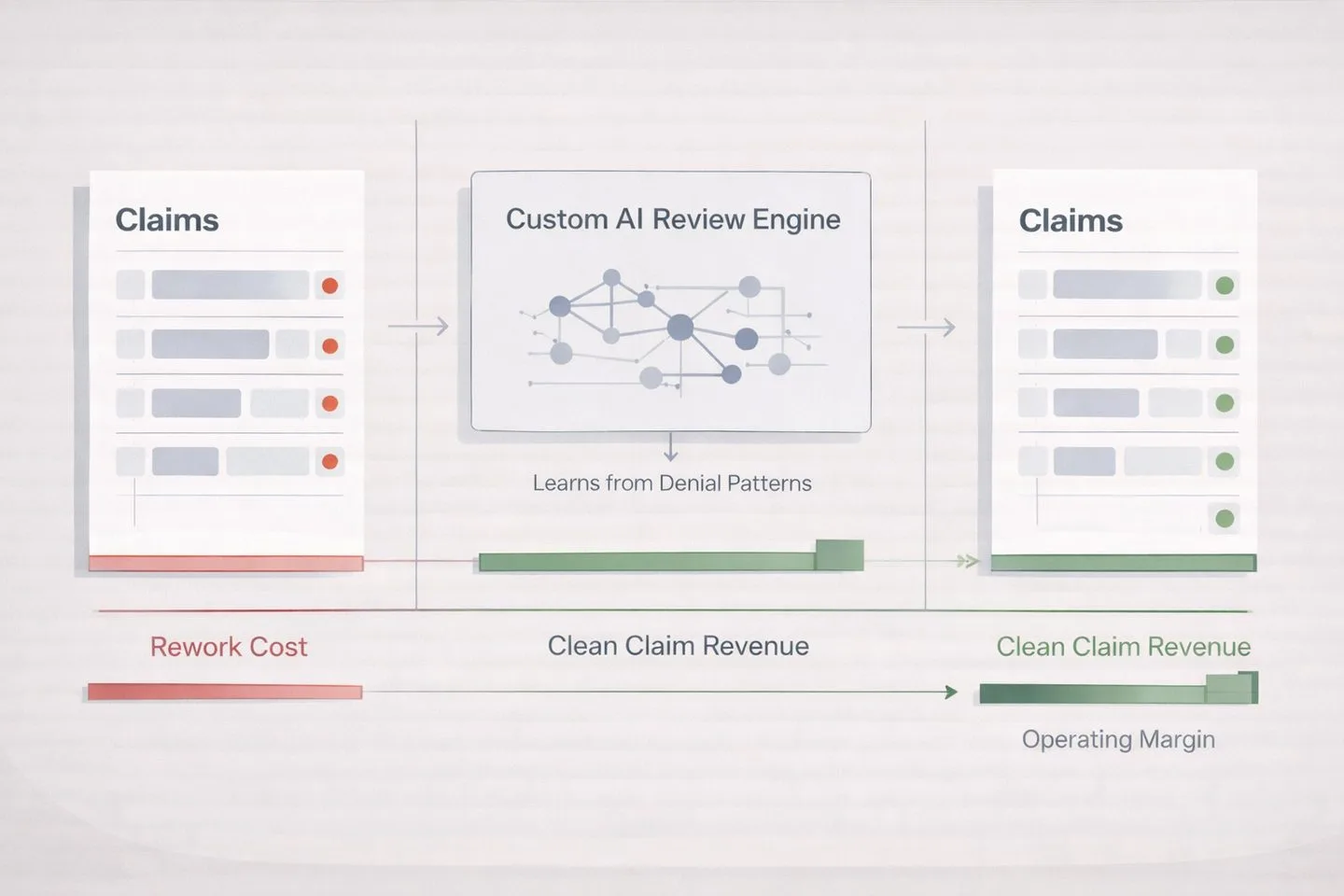
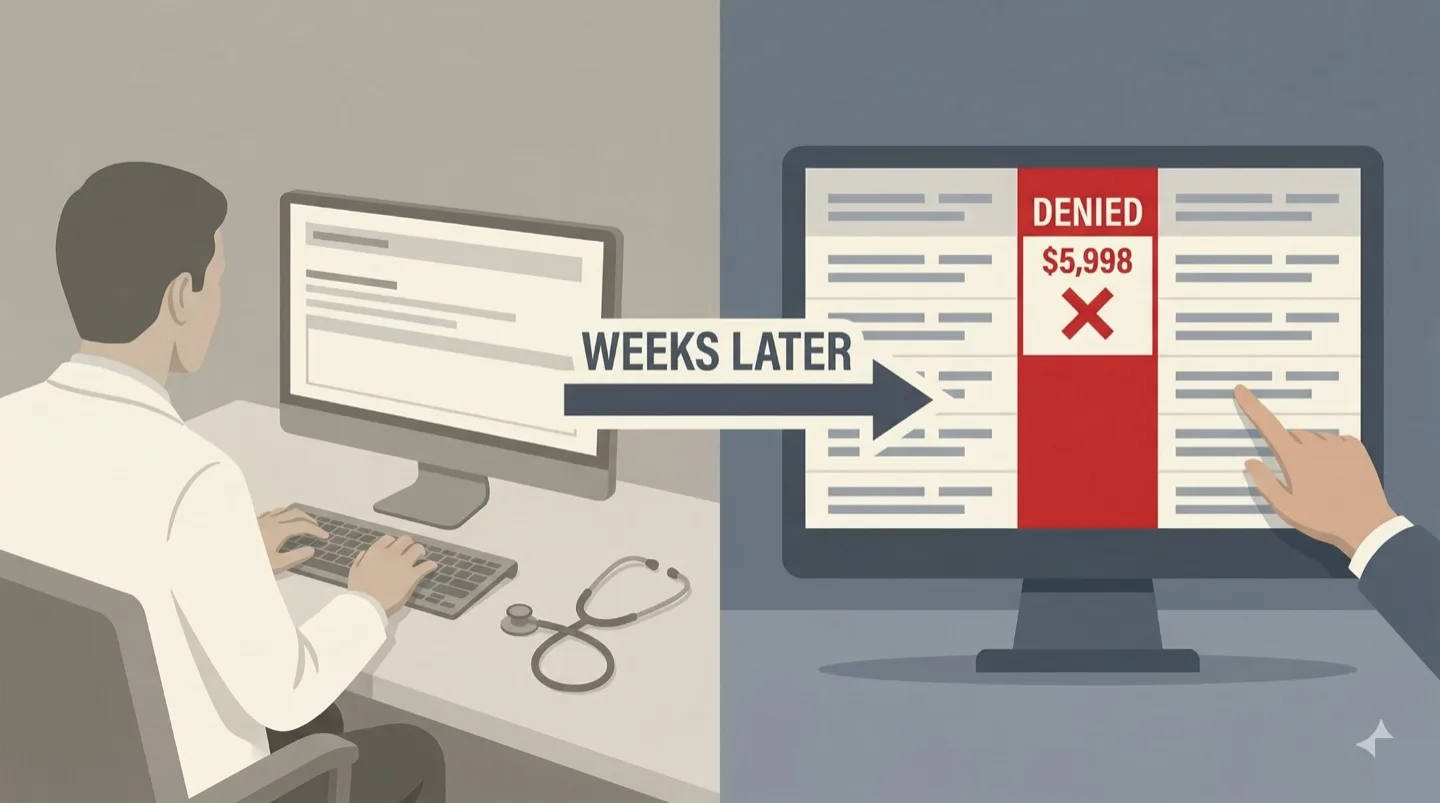
Open the Revenue Integrity Audit page →Every denial costs $25-$118 to rework. Providers blow past alerts.
McKinsey estimates that AI enablement of healthcare revenue cycle could cut cost to collect by 30-60%. Nearly 20% of claims are denied on average; as many as 60% of those are never appealed, representing millions in preventable lost revenue.
Quality Gap
Clinical documentation, coding specificity, and medical necessity alignment are where revenue is lost, before a claim is ever submitted.
Clinical ↔ Financial
A physician ordering a procedure doesn’t know the denial rate for that order with that specific payer. Clinical decisions and financial consequences live in separate systems.
Alert Overload
Providers dismiss alerts because they create friction without providing value. The better path has to be the easier path, or adoption will never happen.
Three layers, one system.
We don’t bolt AI onto your existing RCM stack. We build an intelligence layer that learns your specific payer mix, fights your specific denial patterns, and becomes an institutional capability you own.
Data Audit
Map where leakage happens. Pareto analysis of denial drivers by denied dollars, not count. Quantified, prioritized foundation for every decision that follows.
See the Revenue Integrity Audit →Data Engineering
Clean and connect inputs so claims start cleaner before anyone touches them. Patient identity, eligibility, authorization linkage, payer rules. Fix the plumbing, denials disappear.
Workflow Intelligence
Surface contextual insights to providers at point of work. Light touch: supporting evidence, no hard stops. Providers adopt it because it makes work easier, not harder.
The Model Hospital walkthrough.
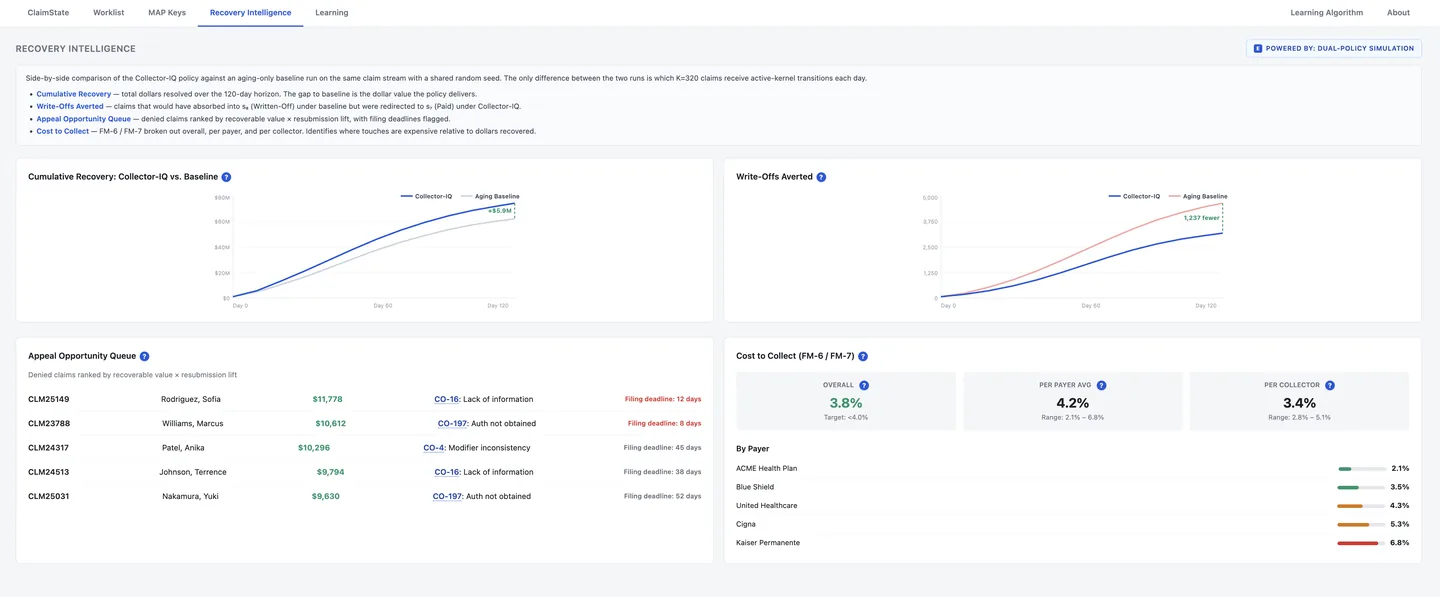
The Model Hospital is a live, interactive simulation of a financially constrained hospital. Built so revenue-cycle leaders can see how AI prioritization changes the recovery curve, without anyone sharing real patient or financial data. Walk through it in 5 to 7 minutes, then bring your own data to a Deployment Assessment.
Open claims
Daily collector touches
Day horizon
Measurement baseline
Open the Model Hospital
Walk through the prioritization workflow, the recovery curve, and the learning dashboard. 5 to 7 minutes.
Open in a new tab →What you will see
- Why aging-only worklists leave recoverable dollars on the table
- How prioritization changes the recovery curve over a 120 day horizon
- How a holdout group lets you measure lift against a real baseline
- How payer patterns and rejection reasons feed back into the model
The simulation is the visualization of the operating model. The Deployment Assessment finds your version of it.
Light touch, provider-driven.
Make the better path the easier path
Reduce cognitive load, not add it
Let providers validate and own changes
Documentation-to-revenue visibility
Use subtle organizational incentives
Peer benchmarking, RVU alignment
Never get in the way of patient care
Contextual, non-interruptive, trust-building
Financial analyst-calculated ROI. Not vendor estimates. $20M+ verified.
$10M+ PDPM Revenue Recovered
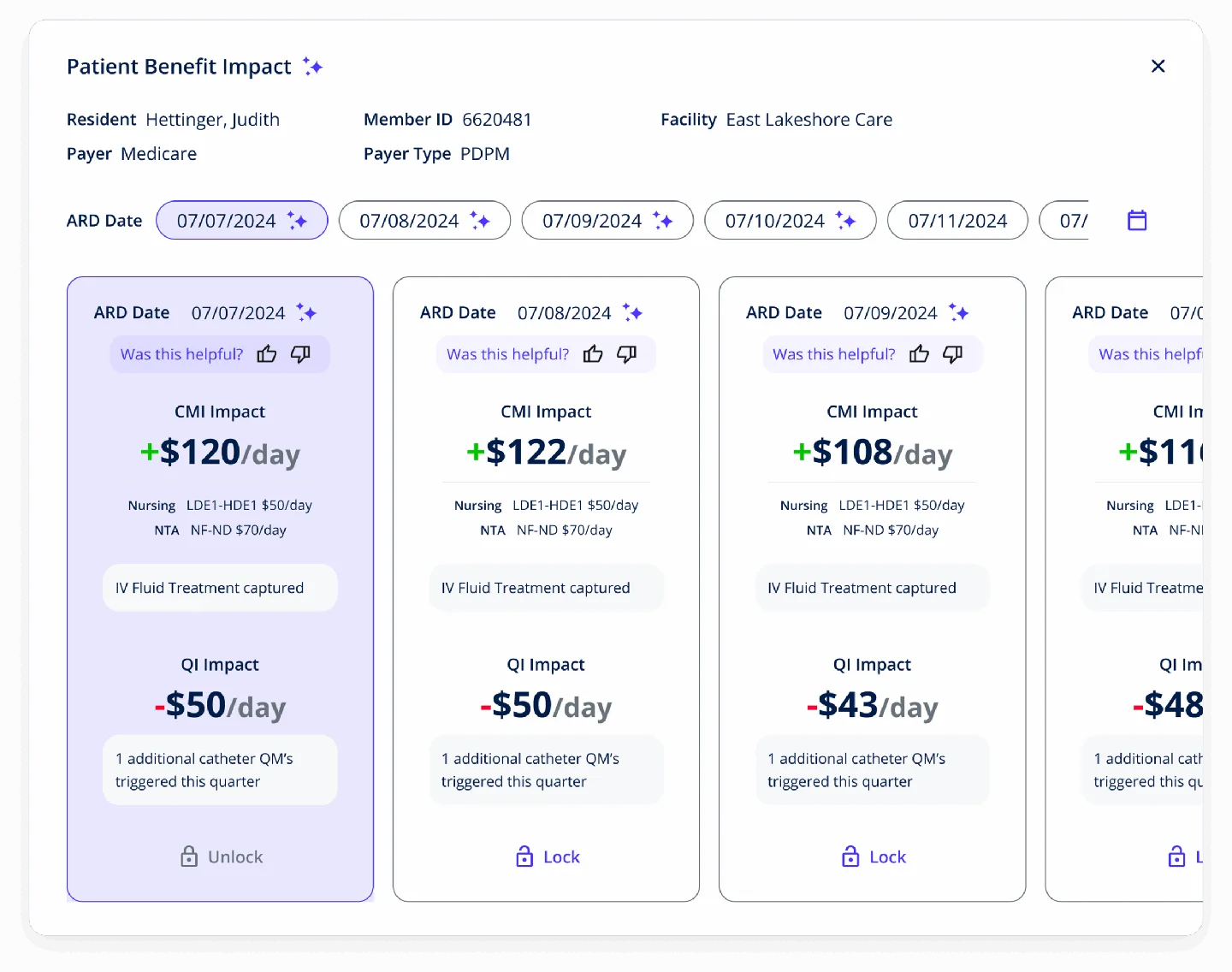
AI-powered MDS assessment optimization for one of the nation’s largest post-acute care providers. 95% reduction in assessment discrepancies. EHR-native PointClickCare integration.
PDPM Revenue
Quality Incentives
Time Savings
$12M Recurring Annual Revenue
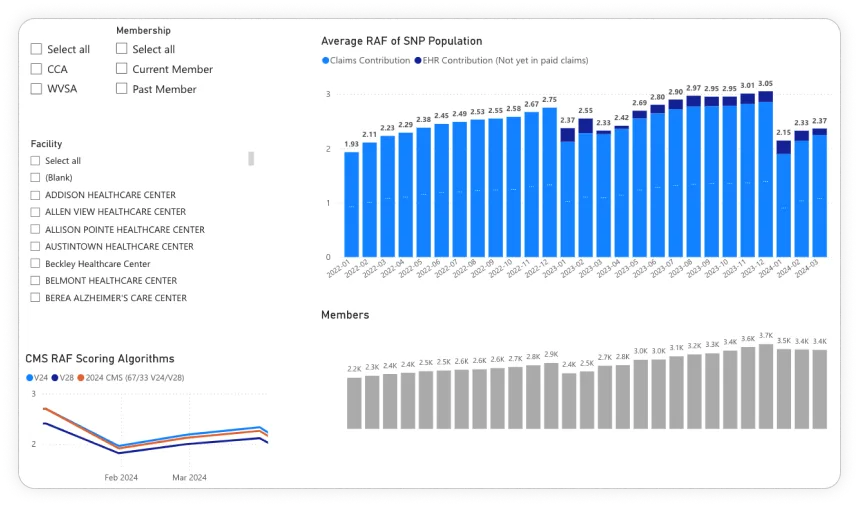
AI-powered medical coding that reviews patients 50x faster than manual audit. 98% clinician adoption. Built in 12 weeks, ROI in 4 months.
Annual Revenue
20K+ Patients
Clinician Adoption
Revenue Cycle AI has two specialized children.
The buyer queries split cleanly. RAF and HCC coding is the risk-adjustment angle; MDS and PDPM is the post-acute reimbursement angle. Both are core to Revenue Cycle AI but earn their own buyer surfaces because the proof, the buyer, and the workflow are distinct.
RAF & HCC Coding AI
Risk-adjustment-focused AI for ACOs, MA plans, and value-based care contracts. $12M annual recurring revenue impact, 90% accuracy, 98% clinician adoption across 7 states / 20K+ patients.
Annual Revenue
Accuracy
Clinician Adoption
MDS Optimization & PDPM
Post-acute MDS assessment optimization and PDPM revenue capture. $10M+ PDPM revenue recovered for CommuniCare, $2M quality incentives, 40-60% time savings on assessment workflow.
PDPM Revenue
Quality Incentives
Time Savings
The intelligence layers, productized.
The Model Hospital demonstrates the operating model. These are the productized intelligence layers Digital Scientists has built across hospital and post-acute revenue cycle. Each links to a deeper guide.
Works with your existing systems
Revenue cycle AI requires deep integration with billing systems, EHRs, and clearinghouses. We have production experience with the platforms you use.
Practice Management
Integration with PM systems for claims, patient demographics, and payment posting.
EHR Systems
PointClickCare, Epic, Gehrimed, Elation, bidirectional data flows for clinical context.
Clearinghouses
Claims submission, status tracking, 835 ERA processing, and denial feed ingestion.
Payer Portals
Automated eligibility checks, prior auth status, plan-level coverage rules, and claims inquiry.
EHR Integrations is the supporting capability that runs underneath every healthcare domain at DS. See the production EHR integration backbone →
We don’t just build and hand off. We operate, support, and stand behind our work.
Discover
Data Foundation, Ingest 12-18 months of claims + remittance data, map denial patterns
Solution Design, Revenue Integrity Audit, Pareto analysis, opportunity ranking by denied dollars
Experiment
Hypothesis & Scope, Target highest-ROI denial bucket with pilot intelligence layer
Build & Validate, Working AI tested on real claims data with operational feedback
Engineer
Agile Development, Iterative sprints with RCM team feedback
Systems Integration, EHR, clearinghouse, and payer portal connections
Change Management, Provider training, workflow adoption
Production Deploy, Phased rollout with monitoring
Optimize
KPI Accountability, Revenue impact validated by independent financial analyst
Continuous Improvement, Model retraining, payer policy updates, ongoing support
Often combined with
MDS / PDPM Optimization
Accurate MDS assessments drive PDPM reimbursement upstream.
Learn more →RAF / HCC Coding
Risk adjustment accuracy directly impacts revenue for VBC organizations.
Learn more →Intelligent Back-Office Agents
Revenue cycle AI is part of our broader back-office automation framework.
See framework →Ambient AI Scribes
Complete documentation at the point of care means cleaner claims downstream.
Learn more →EHR Integrations
Revenue cycle automation requires deep integration with clinical and billing systems.
Learn more →Frequently Asked Questions
Common questions about AI-powered revenue cycle management for healthcare organizations.
Five posts. One argument. Build your own intelligence.
From upstream revenue leakage to a four-phase AI roadmap your CFO will approve, the complete case for payer-aware intelligence that your organization owns.
Your Revenue Cycle Is Bleeding Upstream
Apr 1, 2026

Generic AI Won't Save Your Revenue Cycle
Apr 2, 2026

From Reactive to Proactive: AI-Powered Denials
Apr 3, 2026

Payers Have Industrialized Denial. Fight Back.
Apr 4, 2026

Your RCM AI Roadmap: Build Your Own Intelligence
Apr 5, 2026
Ready to quantify your upstream revenue opportunity?
Start with a Revenue Integrity Audit. 2-4 weeks. We’ll show you exactly where revenue is leaking and what AI can recover.
Or call: 404.654.3855
DS works as a Professional Services build partner or as a Venture Studio with equity-aligned partnerships, accelerators, and operator-founder programs. The right model depends on whether you own the IP, share it, or license ours.
See all engagement models →