
For health systems and academic medicine
Digital Scientists is a healthcare technology partner for health systems and academic medical centers. We design, build, integrate and run the software around the EHR: virtual care programs, research and community platforms, patient apps and AI agents. For Duke, we built one platform that maps community programs against social drivers of health data. NeverAlone, a virtual care platform we built and still run, supports 30,000 patients across six states. Most health systems start with a Blueprint: 4 to 6 weeks to agree scope, architecture and a build plan.
Updated
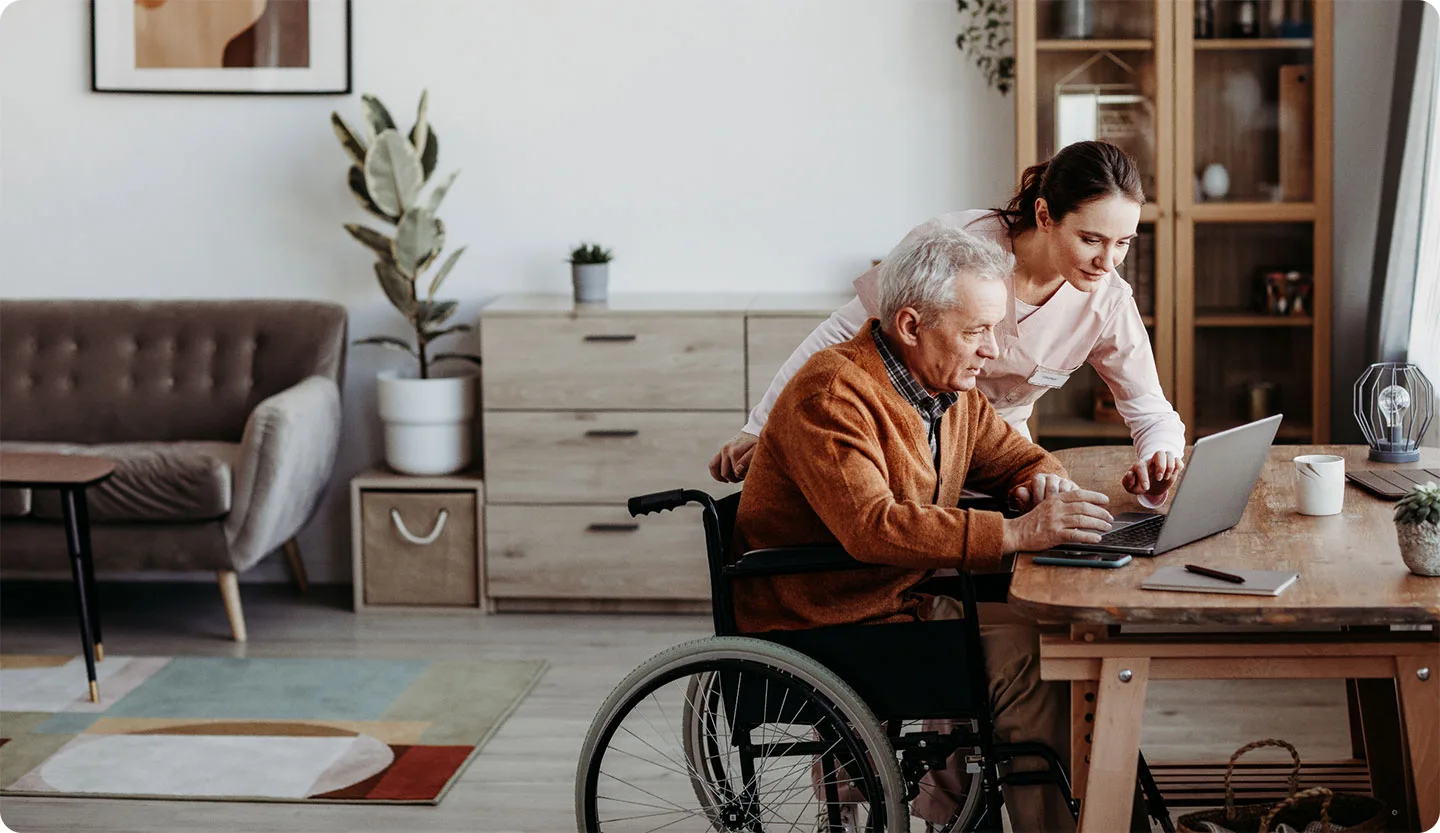
Patients on NeverAlone across six states
Virtual care calls a year on NeverAlone
NeverAlone treat-in-place rate
Guardian transcription accuracy reading OR monitors





What does this work look like at an academic medical center?
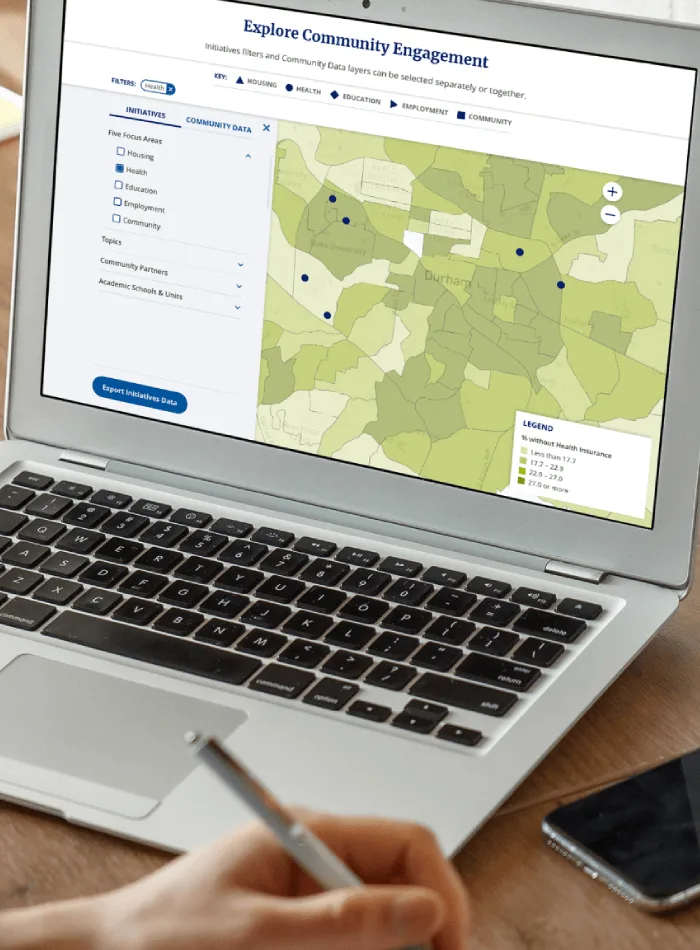
At Duke, it was a research and community platform. Partner program data sat in different places and formats across Duke University and Duke Health, so nobody could see the full picture of community impact. We built one platform for students, researchers, faculty and community members.
We started with an alignment workshop to agree the product vision, the users and the priorities. A landscape analysis of mapping and data tools gave Duke a build, buy or partner recommendation and a good, better, best path to an MVP. The solution architecture became the roadmap Duke's own technical team worked from. Then we designed, prototyped and built it.
The platform maps Duke's initiatives against social drivers of health data from the US Census and public health sources, down to county and census tract. It matches organizations and people to events, causes and volunteer work, runs a grant portal for grant managers and applicants, and gives administrators one source of truth for the partner community. It connects to Duke single sign-on, the Scholars@Duke directory and Galaxy Digital volunteer management. Read the Duke case study.
Mapping, matching, grant management and analytics on one platform
Social drivers of health data mapped to county and census-tract level
Single sign-on and the Scholars@Duke directory connected
What problems do health systems bring us?
Usually one of six. Most sit outside the EHR, or between the EHR and everything else the health system runs.
A program that needs its own software
Virtual care, remote monitoring, a community program or a research registry the EHR wasn't built to run. It has to go live, connect back to the chart and be supported after launch.
Data spread across departments
At Duke, partner data sat in different places and formats. Research, community and operations data rarely line up without a deliberate data model behind them.
The EHR is the platform, not the whole answer
Epic or Oracle Health holds the record. How your institution triages, escalates and follows up lives in people's heads and spreadsheets. That layer above the EHR is where a health system differentiates. See forward deployed engineering.
An IT team with a full roadmap
Your IT and EHR teams are already committed. A new product or AI program needs senior builders who don't pull them off that work.
Grant money with milestones and an end date
RHTP and research grants come with reporting and a deadline. The software has to be useful on day one and still run when the funding stops.
AI pilots that stall before production
A demo works on sample data. Production needs PHI controls, clinician review, monitoring and someone on call when it breaks.
Should a health system build, buy or partner?
Health systems face a strategic choice when building digital capabilities. Internal builds are slow and expensive. Vendor purchases create lock-in. The right partnership delivers speed, expertise, and ownership.
Internal Build
IT teams already stretched thin. Healthcare AI expertise scarce and expensive to hire. Slow time-to-value.
Result: Delayed or failed projects
Vendor Purchase
Generic tools that don't fit your workflows. Vendor lock-in with limited customization. Your data creates value for the vendor, not you. Ongoing license fees erode ROI.
Result: Compromise and dependency
Strategic Partnership
Healthcare expertise from day one. Custom solutions for your workflows. You own the IP. Flexible exit: ongoing support or full transfer.
Result: Speed + ownership + expertise
Where does a health system usually start with us?
Usually with a Blueprint: 4 to 6 weeks to agree what gets built, the architecture, the EHR integration route and a build plan with a budget. Other teams start with Build with Us, an embedded AI team or support for a platform that's already live.
We pull risk forward. If one piece is risky, an Epic integration or an AI feature nobody in the building has shipped, we prove it with a week of engineering before you commit to the full build.
Each step ends with a decision. You see how we work on real work before you commit to more, and your IT, EHR and security teams see the plan before anything touches production.
Common starting points for health systems
| Where you are | Common first step | What you get | Typical length |
|---|---|---|---|
| A program idea, a grant award or an innovation brief | Blueprint | Scope, architecture, user stories, the EHR integration route and a build plan with a budget. The 6-week version adds a working prototype. | 4 to 6 weeks |
| A program that's ready for real users | MVP, scoped from the Blueprint | The smallest product that proves the program with real users, on production foundations: BAA, access controls and audit logging from day one. | 8 to 16 weeks |
| An AI use case inside one department | Forward Deployed AI Engineering | Senior engineers embedded with the team that owns the problem, building a working agent or workflow on your data, with clinician review built in. | Scoped to the use case |
| A systems or vendor decision to make | Healthcare IT consulting | An audit of what you run and a clear build, buy or partner call. For CommuniCare Advantage we audited 60+ systems and ran an 11-vendor EHR selection. | Scoped to the decision |
| A platform we built that's live and growing | Platform operations | L2 and L3 support, new features, and a build-operate-transfer plan when your own team is ready to take it over. | Ongoing |
These are common starting points, not rules. Many health systems combine them or change course, and the first conversation is where we work out the right one.
The Complete Value Chain
Ten steps, from idea to measured results
Healthcare software usually stalls after the prototype: at integration with the EHR and claims systems, staff training and rollout. Those are steps 5 to 8, and we do them too. NeverAlone started as a 90-day MVP and now serves 30,000 patients.
Phase I
Discover
What should we do?
Data Foundation
Assess & structure your data landscape
Solution Design
On-site discovery, map opportunities
Phase II
Experiment
Does it actually work?
Hypothesis & Scope
Define what we’re testing and how
Build & Validate
Working software, tested on your data
Phase III
Engineer
Make it real.
Agile Development
Sprints with continuous feedback
Systems Integration
EHR, CRM, ERP, legacy platforms
Change Management
Training and adoption support
Production Deploy
Phased rollout with monitoring
Phase IV
Optimize
Make it better.
KPI Accountability
Measure outcomes, prove ROI
Continuous Improvement
Ongoing support or clean handoff
Does the Work
Automation & Agents
Shows What’s Happening
Insights & Intelligence
Built Faster
AI-Accelerated Dev
Most projects fail at steps 5-10. We own the complete value chain.
What do we build, connect and run for health systems?
Software around the EHR, the connections back to it, and the operations that keep it running. Each row links to the page with the detail.
What we build, connect and run
| What you need | What we do | Read more |
|---|---|---|
| A new program platform | Virtual care, community and research platforms, from Blueprint to production. | Healthcare product development |
| A platform shared across sites | Multi-tenant platforms for hospitals, affiliates and partner organizations. NeverAlone went multi-tenant in 2023. | Healthcare SaaS development |
| Patient and clinician apps | iOS, Android and web apps. Guardian puts OR vital signs on an anesthesiologist's phone. | Healthcare app development |
| Connections that hold up | Data, video, telephony and identity integrations: AWS Chime video, Bandwidth E911, Twilio, SAML single sign-on. | Healthcare integrations |
| EHR connections | PointClickCare and Netsmart (GEHRIMED) in production with cross-EHR patient matching. Epic tested in a sandbox; Oracle Health planned with your EHR team. | EHR integrations |
| A systems or vendor decision | Build, buy or partner calls, vendor selection and architecture reviews. | Healthcare IT consulting |
| Someone to run it after launch | L2 and L3 support for platforms we built, 24/7 where the program needs it, and build-operate-transfer. | Platform operations |
| AI in clinical and business workflows | AI features with clinician review, running on Bedrock and Claude inside your own AWS account. | Healthcare AI development |
| Less manual admin work | Agents for coding review, document intake and other repeatable back-office work. | Back-office AI agents |
| Less time on clinical notes | Ambient scribes. HealthContext, the scribe we built into NeverAlone, cut note time from 45 minutes to 5. | Ambient scribes |
| A clean security review | A BAA with every covered entity, a security plan mapped to NIST CSF 2.0 and a security addendum per client. | Security and PHI |
How does new software work with Epic or Oracle Health?
It connects to the EHR and leaves it as the system of record. We plan the route with your Epic or Oracle Health team: FHIR APIs, CDS Hooks, a SMART on FHIR app or an interface your integration team already supports.
We're specific about what we've done. We've tested against Epic's FHIR sandbox; we don't have an Epic production interface on record. In production, we pull data from PointClickCare and Netsmart (GEHRIMED) and match the same patient across both.
The EHR holds the record. What makes your institution different, how your teams triage, escalate and follow up, sits in the layer above it. That's the system of intelligence we build: software that reads across your platforms and writes back into the work where the EHR allows it, with a clinician approving. Forward Deployed AI Engineering is how we build it, embedded with the team that owns the problem.
Epic and Oracle Health
FHIR APIs, CDS Hooks or SMART on FHIR, planned with your EHR team
Post-acute EHRs in production
PointClickCare and Netsmart (GEHRIMED), with cross-EHR patient matching
Video and phone
AWS Chime video, Bandwidth E911, Twilio
Identity
SAML single sign-on, as on the Duke platform
Data
Census and public health datasets; Acclivity data for risk adjustment
AI
Bedrock and Claude inside your own AWS account
Can you support grant-funded, research and community programs?
Yes. A grant-funded program needs software that meets the grant's milestones and keeps running when the funding ends. We plan for both in the Blueprint.
Rural Health Transformation Program
States and health systems are funding rural technology with milestones, scored interoperability and a set window. We help plan the work, build it vendor agnostic and decide who runs it after the money stops. See the Rural Health Transformation Program.
Research platforms
Registries, cohort tools and research data platforms built on a data model your researchers trust. Duke's platform maps initiatives against social drivers of health data. See clinical research software.
Community and virtual care programs
NeverAlone began in March 2021 as a 90-day MVP, a tablet that let seniors reach a care partner by video. It now runs 24/7 for 30,000 patients across six states, and we still run it. See telemedicine and virtual care.
Work for health systems and the programs they run
Duke Health
One platform for community impact
Social drivers of health mapping, partner matching, grant management and analytics for Duke's students, researchers, faculty and community members.
See the work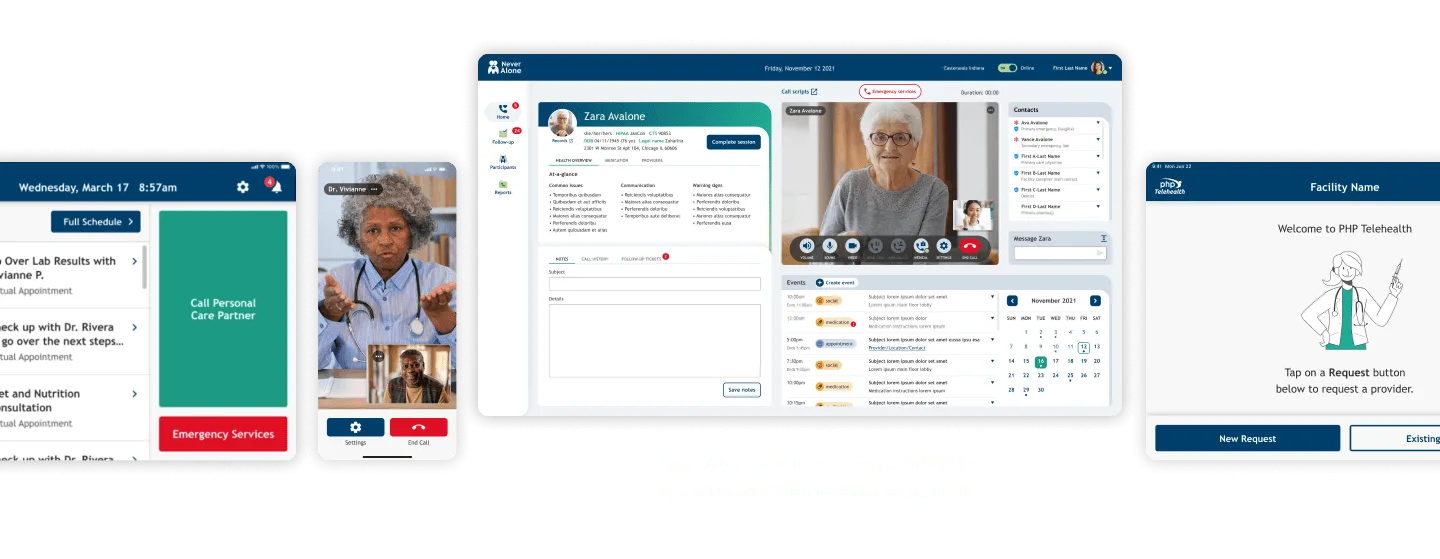
NeverAlone · CommuniCare
30,000 patients, six states
24/7 virtual care that began as a 90-day MVP in March 2021. 100,000+ calls a year and 96% treat-in-place. We built it and still run it.
See the work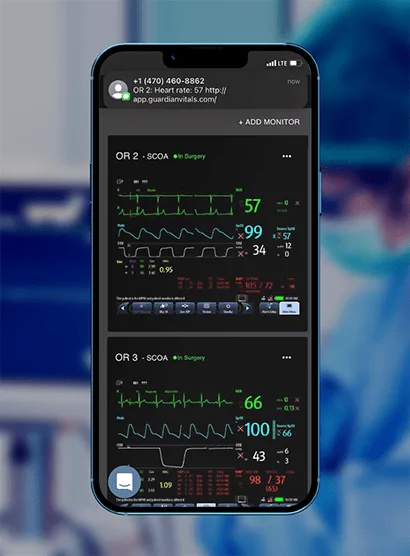
Guardian · Vigilant Medical Solutions
99.9% accuracy
OR monitoring that reads vital signs from any monitor brand and puts every patient on the anesthesiologist's phone, used by anesthesia teams across the country.
See the workTrusted by healthcare leaders.
“I have worked with many technology teams during my career, and Digital Scientists is one of the best. They take the time to understand the customers' needs, deliver innovative solutions, are always professional, and work with your team as a true partner to achieve success.”
Amy Severino
Chief Innovation Officer, CommuniCare Health Services
“By applying a robust machine learning model to our app, DS helped us create a scalable and accurate solution to improve the operating room experience for the anesthesia team and the patient. They are true collaborators.”
Justin Scott, M.D., FASA
CEO, Vigilant Medical Solutions
Related work for health systems
Forward Deployed AI Engineering
Senior engineers embedded with your team, building the system of intelligence above the EHR.
Forward Deployed AI Engineering →Rural Health Transformation Program
Planning and building grant-funded rural health technology.
Rural Health Transformation Program →Telemedicine and virtual care
Virtual care platforms built and run in production.
Telemedicine and virtual care →Clinical research software
Registries, cohort tools and research data platforms.
Clinical research software →EHR integrations
How we connect new software to Epic, Oracle Health and other EHRs.
EHR integrations →Ways to start
Blueprints, MVPs and the other common first steps.
Ways to start →Latest thinking for health systems
Questions health system leaders ask
How do you integrate with Epic?
We've tested against Epic's FHIR sandbox, and we don't have an Epic production interface on record. For each project we plan the route with the health system's Epic team in the Blueprint: FHIR APIs, CDS Hooks, a SMART on FHIR app or an interface your integration team supports. In production today we run PointClickCare and Netsmart (GEHRIMED) data integrations with cross-EHR patient matching.
Can you support grant-funded programs?
Yes. We scope the work to the grant's milestones and reporting, build so the program can show its results, and plan who runs the software when the funding ends: our team with L2 and L3 support, or your own team on a build-operate-transfer plan. For rural programs, see our Rural Health Transformation Program work.
Do you work alongside our IT and EHR teams?
Yes. We work with your IT, EHR, security and research computing teams, and with any IT provider or MSP you use. We build, integrate and support the platforms we deliver. Your service desk and desktop support stay with your own team.
Who owns the code and the data?
You do. You own the code, the IP and the data. Repositories and cloud accounts sit in your name or are ready to transfer, and AI runs inside your own AWS account.
How do you handle PHI and security reviews?
We sign a BAA before we touch PHI. Our security plan is mapped to NIST CSF 2.0, each client gets a security addendum, and encryption, access controls and audit logging are decided in the Blueprint. We answer vendor security reviews from documented controls. See security and PHI.
Who runs the platform after launch?
We do, or your team does. We provide L2 and L3 support for platforms we built, and hand everything over on a build-operate-transfer plan when your own people are hired and trained. We still run NeverAlone, which went live in March 2021.
Tell us what your care teams need
No commitment. No sales deck. We respond the same day, and you talk to senior leadership.
The virtual care platform we built handles 6,000+ calls a month for 130+ facilities. 96% of patients are treated in place.