
Every mid-sized company I talk to is under the same pressure. The board wants an AI story. A competitor put out a press release. Three vendors are in the inbox promising a platform. And on the operations floor, the people who actually run the business are wondering what any of it has to do with the work in front of them.
Here is what I have learned putting this into production, not into slideware: the hard part was never the model. It is knowing where to point it. Most of the AI money being spent right now goes to broad, company-wide programs instead of one specific workflow, and that is where it is lost.
So the real question is not whether to invest in AI. It is narrower and more useful: where do we start so it pays back this year, and does not put the operation at risk if it is wrong? Let me answer it the way we answer it for clients, and start with a real example, because it is the whole argument in miniature.
A real company putting AI to work
This is not theory. It is a live engagement, fully anonymized: a business we worked with to put AI into one workflow, in production, in about a month.
The problem. A nonprofit runs recuperative-care beds: medical respite for homeless patients leaving the hospital. Hospitals send the same referral to four or five facilities at once, and the first to respond wins the patient. The operator's window was about fifteen to twenty minutes. Before, a staffer had to notice the email, open a dozen pages of attachments, read them, and decide. Every empty bed is lost revenue against a fixed payroll.
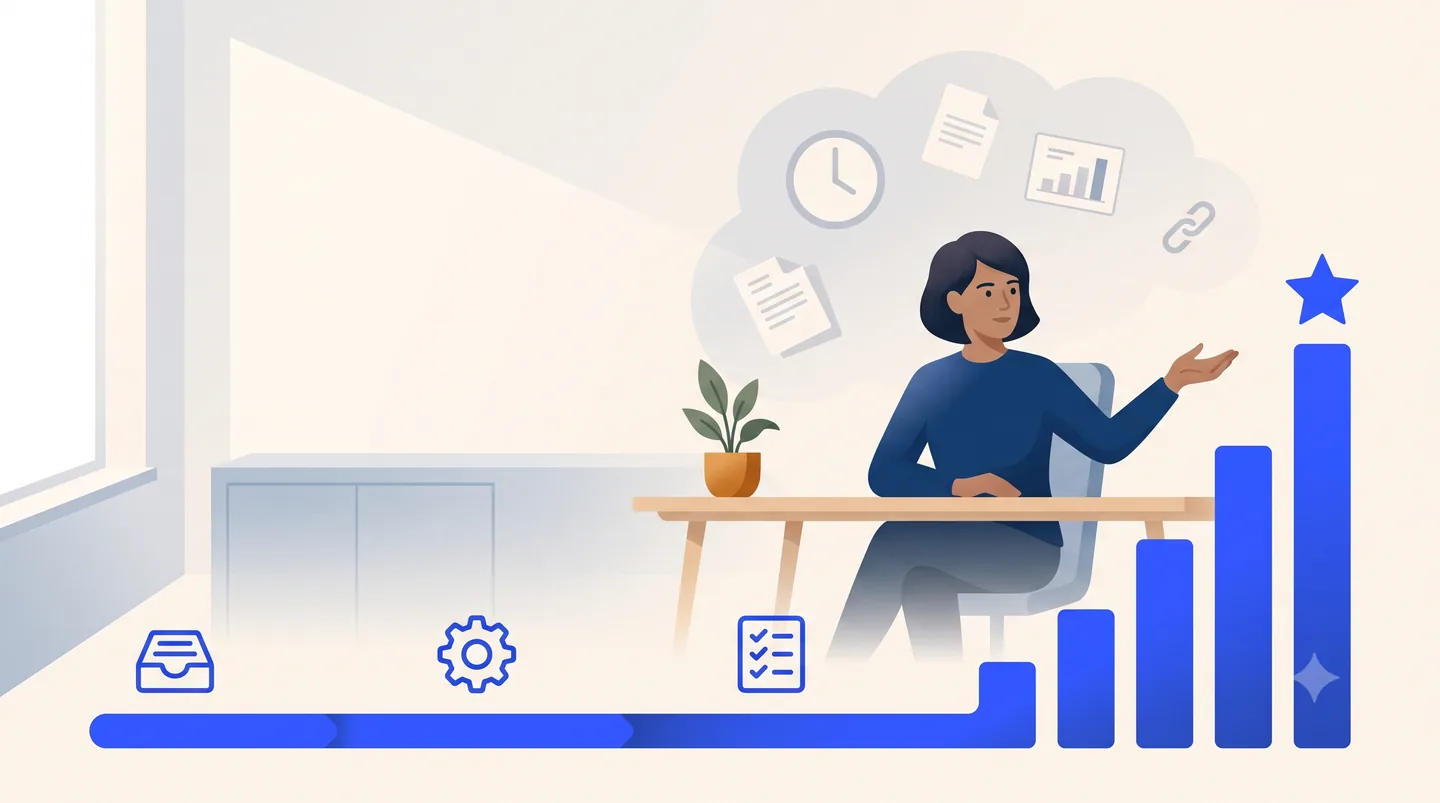
What we built. About a month after their first email to us, they had a live system running one workflow end to end:
The AI reads the packet in minutes and never guesses. A fixed rulebook, not the model, applies the operator's own admission policy, so every decision can be explained. A person makes the final call, with the source document on screen. Beds filled is the number it moves.
Why it worked as a first project. The worst the system could do was recommend something a person then overrode. Heavy manual work, an obvious return in beds filled, a contained downside, and live in weeks. That is a first project chosen on purpose, not by luck.
The word that matters most: workflow
What you just saw was one workflow: the repeatable set of steps your people follow to get one specific thing done. An invoice arrives, someone matches it to a purchase order, flags the exceptions, and approves it. Input, steps, decision, output. It is the operating unit of your business, and it is the right unit of work for AI.
You do not adopt AI as a company. You take one workflow and make it faster and more reliable. Everything in this series is about choosing that one workflow and getting it live.
What "AI in your company" actually means
Strip away the noise and it is simpler than the vendors make it sound. It is not a chatbot bolted onto your website, and it is not replacing your people. It is one workflow, run like this:
- AI reads the messy inputs.
- A set of your own written rules makes the call.
- A person signs off on anything that matters.
- You put it in front of the people who do the work and fix it on their feedback.
One workflow, in production, that someone on shift actually uses. The platform, the integrations, the company-wide rollout all come later, after you have proven one thing works.
The three expensive ways to get this wrong
When companies rush, the money is wasted in one of three places. Naming them is half the battle.
- The wrong hire. Standing up an expensive AI role, or a whole team, for work an embedded engineer now does in weeks. Or hiring before you know what to build.
- The wasted project. A multi-quarter build that never fits how the work actually happens, or that the technology moves past before it ships.
- The tool that demos well and fails on the floor. A generic AI product that looks great in the pitch and never earns the team's trust. This is the one I see most.
The risk was never that you failed to move on AI. The risk is spending real money on the wrong workflow. The company above did the opposite: one workflow, chosen on purpose, live in weeks.
The rest of the terms you will hear
Five words come up in every one of these conversations. Here they are in plain language, so the rest of the series reads easily.
- Agent
- Software that can take a few steps on its own toward a goal: read a document, pull out what matters, and draft the next action, instead of waiting for a person to click through each step.
- Ontology
- The map of the things in your business and how they connect: the referral, the bed, the policy, the decision, and the links between them. It is what lets the software reason about your operation instead of just processing text. In healthcare we call the live version of this a system of intelligence.
- Forward Deployed AI Engineering (FDE)
- A senior engineer works directly inside your operation, next to the person who knows the business, and ships working software into their hands, instead of taking a spec away and coming back months later. That is the subject of Part 2.
- Prototype vs. production
- A prototype is a demo that shows an idea. Production is software your team depends on every day, with real data and real consequences. Most AI pilots die in the gap between the two.
- Rules vs. the model
- The model is the AI that reads and interprets. The rules are your written policy, applied the same way every time. Good systems let the model read and let your rules decide, so every outcome can be explained.
What the rest of this series covers
Over the next four parts I walk through how a company your size gets from "we should do something" to a workflow in production, using that engagement and others as the evidence.
- How Forward Deployed Engineering works, and why the approach the big enterprises use fits a company your size.
- How to pick the one workflow that pays back this year, and how to tell a good first bet from a bad one.
- Partner or in-house: your real options for getting it built, what each takes, and what you end up owning.
- The ROI: how the return actually shows up, measured honestly, including where it does not pencil out.
If your leadership team takes one thing from this, it is this: stop asking whether to invest in AI and start asking which single workflow, done this quarter, would prove it to your own people. That question has a real answer, and finding it is free. Once you have it, one senior architect can start building it with you through Build with Us.