
Healthcare software development services, built and run by one senior team
Digital Scientists is a healthcare software development company in Atlanta. We build custom healthcare software, including platforms, multi-tenant SaaS, clinical workflow tools, patient apps, data products and AI, and we keep it running in production. NeverAlone began as a 90-day MVP with us and now serves 30,000 patients across six states on a platform we still operate. Most clients start with a 4 or 6 week Blueprint that sets scope, architecture and budget, then build in milestones.
Updated
Patients on NeverAlone, which we run
Recovered to date with our MDS platform
Guardian transcription accuracy
Fathers' UpLift EHR, Blueprint + MVP





CommuniCare ARD Optimizer
Built an AI-powered clinical SaaS platform that optimizes MDS assessments for CommuniCare Health Services, one of the nation's largest post-acute care providers.
The platform integrates directly with PointClickCare EHR to pull clinical assessment data in real time, applies 200+ clinical triggers powered by machine learning models, and recommends optimal assessment reference dates that maximize reimbursement accuracy under the PDPM payment model. Review time per resident fell from 3 to 4 hours to about 60 seconds at 90%+ assessment accuracy. The platform has recovered $10M+ to date, and forecast PDPM revenue it supports is $24M+.

Why is healthcare software harder to build than other software?
Because the code is the easy part. The hard parts are the systems it has to talk to, the patient data it carries, the security review it has to pass, and the fact that it can't go down.
Integrations
Your software is only useful once it talks to the EHR, the payer or the device. Everyone thinks an integration is easy. We've seen simple ones take four months. We plan them in week one.
Patient data
Where PHI lives, who can see it and what gets logged are architecture decisions. We sign a BAA before we touch patient data.
Buyer diligence
Health systems, payers and investors send long security questionnaires. We build so every answer is a document you can hand over.
Uptime
Providers tell us it can never go down. NeverAlone runs 24/7/365 and handles 100,000+ calls a year, so that's the standard we build to.
What makes Digital Scientists different from other healthcare software development companies?
We run what we build. NeverAlone, the virtual care platform we built with CommuniCare, has been live since March 2021, and we still operate it every day.
That changes how we build. When you're the team on call when something breaks, you design for monitoring, support and the security review from the first sprint. It's also why HIPAA is part of how we work: we handle PHI in production every day.
We're a senior US team in Atlanta, building software since 2007. We support the platforms we built, usually at L2 and L3 while your team handles first-line questions, and we can hand everything over on a build-operate-transfer plan when you're ready. You own the code and the IP.
Patients across six states
Calls a year through the platform
Devices in the field
Live since, from a 90-day MVP
How does a healthcare software project start?
Most start with a Blueprint: 4 to 6 weeks to agree what gets built, how it's architected and what it costs. Then an MVP in front of real users, then the full build in milestones, then we run it or hand it over.
These are common starting points, not rules. Some clients go straight to an MVP because the scope is already clear. Some bring us a platform another partner started, and we take over the in-flight build. If a piece is risky, we pull it forward and spend a week of engineering on it before anyone commits to the full build.
How healthcare software moves from idea to production
| Step | What you get | Typical time |
|---|---|---|
| Blueprint | Research, scope, architecture, user stories and a build plan with a budget your board can approve. The 6 week version adds a working prototype. | 4 to 6 weeks |
| MVP | The smallest product that proves the idea with real patients, clinicians or payers, built on production foundations. | 8 to 16 weeks |
| Full build | Integrations, security controls, admin tools, analytics and multi-tenant onboarding, delivered by milestone. | 3 to 12 months |
| Run or transfer | We operate it with L2/L3 support, or hand the code, the accounts and the know-how to your team. | Ongoing |
More options on ways to start.
Ten steps, from idea to measured results
Healthcare software usually stalls after the prototype: at integration with the EHR and claims systems, staff training and rollout. Those are steps 5 to 8, and we do them too. NeverAlone started as a 90-day MVP and now serves 30,000 patients.
Phase I
Discover
What should we do?
Data Foundation
Assess & structure your data
Solution Design
Co-design with care teams
Phase II
Experiment
Does it actually work?
Hypothesis & Scope
Define success criteria
Build & Validate
Working software, your data
Phase III
Engineer
Make it real.
Agile Development
Sprints with clinical feedback
Systems Integration
EHR, claims, lab connectivity
Change Management
Training & adoption support
Production Deploy
Phased rollout with monitoring
Phase IV
Optimize
Make it better.
KPI Accountability
Measure outcomes, prove ROI
Continuous Improvement
Ongoing optimization or handoff
Does the Work
Automation & Agents
Shows What’s Happening
Insights & Intelligence
Built Faster
AI-Accelerated Dev
Most projects fail at steps 5-10. We own the complete value chain.
What kinds of healthcare software do you build?
Platforms, multi-tenant SaaS, clinical workflow tools, patient and clinician apps, data products and AI, for health tech companies, providers and payers. If it handles patient data and has to connect to clinical systems, it's our kind of work.
Apps are one part of it. For iOS, Android and web apps on their own, see healthcare app development. For connecting what you build to the systems you already run, see healthcare integrations.
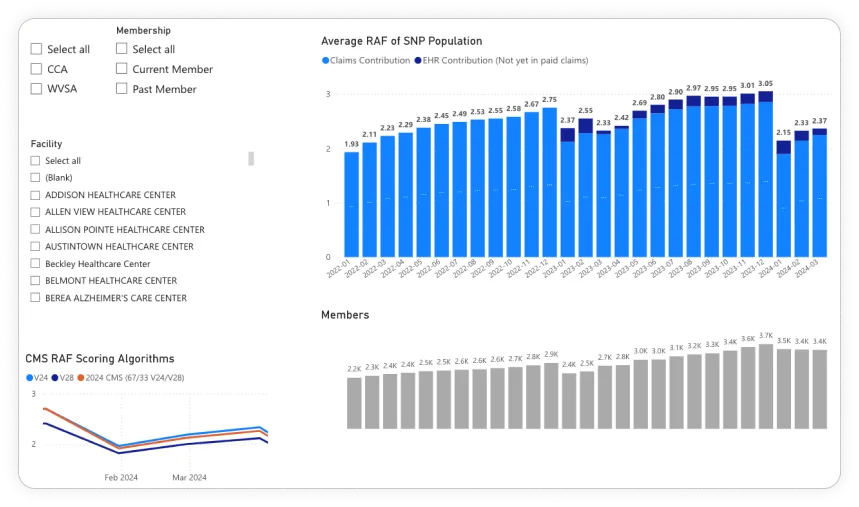
The risk adjustment dashboard we built (2023 to 2024): risk scores by provider and patient, from EHR and claims data.
What we build, and where we've built it
| Type | What it does | Work we've shipped |
|---|---|---|
| Virtual care platforms | Video visits, triage, care team consoles and managed device fleets | NeverAlone: 24/7 virtual care for 30,000 patients across six states |
| Clinical workflow and EHR tools | Purpose-built records, caseloads, notes and charge capture | Fathers' UpLift: a custom EHR, Blueprint and MVP in 8 weeks |
| Reimbursement and coding AI | MDS, PDPM and risk adjustment on live EHR data | MDS platform: $10M+ recovered to date, $24M+ forecast PDPM revenue |
| Population health and analytics | Claims and eligibility data turned into targeted interventions | Congruity Health: 7,020 enrolled patients tracked |
| Device software and computer vision | Models, mobile apps and the cloud behind a clinical device | Guardian: 99.9% transcription accuracy |
| Multi-tenant SaaS | Tenant isolation, onboarding and support for a product sold to many organizations | NeverAlone, now serving providers beyond CommuniCare |
Can you build AI into healthcare software?
Yes. We treat AI as a method with rules attached: the model runs inside your cloud account, on your data, under your BAA, with a person checking the output where it matters.
HealthContext.AI cut clinical note time from 45 minutes to 5. Our risk adjustment AI delivered $10M+ in RAF improvement at 90%+ accuracy for 20K+ patients and 245 providers in 7 states, and it learned from physician feedback. Guardian reads vitals off any OR monitor at 99.9% accuracy.
We run models such as Claude through Amazon Bedrock inside a client's own AWS account, so PHI stays where it belongs. Every model ships with logging, a way to measure accuracy on your own cases, and a clear point where a clinician or coder signs off. See healthcare AI development.
Clinical note time with HealthContext.AI
Accuracy on risk adjustment suggestions
Guardian transcription accuracy
How do you keep healthcare software compliant as it grows?
HIPAA-compliant code is the start. The architecture has to stay compliant as you add customers and data, and stay fast enough for clinicians to use all day.
Multi-Tenant Isolation
Row-level security with tenant-scoped database schemas. Each organization's PHI is logically isolated with cryptographic separation, one tenant's data breach cannot expose another's records. We use PostgreSQL Row Level Security policies and application-layer tenant context injection.
End-to-End Encryption
AES-256 encryption at rest for all PHI. TLS 1.3 in transit. Field-level encryption for sensitive identifiers (SSN, MRN). Managed cloud key services for key management. All encryption keys are rotated automatically and never stored alongside encrypted data.
Audit Logging
Every PHI access, modification, and export is logged with user identity, timestamp, IP address, and action type. Immutable audit logs stored separately from application data. Configurable retention policies (7+ years for HIPAA). Real-time alerting on suspicious access patterns.
Healthcare Interoperability
FHIR R4 APIs for modern EHR integration. HL7 v2 ADT/ORU/ORM message handling for legacy systems. SMART on FHIR app launch for embedded EHR workflows. X12 EDI for claims and eligibility. CDA/C-CDA document exchange for care coordination.
Cloud Infrastructure
AWS or Azure HIPAA-eligible services with signed BAAs. Containerized deployments (Docker/Kubernetes) for consistent environments. Auto-scaling groups that respond to clinical workflow patterns, handling morning census spikes and month-end reporting loads without manual intervention.
Role-Based Access Control
Fine-grained RBAC mapped to clinical hierarchies, physicians, nurses, billing staff, administrators each see only the data relevant to their role. SSO integration (SAML 2.0, OAuth 2.0). Automatic session timeouts. Multi-factor authentication for PHI access.
Healthcare Data Integration
Healthcare SaaS must consume data from systems you don't control, each with different formats, update frequencies, and access patterns. A production platform often supports multiple integration methods simultaneously.
Modern REST APIs
Required by 21st Century Cures Act. Standard for patient access and new EHR integrations.
Legacy Message Feeds
ADT, ORU, ORM messages. Still the most common integration method for established health systems.
Claims & Eligibility
270/271 eligibility, 837 claims, 835 remittance. Standard for payer integrations.
EHR-Specific
PointClickCare and Netsmart (GEHRIMED) in production, Epic in a sandbox environment. Each with unique APIs, certification, and sandbox processes.
Abstraction Layer
Normalizes data from different sources into a unified clinical data model. Your application logic doesn't need to know which EHR the data came from.
Event-Driven Architecture
Message queues (AWS SQS, Kafka) for real-time clinical workflows. ETL pipelines with validation checkpoints for batch processing like claims and risk adjustment.
Integration Monitoring
Real-time tracking of message throughput, error rates, latency, and data quality. Automated alerts for EHR upgrades, network changes, and credential rotations.
Off-the-Shelf vs. Custom Healthcare SaaS
| Factor | Off-the-Shelf SaaS | Custom Healthcare SaaS |
|---|---|---|
| Compliance | Generic, may not cover healthcare-specific requirements | HIPAA, HITECH, 42 CFR Part 2 built into the architecture |
| EHR Integration | Limited connectors, often read-only | Integration with the EHR you run, through FHIR and HL7 where it supports them |
| Clinical Workflows | You adapt your workflow to the software | Software adapts to your clinical workflow |
| Data Ownership | Vendor controls data; limited export options | You own your data and your model, your data is your moat |
| Competitive Advantage | Same tool as your competitors | Proprietary platform that creates defensible differentiation |
| Time to Value | Weeks (but months of customization) | 8 to 16 weeks for an MVP; iterate from real clinical feedback |
Who do you build healthcare software for?
Health tech companies, providers, payers and the software companies that serve them. Each starts from a different place, so the first conversation is different too.
Health tech companies
Founders and product teams taking a product from idea to production that has to pass a health system's security review. See health tech companies.
Providers
Health systems, physician groups, post-acute and behavioral health organizations that have outgrown off-the-shelf tools. See post-acute and senior care.
Payers
Health plans and risk-bearing groups that need analytics, risk adjustment and member tools built on their own data. See health plans and payers.
Software and PE companies
Healthcare software companies adding AI or integrations, or replacing a legacy product piece by piece. See healthcare software and PE companies.
What does healthcare software development cost?
Healthcare software costs more to build than general-purpose software because of compliance requirements, EHR integrations, and the need for clinical domain expertise. The HIPAA compliance layer alone adds 15% to 25% to baseline development costs, but it's a non-negotiable requirement, not an optional add-on. Here's what to expect based on platform complexity, drawn from our experience building production healthcare SaaS platforms across post-acute care, population health, and clinical AI.
- Core clinical workflow (1 to 2 use cases)
- Single EHR integration (FHIR or HL7)
- HIPAA-compliant infrastructure
- Basic role-based access control
- Deployed for real users
- Full clinical workflow automation
- Multiple EHR integrations
- Advanced analytics and reporting
- Multi-tenant architecture
- Full audit logging
- SSO and advanced RBAC
- Complex multi-stakeholder workflows
- AI/ML-powered clinical features
- Broad interoperability (FHIR, HL7, X12)
- Enterprise security controls
- White-label / multi-brand support
- Data migration from legacy systems
Key Cost Drivers
Compliance
HIPAA baseline. Built in from day one to avoid costly retrofitting.
Per EHR Integration
Epic, PointClickCare, Cerner each have unique APIs and certification. First integration is most expensive, subsequent ones reuse your normalization layer.
Data Migration
Schema mapping, deduplication, reconciliation. Simple single-source: $15K to $30K. Complex multi-system with format conversion: $50K to $100K.
Real-Time Processing
Clinical alerts, device streaming, live dashboards require event-driven architecture. Adds 30% to 50% to infrastructure costs vs. batch processing.
Healthcare software we built and still stand behind
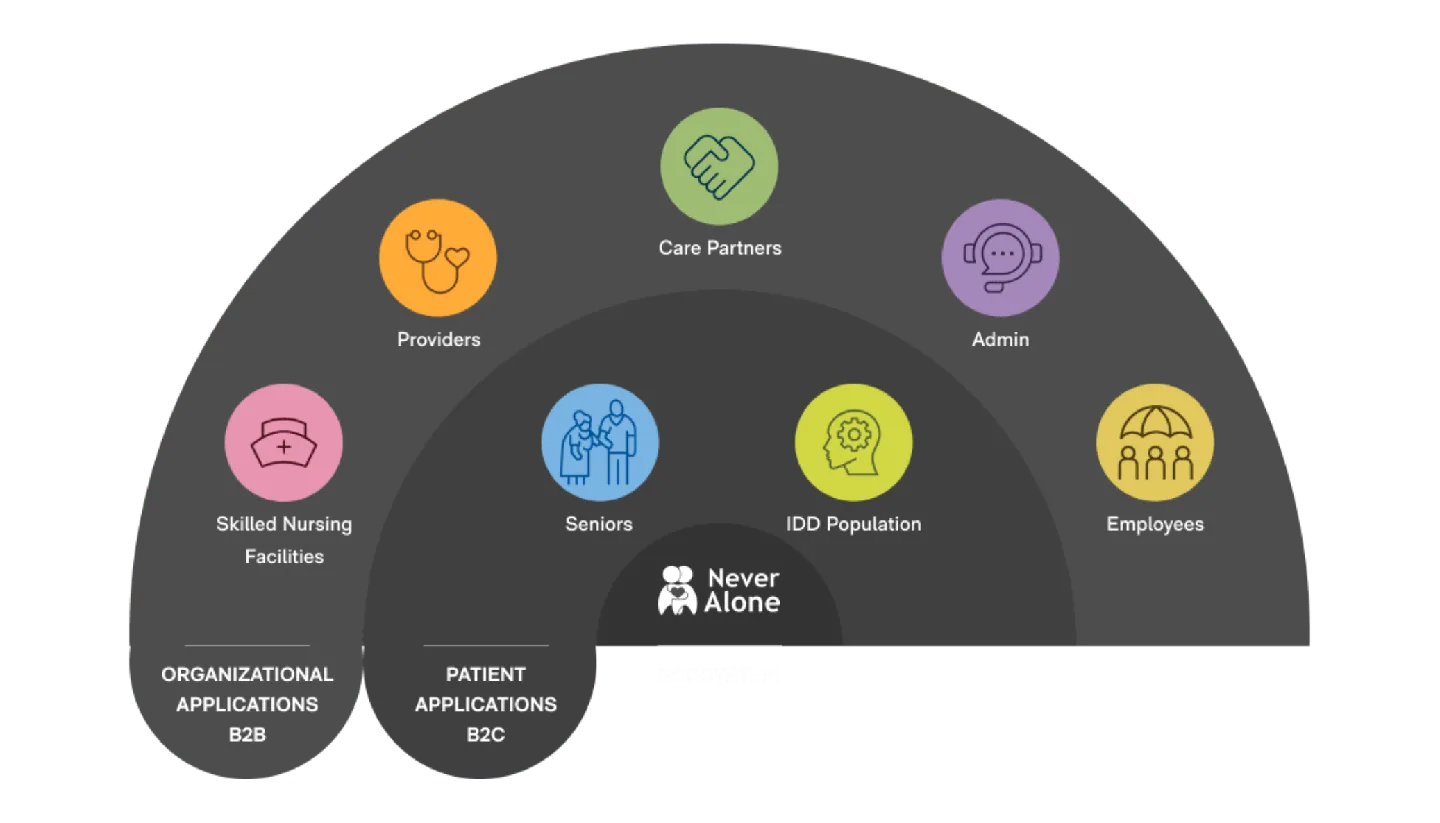
NeverAlone · CommuniCare
90-day MVP to 30,000 patients
A 24/7 virtual care platform, live since March 2021, now across six states with 100,000+ calls a year. We still run it.
See the work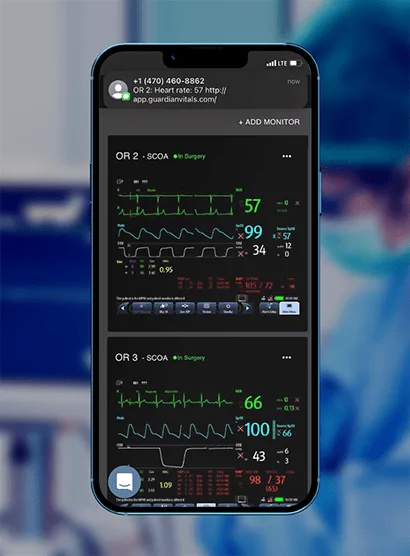
Guardian · Vigilant Medical
99.9% accuracy
An anesthesiologist's idea turned into a national OR monitoring platform: computer vision, a mobile app and the cloud behind it.
See the work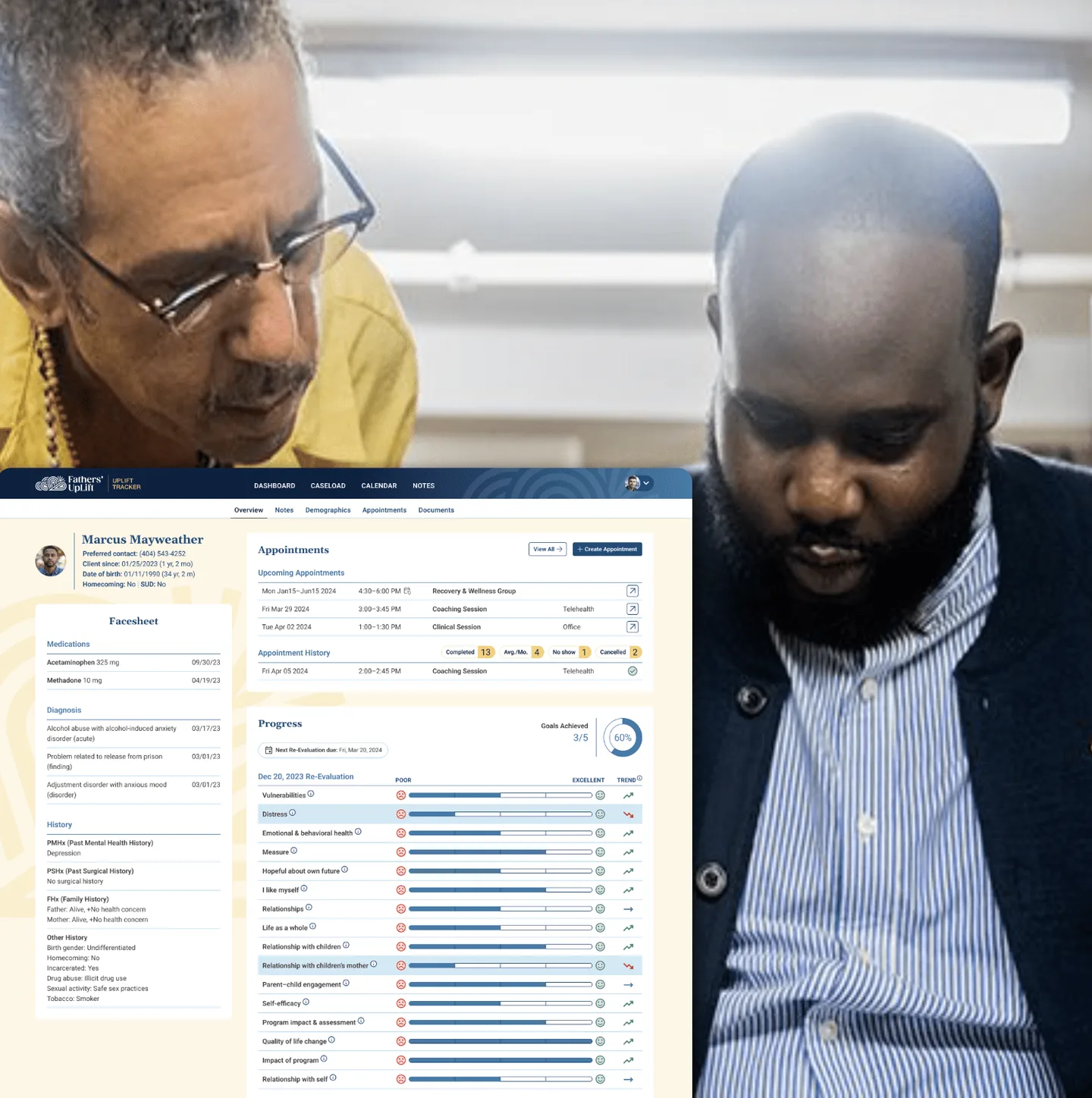
Fathers' UpLift
Custom EHR in 8 weeks
A purpose-built EHR for a coaching and clinical model no off-the-shelf system fit. Blueprint and MVP in eight weeks.
See the workTrusted by healthcare leaders.
“Thank you to the Digital Scientists team, this has been a long time coming! We finally have something that will be useful for our team so I want to take this opportunity to thank you for your hard work and your diligence. You took an idea and made it come to life!”

Dr. Charles Clayton Daniels Jr.
CEO & Founder, Fathers' UpLift
“The team at Digital Scientists was a huge help in not only developing our analytics platform, but understanding the competitive space and defining our true value proposition for our customers.”

Justin Davis
CEO, Congruity Health
Related services
Healthcare app development
iOS, Android and web apps for patients and clinicians.
Healthcare app development →Healthcare product development
From first Blueprint to a product in production.
Healthcare product development →Healthcare integrations
EHR, payer, lab and device connections we build and run.
Healthcare integrations →Platform operations and build-operate-transfer
We run what we build, or hand it over.
Platform operations and build-operate-transfer →Health tech companies
How we work with founders and product teams.
Health tech companies →Minimum viable product
Our MVP service across industries.
Minimum viable product →Latest thinking on building healthcare software


Questions buyers ask about healthcare software development
How much does custom healthcare software cost?
An MVP typically runs $75K to $150K over 8 to 12 weeks. A production platform with several integrations runs $150K to $300K over 4 to 6 months, and an enterprise platform $300K to $500K or more over 6 to 10 months. EHR integrations, compliance, data migration and real-time features drive the number. A Blueprint gives you a scope and a budget before you commit to the build.
How long does an MVP take?
Most healthcare MVPs take 8 to 12 weeks, and up to 16 when there are several integrations or AI features. NeverAlone started as a 90-day MVP and has been live since March 2021.
Do you build HIPAA-compliant software?
Yes. We sign a BAA with every covered entity before we touch patient data, our security plan is mapped to NIST CSF 2.0, and each client gets a security addendum. Encryption, role-based access and audit logging are in the architecture from the first sprint.
Can you integrate with our EHR?
Yes. PointClickCare and Netsmart (GEHRIMED) integrations are in production on platforms we operate, including matching patients across EHRs. Our Epic work is in a sandbox environment. We can integrate with any system that has an API, a standard interface or a reliable export. See healthcare integrations.
Can you take over an existing codebase?
Yes. We start with a review of the code, the infrastructure and the security posture, then take over in stages. Nobody likes a big-bang rewrite, so we replace legacy pieces one at a time while the product stays live.
Who owns the code?
You do. You own the code, the IP and the roadmap. Repositories and cloud accounts sit in your name or are set up to transfer whenever you want.
Do you support the software after launch?
Yes, for platforms we built. We usually take L2 and L3 while your team handles first-line questions, and we can hand everything over on a build-operate-transfer plan. We've run NeverAlone 24/7/365 since March 2021.
Tell us what your product needs next
No commitment. No sales deck. We respond the same day, and you talk to senior leadership.
An MDS platform we built on PointClickCare has recovered $10M+ to date, with $24M+ in forecast PDPM revenue.