
For healthcare software companies and PE portfolio companies
Digital Scientists works inside healthcare software companies and PE-backed portfolio companies as senior architects who code. We put AI where it grows revenue and margin, modernize only the slice of the platform that work needs, and keep code, data and accounts in the company's name. For Sandata, a PE-backed home health software company, we unified three products under one design system in eight weeks. Most companies start with Build with Us: two weeks and $10K to working software and our read on the return, then $20K a month.
Updated

Founded in Atlanta
Products shipped to production
To working software with Build with Us
Sandata, unified under one design system
What does Digital Scientists do for a PE-backed healthcare company?
We help you execute the value creation plan on three levers: revenue, margin and the multiple. We work inside the portco, alongside its team, and put AI where it moves one of those numbers.
The work is the same whether you hold the asset, are pricing a deal or run a portfolio. For an asset you hold, we move the plan's numbers before the exit. For a deal you're pricing, an architect rebuilds the core features from the outside, reports what copied easily and what didn't, and plans the first 100 days. Across a portfolio, one partner reuses what it learns from one company to the next.
Grow revenue
Catch up, then pull ahead. AI features customers pay for: agents inside the product that do the work, priced on outcomes, not seats. Close the feature gap newer rivals win demos with, and build new products apart from legacy tech debt, without pulling your team off the roadmap.
Expand margins
Take out the work that grows with headcount. Claims, referrals, assessments and records read and entered for you. Intake and triage with people approving the edge cases. AI review before work ships. Your call on what it means: more volume without hiring, or a lower cost base.
Build the moat
Buyers pay for moats in the product. It acts instead of advising. It's accurate enough that nobody re-checks it. It's the system of record, it carries the HIPAA approvals, BAAs and audit trail a newcomer lacks, and it learns from every customer. That earns a better multiple.
How did a PE-backed healthcare software company modernize without a rewrite?
Sandata unified three home health products under one design system in eight weeks, and kept the functionality agencies run their businesses on.
Sandata is a leading US provider of home health technology. Its platform handles electronic visit verification (EVV, the state-mandated record that a home visit happened), scheduling, billing and payroll for agencies, state Medicaid programs and managed care organizations. New private equity investment brought a digital transformation agenda, and the products looked older than they worked.
Three applications had grown up separately. SAM, the agency management system, dated from around 2009. EVV was newer but plain. AMP ran on a different stack again. Users who worked across them relearned navigation, forms and workflows in each one, while competitors shipped polished dashboards.
We ran four design sprints over eight weeks, with stakeholder reviews at each milestone. The scope covered every major screen type: navigation, dashboards, search and filters, data entry, multi-step workflows and reporting. The result was one design language, a style guide and a design system built on Angular Material, with WCAG AAA as the accessibility target. Sandata's engineers kept shipping the whole time. See the Sandata case study.
Products unified: SAM, EVV and AMP
Four design sprints, kickoff to design system
WCAG accessibility target
Design system across the product suite
Where does AI pay off, and do we have to replatform first?
AI is the why. Modernization is the how, and only where it pays. No big-bang replatform, and no AI pilot that can't reach production. We start with one workflow.
Every change, including AI-written code, gets senior review and automated tests before it ships. In a product that touches patient data, owning that code matters more than writing it fast.
Over a few cycles the new platform grows around the work. Customers move over in steps, your team keeps shipping the roadmap, and old modules retire when nothing depends on them.
Sit with the work
Forward deployed, alongside the operators, clinicians and your engineers, so we see where the hours go.
Pick one workflow
The one that moves the plan's number, with a baseline measured before we change anything.
Modernize the slice
Only the part of the platform that workflow needs: the data, the integration, the module. The rest keeps running.
Run it, then repeat
In production and measured, in shadow mode first where the stakes call for it. Then the next workflow.
What do the three levers look like inside a healthcare company?
NeverAlone, the virtual care platform we built for CommuniCare and still run, shows the revenue lever. CommuniCare's MDS work shows the margin lever.
NeverAlone started as a 90-day MVP in March 2021. In 2023 we made it multi-tenant, and it's now licensed to operators beyond CommuniCare, including Stonerise, Dignity Care Partners and Westbrook. That's the move many healthcare software companies want: a platform built for one customer becomes a product many customers pay for. HealthContext, the ambient scribe we built into it, cut clinical note time from 45 minutes to 5.
For MDS (the Minimum Data Set assessments that set skilled nursing payment), the review AI we built from April 2024 has recovered $10M+ to date, with $24M+ in forecast PDPM revenue. We then handed it to CommuniCare's own team.
The moat is the part that's hard to copy: PointClickCare and Netsmart (GEHRIMED) data with cross-EHR patient matching, a BAA with every covered entity, and people approving what AI decides, with an audit trail. See the NeverAlone case study.
Patients on NeverAlone across six states
Minutes of note time with HealthContext
Recovered to date by MDS review AI
Forecast PDPM revenue from MDS review
How is Digital Scientists different from strategy firms, offshore teams and AI studios?
Senior judgment, builder speed and a mid-market price. You buy time to proof, not hours and headcount: the architect who builds sits with the person who owns the problem, and you see working software in two weeks.
The old playbook runs on spec writers, handoffs and rework. AI makes those hours cheaper. It doesn't make them fewer. Architect-led work with AI means fewer handoffs, faster proof and senior review on every change.
We lead. Nearshore scales. When the work is defined and volume matters, we bring in a nearshore partner team only where needed, or work with yours, under our architecture and review. Keep your nearshore partner. Put our architect in front of it.
How the provider categories compare
| Provider type | Price | Quality | Speed | Complexity | Communication |
|---|---|---|---|---|---|
| Strategy firms | High, and strategy only | A plan, not software | Months, then a handoff | Advises on it | Steering committees |
| Enterprise FDE platforms | Highest, plus a license | High, on their platform | Months to stand up | High, if you adopt their platform | Embedded, on their terms |
| Offshore and nearshore teams | Low per hour, many hours | Varies by team | Weeks to staff, then specs | Needs it fully specified | Account managers and handoffs |
| AI build studios | Low | Demo-grade | Days to a demo | New, simple builds | Direct, while it lasts |
| Digital Scientists | $10K to start, then $20K a month | Production-grade, every change reviewed | Working software in two weeks | Legacy stacks, regulated data, live systems | Your leaders talk to the architect who builds |
Categories, not ratings of any one firm.
Who owns what you build, and will it hold up in diligence?
The company does. Everything we build for you is yours, in your accounts, with no platform license to rent.
Anything we bring to the work comes with a perpetual, royalty-free license, so the next buyer inherits a clean asset, not a dependency. Keep us, add a team or take it in-house.
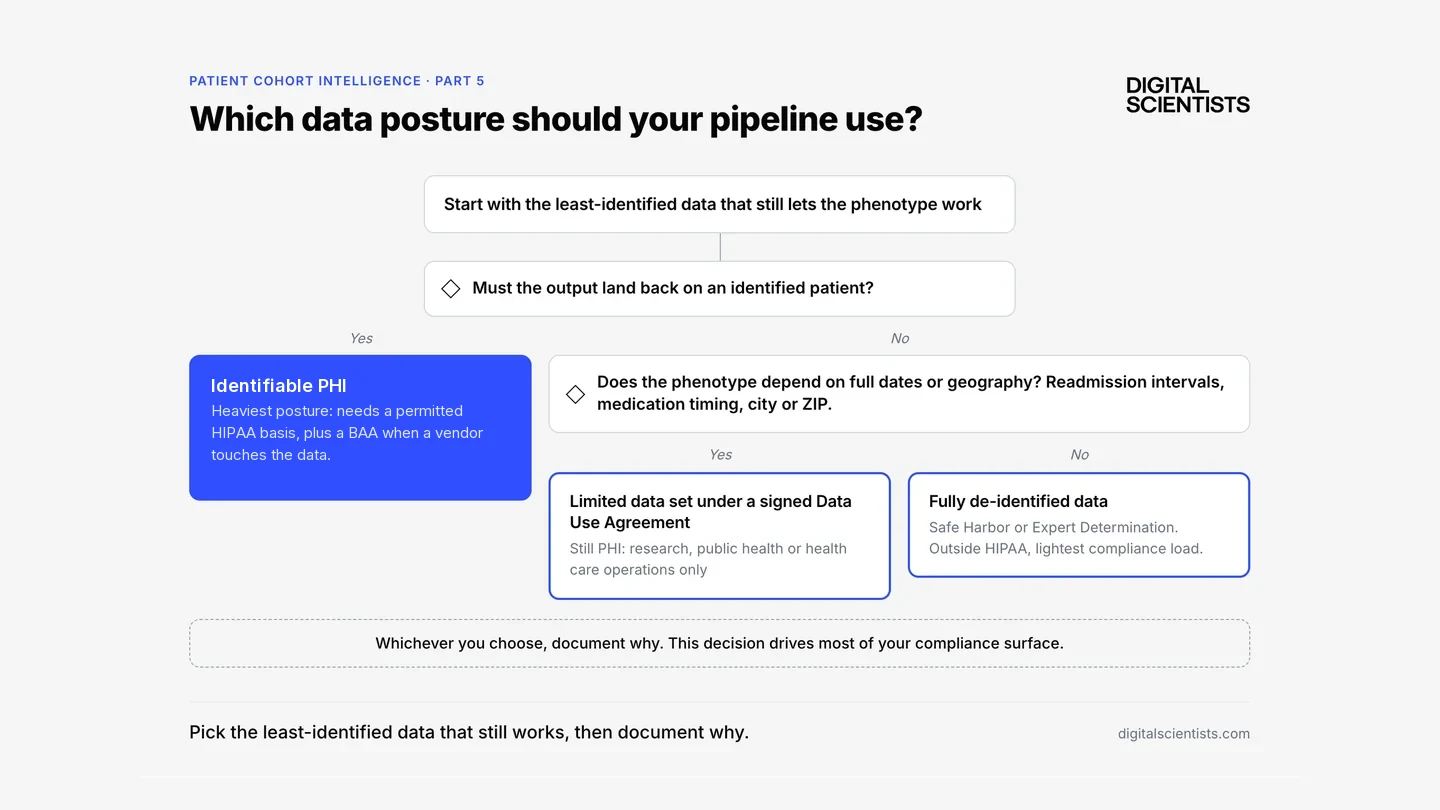
On healthcare work we sign a BAA before anyone touches PHI, use HIPAA-eligible cloud services only, and work to a security plan mapped to NIST CSF 2.0 with a per-client security addendum. See security and PHI.
You own it
Code, IP and roadmap belong to the company
In your accounts
Repos, cloud and data in the company's name, ready to hand over
No lock-in
No platform license. Keep us, add a team or take it in-house
Diligence-ready
Clean ownership, documentation and an audit trail for the buyer
How does a portfolio company start, and what does it cost?
Pick a portco and name the number to move: revenue, margin or the moat. Build with Us is the easiest way in: two weeks, $10K, and the only commitment. Then scale on evidence.
In those two weeks a senior architect delivers a first build, or rebuilds your core features from the outside to show what copies easily and what doesn't, and gives you our read on the return.
From there it's month to month. We work on our own or inside your team, alongside the portco's engineers and existing partners.
Common starting points for software and PE portfolio companies
| Step | What you get | Investment |
|---|---|---|
| Start: Build with Us | Working software in two weeks, a first build or an outside-in copy test of your core, and our read on the return. | $10K for two weeks |
| Continue and run | A senior architect, with engineering and AI compute included. The next release, then support and monitoring in production, or a clean handover. | $20K a month, month to month |
| Scale to a team | A team for a new product, an MVP or a replatform through Product & Platform Development, with a nearshore partner team only where needed. | Scoped to your roadmap |
| Across the portfolio | One partner for several portcos, with what we learn reused from one company to the next. | Starts with one portco |
| A platform you just acquired, or a new product line | A Blueprint: architecture, data and integration review, a staged plan with costs, and the riskiest piece named first. | 4 weeks and $25K, or from $50K over 6 weeks with a working prototype |
Common starting points, not rules. The first conversation is where we pick the right one.
Work across one PE portfolio: Sandata, ToolsGroup and OneShield

Sandata
3 products, 1 design system
A home health software company in a PE-backed transformation. Four design sprints in eight weeks unified SAM, EVV and AMP under one design language and style guide.
See the work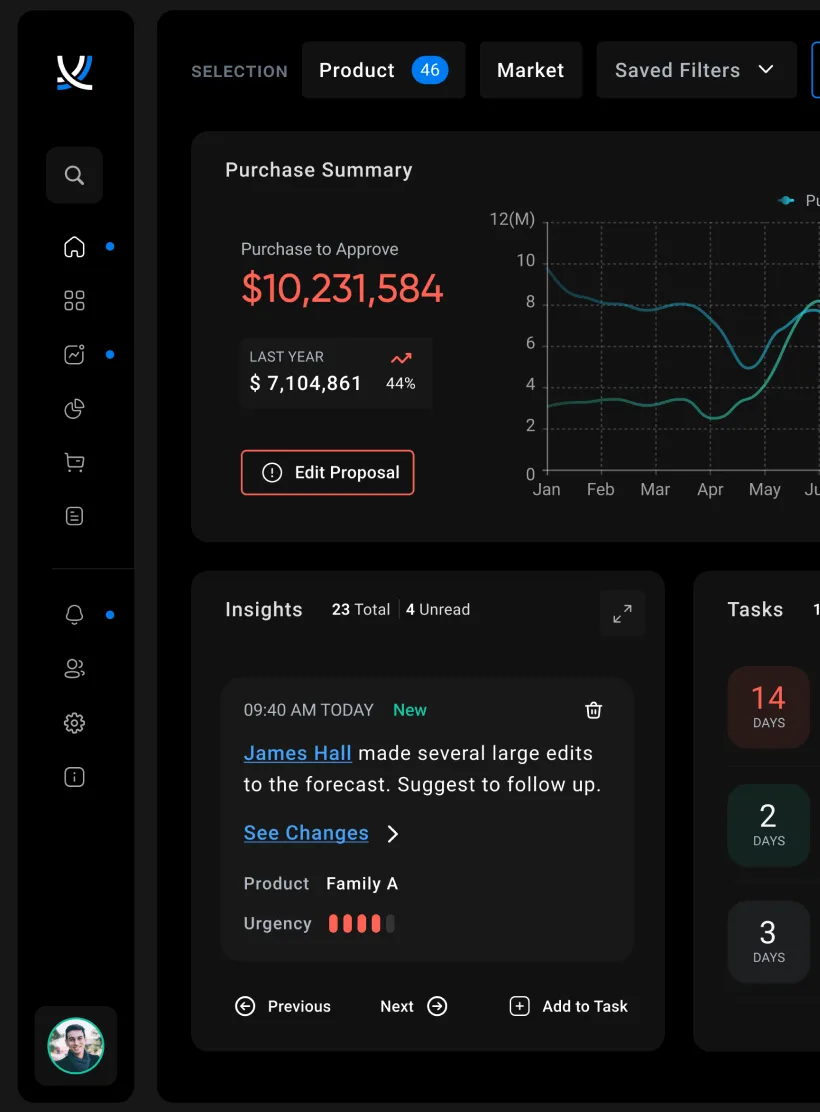
ToolsGroup
75% of sales losses were UI
A PE-backed supply chain software company losing demos to newer rivals. Five months with the C-suite to a validated product direction, a functional prototype and a design system.
See the work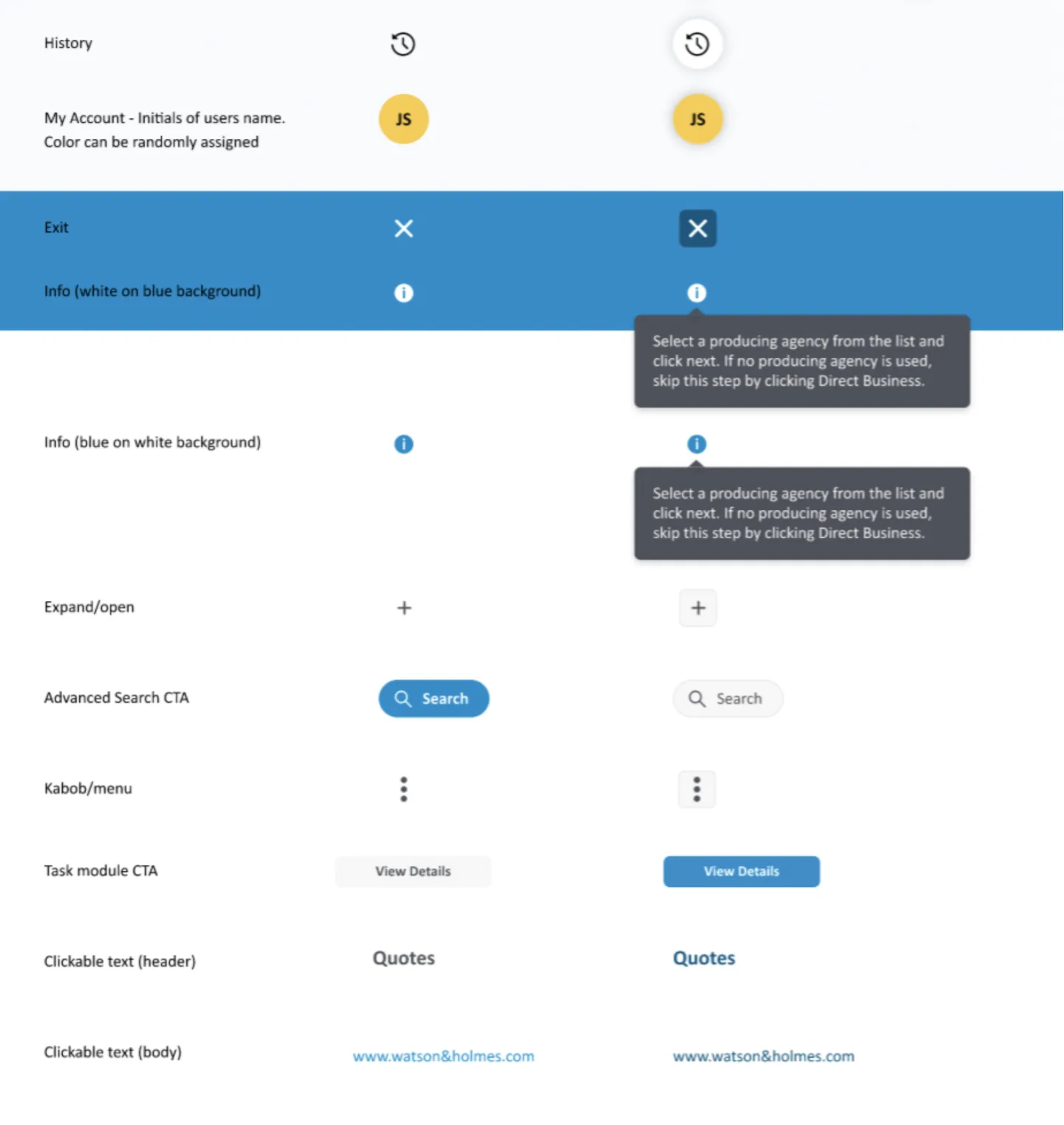
OneShield Software
500+ screens redesigned
Enterprise policy, billing and claims software for insurance carriers. One design system across its products, starting with an 8-week UI refresh of the screens that mattered most.
See the workTrusted by healthcare leaders.
“Digital Scientists did a great job for us. They were easy to work with, and their work was on-time and high quality. Everything went smoothly throughout the entire engagement. I'd highly recommend DS to other firms seeking a top-notch UX design team. Amazing job!”
Justin Jugs
Chief Product Officer, Sandata
“I have worked with many technology teams during my career, and Digital Scientists is one of the best. They take the time to understand the customers' needs, deliver innovative solutions, are always professional, and work with your team as a true partner to achieve success.”

Amy Severino
Chief Innovation Officer, NeverAlone
Related pages for software and PE companies
Health tech companies
For digital health founders and product leaders, from Blueprint to MVP to platform.
Health tech companies →Healthcare SaaS development
Multi-tenant platforms for providers, payers and health tech.
Healthcare SaaS development →Healthcare integrations
EHR, video, telephony and data connections that hold up in production.
Healthcare integrations →Healthcare IT consulting
Audits, vendor selection and roadmaps that end in a working system.
Healthcare IT consulting →Home health and hospice
The market Sandata and NeverAlone's operators serve.
Home health and hospice →Blueprint
Four to six weeks to map what you run and plan what comes next.
Blueprint →Latest thinking
Questions software leaders and operating partners ask
Do we have to replatform before we use AI?
No. We pick one workflow that moves the plan's number, modernize only the part of the platform it needs, run it in production and measure it, then take the next one. No big-bang replatform, and no AI pilot that can't reach production.
How do you avoid a big-bang rewrite?
We modernize in stages. We replace one module at a time, run old and new side by side, and move customers over as each piece proves out. Every change gets senior review and automated tests. Your team keeps shipping the roadmap the whole time.
Do you use nearshore teams?
A senior US team leads every engagement, from our Atlanta base. We bring in a nearshore partner team only where needed, or work with the one you already have, and our senior people stay accountable for the architecture, code review and delivery.
Can you work inside our codebase alongside our engineers?
Yes. Build with Us puts a senior architect in your codebase from week one, working in your repositories and pairing with your team on the integrations, security work and AI features that keep slipping. It's $10K for the first two weeks, then $20K a month, and grows into a full team if the roadmap needs one.
Who owns the code, data and IP?
The company. Everything we build is yours, and anything we bring comes with a perpetual, royalty-free license. Repositories, cloud and data sit in the company's name, with documentation and an audit trail ready for buyer diligence. There's no platform license and no lock-in.
Can you help us combine products from an acquisition?
Yes. We start with a Blueprint covering each product's architecture, data and integrations, then plan the order to combine them. For Sandata, three products with separate stacks and navigation got one design language and design system in eight weeks.
Do you work with PE operating partners across a portfolio?
Yes. Sandata, ToolsGroup and OneShield sit in one PE portfolio. The usual start is one portco and one number to move, with two weeks of Build with Us. From there we scale to a team or to the next portco, and reuse what we learned.
Talk it over
Tell us what you are trying to do. A senior person from our Atlanta team replies within one business day, and you can book a 30-minute call right after you send this.
- We tell you if we're the right fit, and if we're not, who is.
- Most work starts small, so you see how we work before you commit to more.
- We sign a BAA before we touch patient data.