
For specialty, infusion and compounding pharmacies
Digital Scientists designs, builds, integrates and runs software for specialty, infusion, compounding and independent pharmacies. We connect your pharmacy system to prescribers, care platforms and your CRM, automate intake and reporting, and build patient and prescriber apps under a BAA. For McKesson 3PL we interviewed 25 users and tested 5 clickable prototypes to redesign the portal its pharma, plasma and cell and gene therapy clients use. Most pharmacies start with a Blueprint: 4 to 6 weeks to map one workflow, confirm what your system exposes and price the build.
Updated
Interviews in McKesson 3PL's portal Blueprint
Clickable prototypes tested with McKesson users
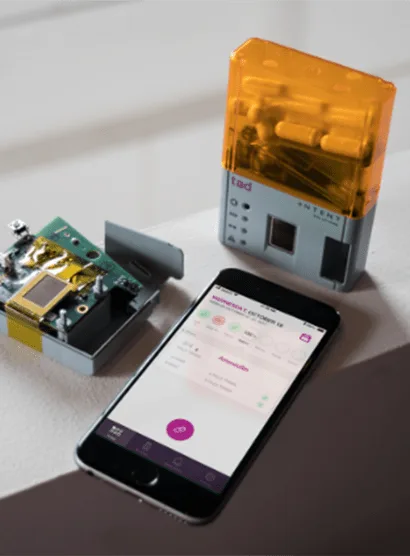
Apps built around Intent Solutions' smart pill bottle
Systems audited for CommuniCare Advantage






Have you worked on pharmacy and pharmaceutical software before?
Yes. For McKesson 3PL, which handles distribution for pharmaceutical, plasma and cell and gene therapy companies, we ran a 4-month Blueprint to redesign the client portal those companies use every day.
The old portal sat on SAP. Clients ran multi-step raw data exports to answer simple questions, support tickets piled up, and program managers spent their time on transactional requests. A 7-person team from Digital Scientists ran three rounds of research: group sessions with client services and program managers, 21 one-on-one interviews with McKesson staff and clients, and a deep dive with plasma clients. We reviewed 6 competitor portals, built and tested 5 clickable prototypes, and finished with a solution architecture and product requirements ready to build.
Medication adherence is familiar ground too. For Intent Solutions we designed and built tad (Take As Directed), a biometric smart pill bottle with a React Native patient app, a pharmacist tablet app that loads prescriptions and regimens into the device over Bluetooth, and a web admin portal that exports adherence data for clinical research, all on a HIPAA-compliant AWS platform.
Interviews across McKesson teams and external clients
Clickable prototypes tested with real users
Competitor portals reviewed
From kickoff to a build-ready architecture
What problems do specialty, infusion and compounding pharmacies bring us?
Most come with one of six. Each one is staff time spent moving information between systems, and each one has a software answer.
Referrals arrive by fax, phone and portal
Intake staff rekey orders from prescribers, hospitals and care platforms into the pharmacy system. Every rekey adds a delay before the first fill and a chance for error.
Benefits and prior authorization eat the first week
Specialty and infusion therapies need eligibility checks, prior authorization and copay assistance before anything ships. That work lives in phone calls, payer portals and spreadsheets.
Refills and adherence depend on someone calling
Refill reminders and therapy check-ins run off call lists. Patients drop off between fills, and nobody sees it until the refill doesn't come.
Manufacturer and payer reporting is built by hand
Limited-distribution drugs come with data reporting to manufacturers and hubs, and payers ask for outcomes. Staff assemble those files every week or month.
Compounding and infusion work sits outside the system
Formulas, batch records and beyond-use dates, or nursing visits and supply tracking, live in spreadsheets that don't connect to the order or the patient.
Patients and prescribers call for status
"Where's my order?" calls tie up the phones, and prescribers want to know therapy started. A patient app and a prescriber portal answer most of those before anyone calls.
Where do pharmacies usually start with us?
Usually with the one workflow that costs your staff the most time. We map it, confirm what your pharmacy system exposes and price the build in a Blueprint, then build that workflow end to end before taking on the next one.
A Blueprint is a 4 to 6 week engagement that produces the scope, architecture, user stories and a build plan with a budget. The medium Blueprint adds a working prototype your staff, patients or prescribers click through before you commit to the build.
We're usually trying to pull risk forward. For a pharmacy, the risky piece is almost always the connection to the pharmacy system or a payer. We prove that connection in the Blueprint, so the build never depends on an assumption.
Common starting points for pharmacies
| Where you are | What's usually true | Common first step | Time and investment |
|---|---|---|---|
| Intake is the bottleneck | Referrals arrive by fax, e-prescription and portal, and staff rekey them into the pharmacy system. | Blueprint on intake, then a service that reads each referral, creates the order and flags gaps for a person to review. | 4 to 6 weeks. $25K, or from $50K with a prototype. Build scoped from the Blueprint |
| Reporting takes a person every week | Manufacturer, hub and payer files are assembled by hand from pharmacy system exports. | A reporting pipeline built from your pharmacy system's data, validated against the files your staff send today. | Scoped from a Blueprint |
| Patients and prescribers call for status | Refill requests, order status and adherence check-ins run through the phones. | MVP: a patient app or prescriber portal with refill requests, status, reminders and secure messaging. | 8 to 16 weeks. $75K to $250K |
| Benefits and prior auth are slow | Staff gather the same documents and fill the same payer forms for every new therapy start. | One back-office AI agent that drafts the packet and routes it to your staff to approve. | Scoped from a Blueprint |
| A new service line or product | A new therapy program, a clinic-facing ordering product or a patient service you want to own. | Medium Blueprint with a working prototype, then an MVP. | 6 weeks, from $50K, then scoped from the Blueprint |
These are common starting points, not rules. Many pharmacies combine them or change course, and the first conversation is where we work out the right one. Blueprint and MVP prices are from our published service pages.
Can you connect our pharmacy system to prescribers, care platforms and the rest of the business?
Yes, if it has an API, a standard interface or a reliable export, and most pharmacy systems have at least one. We confirm what yours exposes in the first week, before the build depends on it.
The connections a pharmacy needs are well defined. E-prescribing runs on NCPDP SCRIPT, the standard for new prescriptions, refill requests, changes and cancellations between prescribers and pharmacies. Orders from skilled nursing, home health and clinic systems arrive through their own platforms. Payers, manufacturers and hubs each have their own files and portals.
We run EHR data integrations in production today, including PointClickCare and Netsmart (GEHRIMED) with the same patient matched across both, plus Twilio messaging and AWS Chime video. Order intake from care platforms is familiar work: a pharmacy already takes orders from skilled nursing facilities through NeverAlone, the virtual care platform we run. When your pharmacy system is one we haven't connected to in production, we say so, and we prove the connection in the Blueprint. See pharmacy integration.
E-prescribing
NCPDP SCRIPT new prescriptions, refill requests, changes and cancellations
Care platforms and EHRs
Orders and referrals from skilled nursing, home health and clinic systems
CRM and intake
Referral tracking, prescriber relationships and patient outreach
Payers
Eligibility, prior authorization and claim status
Manufacturers and hubs
Dispense and patient status data for limited-distribution reporting
Patients
Refill requests, reminders and delivery status by text and app
What do we build, connect and run for pharmacies?
Specialty pharmacy software, home infusion software and compounding pharmacy software that fits around your pharmacy system: the apps, integrations, agents and reporting it doesn't do for you.
Patient and prescriber products
Refill and adherence apps, prescriber portals for order and therapy status, and new pharmacy services you own. See healthcare product development and healthcare app development.
Integrations and reporting
E-prescribing, order intake from care platforms, CRM, payer connections and manufacturer and payer reporting pipelines. See healthcare integrations and pharmacy integration.
Back-office agents
AI agents that draft benefits checks, prior authorization packets and intake triage for your staff to approve. Models run inside your own cloud account. See back-office AI agents.
Technology planning
Which systems to keep, connect or replace. For CommuniCare Advantage we audited 60+ systems and ran an 11-vendor EHR selection. See healthcare IT consulting.
Running it in production
L2 and L3 support for the platforms we build, working alongside your IT provider or MSP, with a build-operate-transfer plan when you want your own team to take over. See platform operations.
Security and PHI
A BAA before we touch patient data, a security plan mapped to NIST CSF 2.0 and a per-client security addendum. See security and PHI.
Pharmacy and medication work we've shipped

McKesson 3PL
25 interviews, 5 prototypes
A 4-month Blueprint for the client portal used by pharmaceutical, plasma and cell and gene therapy companies: research, UX, prototypes and solution architecture.
See the work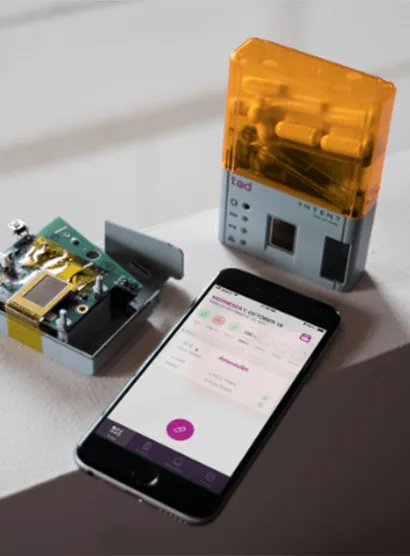
Intent Solutions
3 apps and a smart pill bottle
A biometric pill bottle for medication adherence, with a patient app, a pharmacist tablet app that loads prescriptions over Bluetooth and an admin portal for clinical trial data.
See the work
CommuniCare Advantage
60+ systems audited
A technology audit and 11-vendor EHR selection for a health plan, ending with a 25% smaller systems footprint.
See the workTrusted by healthcare leaders.
“I have worked with many technology teams during my career, and Digital Scientists is one of the best. They take the time to understand the customers' needs, deliver innovative solutions, are always professional, and work with your team as a true partner to achieve success.”

Amy Severino
Chief Innovation Officer, NeverAlone
“Digital Scientists provided immense value to our plan administrators, providers, and patients. The team was able to come in and understand our core needs, while remaining product agnostic. They helped identify the technical debt and pitfalls, and to get us to a point of stabilization and growth.”

Robert Hager
CEO, CommuniCare Advantage
What we build for pharmacies
Pharmacy integration
E-prescribing, order intake and pharmacy system connections.
Pharmacy integration →Healthcare integrations
EHR, payer, CRM and messaging connections that hold up in production.
Healthcare integrations →Back-office AI agents
Agents that draft intake, benefits and prior authorization work for staff to approve.
Back-office AI agents →Healthcare IT consulting
Which systems to keep, connect or replace, decided on evidence.
Healthcare IT consulting →Platform operations
L2 and L3 support for the platforms we build, with build-operate-transfer.
Platform operations →

Questions pharmacy owners and operators ask
Can you work with our pharmacy system?
Yes, if it has an API, a standard interface or a reliable export, and most pharmacy systems have at least one. We confirm what yours exposes in the first week. When it's a system we haven't connected to in production, we say so and prove the connection in the Blueprint before the build depends on it.
Can you help with manufacturer data reporting?
Yes. We build pipelines that pull dispense and patient status data from your pharmacy system, map it to each manufacturer's or hub's file specification, validate it and send it on schedule, with a record of what went out. We start by matching the files your staff build by hand today.
Do we have to replace our pharmacy system?
Usually not. Most pharmacies keep the system that handles dispensing, inventory and claims, and we build the intake, reporting, apps and agents around it. When replacement is the right call, we run the vendor selection, as we did in an 11-vendor EHR selection for CommuniCare Advantage.
Can AI handle benefits verification and prior authorization?
It drafts the work and your staff approve it. An agent gathers the documents, fills the payer forms and flags what's missing, and a person signs off before anything is sent. Models run inside your own cloud account, for example Amazon Bedrock with Claude, so patient data stays under your control.
Do you sign a BAA?
Yes, with every covered entity, before we touch patient data. Our security plan is mapped to NIST CSF 2.0, and each client gets a security addendum covering access, encryption, audit logging and incident response.
How do pharmacies usually start?
With a Blueprint on one workflow: $25K for 4 weeks, or from $50K for 6 weeks with a working prototype. It ends with a scope, an architecture and a priced build plan. Many pharmacies start with intake or reporting, since that's where staff time goes.
Talk it over
Tell us what you are trying to do. A senior person from our Atlanta team replies within one business day, and you can book a 30-minute call right after you send this.
- We tell you if we're the right fit, and if we're not, who is.
- Most work starts small, so you see how we work before you commit to more.
- We sign a BAA before we touch patient data.