
Pharmacy system integration for orders, adherence and reporting
Digital Scientists connects pharmacy management systems to the care platforms, CRMs, patient apps and reporting feeds around them, under a BAA. If your system has an API, a vendor partner program or a reliable export, we can connect it, and we confirm which in week one. We don't run a pharmacy system integration in production today. We do run NeverAlone, where a pharmacy already takes orders from skilled nursing facilities, and we built the apps and admin portal around Intent Solutions' smart pill bottle. Most pharmacies start with a Blueprint on one workflow.
Updated

Apps built around Intent Solutions' smart pill bottle
Interviews in McKesson 3PL's portal Blueprint
Patients across six states on NeverAlone, a platform we run
NeverAlone live and run by us since
What do pharmacy integrations usually connect?
Five things: e-prescribing, orders from care platforms, refills and adherence, the dispensing system itself and reporting feeds. Every row in the table is capability work for us. We don't run a pharmacy system integration in production today.
Here's what we do run. A pharmacy already takes orders from skilled nursing facilities through NeverAlone, the 24/7 virtual care platform we built and operate. That's an ordering workflow on our platform, not a connection to the pharmacy's own system. Across our healthcare integrations, we run PointClickCare and Netsmart (GEHRIMED) data in production with patients matched across both, plus Twilio messaging and AWS Chime video.
The table shows what usually moves and how. E-prescribing runs on NCPDP SCRIPT, the standard for new prescriptions, refill requests, changes and cancellations between prescribers and pharmacies.
What pharmacy integrations usually connect
| System | What moves | Method | Status |
|---|---|---|---|
| E-prescribing (Surescripts network) | New prescriptions, refill requests, changes and cancellations | NCPDP SCRIPT, usually through a certified e-prescribing vendor's API | Capability |
| Care platforms and EHRs | Medication orders from skilled nursing, home health and clinics | Platform API, FHIR medication resources or an order export | Capability |
| Pharmacy management system | Patients, prescriptions, fill, dispense and delivery status | Vendor API, partner program, database access or scheduled export | Capability |
| Patient apps and messaging | Refill requests, reminders, adherence check-ins and delivery status | App backend, webhooks and SMS | Capability |
| CRM | Referral source, prescriber and order status, minimum necessary | CRM API under a BAA | Capability |
| Manufacturers, hubs and payers | Dispense and patient status data, outcomes reporting | Specification files over SFTP, or the partner's API | Capability |
Status is for pharmacy work. Capability means we build it; it is not a feed we run today. See healthcare integrations for what runs in production.
What does connecting your pharmacy system take?
Access, mostly. Pharmacy management systems differ in what they expose, and that decides the method, the timeline and the cost. We find out in the first week, before any build depends on it.
A documented API
The cleanest path. We read the vendor's documentation, request credentials for a test environment and confirm which records and events it exposes.
A vendor partner program
Some vendors open their interfaces only to approved partners, with an agreement, a review and sometimes a fee. We check the terms and how long approval takes.
Database access or scheduled exports
When there's no API, a read-only database connection or a nightly report file often does the job. We confirm the fields, the schedule and who owns the export.
The week-one check
We list what your system exposes, what your contract allows, which workflow it serves and what fails if a feed stops. You get a written answer and a recommended method.
A BAA and minimum necessary
We sign a BAA before we touch patient data and move only the fields the workflow needs. See security and PHI.
Retries, logs and alerts
Every feed retries on failure, logs what it sent and alerts a person when something stops. Pharmacy orders can't sit in a queue unnoticed.
Have you built software around medication adherence data?
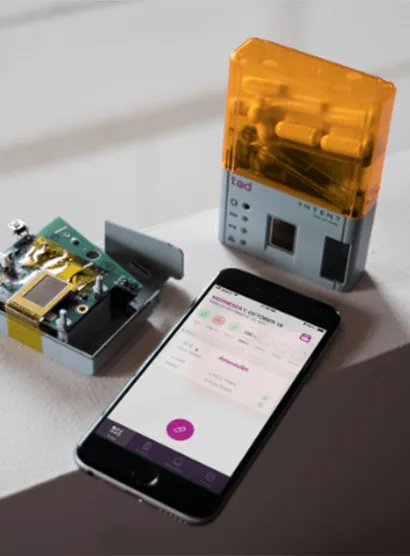
Yes. For Intent Solutions we designed and built the apps around tad (Take As Directed), a biometric smart pill bottle that dispenses the right dose to the right person at the right time.
We built three pieces on a HIPAA-compliant AWS platform. A React Native patient app pairs with the bottle over Bluetooth Low Energy and shows doses, missed doses and adherence history. A pharmacist tablet app loads prescriptions and regimens into the device before it goes home with the patient. A Ruby on Rails admin portal, shown above, sets up medications, devices, participants and prescriptions, and exports adherence data as CSV for clinical research.
That's the same data a refill and adherence workflow needs: what was prescribed, what was taken and when, and who needs a call. The difference in a pharmacy integration is where the prescription comes from. We'd read it from your pharmacy system instead of a portal. See the Intent Solutions case study.
Companion apps: patient, pharmacist and admin
Stakeholder personas researched
Medication adherence products reviewed
Bluetooth link between app and pill bottle
Can you build manufacturer and payer reporting feeds?
Yes. We build pipelines that pull dispense and patient status data from your pharmacy system, map it to each recipient's file specification, validate it and send it on schedule, with a record of what went out.
Limited-distribution drugs come with reporting to manufacturers and hubs, and payers ask for outcomes. In most pharmacies a person builds those files by hand every week or month. We start by matching the files your staff send today, field for field, then automate them.
The other side of reporting is the portal your partners use to get their data. For McKesson 3PL, which handles distribution for pharmaceutical, plasma and cell and gene therapy companies, we ran a 4-month Blueprint to redesign the client portal. Clients were running multi-step raw data exports to answer simple questions. We interviewed 25 people, tested 5 clickable prototypes and delivered a solution architecture ready to build. See the McKesson 3PL case study.
Manufacturer data
Dispense and patient status files for limited-distribution drugs
Hubs
Therapy start, shipment and patient status updates
Payers
Outcomes and adherence reporting
Your own team
Dashboards built from the same validated data
Where do pharmacy integration projects usually start?
With the one workflow that costs your staff the most time, and the connection it depends on. We prove that connection first, in a Blueprint, so the build never rests on an assumption.
Order intake
Orders from skilled nursing, home health or clinic platforms land in your pharmacy system without rekeying. We start with the platform that sends you the most orders.
Refills and adherence
Refill requests, reminders and check-ins by text or app, read from and written back to your pharmacy system.
Reporting
One manufacturer or payer file, automated and validated against the one your staff build today.
A Blueprint
$25K for 4 weeks, or from $50K for 6 weeks with a working prototype. It ends with a scope, an architecture and a priced build plan. See Blueprint.
These are common starting points, not rules
Many pharmacies combine two. See technology for pharmacies for the wider picture.
Pharmacy and medication work we've delivered
Intent Solutions
3 apps and a smart pill bottle
A biometric pill bottle for medication adherence, with a patient app, a pharmacist tablet app that loads prescriptions over Bluetooth and an admin portal that exports adherence data.
See the work
McKesson 3PL
25 interviews, 5 prototypes
A 4-month Blueprint for the portal pharmaceutical, plasma and cell and gene therapy companies use to get their distribution data. Related work for reporting feeds.
See the work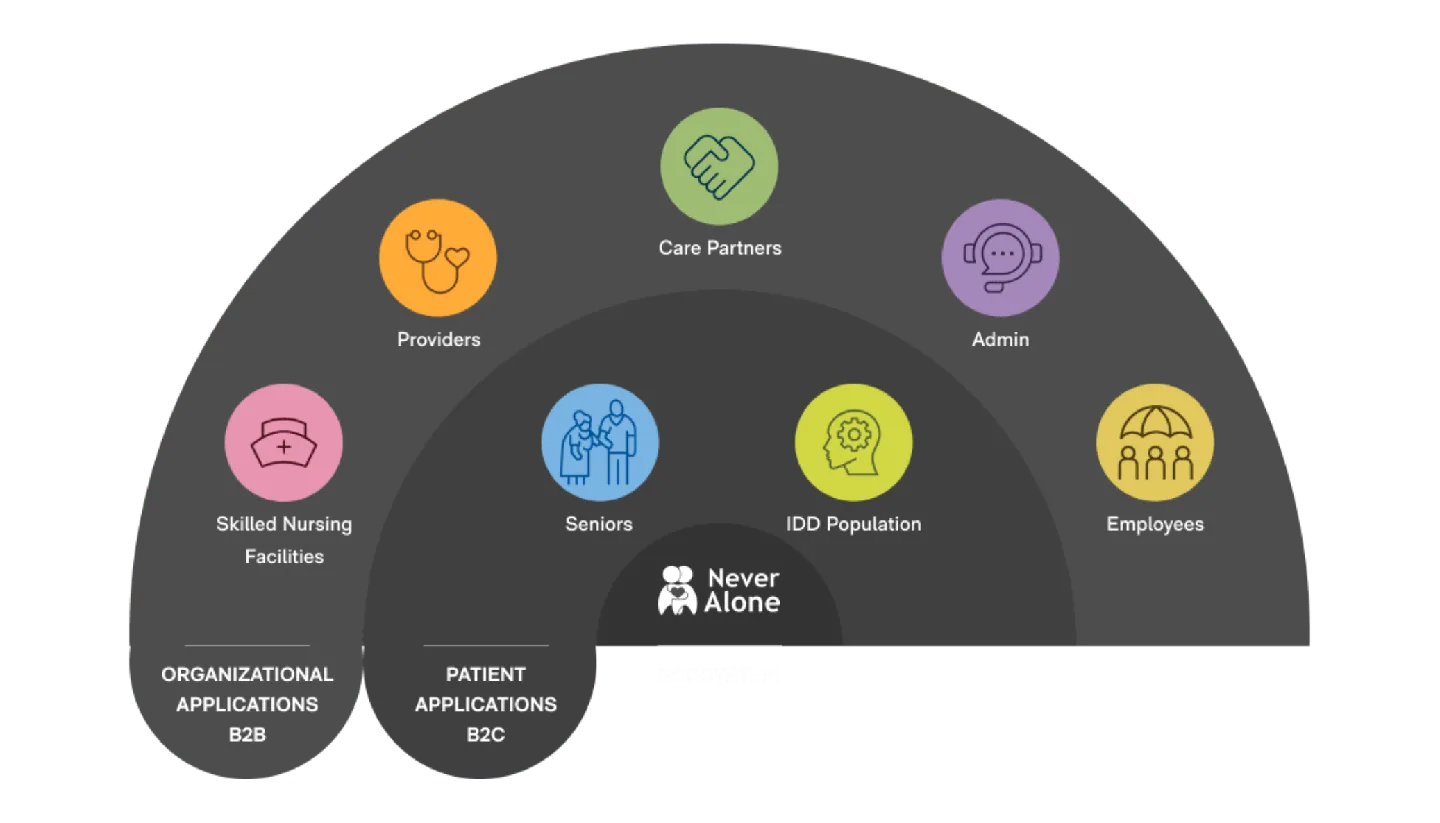
NeverAlone · CommuniCare
30,000 patients, six states
A 24/7 virtual care platform we built and run. A pharmacy already takes orders from skilled nursing facilities through it, as a workflow on our platform.
See the workTrusted by healthcare leaders.
“I have worked with many technology teams during my career, and Digital Scientists is one of the best. They take the time to understand the customers' needs, deliver innovative solutions, are always professional, and work with your team as a true partner to achieve success.”

Amy Severino
Chief Innovation Officer, NeverAlone
Related integration and pharmacy pages
Healthcare integrations
EHR, payer, CRM and messaging connections that hold up in production.
Healthcare integrations →CRM integration
Referral and patient data in your CRM, minimum necessary, under a BAA.
CRM integration →Payer API integration
Eligibility, prior authorization and claim status from payers.
Payer API integration →FHIR and HL7 integration
Standard interfaces to EHRs and care platforms.
FHIR and HL7 integration →Technology for pharmacies
Software for specialty, infusion and compounding pharmacies.
Technology for pharmacies →


Questions about pharmacy system integration
Can you connect PioneerRx, Pharmetika or Liberty?
If the system exposes an API, a partner program or a reliable export, yes. We haven't connected any of these in production, so we don't guess. In week one we confirm what your version and your contract allow, and which method fits the workflow, before the build depends on it.
Can pharmacy data go into our CRM?
Yes, under a BAA and minimum necessary. We move only the fields the CRM workflow needs, such as referral source, prescriber and order status, and keep the full medication record in the pharmacy system. Your CRM vendor has to sign a BAA too, and we check that first.
Do you handle manufacturer reporting feeds?
We build them. A pipeline pulls dispense and patient status data from your pharmacy system, maps it to each manufacturer's or hub's specification, validates it and sends it on schedule, with a record of what went out. We start by matching the files your staff build by hand today.
Do you connect to Surescripts for e-prescribing?
E-prescribing runs on NCPDP SCRIPT over the Surescripts network, and every product that sends or receives on it has to be certified. Most products connect through a certified e-prescribing vendor, and we integrate with that vendor's API. We confirm the path and the certification work in the Blueprint.
Do we have to replace our pharmacy system?
Usually not. Most pharmacies keep the system that handles dispensing, inventory and claims, and we build the intake, reporting and patient apps around it. When replacement is the right call, we run the vendor selection, as we did in an 11-vendor EHR selection for CommuniCare Advantage.
Talk it over
Tell us what you are trying to do. A senior person from our Atlanta team replies within one business day, and you can book a 30-minute call right after you send this.
- We tell you if we're the right fit, and if we're not, who is.
- Most work starts small, so you see how we work before you commit to more.
- We sign a BAA before we touch patient data.