
Healthcare CRM, set up and connected to clinical systems under a BAA
Digital Scientists connects clinical, claims and care systems to CRMs like Salesforce, HubSpot and GoHighLevel. We settle the BAA question first, then move only the data the workflow needs. For Congruity Health we turned claims and eligibility data into intervention tasks inside the care team's Salesforce, with dispositions synced back for reporting. For NeverAlone we replaced Salesforce with a care management platform we built and still run. Most CRM work starts with a short check of your vendor's BAA terms, your data and the workflow.
Updated

Enrolled patients tracked for Congruity Health
Intervention triggers sent to the care team's Salesforce
Patients on NeverAlone, which moved off Salesforce to a platform we built
Confirmed with every vendor before any PHI moves
Can a CRM hold patient data under HIPAA?
Yes, if the CRM vendor signs a business associate agreement (BAA) that covers the edition and features you actually use. No BAA, no PHI. That's the first thing we check, before any design work.
A BAA is the contract that makes a vendor answerable for protecting patient data it stores or processes for you. CRM vendors handle it differently. Some sign one only on specific editions or add-ons. Some cover the core database but not every feature, such as marketing email, forms or AI tools. Terms change, so we read the vendor's current terms for your plan and don't rely on what was true last year.
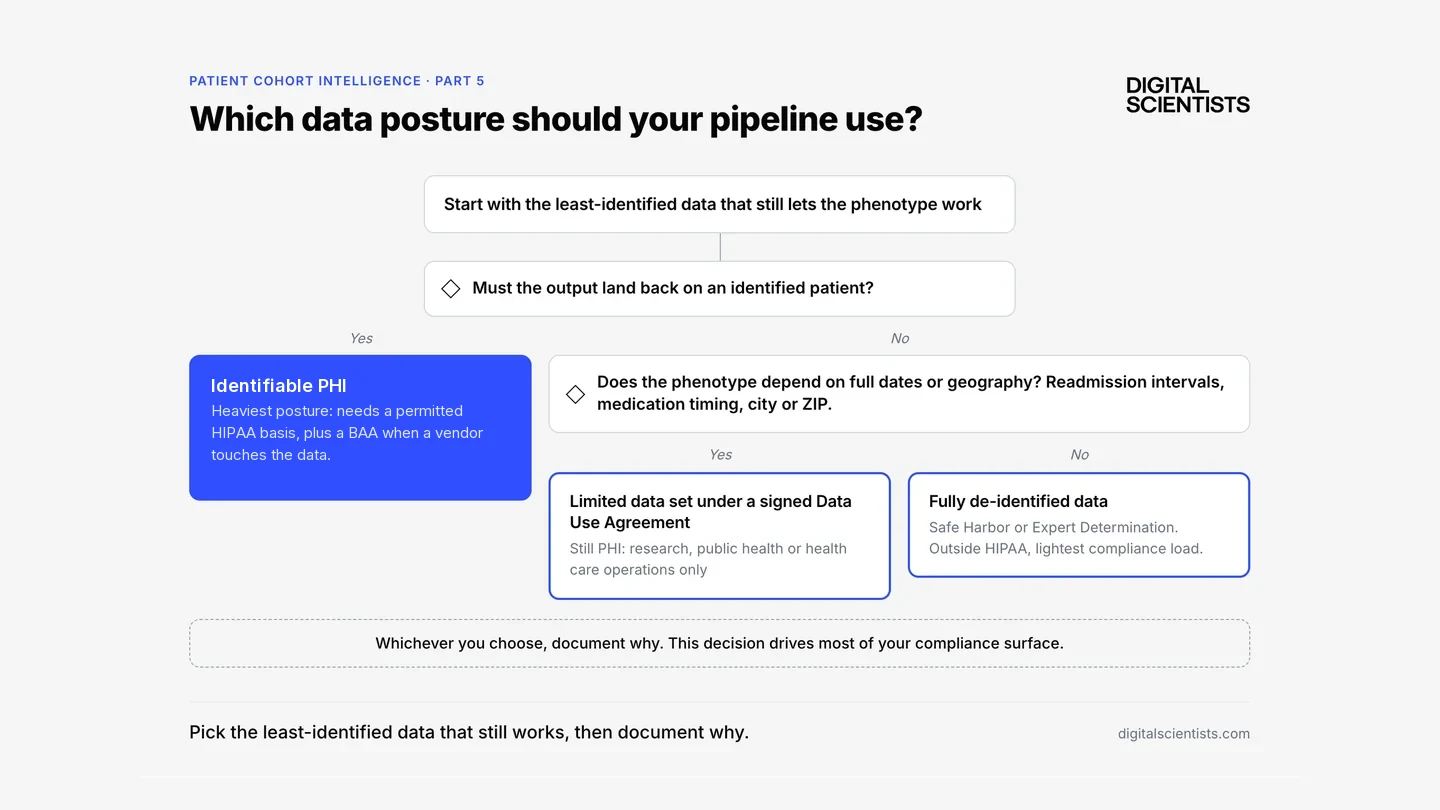
Then we apply minimum necessary: the CRM gets only the fields a person needs to do the job in front of them. Often that's a name, a contact method, a reason to call and a link back to the clinical system. CRM integration is one part of our healthcare integration services.
Salesforce
Confirm your edition and add-ons are covered by the BAA
HubSpot
Confirm your tier and the features you use are covered
GoHighLevel
Check whether a BAA is offered on your plan
Any other CRM
No BAA on your plan means no PHI in it
Custom platform
Your cloud provider's BAA plus ours
What does a clinical-to-CRM integration look like in production?
For Congruity Health it looks like a task in Salesforce. Claims and eligibility data come in, a rules engine finds patients who need outreach, and the care team sees the task in the CRM they already use.
Third-party administrators send claims and eligibility files over managed FTPS. The data lands in a cloud data warehouse, where rules flag events such as a diabetes patient with no follow-up visit in three months. Cloud functions then create a lead in the telehealth provider's Salesforce, with the trigger reason, criticality and recent visit history on the record. No separate login and no second screen.
The agent calls, books the telehealth visit and updates the disposition in Salesforce. That disposition syncs back to the warehouse, so executive dashboards show which triggers turn into enrolled patients. See the Congruity Health case study.
Enrolled patients tracked
Intervention triggers
Patient enrollment rate
What patient data should go into a CRM?
Less than most teams expect. The CRM needs enough to act: who to contact, why and what happened. The clinical detail stays in the clinical system, one click away.
The table is where we start most conversations. Your BAA, your workflow and your compliance team set the final line. When a field is borderline, we send a flag or a code in place of the full record, and the person who needs more opens the source system.
Common data and whether it belongs in the CRM
| Data | In the CRM? | Why |
|---|---|---|
| Name, phone, email, preferred contact method | Yes, under a BAA | Outreach can't happen without it |
| Referral source, program, enrollment status | Yes | This is what the CRM is for |
| Reason for outreach (trigger, care gap) | Yes, as a short reason or code | The agent needs to know why they're calling |
| Call outcome and disposition | Yes, and synced back | Closes the loop for reporting |
| Recent visits and diagnosis codes | Sometimes, limited | Only when the agent needs context for the call |
| Medication lists and dosages | Rarely | Keep in the clinical system; send a flag such as "refill outreach due" |
| Clinical notes, lab results | No | Link back to the EHR |
| Behavioral health or SUD detail | No | 42 CFR Part 2 consent rules apply on top of HIPAA |
Starting points, not rules. Marketing tools inside a CRM are a separate question: check whether the BAA covers them before any patient data reaches a campaign.
How does data get from a clinical system into the CRM?
Through one of three patterns: webhooks for events, APIs for lookups and writes, and batch files for everything that runs on a schedule. Most integrations mix two.
We pick the pattern from what each system actually offers, not what its sales deck says. Congruity Health runs on batch in and API out: scheduled claims files feed the warehouse, and cloud functions write leads into Salesforce through its API. Whatever the pattern, writes go through a queue with retries, failures land where a person reviews them, and every read and write is logged.
Three ways to connect a clinical system to a CRM
| Pattern | How it works | Good for | Watch for |
|---|---|---|---|
| Webhooks | The source system calls us when something changes | New referrals, signed forms, finished calls | Missed events; we reconcile on a schedule too |
| APIs | We call the CRM or source system to read or write records | Creating tasks and leads, syncing dispositions back | Rate limits and token expiry |
| Batch files | Scheduled extracts over SFTP or FTPS, loaded into a warehouse | Claims, eligibility, nightly trigger runs | A missing or empty file counts as a failure |
Status: Congruity Health's Salesforce integration was delivered; the patterns apply to HubSpot, GoHighLevel and other CRMs that publish an API. We can integrate with any system that has an API, a standard interface or a reliable export.
When should you replace the CRM with a custom care management platform?
When the care team spends its day working around the CRM. That's what happened on NeverAlone, and in 2022 we replaced Salesforce with a care management platform we built.
NeverAlone is a 24/7 virtual care platform that began as a 90-day MVP in March 2021. Care coordination and provider management started in Salesforce. As the workflow grew, the CRM was shaping the care, not the other way round. We built a purpose-built care management platform, brought that work in-house and still run it today.
A sales CRM is built around leads and deals. Care management is built around patients, care plans, schedules and clinical handoffs. When most of your custom fields are clinical, when staff keep a spreadsheet beside the CRM, or when the license and the BAA add-ons cost more each year than the workflow is worth, a custom platform is worth pricing. Often the right answer is both: keep the CRM for sales and referrals, and build the clinical side. See care management software.
Patients across six states
Calls a year
Live and run by us since
Where do you start a HIPAA CRM integration?
With a short check of four things. You get a written plan and estimate before the build starts, and if a connection won't work, you hear it early.
The BAA
We read your CRM vendor's current BAA terms for your plan and list which features it covers. If it doesn't cover what you need, we say so before anything else.
The workflow
Who acts on the record, what they need to see and what they write back. That decides the minimum data set.
The access
API keys, sandboxes and partner approvals for the CRM and each source system. Approvals often set the calendar, so we start them on day one.
The plan
The pattern for each connection, the fields that move, the risks we found and a written estimate. Larger programs start with a Blueprint.
CRM and care management work we've delivered

Congruity Health
968 intervention triggers
Claims and eligibility data turned into outreach tasks in the care team's Salesforce, with dispositions synced back to executive dashboards.
See the work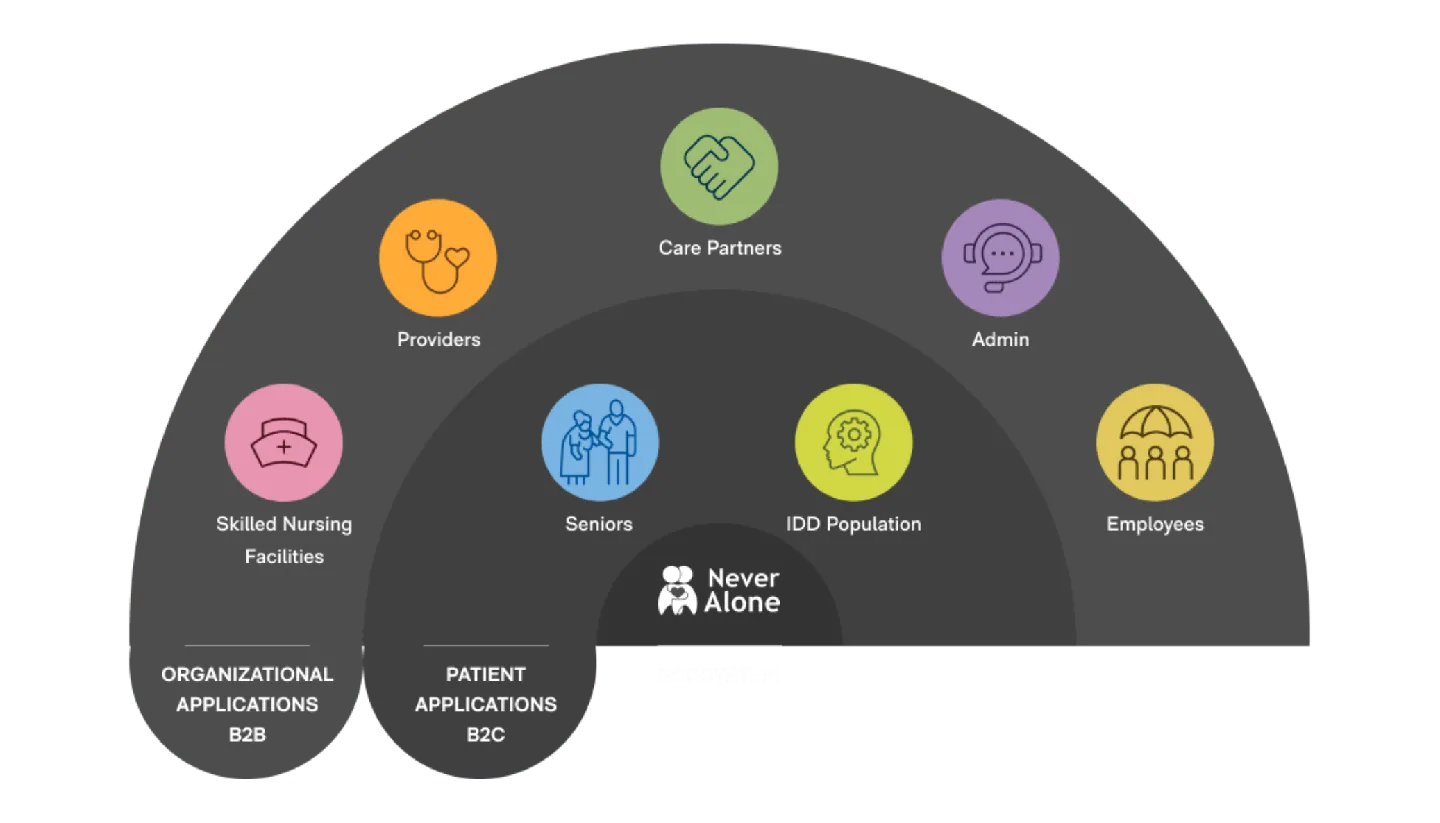
NeverAlone · CommuniCare
30,000 patients, six states
We replaced Salesforce with a custom care management platform on a 24/7 virtual care platform that began as a 90-day MVP. We still run it.
See the workTrusted by healthcare leaders.
“The team at Digital Scientists was a huge help in not only developing our analytics platform, but understanding the competitive space and defining our true value proposition for our customers.”

Justin Davis
CEO, Congruity Health
“I have worked with many technology teams during my career, and Digital Scientists is one of the best. They take the time to understand the customers' needs, deliver innovative solutions, are always professional, and work with your team as a true partner to achieve success.”

Amy Severino
Chief Innovation Officer, NeverAlone
Related integrations
Healthcare integration services
EHRs, labs, CRMs, payers and claims, connected under a BAA.
Healthcare integration services →Claims and X12 integration
837 claims, 835 remittance and 270/271 eligibility.
Claims and X12 integration →Pharmacy integration
E-prescribing, NCPDP SCRIPT and pharmacy systems.
Pharmacy integration →Behavioral health EHR integration
Where 42 CFR Part 2 consent sits on top of HIPAA.
Behavioral health EHR integration →Latest thinking on patient data and integration
Questions about HIPAA CRM integration
Does GoHighLevel offer a HIPAA option?
Check your plan before any patient data goes in. Vendors change what they offer and which plans it covers, so we confirm whether GoHighLevel offers a BAA on the plan you're on, and which features it covers, before any PHI moves. If it doesn't, we keep PHI out of it and send only what a BAA isn't needed for, or we route the patient side through a system that is covered.
Can medication data go into a CRM?
Rarely, and usually it shouldn't. A medication list is clinical detail, and minimum necessary says the CRM gets only what the person working the record needs. Most workflows work fine with a flag such as "refill outreach due" and a link back to the clinical or pharmacy system. If a workflow truly needs a medication field, the BAA has to cover it and access has to be limited to the people who use it.
Salesforce Health Cloud or a custom platform?
It depends on how clinical the workflow is. If the work is mostly referrals, intake and outreach, a CRM under a BAA does the job, and we integrate it.We made that call with NeverAlone and replaced Salesforce with a care management platform we built. We'll lay out both options with costs before you commit.
Can you connect our EHR to HubSpot?
If the EHR has an API, a standard interface or a reliable export, and your HubSpot plan is covered by a BAA for the features you use, yes. We confirm both first. Then we move the minimum data set, usually contact details, a reason for outreach and a status, and keep clinical detail in the EHR.
Will you sign a BAA?
Yes. We sign a BAA before we touch patient data. Our security plan is mapped to NIST CSF 2.0, and each client gets a security addendum. Every vendor in the chain that handles PHI, including the CRM, has to be covered by a BAA too. See security and PHI.
Talk it over
Tell us what you are trying to do. A senior person from our Atlanta team replies within one business day, and you can book a 30-minute call right after you send this.
- We tell you if we're the right fit, and if we're not, who is.
- Most work starts small, so you see how we work before you commit to more.
- We sign a BAA before we touch patient data.