
For medtech and medical device companies
Digital Scientists builds software for medtech and medical device companies: companion apps, connected device apps, device cloud and machine learning on device data. We built Guardian with Vigilant Medical Solutions, a computer-vision model that reads any OR monitor brand at 99.9% transcription accuracy and puts the vitals on the anesthesiologist's phone. We build to design controls, and our quality partner, Rook Quality Systems, handles the QMS, design history file and 510(k) documentation. Most device companies start with a 4 to 6 week Blueprint that proves the riskiest connection first.
Updated
Guardian transcription accuracy
Monitor images the Guardian model trained on
Monitor brand Guardian reads, no hospital IT project
Managed devices on NeverAlone
Have you built software around a medical device?
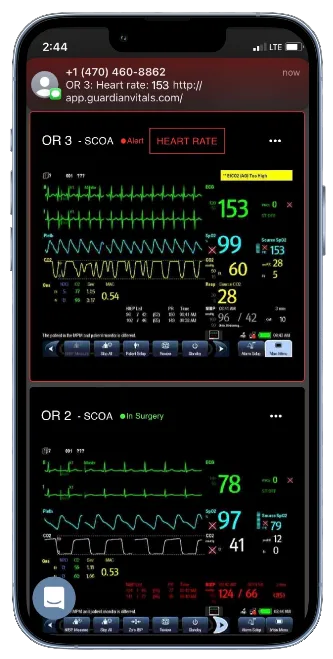
Yes. Guardian reads the screen of any OR monitor with a small edge device and a computer-vision model, then puts every patient's vitals on the anesthesiologist's phone.
Justin Scott, M.D., FASA, spent more than 21 years in the OR before he founded Vigilant Medical Solutions. His problem was simple to state: one anesthesiologist, several patients in different rooms, and no continuous view of any of them. He had a working prototype. We built the rest: the machine learning model, the mobile app with configurable alerts, and the cloud behind it.
The hard call was what not to integrate. Every monitor vendor has its own data pipeline, and every hospital integration is its own IT project. Reading the screen instead meant Guardian works with any monitor brand and a new OR goes live without one. The model trained on more than a million monitor images, reached 99.9% transcription accuracy, and refreshes from the OR to the phone in under two seconds.
Guardian is used by anesthesia teams across the country and was evaluated by the Geneva Foundation for forward military medical care. Read the Guardian case study.
Vital-sign transcription accuracy
Monitor images the model trained on
Refresh from the OR to the phone
Monitor brand, read by an edge device
What problems do medtech and device companies bring us?
Usually the device works and the software around it doesn't. These six come up most.
A device without the app it needs
The hardware is proven. Patients and clinicians still need a companion app that pairs reliably, works offline and is simple enough to use on a bad day.
Data stuck on the device
Readings sit on the device or in a vendor's cloud. Clinicians, researchers and your own team can't see them in one place.
An FDA path that shapes the software
Whether your software is a device, and which class, decides how it gets built and documented. You need engineers who work inside design controls from the first sprint, not after.
Integration with every hospital's equipment
Every site has different monitors, networks and IT rules. One integration per hospital doesn't scale.
Machine learning that has to be trusted
A model that reads a signal or an image needs accuracy you can measure and defend before a clinician acts on it.
A fleet to run once it ships
Devices in the field need updates, monitoring and someone on call when one goes quiet.
How do you handle FDA design controls and 510(k) documentation?
We build to design controls, and our quality partner, Rook Quality Systems, handles the QMS, the design history file and 510(k) documentation. Your regulatory consultant sets the strategy, and we work with them.
Design controls are the FDA's process for showing that a device's design meets its user needs: requirements, design reviews, verification, validation and the traceability between them. For software, that means every requirement maps to code and to a test, and every change leaves a record. We set that up in the Blueprint, before the build depends on it.
If you're not sure whether your software is a device at all, start with our page on software as a medical device (SaMD). The answer changes how the work is planned, tested and documented. We don't claim a clearance on your behalf; the submission is yours, prepared with your quality and regulatory team.
Who does what on a regulated device software project
| Work | Digital Scientists | Rook Quality Systems | Your regulatory consultant |
|---|---|---|---|
| Regulatory strategy and device classification | Input on what the software does and how | Quality system input | Leads |
| Requirements, architecture and design reviews | Leads, built to design controls | Reviews against the QMS | Reviews |
| Software development, verification and validation | Leads, with traceability from requirement to test | Reviews the records | As needed |
| QMS and design history file | Supplies the engineering records | Leads | As needed |
| 510(k) documentation | Supplies software documentation | Leads the documentation | Leads the submission strategy |
Every project splits this a little differently. If you already have a quality system and a consultant, we work inside yours.
Can you build the app that connects to our device?
Yes. For Intent Solutions we designed and built the apps around tad (Take As Directed), a biometric smart pill bottle that releases the right dose, at the right time, to the right person.
The pill bottle hardware came from Intent's electronics partner, Milestone Consulting. We connected to it over Bluetooth Low Energy and built three applications around it: a React Native patient app, a pharmacist tablet app that loads prescriptions into the device, and a web admin portal where clinical research teams set up regimens and export adherence data. All of it ran on a HIPAA-ready AWS platform.
Connected device app development is mostly about the edges: pairing that fails, a device that's offline, a dose that needs to be released remotely when the hardware misbehaves. We design for those cases first. See the Intent Solutions case study and remote patient monitoring.
Device connection
Bluetooth Low Energy pairing, configuration and data sync
Patient app
iOS and Android, biometric identity, reminders and adherence history
Clinician and pharmacist apps
Load prescriptions into the device and hand it off ready to use
Admin and research portal
Programs, regimens, participants and CSV export for trials
Device cloud
HIPAA-ready AWS back end for device data and alerts
Edge devices
Small computers beside existing equipment, like Guardian's monitor reader
Where do device companies usually start with us?
With a Blueprint that settles scope, architecture and the regulatory path, and proves the riskiest connection before the build depends on it. Here are the common first steps.
Common first steps, by situation
| Where you are | What's usually true | Common first step | Time and investment |
|---|---|---|---|
| A device and no software around it | The hardware works. The app, cloud and clinician view don't exist yet. | Blueprint: requirements under design controls, architecture, and a working prototype that talks to the device. | 4 to 6 weeks. $25K, or from $50K with a prototype |
| A prototype you need in clinicians' hands | A founder or clinical team built something that works in the lab. | A Blueprint, then an MVP with the device connection, app and cloud built for real use. | MVP in 8 to 16 weeks. $75K to $250K |
| A model that reads device data | Images, signals or readings that a model could interpret, if it's accurate enough. | A Blueprint that tests accuracy on your data first. See healthcare AI development. | Scoped from the Blueprint |
| Device software already shipping, with work slipping | Your team owns the firmware. The app, cloud or integrations keep getting pushed. | Build with Us: a senior architect in your codebase from week one. | $10K for the first two weeks, then $20K a month |
These are common starting points, not rules. Many clients combine them or change course, and the first conversation is where we work out the right one. Prices from our published Blueprint, MVP and Build with Us pages.
What do you build, connect and run for medtech companies?
The software around the device: the apps people use, the cloud that holds the data, the models that read it, and the operations that keep a fleet running.
Companion and connected device apps
iOS, Android and web apps that pair with your device and stay usable when it's offline. See healthcare app development.
Software as a medical device
Software that is the device, built to design controls with our quality partner. See SaMD.
Machine learning on device data
Computer vision and models that read signals and images, with accuracy measured before anyone relies on it. Guardian's model reads any monitor brand at 99.9% transcription accuracy. See healthcare AI development.
Device cloud and data
Pipelines and storage for device data, and connections to the EHRs and systems your customers run. We integrate with any system that has an API, a standard interface or a reliable export. See healthcare integrations.
Usability research
Studies with the patients and clinicians who will use the device, so the design holds up in real use. See UX design and research.
Fleets we run
For NeverAlone we manage 750+ iPads with mobile device management, around the clock. See platform operations and security and PHI.
Work around devices, data and the people who use them
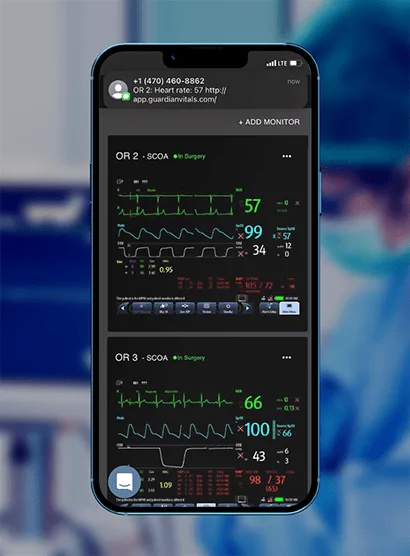
Guardian · Vigilant Medical Solutions
99.9% accuracy
An anesthesiologist's prototype turned into a national OR monitoring platform: computer vision trained on 1M+ monitor images, an edge device beside any monitor brand, a mobile app and the cloud behind it.
See the work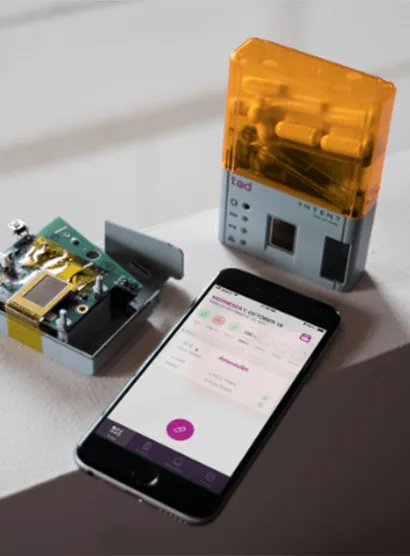
Intent Solutions
Smart pill bottle and apps
Patient, pharmacist and admin apps for tad, a biometric smart pill bottle, connected over Bluetooth Low Energy on a HIPAA-ready AWS platform.
See the work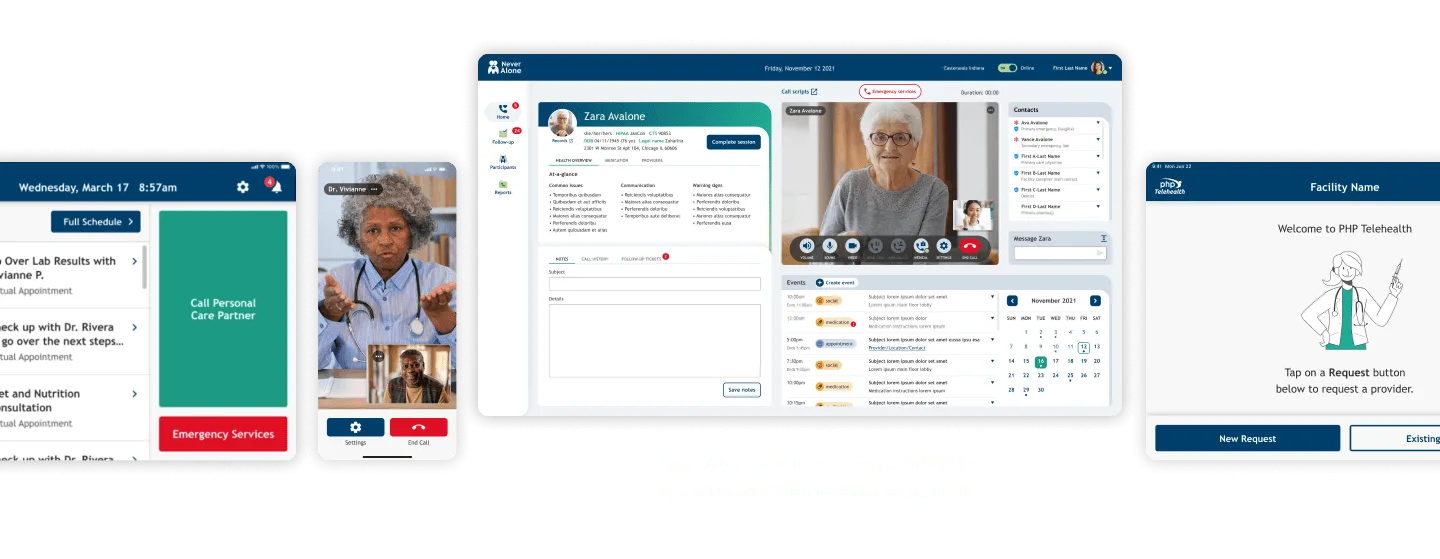
NeverAlone · CommuniCare
750+ managed devices
A 24/7 virtual care platform for 30,000 patients across six states, running on managed iPads we operate. It began as a 90-day MVP in March 2021.
See the workTrusted by healthcare leaders.
“By applying a robust machine learning model to our app, DS helped us create a scalable and accurate solution to improve the operating room experience for the anesthesia team and the patient. They are true collaborators.”
Justin Scott, M.D., FASA
CEO, Vigilant Medical Solutions
Related pages for medtech and device companies
Medical device software
Software as a medical device, built to design controls.
Medical device software →Remote patient monitoring
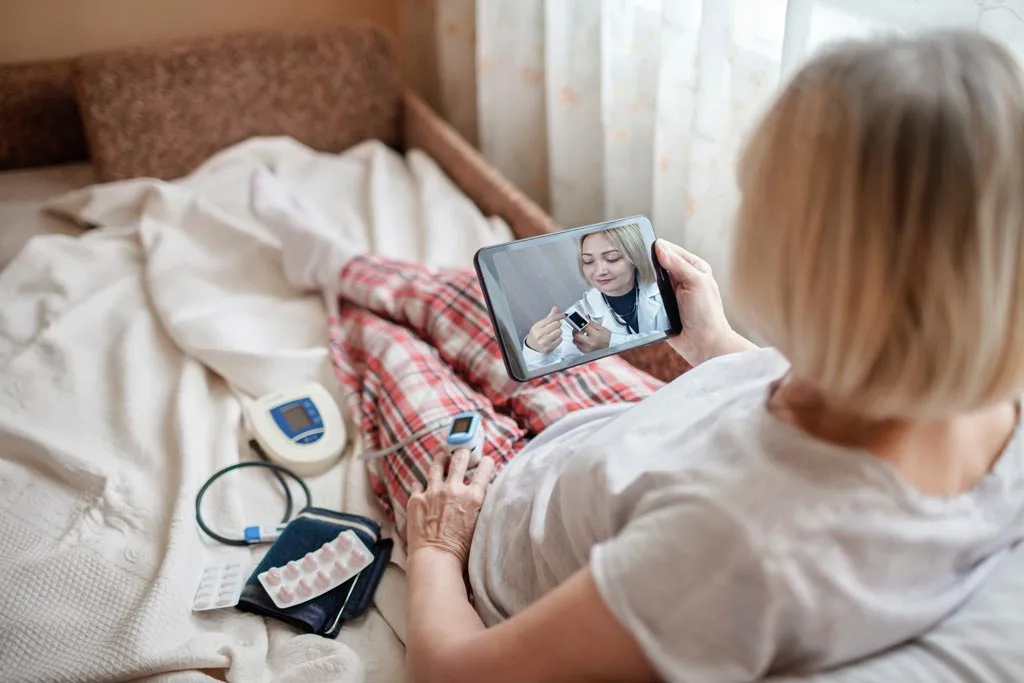
Device data in front of the clinicians who act on it.
Remote patient monitoring →Healthcare AI development
Models and agents inside real clinical workflows.
Healthcare AI development →UX design and research
Usability research with patients and clinicians.
UX design and research →Product development
From Blueprint to MVP to platform.
Product development →IoT application development
Connected devices and apps outside healthcare.
IoT application development →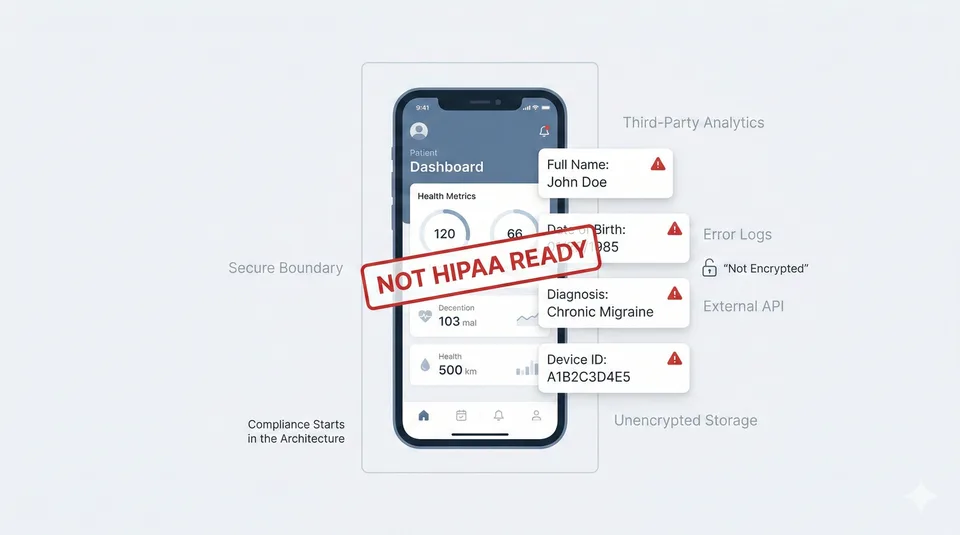
Questions medtech and device companies ask
Do you work with our regulatory consultant?
Yes. Your regulatory consultant leads the strategy: whether the software is a device, its class and the submission path. We build to that plan, under design controls, and give your consultant the engineering records they need. If you don't have one yet, we'll say so early, because the answer shapes how the software gets built.
Who handles our QMS and 510(k) documentation?
Our quality partner, Rook Quality Systems, handles the QMS, the design history file and 510(k) documentation. We build to design controls and supply the requirements, design reviews, verification and validation records that go into them. If you already run a quality system, we work inside yours.
Do you follow IEC 62304?
Yes. IEC 62304 is the international standard for the medical device software lifecycle. We build to it with your QMS partner: planning, requirements, architecture, verification and risk records for each software item. It's a process standard, so the evidence lives in your quality system and design history file, not in a certificate we hold.
Can you connect an app to our device over Bluetooth?
Yes. For Intent Solutions we connected patient and pharmacist apps over Bluetooth Low Energy to tad, a biometric smart pill bottle built by their electronics partner. We design for the failure cases first: pairing that drops, a device that's offline, and what happens when the hardware misbehaves.
Can you run the devices once they're in the field?
Yes, for platforms we built. For NeverAlone we manage 750+ iPads with mobile device management and run the platform around the clock, with L2 and L3 support from our team. When your team is ready to take over, we hand everything over on a build-operate-transfer plan.
How do you handle patient data from devices?
We sign a BAA before we touch PHI. Our security plan is mapped to NIST CSF 2.0, and each client gets a project security addendum. Encryption, access controls and audit logging for device data are decided in the Blueprint. See security and PHI.
Talk it over
Tell us what you are trying to do. A senior person from our Atlanta team replies within one business day, and you can book a 30-minute call right after you send this.
- We tell you if we're the right fit, and if we're not, who is.
- Most work starts small, so you see how we work before you commit to more.
- We sign a BAA before we touch patient data.