
Lab and results integration
Digital Scientists builds lab and results integrations: orders from practices to the lab, results back into the ordering EHR, LIS data into apps and analytics, and results delivered to patients. We work with HL7 v2 orders and results (ORM and ORU), FHIR DiagnosticReport and Observation, LOINC codes and file feeds. We don't run a direct LIS interface in production today. Lab results already flow through our work inside EHR data, including the six-source risk adjustment AI behind $10M+ in RAF improvement. Most lab work starts with a week-one check of your LIS and real sample messages.
Updated

Clinical data sources behind our risk adjustment AI, lab results among them
RAF improvement from that work, delivered 2023 to 2024
Forecast PDPM revenue on the MDS platform, which reads lab results
Signed before we touch patient data
Do you build lab orders and results interfaces?
Yes, as a capability. To be straight about it: we don't run a direct lab interface in production today. Lab results reach our work through EHR data, and the standards for a direct LIS connection are well documented.
LIS integration connects a laboratory information system, the system a lab uses to receive orders, run tests and release results, to the practices, apps and analytics that need its data. Two message flows do most of the work. Orders go from the ordering system to the lab. Results come back, usually one message per order with a line for each test.
The table shows the messages and FHIR resources involved. Every row is capability: we know how each one works and how to test it, and we'd build and prove it with you, starting from your vendor's interface spec and real sample messages. How healthcare systems exchange data in general is on our healthcare integration page.
Lab orders and results: messages, resources and our status
| Message or resource | What it is | What it carries | Status |
|---|---|---|---|
| HL7 v2 ORM^O01 | General order message | Test orders from a practice EHR to the lab: patient, ordering provider, tests, specimen and insurance | Capability |
| HL7 v2 OML^O21 | Lab order message in newer HL7 v2 versions | The same job as ORM, with more specimen detail | Capability |
| HL7 v2 ORU^R01 | Observation result | Results from the lab: each test with its value, units, reference range, abnormal flag and status (preliminary, final, corrected) | Capability |
| HL7 v2 ACK | Acknowledgment | Confirms each message arrived, or says why it was rejected | Capability |
| FHIR ServiceRequest | The order as a FHIR resource | What was ordered, for whom and by whom | Capability |
| FHIR DiagnosticReport | The report as a FHIR resource | The finished report, its status and links to each result | Capability |
| FHIR Observation | One result as a FHIR resource | A single test value with its LOINC code, units and reference range | Capability |
| File feeds (CSV, PDF) | Scheduled extracts on a secure SFTP server | Batch results for analytics, and PDF reports where a lab sends nothing structured | Capability |
Capability means we haven't run it in production yet. LOINC is the standard code set for naming lab tests; we map a lab's local test codes to it.
Can you get results into the ordering practice's EHR?
Yes, through whatever inbound channel the EHR supports: an HL7 results interface, FHIR or the vendor's own API. Which channel a given EHR accepts is the first thing we check.
In production we read data from PointClickCare and Netsmart (GEHRIMED), and we match the same patient across both, including patients who showed up with more than one Medicare ID. That matching problem is the hard part of lab results too. A result is only useful if it lands on the right patient and in the ordering provider's inbox. Results that don't match cleanly go to a person to review. Nothing gets filed on a guess.
Our Epic work so far has been in Epic's sandbox. We've also built a FHIR R4 gateway on HAPI FHIR, tested and waiting on a partner's production credentials. The tiles show where each EHR stands with us today. For EHR work in general, see EHR integration and FHIR and HL7 integration.
PointClickCare
Production: clinical data, lab results included, for the MDS platform
Netsmart (GEHRIMED)
Production: EHR data, patients matched with PointClickCare
Epic
Sandbox only so far
FHIR R4 gateway (HAPI FHIR)
Built and tested; waiting on production credentials
Any other EHR
An API, a standard interface or a reliable export
How do lab results reach patients, and when?
Through a portal or app, under release rules your clinical leaders own. Most results go to patients without delay. The real questions are which ones wait for a clinician and how patients get told.
Under the 21st Century Cures Act information blocking rules, holding results back from patients needs a reason that fits one of the rule's exceptions. Many patients now see a result before their doctor calls. That changes what the portal has to do. We build results delivery as a set of rules, not code buried in a release. See patient portals and apps.
Release timing
Which results go out right away and which wait, by test type, with each delay tied to a documented exception such as preventing harm.
Sensitive results
Some states add rules for certain tests. Each rule lives in configuration, so your legal and clinical teams sign off once and change it without a new release.
A view patients follow
Value, units, reference range and the flag in plain words, with the ordering provider's note when there is one.
Notifications
A text or email that says a result is ready, with no PHI in the message. The result stays behind the login.
Audit trail
Who released each result, when, and when the patient opened it.
Where does lab data already flow through work we've delivered?
Inside EHR data. Lab results were one of six data sources behind the risk adjustment AI we built for CommuniCare, and the MDS platform we built reads lab results from PointClickCare.
For risk adjustment, delivered from 2023 to 2024, the engine read diagnoses, health risk assessments, medications, progress notes, lab results and claims for 20K+ patients. A lab value was often the evidence behind a suggested diagnosis code, and every suggestion linked back to the record it came from. The result was $10M+ in RAF improvement at 90%+ accuracy across 7 states and 245 providers.
The MDS platform, built from April 2024 and handed to CommuniCare's own team, checks assessments against PointClickCare data, lab results included, before submission. It has recovered $10M+ to date, with $24M+ in forecast PDPM revenue.
Neither is a direct LIS interface. Both are the downstream half of the job: taking results in, tying them to the right patient and using them in a decision someone can defend.
RAF improvement, lab results among six sources
Recovered to date on MDS
Forecast PDPM revenue on MDS
Where does a lab integration project start?
With a week-one check of your LIS, the systems on the other end and real sample messages. If a connection won't work, you hear it in week one.
A week-one check is a common starting point when the lab connection is the whole job. When it's part of a bigger product, it usually goes into a Blueprint. See ways to start.
Your LIS and its interfaces
What the vendor supports for orders and results, whether messages run through an interface engine, and who on the vendor side approves a new connection.
Sample messages
Real orders and results from a test environment, under a BAA. Specs and real messages rarely agree, so we read both.
Test codes
Your local test codes, how many map cleanly to LOINC and which need a person with lab knowledge to decide.
A plan
The channel for each connection, the order to build them in, the risks we found and a written estimate.
Related work where lab data already flows
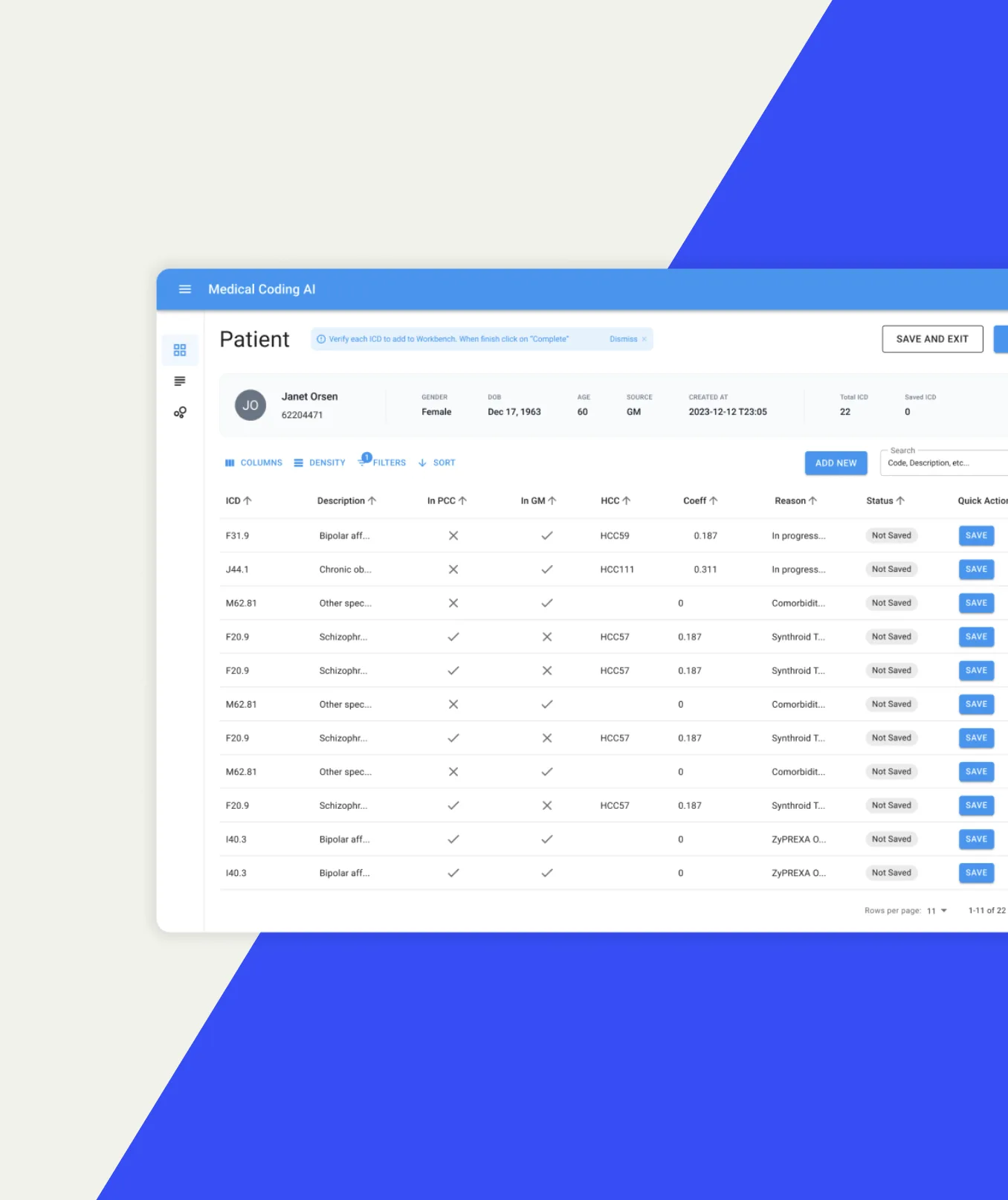
Risk adjustment · CommuniCare
$10M+ RAF improvement
An AI engine that read six clinical data sources, lab results among them, for 20K+ patients. Delivered 2023 to 2024; the closest we've come to lab data in production.
See the work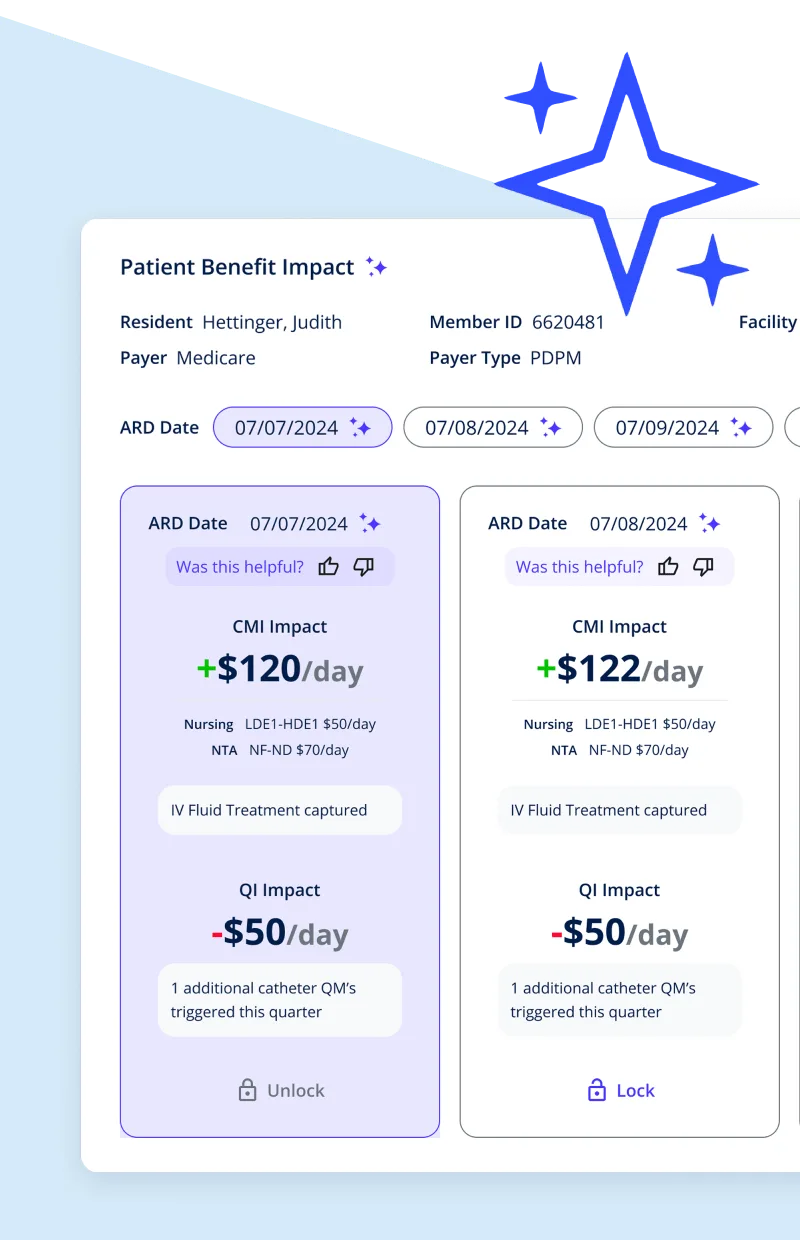
MDS · CommuniCare
$10M+ recovered
Checks MDS assessments against PointClickCare data, lab results included, with $24M+ in forecast PDPM revenue. Built from April 2024 and handed to CommuniCare's own team.
See the work
Congruity Health
7,020 patients tracked
Claims and eligibility files from TPAs, ingested over managed FTPS. It's the same pattern as a scheduled lab results feed.
See the workTrusted by healthcare leaders.
“Digital Scientists provided immense value to our plan administrators, providers, and patients. The team was able to come in and understand our core needs, while remaining product agnostic. They helped identify the technical debt and pitfalls, and to get us to a point of stabilization and growth.”

Robert Hager
CEO, CommuniCare Advantage
“The team at Digital Scientists was a huge help in not only developing our analytics platform, but understanding the competitive space and defining our true value proposition for our customers.”

Justin Davis
CEO, Congruity Health
Related integration and lab pages
Healthcare integration
Every system family we connect, and what's in production.
Healthcare integration →FHIR and HL7 integration
FHIR R4, US Core, SMART on FHIR and HL7 v2.
FHIR and HL7 integration →Pharmacy integration
E-prescribing, NCPDP SCRIPT and pharmacy systems.
Pharmacy integration →Claims and X12 integration
837 claims, 835 remittance and eligibility files.
Claims and X12 integration →Lab and diagnostics software
Software we build for labs and diagnostics companies.
Lab and diagnostics software →Latest thinking on healthcare data and interoperability
Questions about lab and results integration
Which EHRs can you send results to?
Any EHR that accepts results through an HL7 results interface, FHIR or its own API, which covers most of them. We haven't sent lab results into an EHR in production yet. We read data, lab results included, from PointClickCare and Netsmart (GEHRIMED) in production, and our Epic work so far has been in Epic's sandbox. Inbound interfaces usually go through the EHR vendor's interface team, so we start that request on day one.
Can you work with our LIS vendor?
Yes, if it has an API, a standard interface such as HL7 v2 or FHIR, or a reliable export. Most LIS products have at least one. People ask us about Orchard Harvest and other LIS products. We haven't connected to a specific LIS in production yet, so we start with your vendor's interface spec and real sample messages in the week-one check and tell you what we find.
Do you map local test codes to LOINC?
Yes. LOINC is the standard code set for naming lab tests and measurements. Most labs use their own local codes, so we build a mapping table, match the clear cases automatically and send the rest to a person with lab knowledge to decide. The mapping is versioned, because labs add and retire tests.
How fast do results have to be released to patients?
Under the 21st Century Cures Act information blocking rules, results generally go to patients without unnecessary delay, often before a clinician has reviewed them. A delay has to fit one of the rule's exceptions, such as preventing harm to the patient, and some states add rules for certain tests. We build release timing as configuration your clinical and legal leaders sign off on. Confirm the rules that apply to you with your own counsel.
Should lab results use HL7 v2 or FHIR?
Whichever your LIS and EHR support best. Most lab interfaces in use today are HL7 v2, often through an interface engine. FHIR DiagnosticReport and Observation suit apps, patient access and analytics. Many projects use both: HL7 v2 between the lab and the EHR, and FHIR or a file feed to everything downstream.
Talk it over
Tell us what you are trying to do. A senior person from our Atlanta team replies within one business day, and you can book a 30-minute call right after you send this.
- We tell you if we're the right fit, and if we're not, who is.
- Most work starts small, so you see how we work before you commit to more.
- We sign a BAA before we touch patient data.