
Lab and diagnostics software for diagnostic and specialty labs
Digital Scientists builds the software that sits around a lab's LIS: results interfaces to ordering practices, patient results apps, client portals, and cloud data and reporting. We don't replace your LIS. We haven't run a direct lab interface in production yet. Lab results already flow through our work inside EHR data, including the risk adjustment AI behind $10M+ in RAF improvement at 90%+ accuracy. Most labs start with a Blueprint: 4 to 6 weeks to map one workflow, check what your LIS exposes and price the build.
Updated
RAF improvement from AI that reads lab results inside EHR data
Patients across six states on NeverAlone, the platform we built and run
Interviews behind the client portal Blueprint we ran for McKesson 3PL
Signed before we touch patient data





Do you sell laboratory information system software?
No. If you're shopping for LIS software, a vendor sells that. We build what sits around your LIS: the interfaces, apps, portals and reporting it doesn't do well, or doesn't do at all.
A laboratory information system (LIS) is the system a lab uses to receive orders, track specimens, run tests and release results. It's the system of record, and the good ones are hard to replace. What they rarely do well is everything at the edges: getting results into each ordering practice's EHR, giving patients a clear view of a result, giving client practices a portal that cuts the phone calls, and turning lab data into reports the business runs on.
That edge work is what we do. The table shows the split we usually see.
What your LIS does, and what we build around it
| Job | Who usually owns it | What we build |
|---|---|---|
| Orders, specimens, testing and result release | Your LIS | Nothing. We read from it and write to it through its interfaces |
| Results to ordering practices | LIS interface module, often one interface per practice EHR | Results interfaces and the monitoring around them. See lab integration |
| Patient access to results | A basic LIS or EHR portal, if any | Patient results apps with plain-language context and release rules your clinicians set |
| Client practices checking status | Phone, fax and email | A client portal for orders, results status, supplies and billing questions |
| Turnaround, volume and payer reporting | Spreadsheets built from LIS exports | Cloud data pipelines and dashboards. See data engineering |
Every row we build is capability for labs. We haven't shipped a lab-specific product yet, and the related work we have shipped is listed below.
What have you built that carries over to a lab?
Three kinds of work: lab results read from EHR data, patient-facing platforms we run in production, and client portals designed with the people who use them. None of it was for a lab, and all of it is the same work a lab needs.
For CommuniCare Health Services we built a risk adjustment AI that read six clinical data sources, lab results among them, across 20K+ patients, 7 states and 245 providers. It delivered $10M+ in RAF improvement at 90%+ accuracy. Our MDS platform reads clinical data from PointClickCare, lab results included, and has recovered $10M+ to date, with $24M+ in forecast PDPM revenue.
We built NeverAlone, a virtual care platform now serving 30,000 patients across six states, and we still run it. For McKesson 3PL, which handles distribution for pharmaceutical, plasma and cell and gene therapy companies, we interviewed 25 users and tested 5 clickable prototypes to redesign the client portal those companies use every day. A lab's client portal has the same job.
Clinical data sources, lab results among them, behind our risk adjustment AI
Forecast PDPM revenue on the MDS platform ($10M+ recovered to date)
Calls a year on NeverAlone, live since March 2021
Clickable portal prototypes tested with McKesson 3PL users
Where do diagnostic and specialty labs get stuck?
Usually at the edges of the LIS, where staff time goes to moving results and answering questions by hand. These are the six we'd expect to hear first.
Every new client practice needs an interface
Each ordering practice runs its own EHR, and each one wants results delivered its own way. The queue of interface requests slows down sales.
Results that don't match a patient
A name spelled differently or a missing date of birth sends a result to a work queue, and someone fixes it by hand before it can file.
Patients call to ask what a result means
Results reach patients faster than ever, often before the ordering provider calls. The phones fill with questions staff aren't there to answer.
Client practices call for status
Where's the specimen, when's the result, why was it rejected. A portal answers most of those before anyone picks up the phone.
Reporting lives in LIS exports
Turnaround time, volume by client, test mix and payer reporting get rebuilt in spreadsheets every week or month.
Data sits on servers in a closet
The LIS database and the reporting around it run on-premises, so every new report or analytics project starts with getting the data out.
Can you build results interfaces from our LIS to ordering practices?
Yes, as a capability. We know the standards and how to test them, and we'd prove the connection with your LIS vendor's spec and real sample messages before the build depends on it.
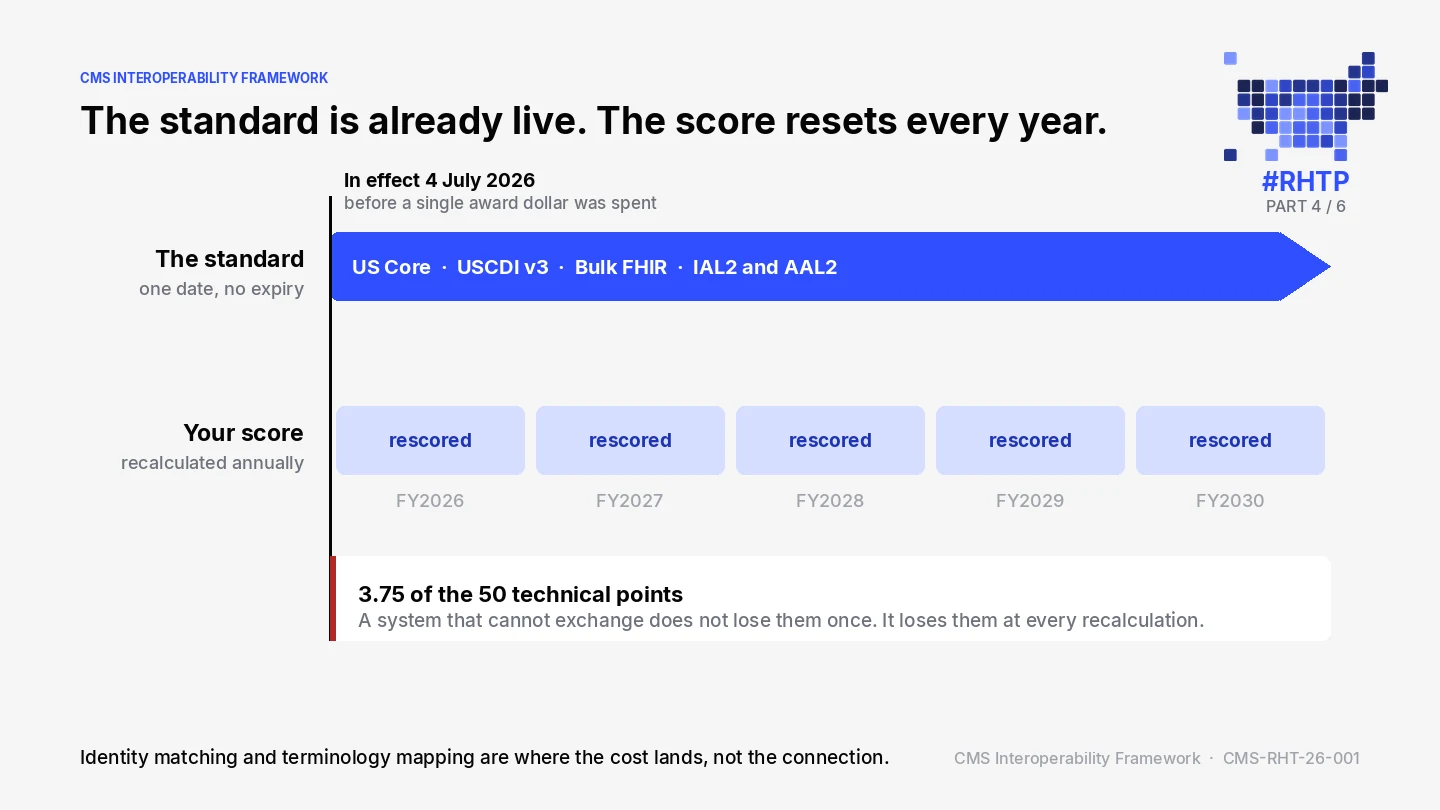
Results usually travel as HL7 v2 messages (ORU for results, ORM or OML for orders) or as FHIR DiagnosticReport and Observation resources. LOINC is the standard code set for naming lab tests, and mapping your local test codes to it is part of most interface work. The full breakdown of messages, resources and our status on each is on our lab and results integration page.
The hard part is rarely the message format. It's landing each result on the right patient in the ordering provider's inbox. In production we match the same patient across PointClickCare and Netsmart (GEHRIMED) data, including patients who showed up with more than one Medicare ID. Results that don't match cleanly go to a person to review. The tiles show where each piece stands.
Your LIS
Outbound results and inbound orders through its interface engine, API or file exports
athenahealth and eClinicalWorks
Capability through their APIs and interface programs; not yet connected in production
PointClickCare and Netsmart
Production: clinical data, lab results included, with cross-EHR patient matching
Epic
Sandbox only so far
Any other EHR
An API, a standard interface or a reliable export
Can you build an app that helps patients understand their results?
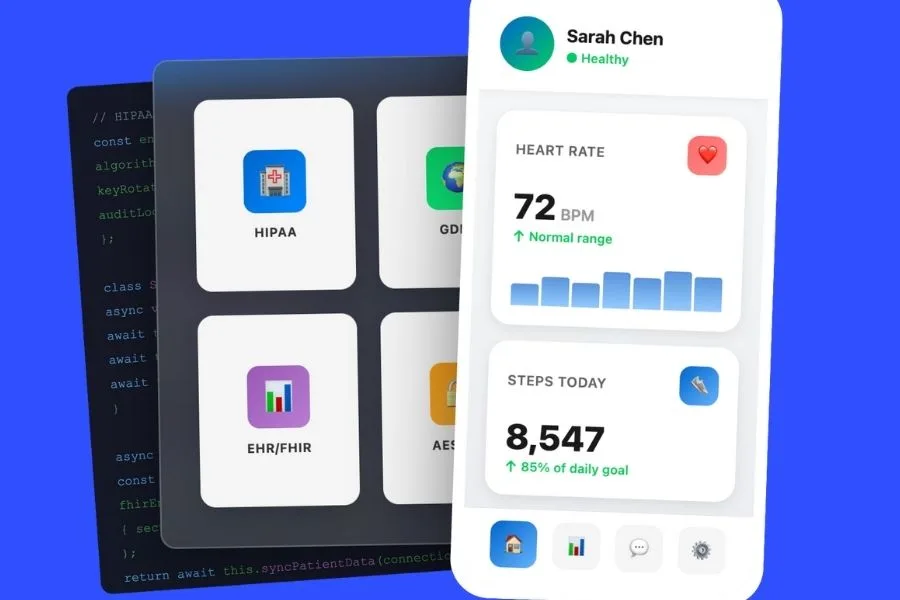
Yes. A patient results app shows each result with its reference range, history and a plain-language explanation, under release rules your clinical leaders set. This is capability for labs; patient-facing platforms are work we already run.
Results with context
Each value next to its reference range and the patient's own history, with a trend line for tests they repeat, such as A1c or lipids.
Plain-language explanations
What the test measures and what an out-of-range flag usually means, written or approved by your clinicians. AI drafts follow rules you set, run inside your own cloud account, for example Amazon Bedrock with Claude, and never give a diagnosis.
Release rules you own
Which results release at once and which wait for a clinician, set as rules, not buried in code. Our lab integration page covers the Cures Act side.
A next step on every screen
Message the ordering practice, book a follow-up or schedule the next draw, so the question goes to the right person instead of your phone line.
Built for real patients
We run NeverAlone for 30,000 patients across six states, many of them seniors. We design for patients who don't read lab reports. See patient portals and apps.
Client portals too
Ordering practices get one place for specimen status, results, rejections, supplies and billing questions, the same kind of portal we designed with McKesson 3PL's clients.
Can you move our lab data to the cloud and build reporting on it?
Yes, and this is the closest work we've done to it. For CommuniCare's risk adjustment work we moved clinical data from on-premises SQL Server databases to AWS over a VPN, validated it, then built the AI and reporting on top.
Lab data is a good fit for the same pattern. We copy what the LIS holds into a HIPAA-eligible cloud environment on a schedule, check it against the source, and model it around the questions the business asks: turnaround time by test and client, volume and revenue by client practice, rejection rates, payer mix and test utilization. Dashboards sit on top, and nothing in the LIS changes.
Once the data is in one place, the next steps get cheaper: reporting for clients and payers, utilization analysis, and AI that reads results alongside other clinical data, as our risk adjustment engine did. See healthcare data engineering and HIPAA cloud and hosting.
RAF improvement at 90%+ accuracy, built on data we moved to AWS
Patients' data in that pipeline
States, with 245 providers
Signed before we touch patient data
Where would a lab start with us?
With the one workflow that costs your staff the most time. We map it, confirm what your LIS exposes and price the build in a Blueprint, then build that piece end to end before taking on the next one.
A Blueprint is a 4 to 6 week engagement that produces the scope, architecture, user stories and a build plan with a budget. The medium Blueprint adds a working prototype your staff, client practices or patients click through before you commit. For a lab, the risky piece is almost always the LIS connection, so we prove it in the Blueprint. If the answer is that your LIS exposes less than you need, you find out in week one, not month four.
Common starting points for labs
| Where you are | What's usually true | Common first step | Time and investment |
|---|---|---|---|
| Interface requests pile up | Each new client practice waits on a results interface. | Blueprint on results delivery: your LIS, your top client EHRs and real sample messages. | 4 to 6 weeks. $25K, or from $50K with a prototype |
| Patients and practices call for answers | Status and "what does this mean" calls tie up the phones. | Medium Blueprint with a clickable patient or client portal, then an MVP. | 6 weeks from $50K, then 8 to 16 weeks at $75K to $250K |
| Reporting takes a person every week | Turnaround and client reports are rebuilt from LIS exports. | A cloud data pipeline and dashboards, validated against the reports your staff build today. | Scoped from a Blueprint |
| A new test or service line | A new product for patients or ordering practices you want to own. | Medium Blueprint with a working prototype, then an MVP. | 6 weeks from $50K, then scoped from the Blueprint |
These are common starting points, not rules. Many labs combine them or change course, and the first conversation is where we work out the right one. Blueprint and MVP prices are from our published service pages.
Related work we've shipped
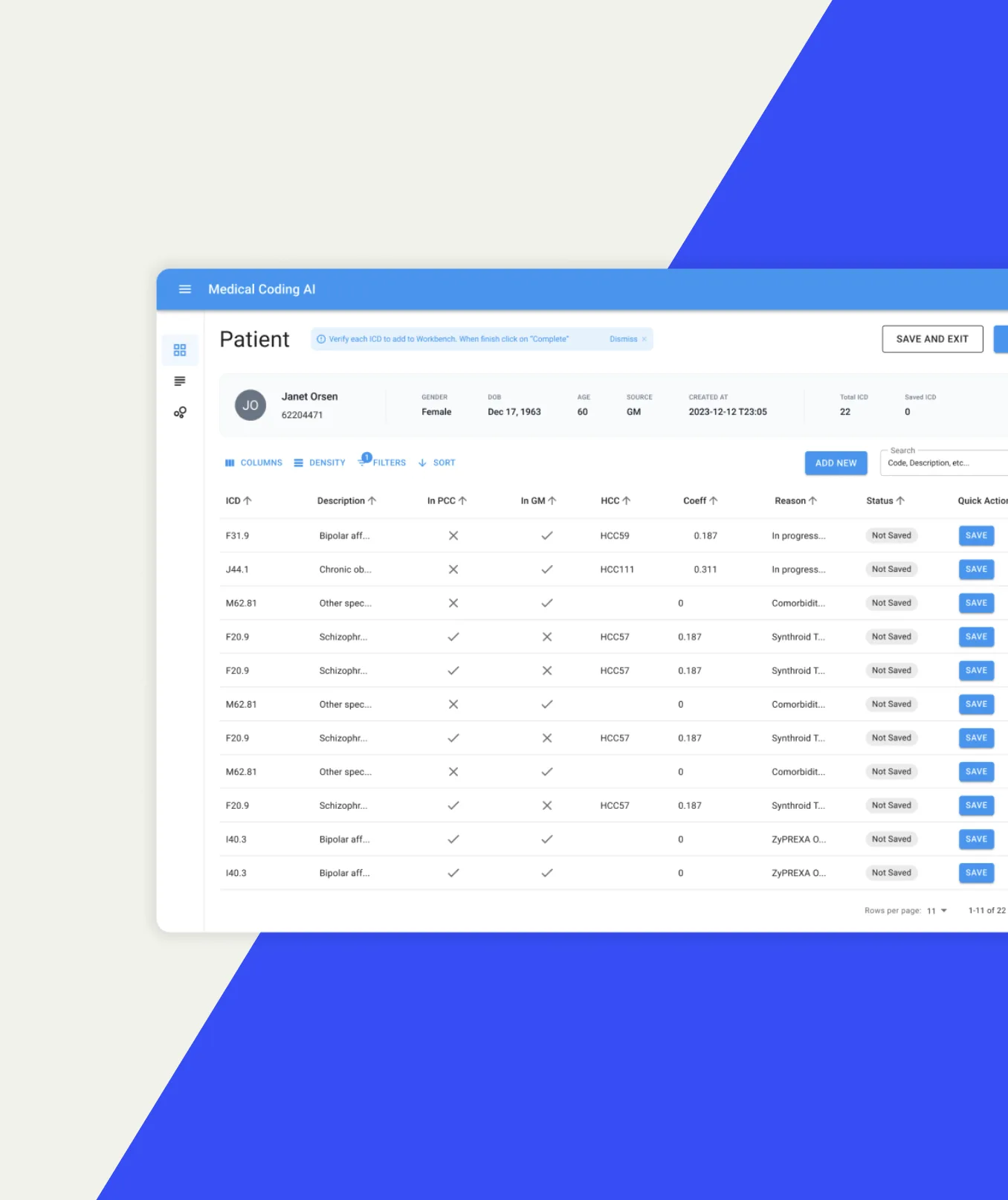
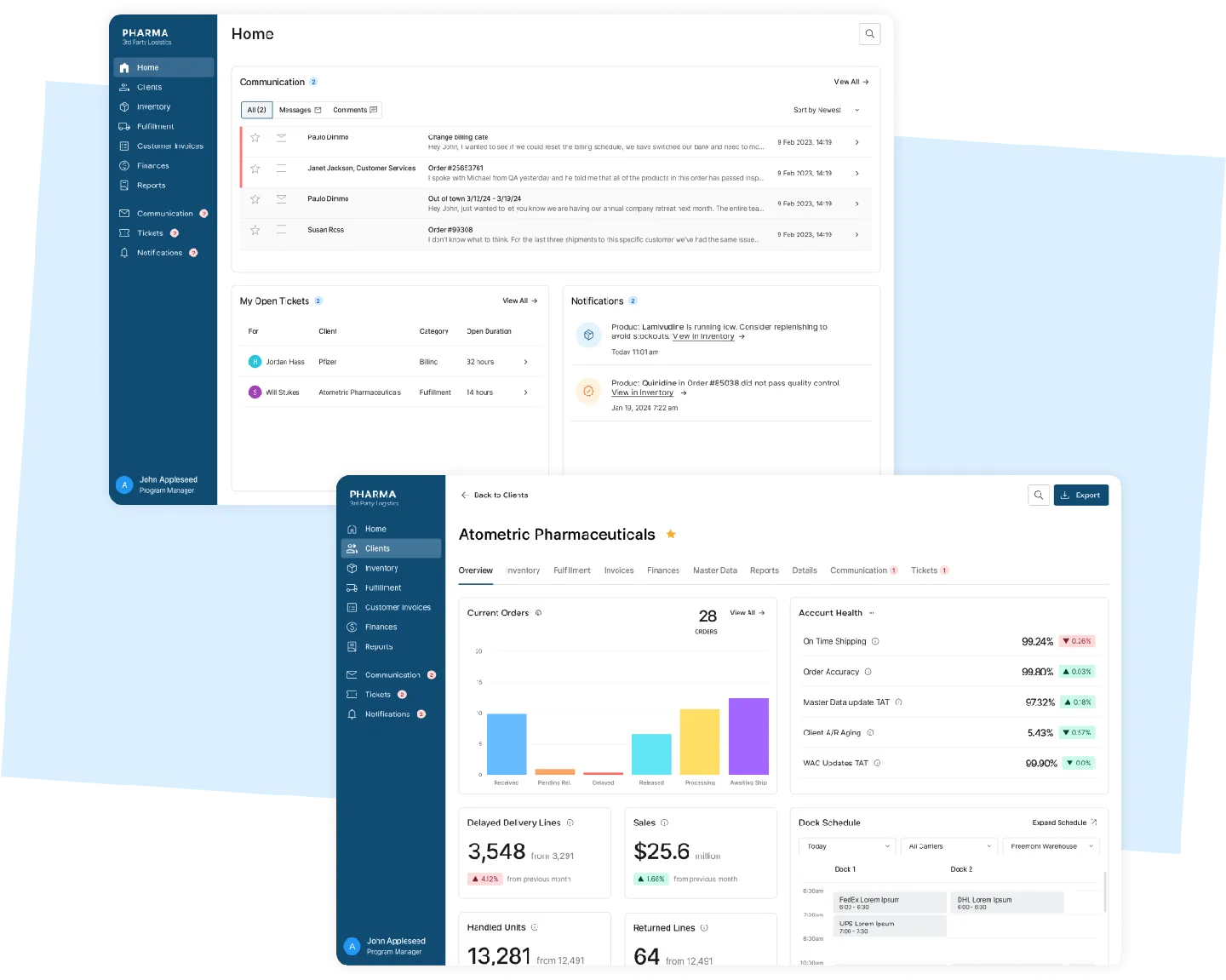
CommuniCare Health Services
$10M+ RAF improvement
Risk adjustment AI that read six clinical data sources, lab results among them, at 90%+ accuracy across 20K+ patients in 7 states.
See the work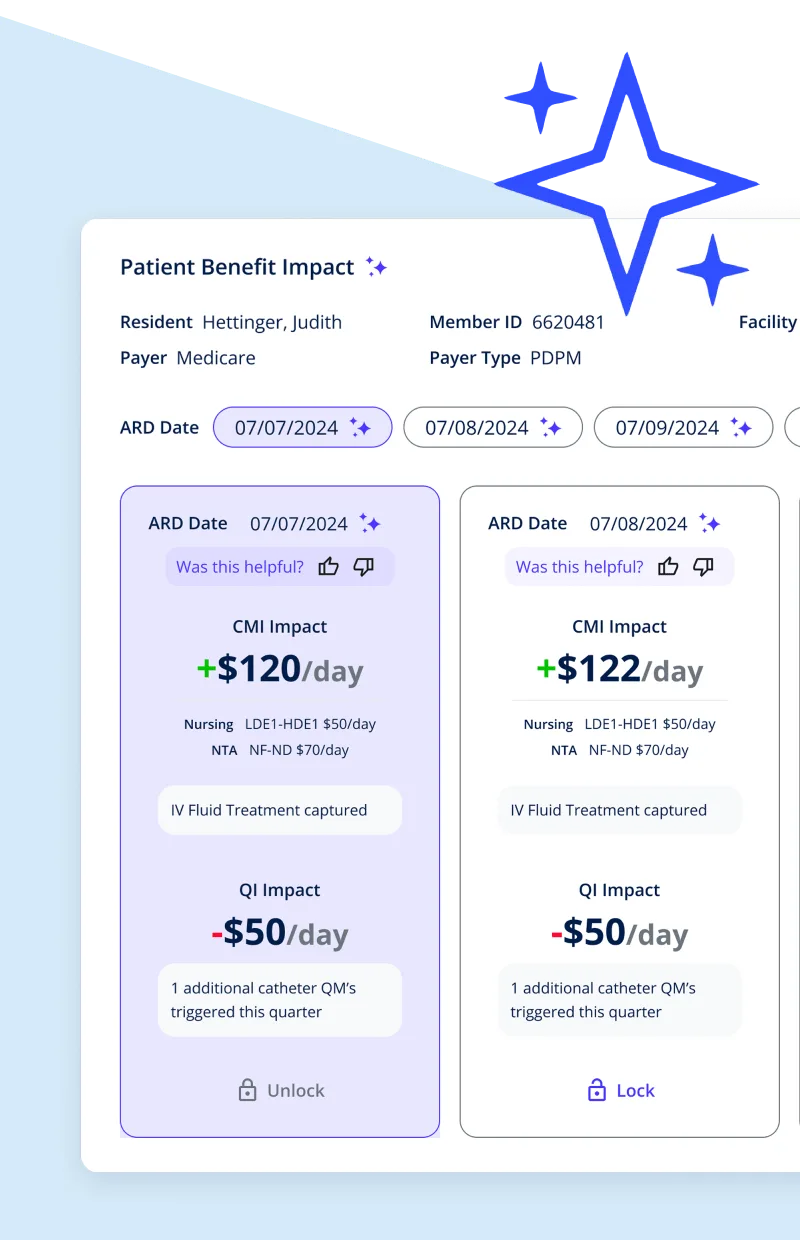
CommuniCare MDS
$10M+ recovered, $24M+ forecast PDPM
An MDS platform built on PointClickCare clinical data, lab results included, built from April 2024 and handed to CommuniCare's own team.
See the work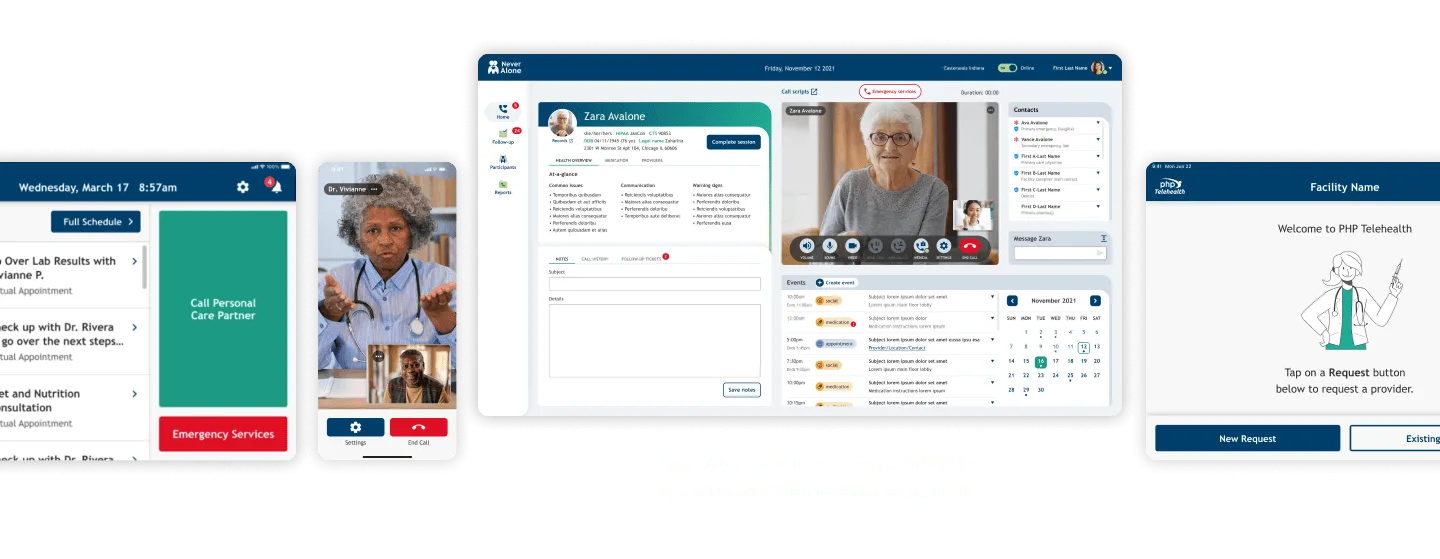
NeverAlone
30,000 patients, six states
A virtual care platform we built as a 90-day MVP in 2021 and still run, with 100,000+ calls a year.
See the work
McKesson 3PL
25 interviews, 5 prototypes
A Blueprint to redesign the client portal used by pharmaceutical, plasma and cell and gene therapy companies.
See the workTrusted by healthcare leaders.
“I have worked with many technology teams during my career, and Digital Scientists is one of the best. They take the time to understand the customers' needs, deliver innovative solutions, are always professional, and work with your team as a true partner to achieve success.”

Amy Severino
Chief Innovation Officer, NeverAlone
“The team at Digital Scientists was a huge help in not only developing our analytics platform, but understanding the competitive space and defining our true value proposition for our customers.”

Justin Davis
CEO, Congruity Health
What we build for labs
Lab integration
HL7 orders and results, FHIR DiagnosticReport and LOINC mapping.
Lab integration →Patient portals and apps
Results, messaging and next steps in one place for patients.
Patient portals and apps →Data engineering and analytics
Cloud pipelines and reporting built on the data you already have.
Data engineering and analytics →FHIR and HL7
The standards behind results interfaces, and when to use each.
FHIR and HL7 →EHR integration
Getting data into and out of the EHRs your client practices run.
EHR integration →HIPAA cloud and hosting
HIPAA-eligible cloud environments for lab data and apps.
HIPAA cloud and hosting →Latest thinking
Questions lab leaders ask
Do you replace our LIS?
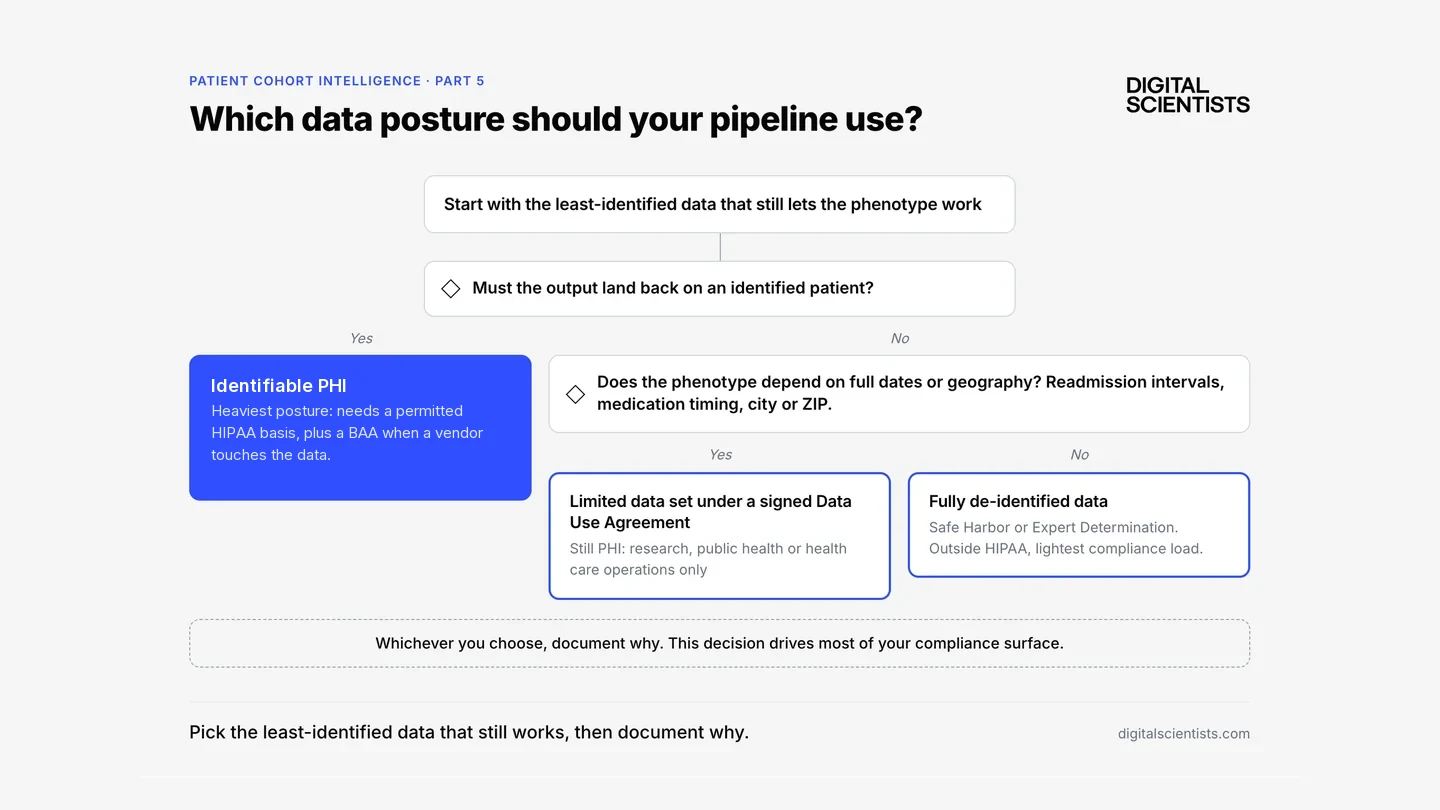
No. Your LIS stays the system of record for orders, specimens, testing and result release. We build what sits around it: results interfaces, patient results apps, client portals, and cloud data and reporting. We read from your LIS and write to it through the interfaces, APIs or exports it already supports.
Can you build results interfaces to athena and eClinicalWorks?
Yes, as a capability. Both athenahealth and eClinicalWorks accept results through their own APIs and interface programs, and setting up a lab interface usually goes through the vendor. We haven't connected either one in production yet, so we prove the connection with real sample messages in the Blueprint before the build depends on it.
Can patients get help understanding their results?
Yes. A patient results app shows each value with its reference range, the patient's history and a plain-language explanation your clinicians write or approve. AI drafts follow rules you set, run inside your own cloud account and never give a diagnosis. Release timing follows rules your clinical leaders own.
Have you built software for a lab before?
Not for a lab client yet, and we say so. Lab results already flow through our work inside EHR data, including the risk adjustment AI behind $10M+ in RAF improvement and our MDS platform. We also build and run patient-facing platforms such as NeverAlone, and we designed a client portal with McKesson 3PL's users.
Can you build a client portal for our ordering practices?
Yes. A client portal gives practices one place for specimen status, results, rejections, supply orders and billing questions. We start with interviews and clickable prototypes, the way we redesigned McKesson 3PL's client portal with 25 interviews and 5 prototypes, then build the version your clients actually use.
Do you sign a BAA?
Yes, with every covered entity, before we touch patient data. Our security plan is mapped to NIST CSF 2.0, and each client gets a security addendum covering access, encryption, audit logging and incident response.
Talk it over
Tell us what you are trying to do. A senior person from our Atlanta team replies within one business day, and you can book a 30-minute call right after you send this.
- We tell you if we're the right fit, and if we're not, who is.
- Most work starts small, so you see how we work before you commit to more.
- We sign a BAA before we touch patient data.