Use robotic process automation in healthcare for stable, rule-based screen work: the same screens, the same fields and the same steps every time. Use an AI agent when the work starts from documents or data that vary and needs a judgment before the next step. Most back offices need both, plus a person for the exceptions. That's how Digital Scientists builds automation: on CommuniCare's risk adjustment agent, about 79% of the logic was SQL and 20% was generative AI, and it drove $10M+ in RAF improvement at 90%+ accuracy.
What is robotic process automation in healthcare?
Robotic process automation (RPA) is software that replays the clicks and keystrokes a person would make in an application. A bot logs in, opens a screen, copies a value, pastes it into another system and moves on. It doesn't read for meaning. It follows the script.
That makes RPA the right tool for a lot of healthcare back-office work. It fits when a task has these traits:
- The screens and fields stay the same from one month to the next.
- The input is structured: a field, a row, a file in a known layout.
- Every case follows the same steps, with no decision about what the content means.
- The system has no API, so working through the screen is the only way in.
Moving data between two systems that don't talk, keying the same values into a portal, pulling a report on a schedule: if a bot does that cleanly today, keep it. Rebuilding working automation as AI adds cost and buys you nothing. Our healthcare AI agents are for the work a script can't do.
Where does RPA break down?
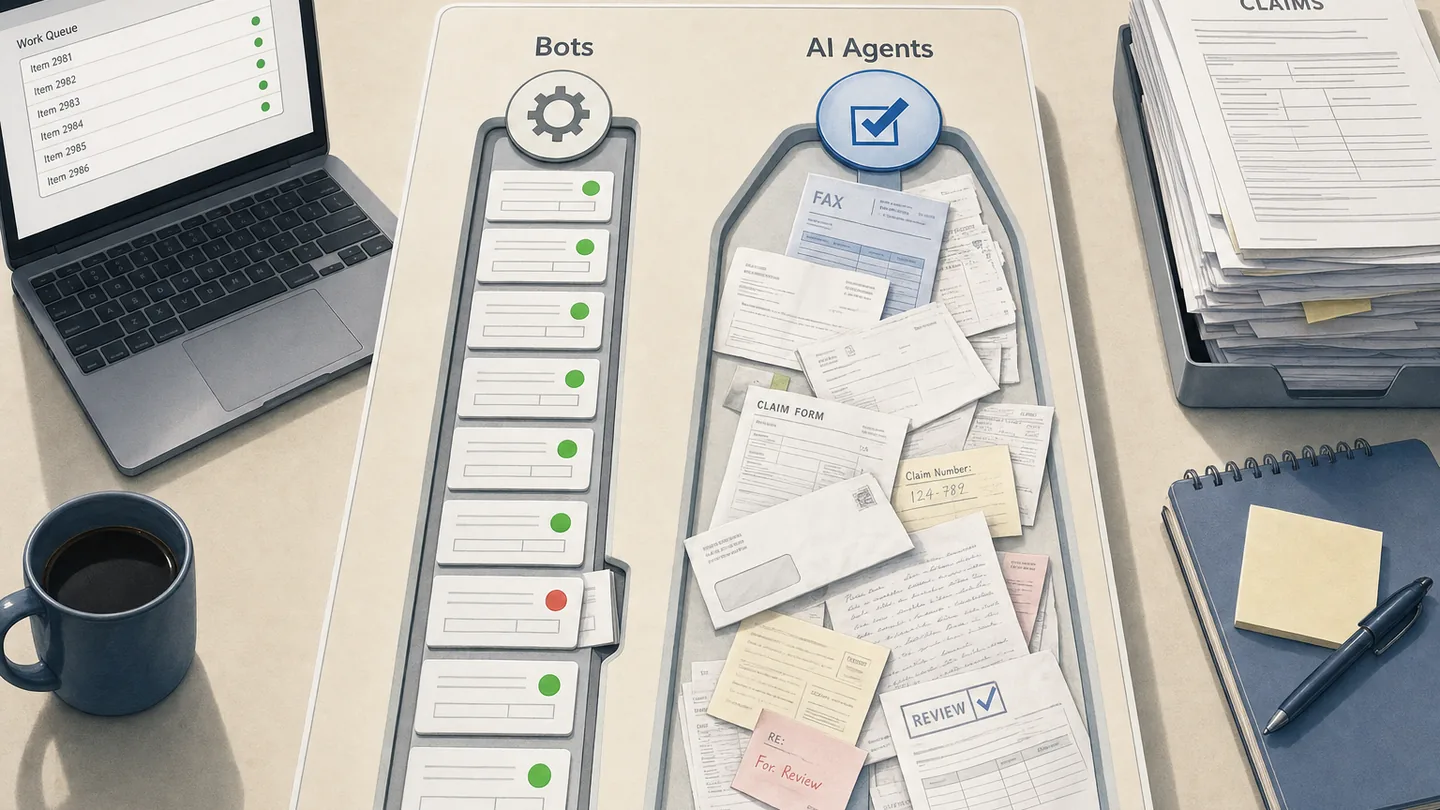
RPA breaks when the screen changes or the input varies. A bot that clicks a button by its position fails when the vendor moves the button. A bot that reads field 12 fails when a fax arrives with the information in a paragraph.
Healthcare back offices are full of that second kind of work. Referrals arrive as faxes. Payers ask for different documents. Diagnoses sit in notes, labs and medication lists, not in one clean field. A person reads, decides what it means and picks the next step. A script can't make that call, so the bot either stops or does the wrong thing quietly.
The tell is staff babysitting the bots. If someone spends the day fixing failed runs or handling everything the bot kicked out, the work needed judgment all along.
What does an AI agent do that RPA doesn't?
An AI agent reads the content, decides what it means and picks the next step, with a confidence score on each decision. That's the work agents take off staff: coding suggestions, MDS reviews, intake triage, claim follow-up and prior authorization packets.
Take the coding agent we built for CommuniCare. It read six clinical data sources for each Medicare Advantage patient, found diagnoses that were documented but never coded, and handed each suggestion to a coder with the evidence attached. A chart audit took about an hour per patient. The agent reviewed a patient in about 60 seconds, across 20K+ patients, 245 providers and 7 states. Coders accepted, changed or rejected every suggestion, and physician feedback went back into the model.
No bot could do that, because the work is reading. But most of that agent wasn't AI either.
How do RPA and AI agents compare?
They solve different problems. RPA repeats steps. An agent makes a judgment and routes what it isn't sure of.
| RPA | AI agent | |
|---|---|---|
| Input | Structured fields on a known screen or file | Documents, notes, faxes and data that vary in shape |
| How it decides | Follows a fixed script | Reads the content and scores its confidence in each decision |
| When things change | Breaks when the screen or layout changes | Handles new wording and layouts; low-confidence items go to a person |
| Exceptions | Stops or fails the run | Routes the item to a named reviewer with the evidence attached |
| Audit trail | Run logs of steps taken | Every read, suggestion, approval and change, with who, what and when |
| Best for | Stable, rule-based screen work, especially where there's no API | Work that repeats, starts from something written down and needs a judgment |
| Healthcare examples | Keying values into a portal, moving data between systems, scheduled report pulls | Coding suggestions, MDS event scanning, intake triage, prior authorization packets |
Why do the best builds use rules, AI and people together?
Because each one is good at a different part of the job. Plain rules and SQL handle the steps you can script. AI handles the judgment in between. A person handles the exceptions and anything that commits money or changes a record.
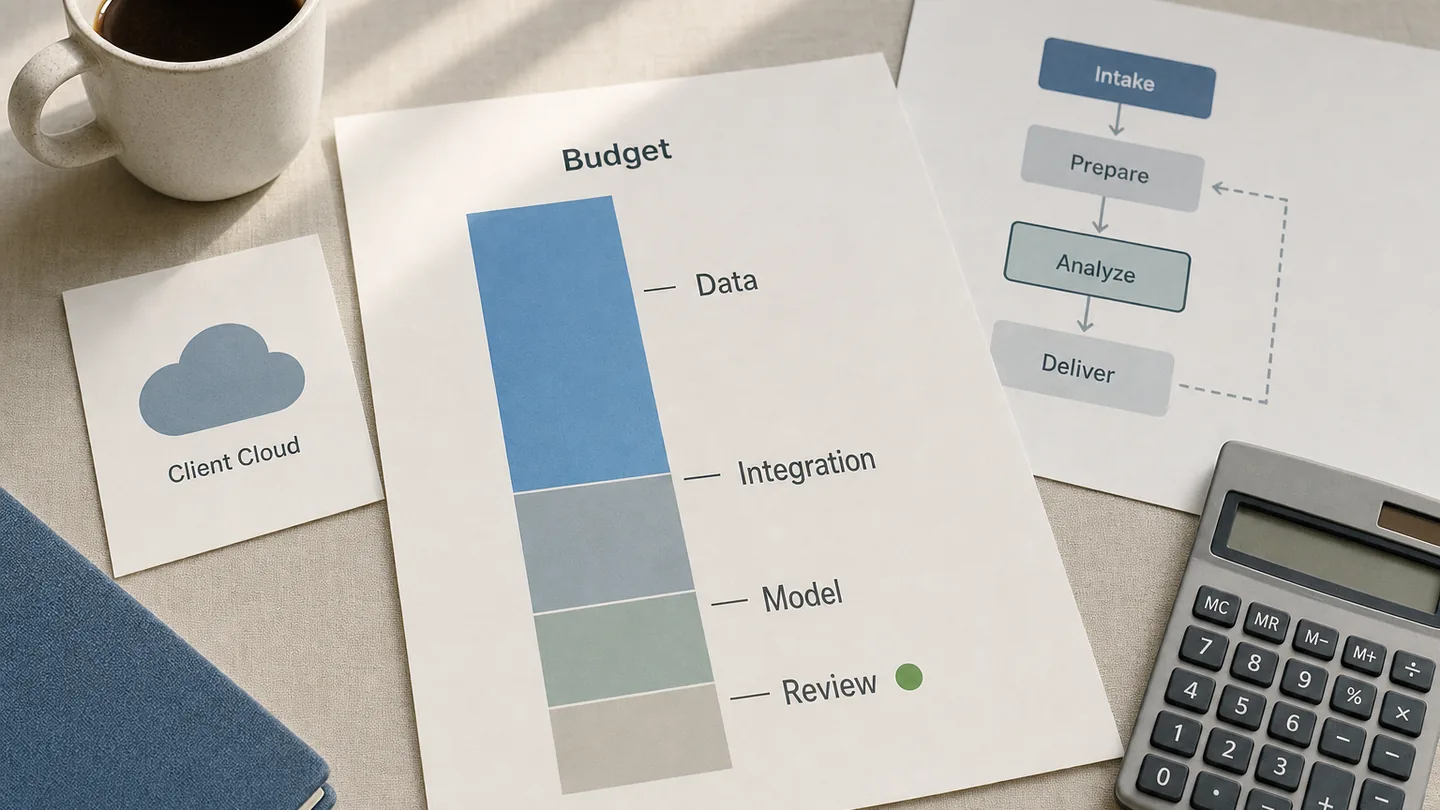
The CommuniCare risk adjustment agent shows the split. About 79% of its logic was SQL against structured clinical data, 20% was generative AI and 1% was clustering. That mix kept it fast, cheap to run and explainable to an auditor. Using a language model for the 79% would have cost more and been harder to defend.
The same thinking applies to integration. Where a system has an API or a standard transaction, use it. Eligibility checks run on X12 270/271, claim status on 276/277 and prior authorization on 278. Screen automation is the fallback for systems that offer nothing else. We integrate with any system that has an API, a standard interface or a reliable export. See payer APIs and prior authorization for the payer side.
Which back-office work fits which tool?
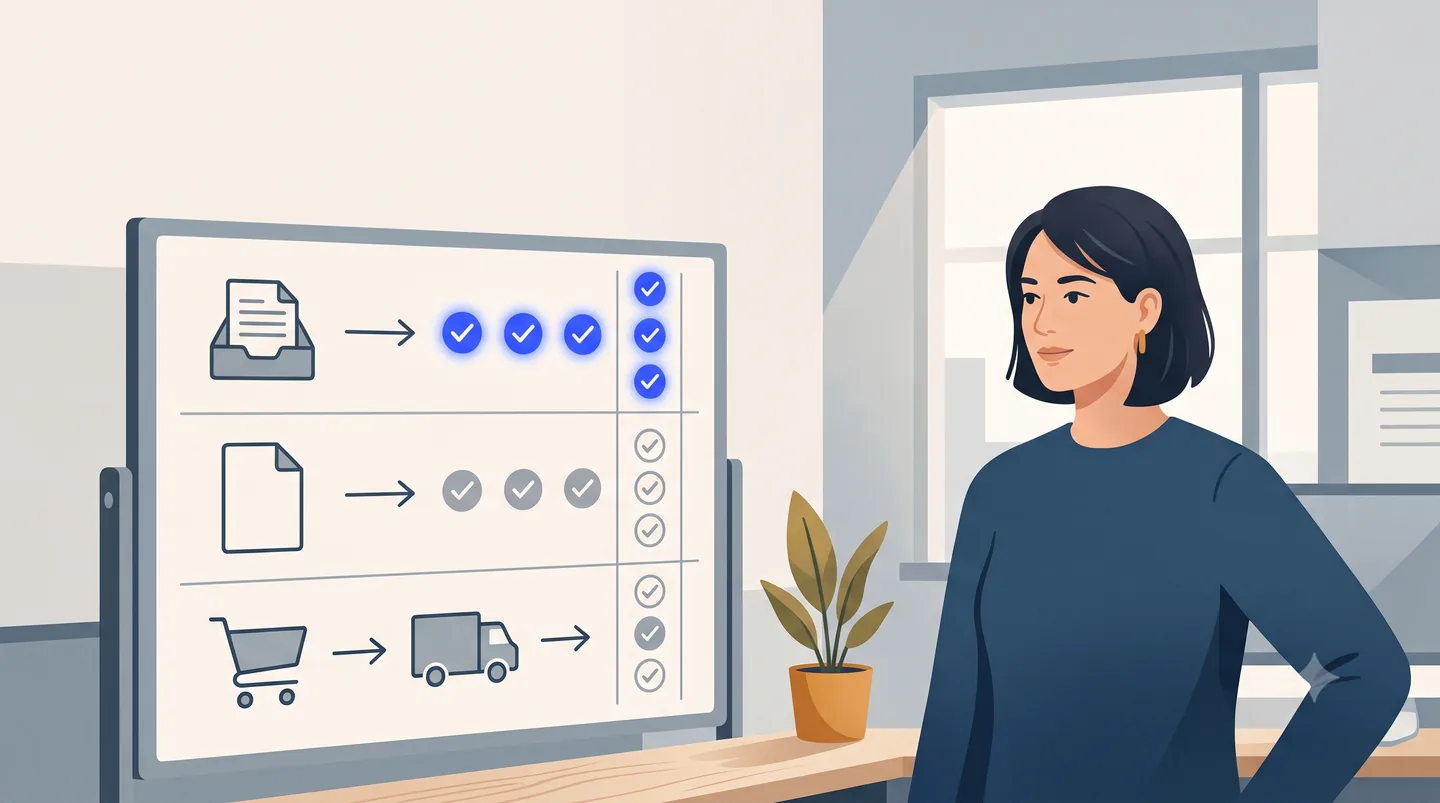
Sort each task by two questions: does the input vary, and does someone have to decide what it means? If both answers are no, script it. If either is yes, it's agent work with a person reviewing.
- Script it. Copying a field from one system to another, keying the same values into a portal, scheduled exports and report pulls.
- Use a standard transaction. Eligibility checks and claim status, where X12 or a payer API returns structured answers.
- Use an agent. Intake triage from faxes and shared inboxes, grouping denials by reason and drafting the next step, assembling prior authorization packets, coding suggestions, and scanning PointClickCare data for the 200+ clinical triggers that change an MDS assessment.
- Keep a person. Every appeal, write-off, submission to a payer and change to a clinical record.
How do exceptions reach your people?
Through a work queue, with the evidence attached. The agent finishes what it's confident about, routes everything else to a named person and logs both.
You set the confidence threshold for each task. On day one, the agent runs in shadow mode and every output goes to a reviewer. As accuracy holds up against the baseline, the agent finishes more of the routine cases on its own. Loosening a threshold is your decision, made on the numbers. Anything that commits money, changes a clinical record or goes to a payer waits for a person's approval until you decide otherwise.
Where models run on patient data, they run inside your own AWS account through Amazon Bedrock, with Claude where we use it, so PHI stays in your environment. Every output is logged on every build.
Should you replace your bots with AI agents?
Replace the ones staff babysit. Keep the ones that run cleanly. A bot that runs every night without failures is doing its job.
Start with one workflow where people already spend the day reading documents or fixing failed runs. Measure the baseline before the build: hours per case, backlog or dollars missed. Then build the agent, the reviewer queue and the integration together, and compare. A 4-week Blueprint at $25K picks the workflow and sets the number, or from $50K for 6 weeks with a working prototype your reviewers can try. To see how the agents themselves are built, read about risk adjustment and HCC coding or talk it over with us.
Frequently asked questions
What is robotic process automation in healthcare?
Robotic process automation (RPA) is software that replays the clicks and keystrokes a person makes in an application. In healthcare it handles stable, rule-based back-office work, such as moving data between systems or keying values into a portal.
What is the difference between RPA and an AI agent?
RPA follows a fixed script, so it breaks when a screen or document changes. An AI agent reads the content, decides what it means and picks the next step, with a confidence score on each decision, and sends anything uncertain to a person.
Is RPA still worth using in healthcare?
Yes, for stable screen work with structured inputs and no API. If a bot runs cleanly today, keep it. Replace the bots staff spend their day fixing, because that work needed judgment all along.
Can RPA and AI agents work together?
Yes, and the best builds combine rules, AI and people. About 79% of our CommuniCare risk adjustment agent's logic was SQL, 20% generative AI and 1% clustering, with a coder reviewing every suggestion.
Do AI agents work without human review?
Not at first. Agents start in shadow mode with every output reviewed. As accuracy holds against the baseline, you can raise how much the agent finishes on its own. Anything that commits money, changes a record or goes to a payer waits for a person.