
Next-gen client portal: from transactional to true partnership
McKesson 3PL needed to transform their outdated SAP-based client portal into a modern experience that would shift client relationships from transactional to consultative, across pharma, plasma, and cell & gene therapy logistics.

Redesigning how a Fortune 8 company serves its logistics clients
McKesson 3PL is a third-party logistics organization providing distribution services to pharmaceutical, plasma, and cell & gene therapy businesses. Their existing client portal, built on SAP, was driving client dissatisfaction, overwhelming internal teams with support tickets, and limiting program managers to transactional interactions.
McKesson engaged Digital Scientists to run a comprehensive Product Blueprint: a 4-month engagement to research, design, validate, and architect a next-generation client portal that would fundamentally change how they interact with their customers.
DS deployed a 7-person cross-functional team, spanning product management, design strategy, UX design, and engineering, to deliver a validated product vision backed by real user research, competitive analysis, high-fidelity prototypes, and a complete technical architecture.

Client
McKesson 3PL
Industry
Pharmaceutical Logistics, Healthcare
Engagement
Product Blueprint
Services
User Research, Competitive Analysis, UX Design, Usability Testing, Solution Architecture, Product Requirements
Timeline
Nov 2023 - Mar 2024 (4 months)
DS Team
7-person cross-functional team
Method
25+
Users interviewed
6
Competitor portals analyzed
5
Usability prototypes built
4 mo
End-to-end blueprint
A client portal that was hurting relationships instead of helping them
McKesson 3PL’s existing portal was built on a simplistic SAP interface that forced users through multi-step raw data exports just to find basic information. The result: frustrated clients, overwhelmed support teams, and program managers stuck in reactive, transactional relationships.
Confusing SAP-based data access
Bottom-up approach requiring multi-step raw data exports that confused users and made simple tasks needlessly complex
Overwhelmed client services teams
Salesforce tickets piling up from clients who needed timely data access but couldn’t get it through the portal
Transactional PM relationships
Program managers limited to reactive, transactional interactions, unable to be the proactive, consultative partners they wanted to be
Low NPS and client dissatisfaction
Client surveys and Net Promoter Scores highlighted clear dissatisfaction with the portal experience, confusing reports, and disjointed communication
Aligning a Fortune 8 organization around a shared product vision
DS kicked off with a stakeholder alignment workshop to document the team’s vision, goals, and objectives, and to align on scope for an aggressive 4-month engagement. The workshop produced a clear product vision:
“To create an opportunity to shift client focus from a transactionally focused relationship to a true partnership that unlocks client value beyond just 3PL services.”
The team used MoSCoW prioritization to define what the portal must, should, could, and won’t include, ensuring the blueprint stayed focused on what would move the needle.
Competitor portal review
DS assessed 6 competitor and adjacent portal experiences to benchmark best practices:
25+ interviews across internal teams and external clients
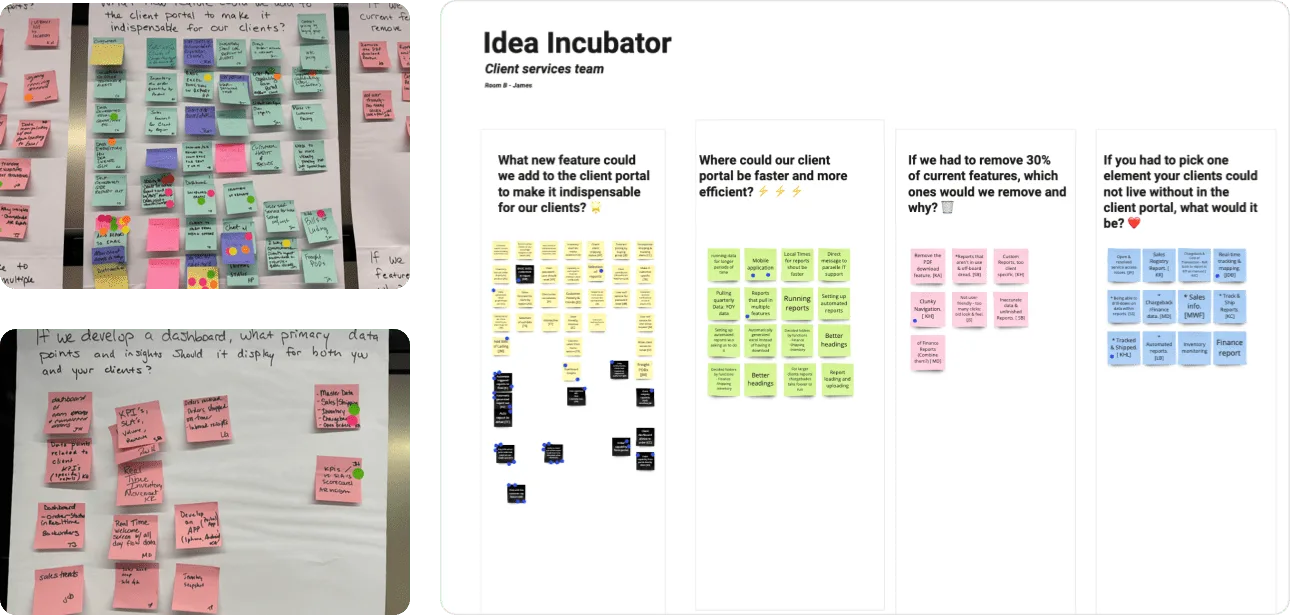
DS conducted three rounds of foundational UX research to understand how both internal McKesson teams and external clients experienced the portal, and what they actually needed from a next-gen solution.
Group interviews at McKesson 3PL Summit
Separate sessions with Client Services and Program Manager groups to understand team-level pain points
21 one-on-one interviews
15 internal McKesson staff and 6 external clients in 45-50 minute structured sessions
Plasma client deep-dive
4 additional interviews focused specifically on the plasma 3PL experience and unique supply chain needs
Research methodology
21
One-on-one interviews
45 min
Structured sessions
3
Research rounds
Two primary personas emerged
The Program Manager
“Ashley”, 10+ years experience, manages 6-8 client programs
Goals
Shift from reactive to consultative client role
Enhance operational efficiency across programs
Challenges
Communication overload from fragmented channels
Order and reporting issues slow everything down
The Supply Chain Client
“Blake”, Director of Supply Chain, 30+ years in pharmaceuticals
Goals
Self-service access to order and financial data
Real-time visibility into logistics operations
Challenges
Non-intuitive portal with limited real-time data
Over-reliance on McKesson PM for routine information
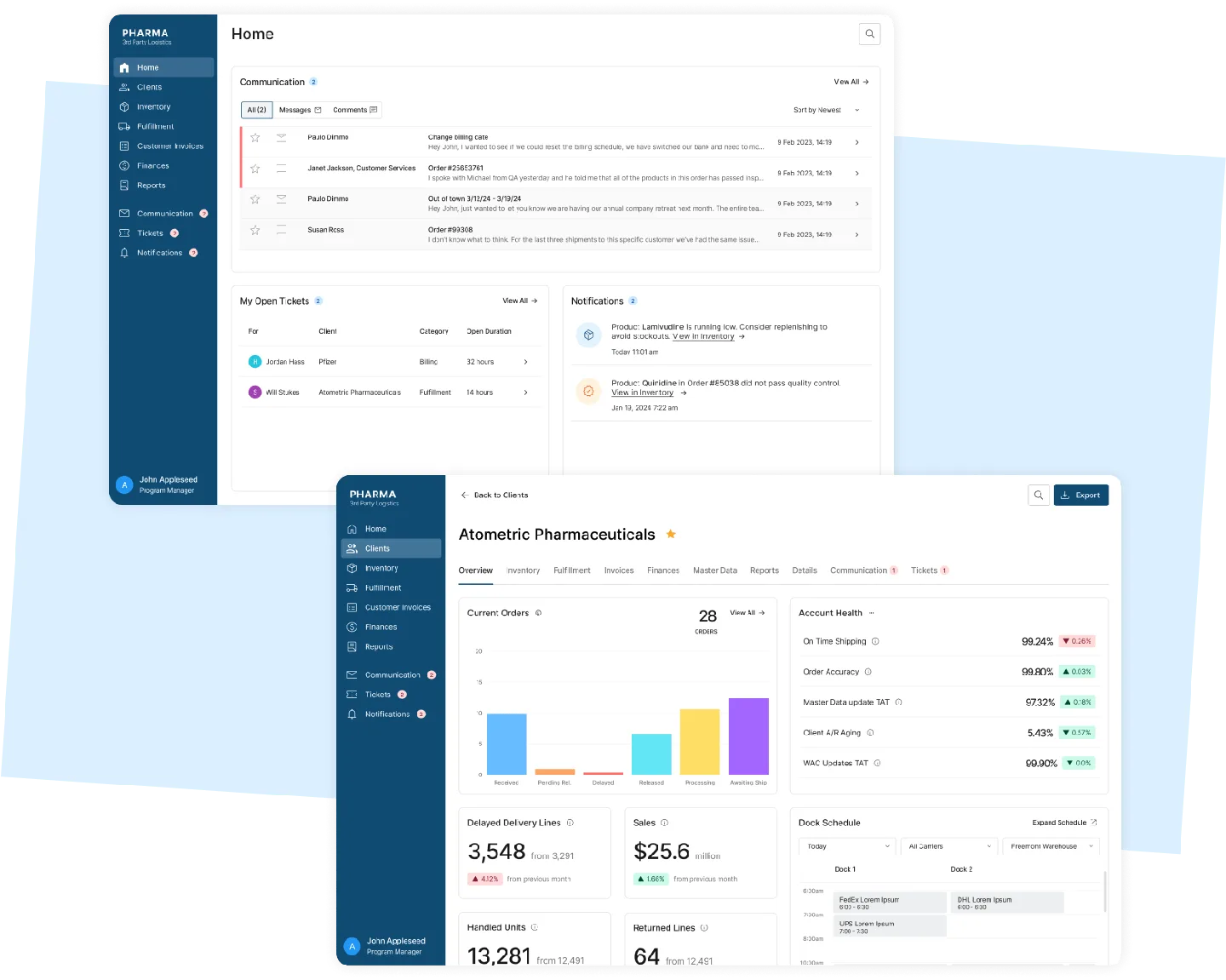
From research insights to validated, clickable prototypes
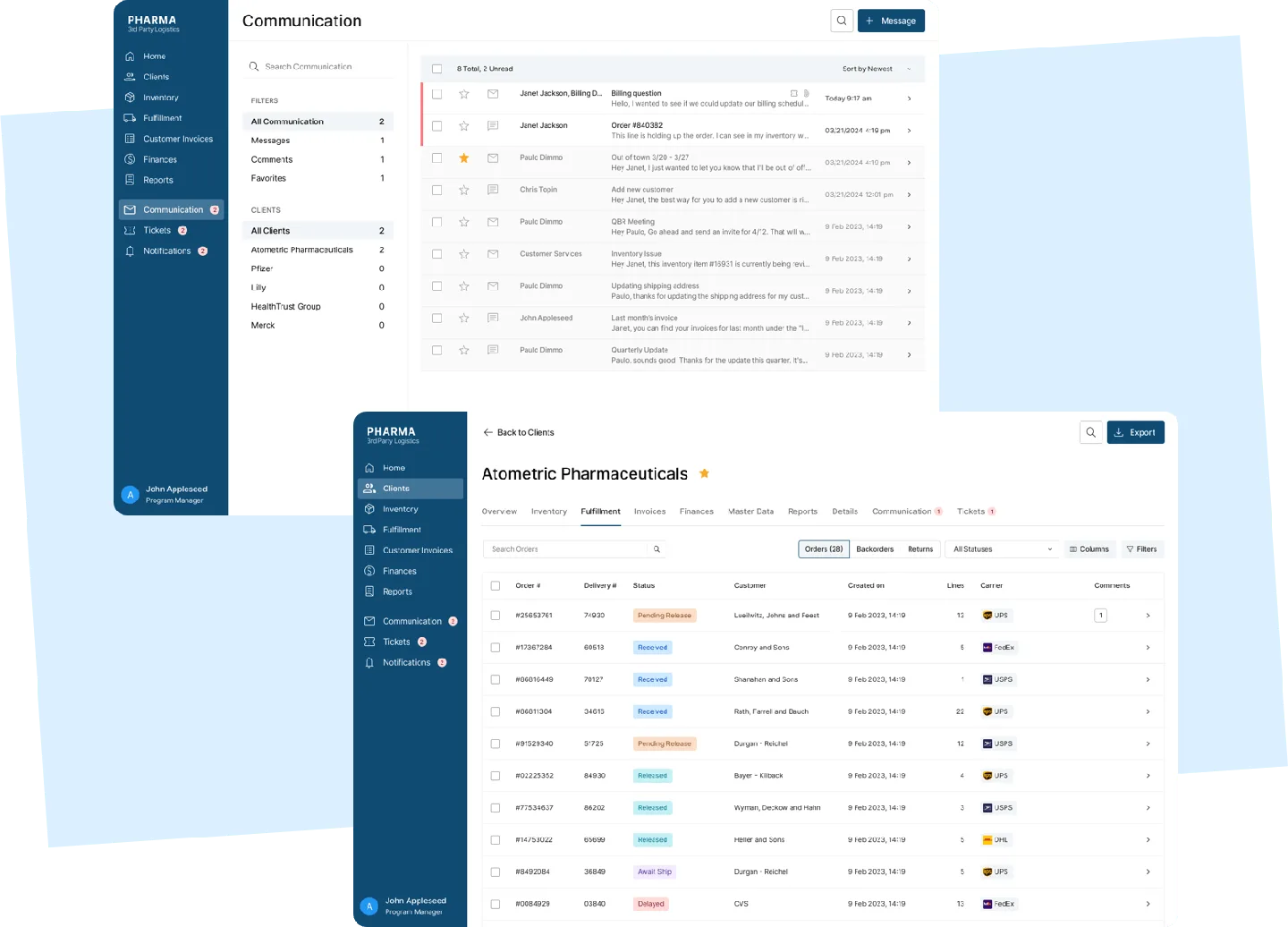
Coming out of the research, DS had clearly identified opportunities straight from the users’ voice. The primary next-gen portal opportunities centered on three themes: data investigation, two-way communication, and client self-service. DS iterated weekly, from information architecture to wireframes to visual design, ending with 5 clickable prototypes and a narrated demo video.
Information Architecture
Radically different from the existing portal but aligned with contemporary IA patterns for products with large data sets. Built to support both internal PMs and external client workflows.
Wireframes
Low-fidelity designs defining primary features, functions, content hierarchy, and navigation patterns before investing in visual polish.
Visual Design
High-fidelity phase applying McKesson’s brand, color palette, typography, and component patterns to create a polished, production-ready design system.
Interactive Prototypes
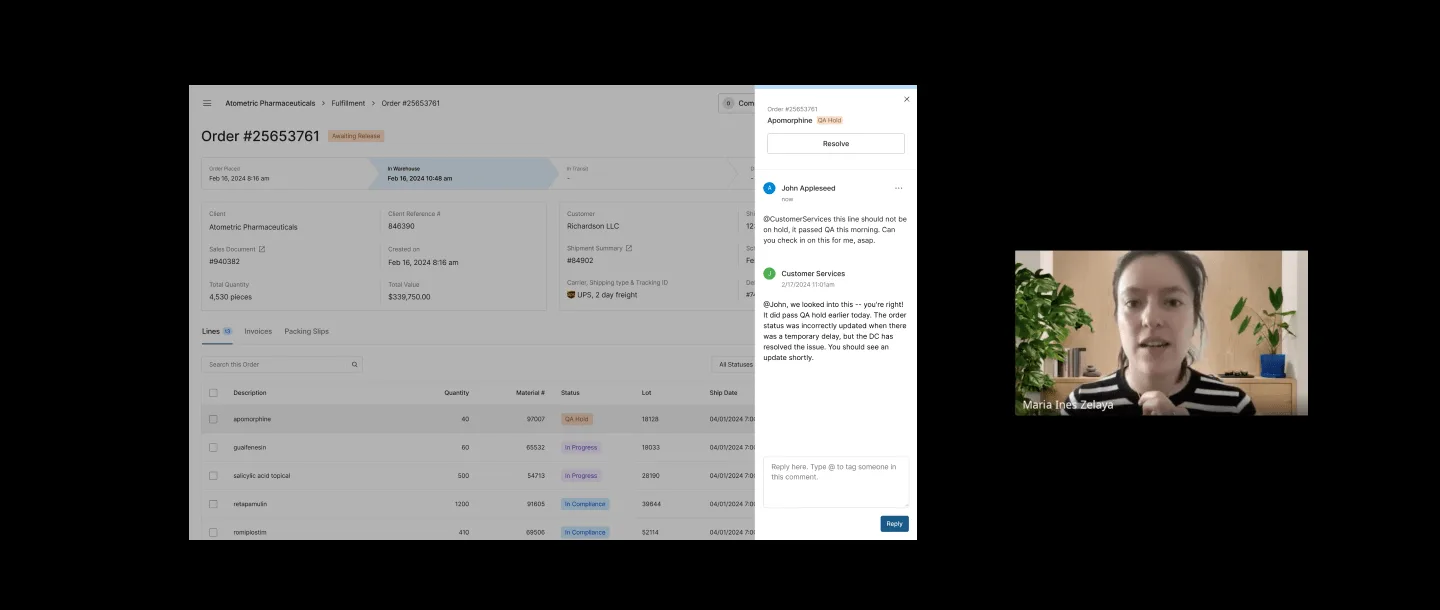
5 usability prototypes testing key workflows (dashboard, notifications, master data, messaging, ticketing) plus a master prototype with narrated demo video.
Validated with 11 users across both persona groups
DS completed the design phase with another round of user feedback, running 5 different usability tests across the two persona groups to receive critical feedback before moving into solution architecture and development planning.
5
Program Managers
2
Customer Service
4
External Clients
Dashboard and data investigation workflows
Email and in-platform notification systems
Commenting, messaging, and ticketing flows
Master data management and self-service access
A technical blueprint ready for development
The final phase of the Product Blueprint aligned the technical team on the high-level functionality and technology needed to support the new client experience. DS delivered a complete solution architecture and detailed product requirements.
Solution Architecture
Software architecture definition including architectural principles, platform recommendations, and how the architecture meets functional and non-functional requirements
Product Requirements
High-level written requirements plus two sprints of example user stories, giving McKesson’s development team a clear starting point
Development Roadmap
Prioritized next steps including workflow refinement, finance and master data features, technical architecture alignment, and continued iteration
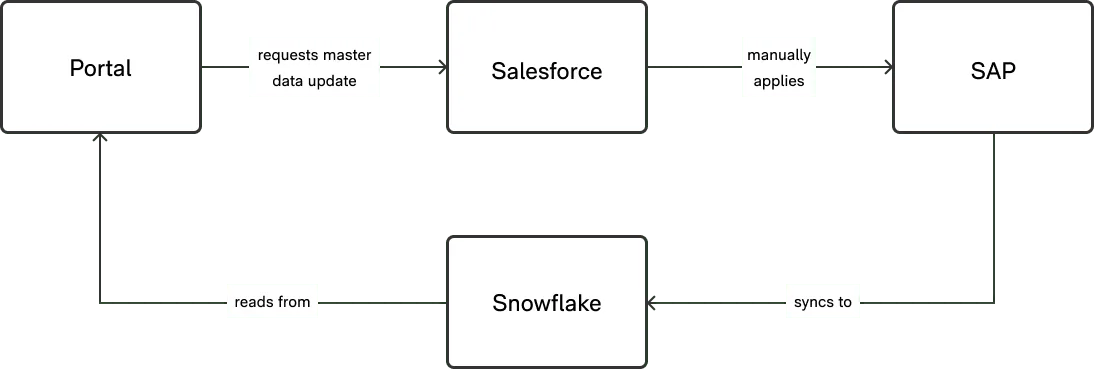
A validated blueprint ready to transform client relationships
Reduce client ticket volume
Self-service data access and intuitive navigation designed to dramatically reduce the Salesforce ticket burden on client services teams.
Increase NPS scores
A modern, intuitive portal experience directly addresses the client dissatisfaction driving poor Net Promoter Scores.
Streamline internal operations
Customizable dashboards, user-friendly data paths, and centralized data management for client service teams across the organization.
Empower PM consultants
Account health KPI tracking and efficient two-way communication enable program managers to maintain proactive, consultative client relationships.
Client self-service access
Intuitive access to order and financial information, eliminating the need for clients to submit tickets or send emails for routine data requests.
Validated before building
Every design decision backed by user research. 11 usability test sessions confirmed the portal concept would meet real user needs before development investment.
Have a complex enterprise product that needs a blueprint?
Digital Scientists’ Product Blueprint validates your product vision with real user research, high-fidelity prototypes, and technical architecture, before you write a line of code.