“We pay for every system we run. We own none of them.
We still can’t make sense across them.”
Where does our IP actually live?
The software bill keeps growing. The asset column does not.
Talk through what you should own






Rent what is commodity. Own what makes you different.
Most of your software spend is fine and should stay rented. Payroll, email, ticketing, the ledger. None of that is what you compete on, and none of it is worth your engineers. The question worth answering is which part is the thing you actually compete on, because that is the only part worth owning.
Everything you run, somebody else owns.
Most of that spend is fine. The question is whether any of it is the thing you actually compete on.
Nothing you run differentiates you
You cannot answer a question without three exports
An acquirer asks what you own
The gap widens while you wait
This is the only one of the five where doing nothing actively makes the eventual job larger.
The data keeps accumulating elsewhere
Every month of operating inside someone else’s system is another month of your history stored where you cannot use it.
Migration cost rises with tenure
The longer a workflow lives in a platform, the more of your business is shaped around its assumptions.
Valuation is decided before you are ready
Nobody builds an asset during diligence. It has to already exist.
SaaS is not dying and most of your software spend is fine. The problem is that you rent all of it, own none of it, and cannot see across any of it.
Three companies that built something of their own
Post-acute care, school athletics, population health. In every case the client holds the IP.


Build the differentiator, integrate the commodity
Most of what you run should stay rented. Working out which part should not is the whole job.
Sometimes the answer is to keep renting all of it, and we will say so. An honest no is worth more to you than a build we talked you into.
The code, the intellectual property and the roadmap are yours. That is in the contract, not the pitch.
Reading for the argument you have to make internally


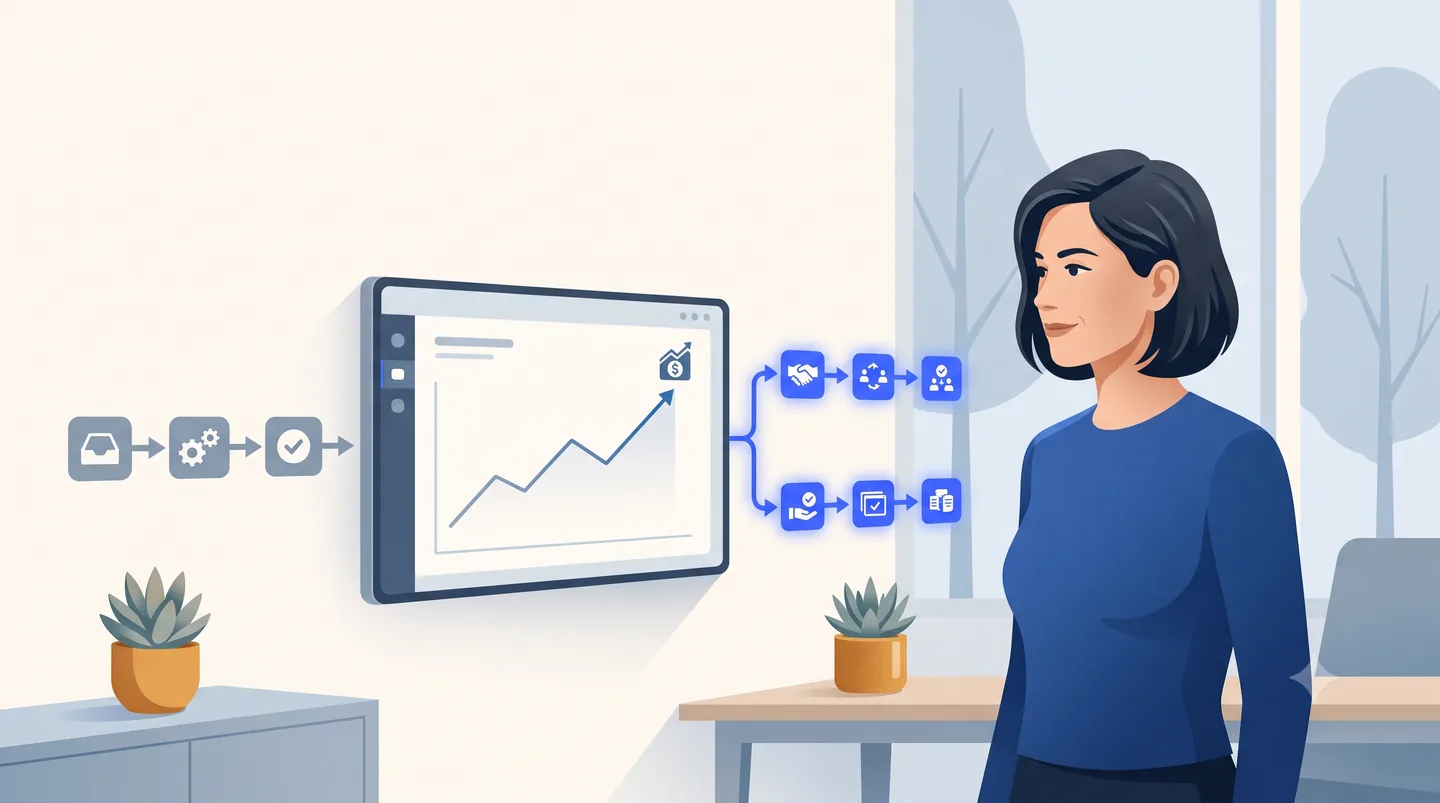
Start with a conversation, then a small piece of work
Nobody should commit to building a platform before knowing which part is worth owning.
Where the value is
Which systems sit closest to what you compete on, and what leaving them would cost.
Architecture and number
What is custom, what is integrated, and what the first piece costs.
Build the differentiator
The part that is yours, with commodity workflows integrated around it.
Own it
Run by you, or by us for as long as you want. The IP does not move either way.
Tell us what you are paying for and what you keep
Thirty minutes. Walk us through the stack and where the value sits, and we will tell you which part is worth owning.
Four other things we hear
“We finally have our roadmap defined. Leadership signed off. Engineering is booked.”
How do we deliver more this year than engineering can on its own →
“Every time we grow, we add another FTE.”
How do we do more without hiring more →
“Our AI prototypes work. None of them made it to production.”
How do we actually get to production →
“We make the short list. We keep losing the deal. Nobody can tell us why.”
How do we stop losing demos →
Or start from all five.