
The portal that came with the EHR was not built for engagement.
Standard portals satisfy Meaningful Use. They do not drive activation, retention, or care plan adherence. We build patient engagement platforms that families actually use, with the same operational discipline we apply at NeverAlone where 26,000+ patients and their families log in across 7 states every day.
Patients & Families
Multi-State Network
Design Standard
Bidirectional
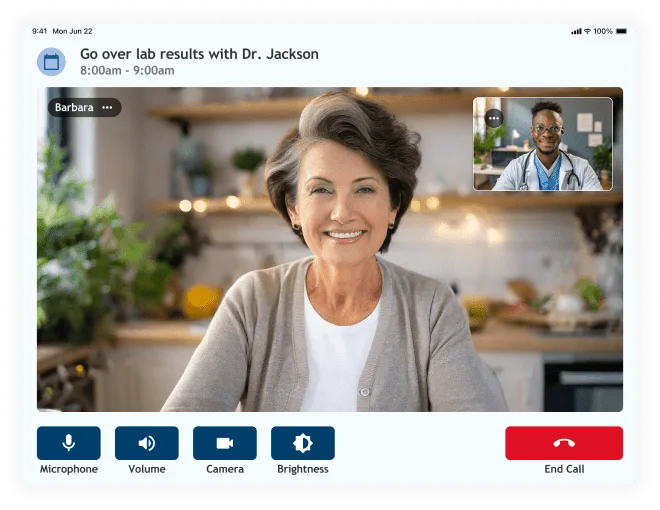
Mobile-first patient and family experiences, EHR-integrated
A portal is one component. A patient engagement platform is the connected experience.
A patient engagement platform is the system that connects patients and families to the care team across the full care journey. It includes the patient portal (records, messaging, scheduling) but extends to family proxy access, asynchronous symptom reporting, RPM data feedback to the patient, education and care plan adherence prompts, video visits, and the secure communication that turns the platform into a habit instead of a checkbox.
Buying a portal is not the same as building patient engagement. The portal is the easy part. The hard parts are the activation workflow, the family communication model, the integration with clinical systems so visit data informs the patient experience, and the operational discipline to retain users beyond the first login. We have been doing exactly that for 26,000+ patients and their families since the platform first went live.
Standard portals were built for compliance, not engagement.
The result is the gap most provider organizations live with: low activation, low retention, and the same staff phone calls a portal was supposed to eliminate. Custom engagement is how you close that gap on your terms.
Average Portal Activation
National baseline. Custom engagement platforms routinely double or triple this with workflow-integrated touchpoints.
Prefer Mobile
Two out of three patients want a mobile-first experience. Most EHR portals were retrofitted from desktop and feel like it.
Per Scheduling Call
Average loaded cost of a phone call your portal was supposed to absorb. Multiply by your call volume to size the missed savings.
No-Show Rate
Appointment no-shows tied directly to engagement gaps. Reminders, prep content, and rescheduling flows all reduce this.
Engagement wherever care happens.
Different settings, different patients, different family dynamics. NeverAlone, the platform we built and operate, serves eight of these segments in production. We engineer engagement for the rest in custom engagements.
Skilled Nursing
Family proxy access, real-time care updates, video visits with the resident, MDS-aligned care plan visibility.
Assisted & Independent Living
Family communication, activities and wellness updates, billing visibility, on-call clinical messaging.
Home Health
Visit prep, between-visit symptom reporting, RPM data feedback, family-included care plan adherence.
Hospice
Family-centered communication, comfort-care education, on-call clinical access, bereavement follow-up.
Health Systems & Acute Care
Pre-op prep, discharge follow-up, post-acute handoff, condition-specific patient apps.
ACOs & Health Plans
Member onboarding, gap-closure prompts, attributable activation, MA and ACO REACH alignment.
IDD Services
Direct support professional logging, family visibility, behavior tracking with caregiver context.
Behavioral Health & Rural Access
Asynchronous messaging, crisis triage, multi-state-licensed therapist access, rural specialty reach.
Buy. Build. Partner.
The default is the EHR vendor portal. The hard option is a 12-to-18-month ground-up build. Partner is the lane DS was built for: you drive the engagement model and own the IP, we bring the platform engineering and the operational discipline of running NeverAlone in production.
| Decision Lever | Buy (EHR vendor portal) | Build (Ground Up) | Partner with DS |
|---|---|---|---|
| Time to deploy | Bundled with EHR | 12 to 18 months | 8 to 12 weeks on the NeverAlone scaffold |
| Engagement design | Built for compliance, not activation | Yours, you carry all the risk | Yours, on a production-proven foundation |
| IP ownership | Vendor owns it | You own it | You own it |
| Mobile experience | Retrofitted from desktop | Designed mobile-first | Designed mobile-first, native or PWA |
| Family proxy access | Bolt-on, often clunky | Yours to design | First-class, NeverAlone-tested |
| Best fit for | Standard outpatient, basic compliance | Ventures with deep tech teams | Health systems, post-acute, home health, hospice, rural networks, VBC organizations, behavioral health, IDD |
Three layers, one platform.
A patient engagement platform that drives activation has three layers. Skip any of them and you ship a portal that nobody logs into a second time.
Digital Front Door
Self-service scheduling, registration, intake, education, and condition-specific landing pages. The first impression that turns a stranger into a patient with a logged-in habit.
Family & Care Communication
Proxy access, secure messaging, real-time care updates, video visits, and the family-included communication model that distinguishes a portal from an engagement platform.
Patient Activation & Adherence
Reminder workflows, RPM data feedback to the patient, care plan adherence prompts, and the analytics that show which interventions actually moved engagement metrics.
Professional Services or Venture Studio.
DS operates two business models. Most patient engagement engagements fit one cleanly. Some span both. The model is named explicitly because the funding mechanics, IP arrangement, and timeline are materially different.
Build a custom patient engagement platform for your network.
You operate the care model. You own the IP. We engineer the platform: digital front door, family communication, patient activation, EHR integration, mobile and web. Milestone-funded engagements that survive CFO scrutiny because every phase produces a measurable activation outcome.
Typical engagement: $150K to $2M. ROI in 18 to 36 months. Discovery first, then phased build tied to activation, retention, and clinical KPIs.
License the NeverAlone family-portal scaffold or co-build with equity alignment.
For organizations launching a new patient-facing line of business, we license the NeverAlone family-portal scaffold as the foundation, customize for your network, and align incentives with equity or revenue share. Production-proven architecture instead of starting from zero.
Typical engagement: Faster deployment via the scaffold (8 to 12 weeks vs. 12 to 18 months). Equity or revenue-share aligned. We have skin in the game.
Production deployments. Real activation. Real retention.
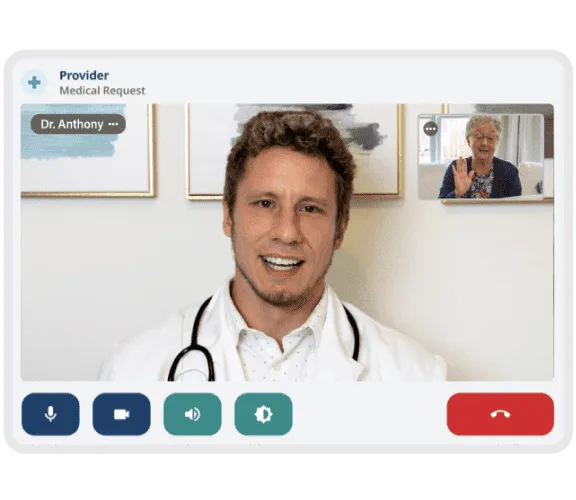
26,000 patients and their families. 7 states. Mobile-first.
We built it. We hold equity in it. We operate it. NeverAlone gives families real-time visibility into their loved one's care, secure messaging with the care team, and video visits. Every lesson from running it at scale flows back into custom engagement engagements.
Patients
Proxy Access
Bidirectional
Beyond the EHR vendor portal. Mobile-first by default.
Custom patient portal and digital front door work that goes past compliance. Self-service scheduling, condition-specific landing pages, family proxy access, EHR-integrated records, and the workflow design that drives activation past the 30% baseline.
First Design
Integrated
Compliant
Patient Engagement Diagnostic
Before we build anything, we audit your current patient-side technology, map your patient and family personas, and quantify the activation gap.
What You Get
Engagement Audit
Current state assessment of EHR portal, patient apps, family communication, and activation
Patient & Family Personas
Mapped across the care journey, with activation moments identified per persona
Activation Moment Inventory
The 5 to 10 highest-impact touchpoints where engagement is won or lost
Buy / Build / Partner Recommendation
With activation lift projections, capital phasing, and CFO-grade business case
60 to 90 Day Pilot Plan
Tied to the highest-impact activation moment with a measurable outcome
Family-Access Architecture Brief
Proxy model, consent, age-of-majority handling, multi-state legal alignment
Bidirectional EHR. Compliant communication. Mobile-first delivery.
Engagement that does not flow back to the clinical system is brochureware. We have production experience with the EHRs, communication stacks, and mobile platforms your patients are already on.
EHR Systems
PointClickCare and Gehrimed in production. Epic integrated in an R&D environment. Cerner, MatrixCare, Netsmart, and Elation via FHIR R4, HL7v2, and ADT.
Secure Messaging
HIPAA-compliant async messaging, video visits, family group threads, on-call escalation routing.
Mobile Delivery
iOS, Android, and Progressive Web App. Push notifications, biometric auth, offline-capable where care setting demands it.
Identity & Access
Patient identity, family proxy, age-of-majority workflow, multi-state consent, audit logging end to end.
EHR Integrations is the supporting capability that runs underneath every healthcare domain at DS. See the production EHR integration backbone →
We do not just build and hand off. We operate, support, and stand behind our work.
Discover
Engagement Audit. Current state of portals, apps, communication, activation.
Patient & Family Personas. Activation moments mapped per persona.
Experiment
Hypothesis & Scope. Highest-impact activation moment gets a working pilot.
Build & Validate. Real patients, real families, real EHR data, real outcomes.
Engineer
Iterative Sprints. Patient feedback loops every 2 weeks.
Systems Integration. EHR, messaging, identity, mobile.
Family Proxy & Consent. Multi-state consent, age-of-majority, audit logging.
Production Deploy. Phased rollout with engagement-metric monitoring.
Optimize
KPI Accountability. Activation, retention, NPS, validated by analyst.
Continuous Improvement. Funnel analysis, A/B tests, content refresh, ongoing support.
Often combined with
Virtual Care Platforms
The clinician-side companion. Telehealth, RPM, AI assistants. Engagement and virtual care ship together at NeverAlone.
Learn more →Value-Based Care
Activated patients are how VBC contracts get hit. Gap-closure prompts, attributable outcomes, MA and ACO REACH alignment.
Learn more →Healthcare UX Design
Engagement is design and research before it is engineering. Research-grounded patient experience.
Learn more →Healthcare SaaS
Multi-tenant, multi-network, mobile-first SaaS architecture for member-facing applications.
Learn more →EHR Integrations
The supporting capability that runs underneath every domain. Bidirectional FHIR/HL7 in production.
Learn more →Frequently Asked Questions
Common questions about custom patient engagement platform development for healthcare organizations.
What is a patient engagement platform and how is it different from a patient portal?
A patient engagement platform is the broader system that connects patients and families to the care team across the full care journey. A patient portal is one component of it, typically focused on records access and messaging. A complete engagement platform also includes scheduling and self-service, family communication and proxy access, education and care plan adherence, secure messaging, video visits, RPM data feedback, and the workflow integrations that turn the platform into a habit, not a checkbox. Most off-the-shelf EHR portals were built for compliance, not engagement, which is why activation rates sit around 30% nationally.
Why build a custom patient engagement platform instead of using the EHR vendor portal?
EHR vendor portals are designed to satisfy Meaningful Use and 21st Century Cures requirements. They are not designed to drive activation, retention, or care plan adherence. If your patient population is post-acute, home health, hospice, IDD, behavioral health, or rural, the standard portal does not match the workflow patients and families actually need. Custom engagement preserves your care model and lets you compete on experience, not just clinical quality.
Does the NeverAlone family portal scaffold work for my organization?
NeverAlone is the engagement platform we built and operate. It serves 26,000+ patients and their families across 7 states, with mobile-first family access, real-time care updates, video visits, secure messaging, and EHR-integrated records access. Two paths are available: license the NeverAlone family-portal scaffold as the foundation for your custom build, or partner with us to engineer a ground-up platform tailored to your network. Both paths skip the 12-to-18-month ground-up build.
Is custom patient engagement HIPAA compliant?
Yes. Digital Scientists builds patient engagement platforms with HIPAA compliance from the architecture layer: end-to-end encryption for messaging and video, role-based access controls including proxy and family-member access, complete audit logging, and Business Associate Agreements with all cloud providers. We have been delivering compliance-grade healthcare software since 2007.
What EHR systems does patient engagement integrate with?
PointClickCare and Gehrimed are in production on platforms we operate. Epic is integrated in an R&D environment. For Cerner, MatrixCare, Netsmart, Elation, and other systems we integrate via HL7 FHIR APIs, ADT feeds, and custom data exchange. Bidirectional FHIR R4 and HL7v2 mean appointment data, lab results, medications, and care plan updates flow into the patient experience, and patient-side activity (questions, symptom reports, RPM data) flows back to the EHR for clinical action. Without that bidirectional flow, you have a brochureware portal.
What does patient activation look like with a custom platform?
Industry baseline portal activation is around 30%. Custom engagement platforms with mobile-first design, family proxy access, and workflow-integrated touchpoints routinely double or triple that. The metrics that matter are activation completion (first login + key action), 30 and 90 day retention in digital programs, NPS, and clinical outcomes for the engaged cohort vs. the unengaged baseline.
What does a Patient Engagement Diagnostic include and what does it cost?
A Patient Engagement Diagnostic is a 2 to 3 week engagement ($20K to $30K) that audits your current patient-side technology, maps your patient and family personas across the care journey, identifies the highest-impact activation moments, and delivers a Buy/Build/Partner recommendation with ROI projections and a 60 to 90 day pilot plan. It is the entry point for organizations evaluating whether the EHR portal is enough or whether custom engagement is the right path.
DS works as a Professional Services build partner or as a Venture Studio with equity-aligned partnerships, accelerators, and operator-founder programs. The right model depends on whether you own the IP, share it, or license ours.
See all engagement models →Funding note
Consumer-facing technology is a scored factor under the $50 billion Rural Health Transformation Program, where adoption rather than purchase is what earns the points.
See what we build against the scored factors →Ready to close the activation gap?
Start with a Patient Engagement Diagnostic. 2 to 3 weeks. We will map your patients, your families, and the activation moments where engagement is won or lost, then recommend buy, build, or partner with hard ROI numbers.
Or call: 404.654.3855