From 90-day MVP to commercial care platform — together
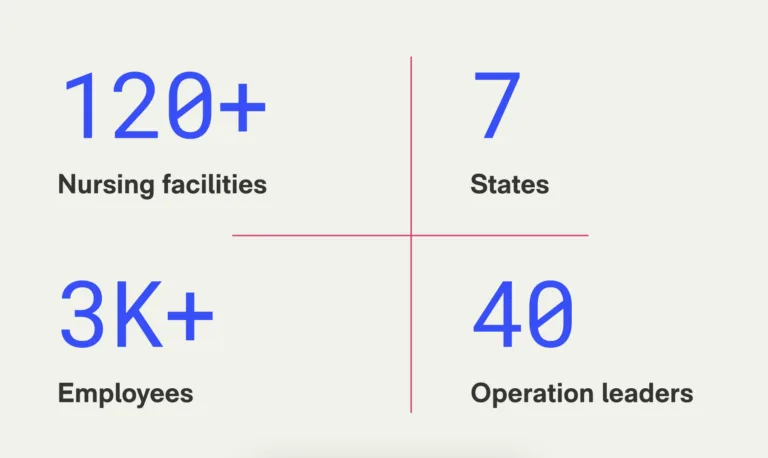
How Digital Scientists embedded with CommuniCare Health Services as their innovation partner, helping transform a single idea into NeverAlone — a 24/7 virtual care platform now serving 130+ facilities across 7 states.
Facilities Served
Continuous Partnership
MVP to Pilot
Populations Served
An innovation partner, not a vendor
CommuniCare Health Services is one of the nation's largest providers of post-acute care, operating skilled nursing facilities, assisted living communities, and home health services across multiple states. They came to Digital Scientists not looking for a vendor to execute a spec — but for an innovation partner who could embed with their team, understand their care delivery workflows, and build together.
CHS brought deep domain expertise in post-acute care. Digital Scientists brought product strategy, UX research, design, and engineering. The combination is why this partnership has lasted 5+ years and keeps expanding into new care settings.
Together, we built NeverAlone — starting as a simplified tablet for independent-living seniors and evolving into a multi-platform care ecosystem serving 8 populations across 130+ facilities in 7 states. Along the way, it became a commercial product that CHS now licenses to facilities outside their own network.

“I have worked with many technology teams during my career, and Digital Scientists is one of the best. They take the time to understand the customers' needs, deliver innovative solutions, are always professional, and work with your team as a true partner to achieve success.”
Amy Severino
Chief Innovation Officer, CommuniCare Health Services
Five years of iterative innovation
Every milestone was driven by CHS's expertise in post-acute care and DS's product, design, and engineering capabilities. We iterated together — they're the domain experts, we're the technology partner.
March 2021
90-Day MVP Sprint
Discovery workshops, specialized UX research with older adults, Blue Ocean competitive analysis, and a functional prototype — delivered in a single quarter.
June 2021
Independent Living Pilot
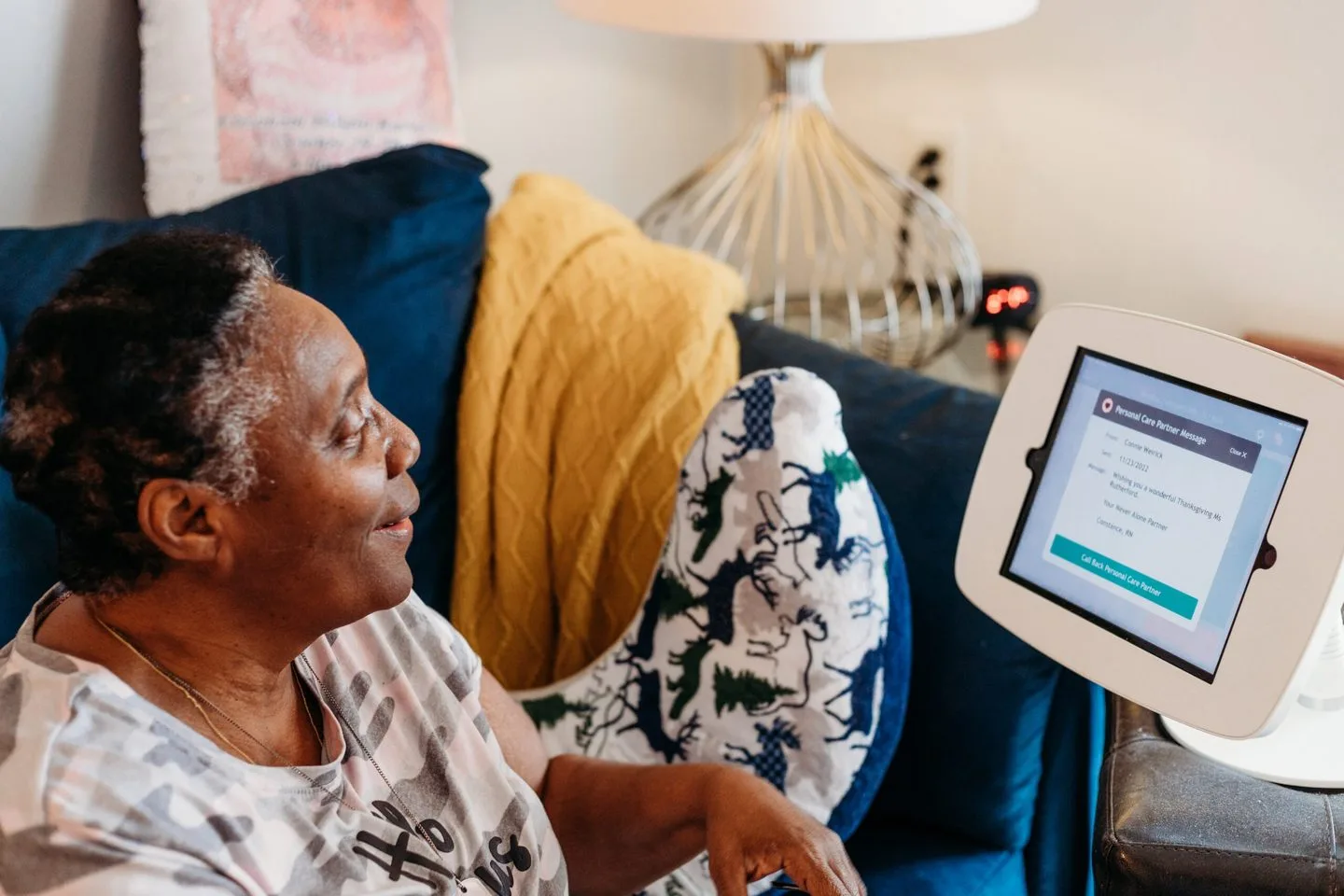
First seniors began using NeverAlone in independent living communities, connecting directly with care partners via tablet.
January 2022
Care Management Platform
Custom CRM replaces Salesforce, bringing care coordination and provider management fully in-house on a purpose-built system.
April 2022
IDD + Employee Health
$2.8M Indiana IDD grant expansion via Easterseals partnership. Employee health use case launched for CHS workforce.
August 2022
130 Facility Deployment
Scaled across CommuniCare's skilled nursing facility network, reaching 130+ locations in 7 states.
January 2023
Employee Mobile App
Extended the platform to the CHS workforce with a dedicated mobile experience for employee health and wellness services.
May 2023
Commercial Launch
First 15 non-CHS facilities onboarded. Multi-tenancy architecture, SaaS pricing model, and commercial go-to-market strategy.
2024 — Present
Home Health, Hospice, Behavioral Health
Expanded into home health, hospice-at-home, and behavioral health settings. Partnership continues with ongoing development and new care populations.
Embedded as their product team
Digital Scientists didn't prescribe solutions from the outside. We integrated with CHS's innovation team — working daily alongside clinicians, administrators, and care coordinators. We made regular on-site visits to skilled nursing facilities in Ohio, Indiana, and West Virginia to observe workflows and understand the real challenges staff and residents face.
CHS brought deep domain expertise in post-acute care. We brought product strategy, UX research, design, and engineering. The combination is why this partnership has lasted 5+ years and keeps expanding into new care settings.
Product strategy and roadmapping
UX research specialized for vulnerable populations
Custom software design and development
EHR integration (PointClickCare, GEHRIMED)
Managed services and 24/7 production support
Business advisory: SaaS pricing, multi-tenancy, grant proposals
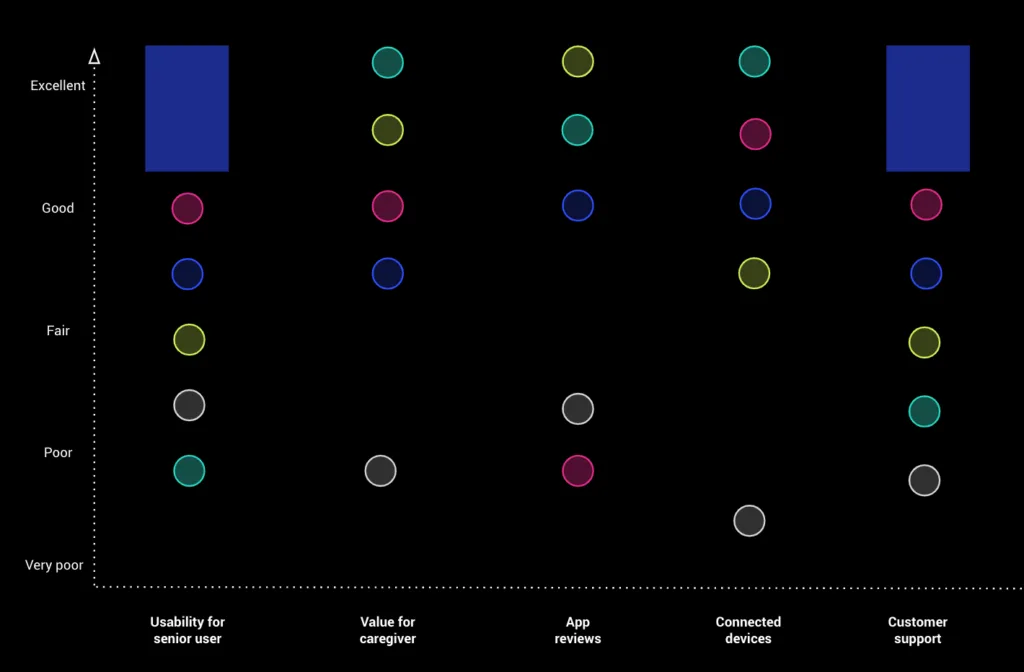
Blue Ocean competitive analysis
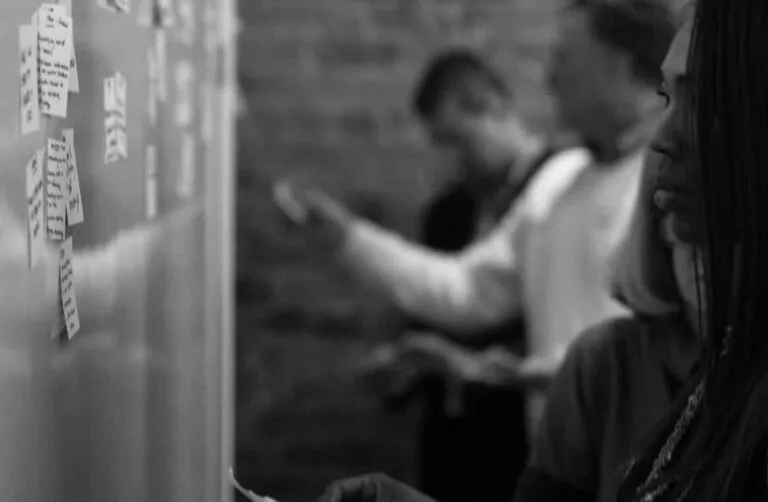
Discovery workshops
Designing for populations most technology teams overlook
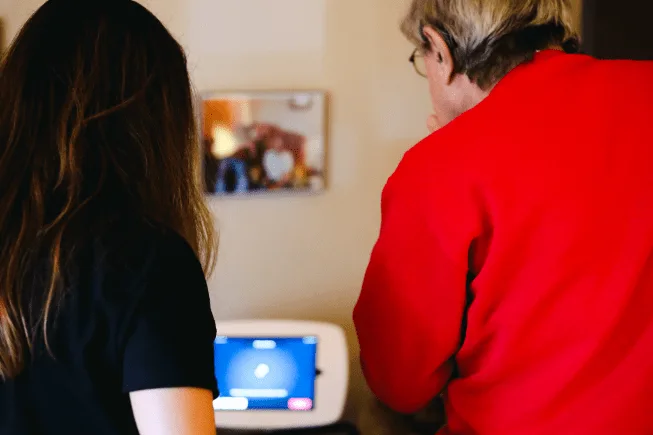
When your users are 80-year-old seniors with limited technology experience, or individuals with intellectual and developmental disabilities, standard UX practices fall short. Digital Scientists deployed specialized research teams trained in interviewing vulnerable populations — using visual aids, interactive activities, and careful terminology to build trust and draw out genuine user preferences.
Across the NeverAlone engagement, we employed four research methodologies: contextual interviews, usability testing, diary studies, and co-creation workshops. These were not one-time exercises — we returned to users repeatedly as the platform expanded into new care settings and populations.
Design Considerations for Seniors
Large touch targets
High contrast UI
Minimal navigation depth
Simplified gestures
Audio cues & subtitles
Clean, uncluttered screens
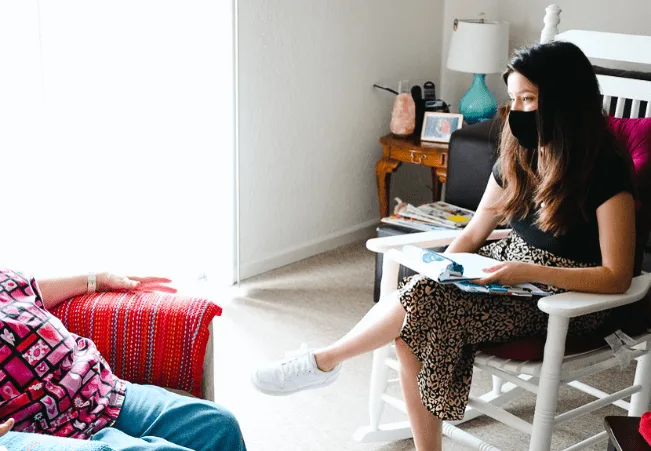
Contextual Interviews
Usability Testing
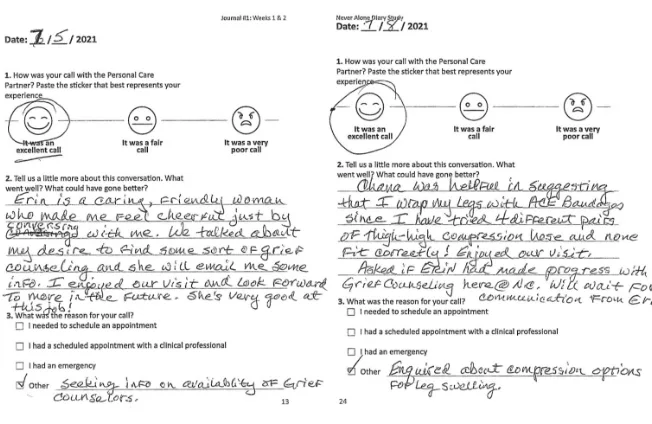
Diary Studies
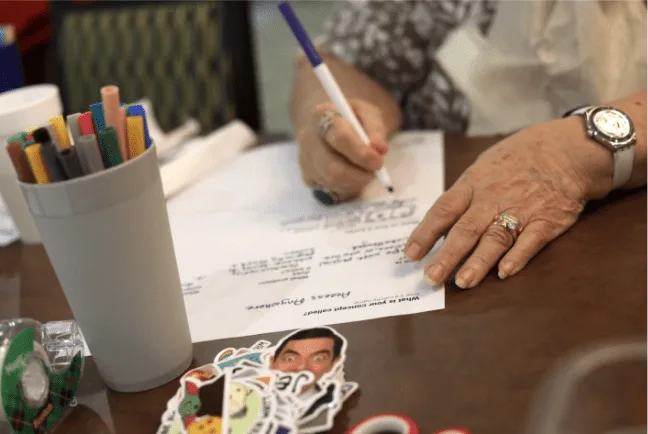
Co-Creation Workshops
From a single tablet app to a full care ecosystem
The platform evolved through continuous iteration — each expansion driven by CHS's domain expertise and real care delivery needs, not a predetermined roadmap.
01 — It started here
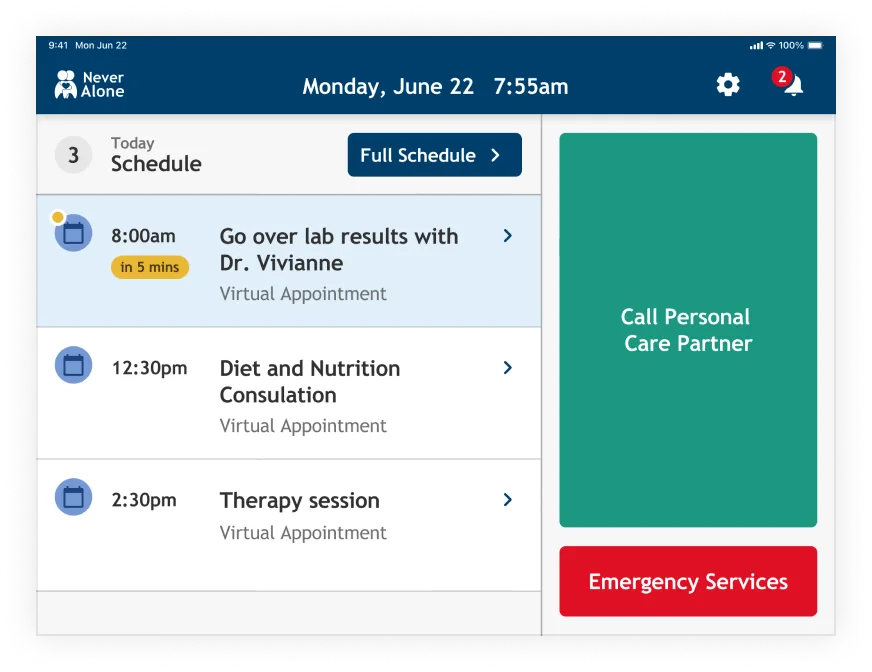
A simplified tablet for seniors
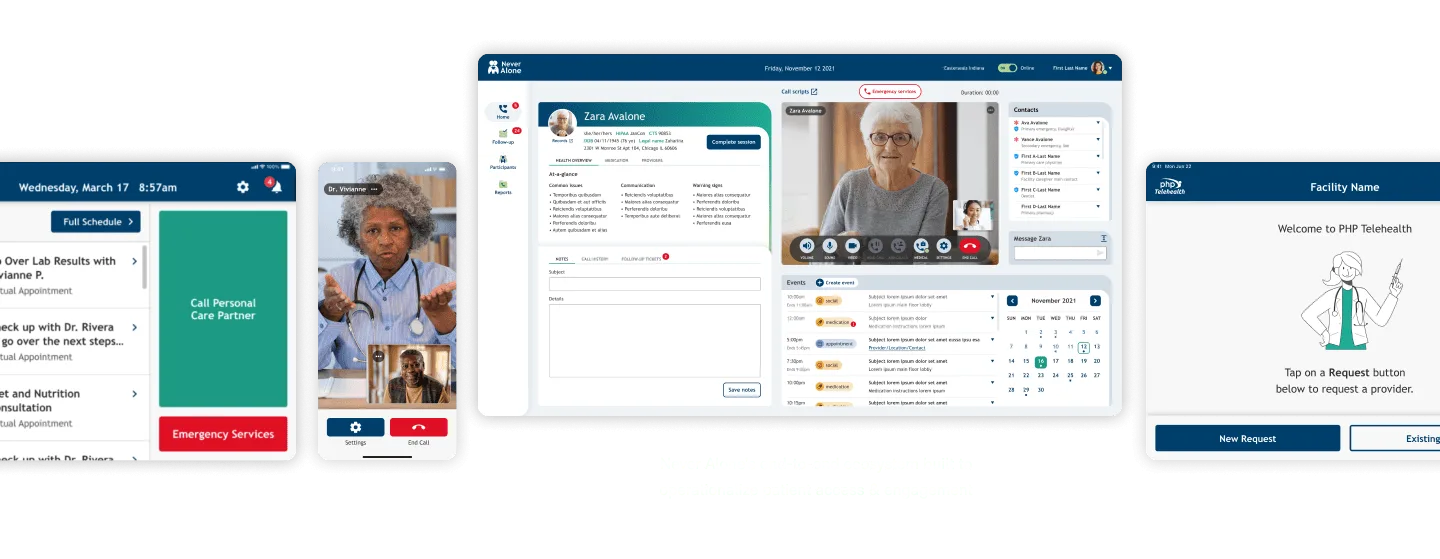
The first product was deliberately simple: a tablet placed in independent-living apartments with large touch targets, high-contrast UI, and two primary actions — call a care partner or check today's schedule. No app store, no login friction. Just tap and connect.
This intentional simplicity came directly from our specialized UX research with 80-year-old residents. Every screen was tested and refined with real users in their actual living spaces.
02 — Then the other side
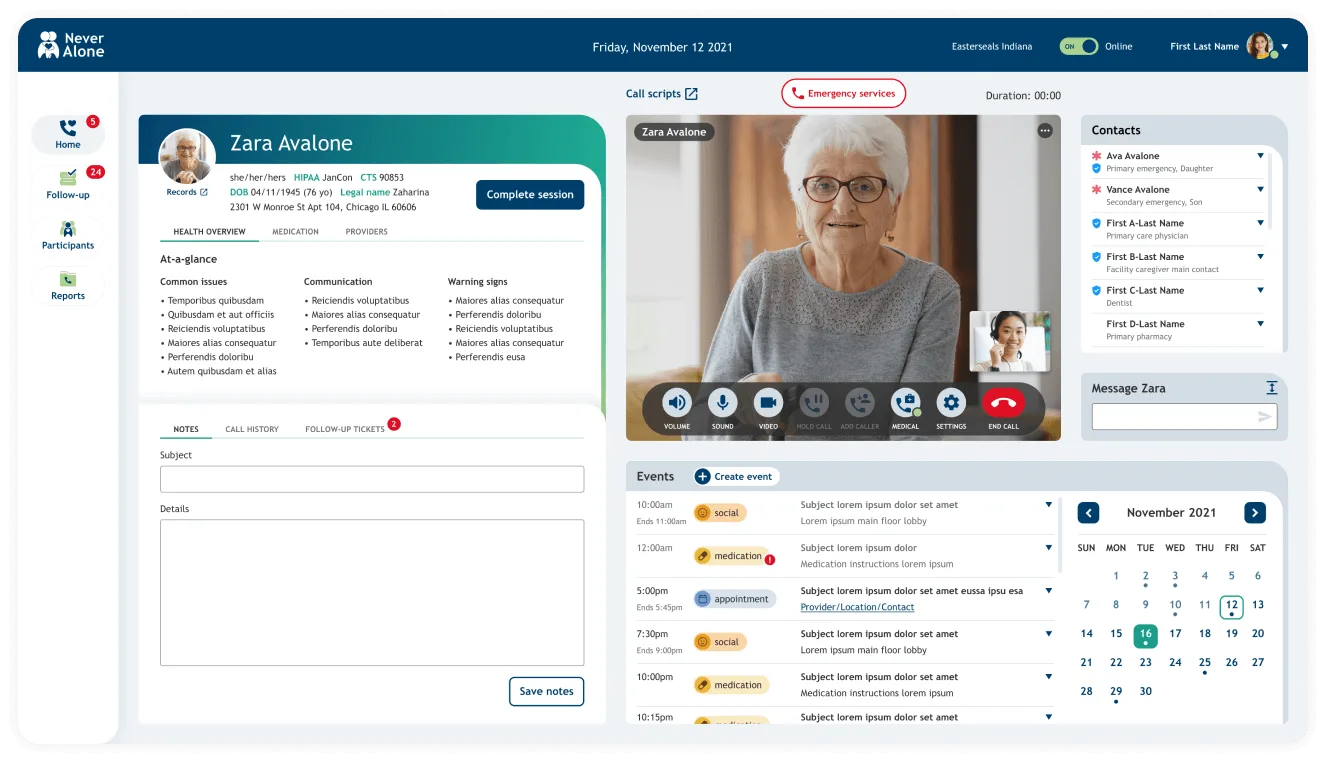
A care partner portal for real clinical workflows
As call volume grew, care partners needed more than just video. We built a comprehensive portal with live video, patient health overviews, contacts, event calendars, SBAR documentation, and follow-up ticket tracking — all visible during a single call.
The portal replaced fragmented workflows across Salesforce, spreadsheets, and paper notes with a unified, purpose-built experience.
03 — Then it expanded
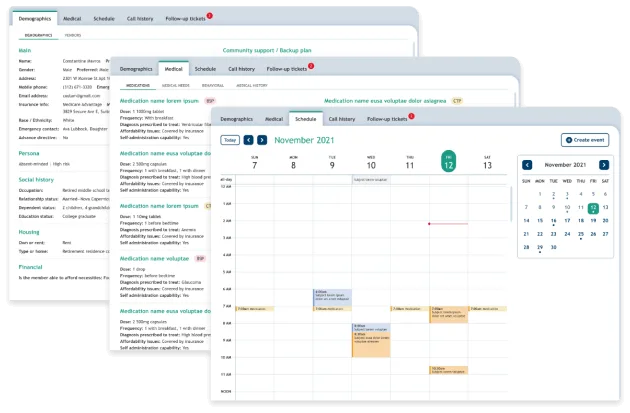
Care management, scheduling, and participant records
The platform grew beyond real-time calls into full care management: participant demographics, medical history, medication tracking, appointment scheduling, and follow-up ticket workflows. This replaced Salesforce entirely as CHS's care coordination system.
By building purpose-specific tools instead of adapting generic CRM software, we reduced training time and improved data quality for care coordinators across 130+ facilities.
04 — Then it went commercial
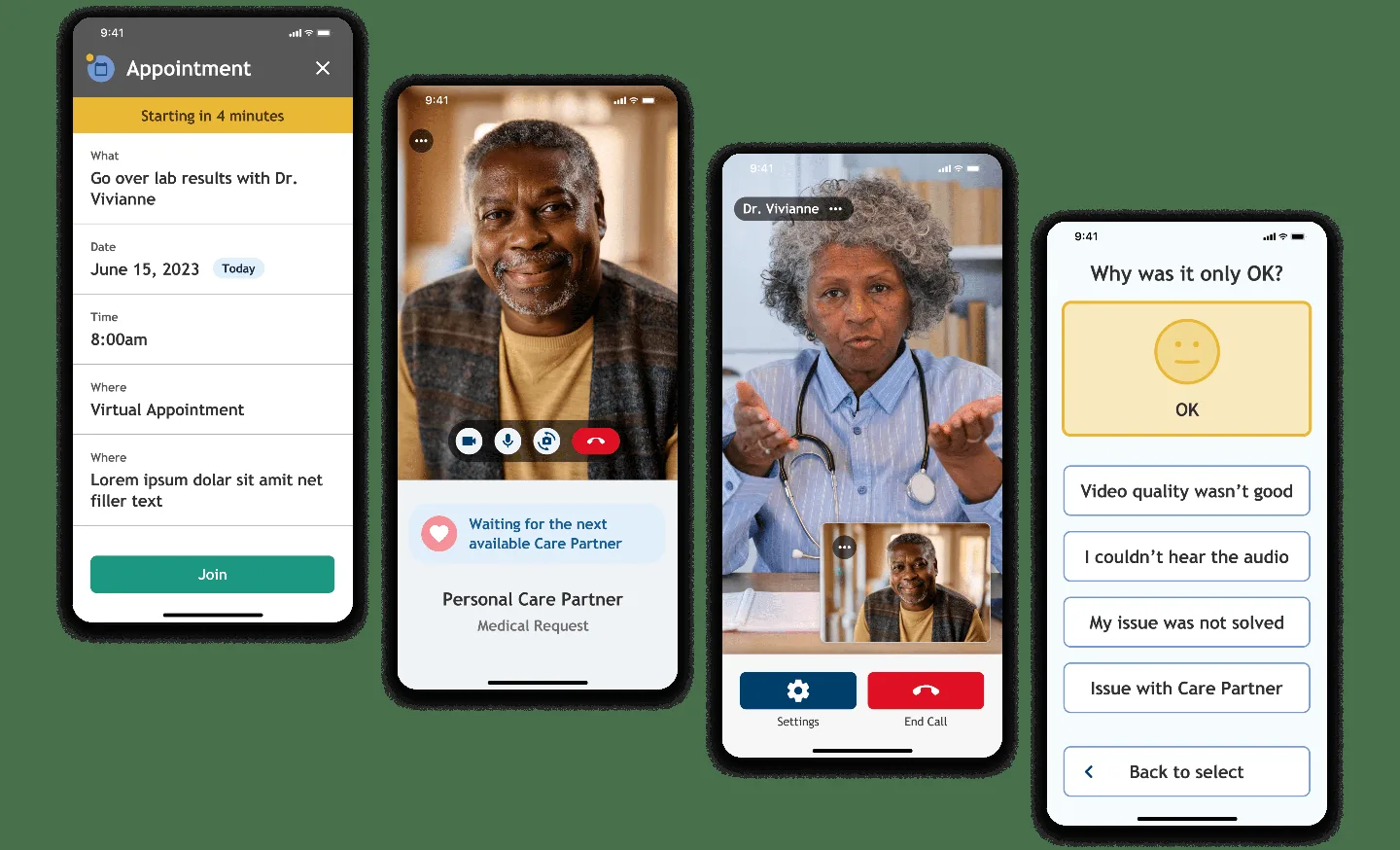
A mobile-first platform for any care setting
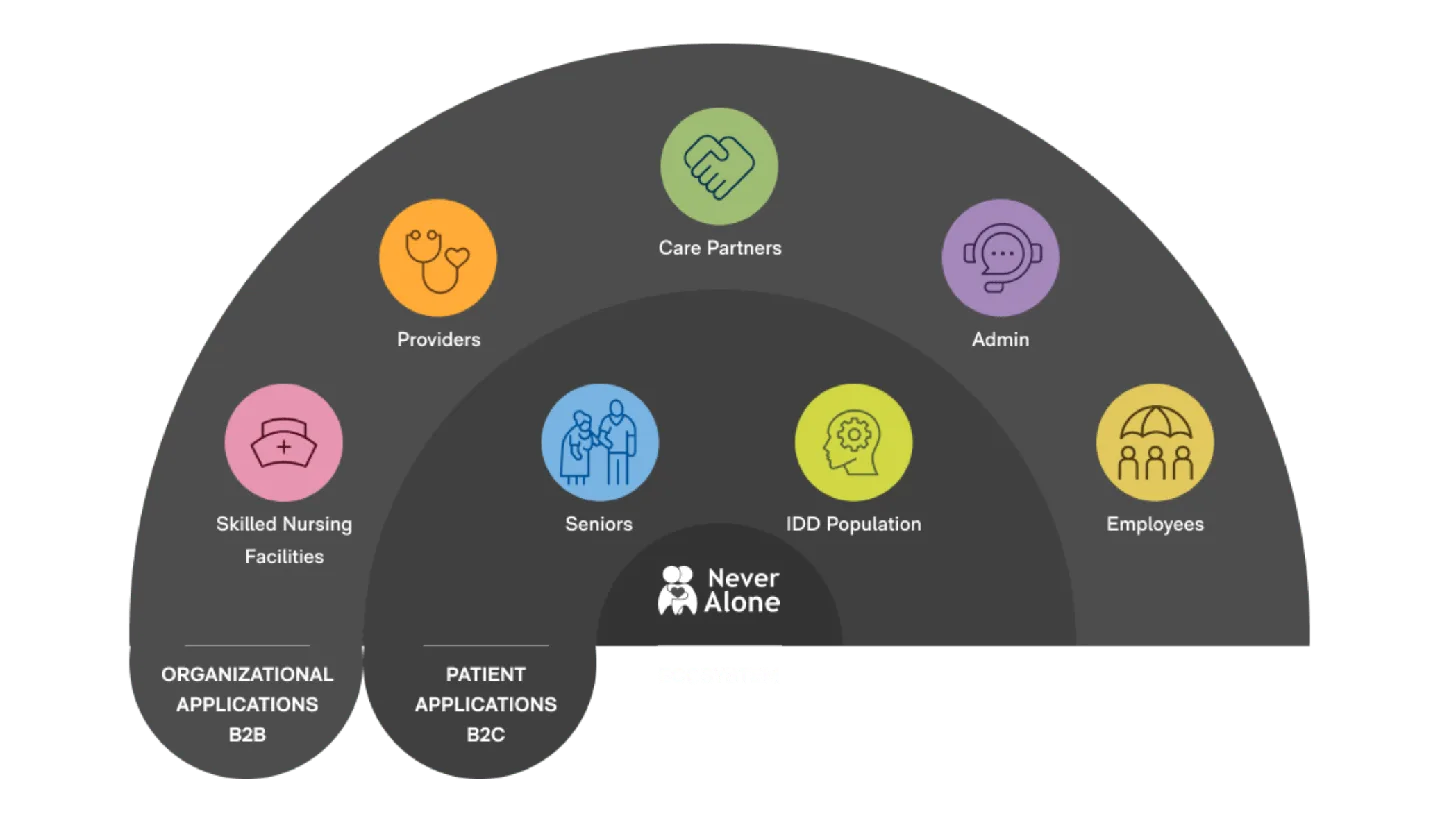
What started on tablets in independent-living communities is now a mobile-first platform serving 8 populations: seniors, IDD individuals, employees, skilled nursing residents, home health patients, hospice patients, behavioral health clients, and their families.
Multi-tenancy architecture, SaaS pricing, and self-service onboarding enabled CHS to license NeverAlone commercially — transforming an internal innovation project into a standalone revenue-generating product.
 IDD Expansion
$2.8M grant-funded expansion into IDD care
In partnership with Easterseals Arc of Northeast Indiana, CommuniCare leveraged Enhanced HCBS FMAP funds from the American Rescue Plan Act to secure $2.8M in Indiana state funding. DS supported the grant proposal process from the start — helping define the pilot scope, population segments, and technology approach.
The expansion required adapting NeverAlone for three distinct IDD populations: family-supported individuals whose guardians initiate calls, independent adults managing their own care, and high-needs individuals requiring 24/7 coverage with remote monitoring and smart sensors. Each persona demanded different interaction patterns, care delivery models, and UI design — from visual medication check-ins to electronic visit verification.
A 23-member pilot in Chapel Hill validated the approach, confirming that ease of navigation, face-to-face interaction, and consistent layouts drove adoption across all three groups.
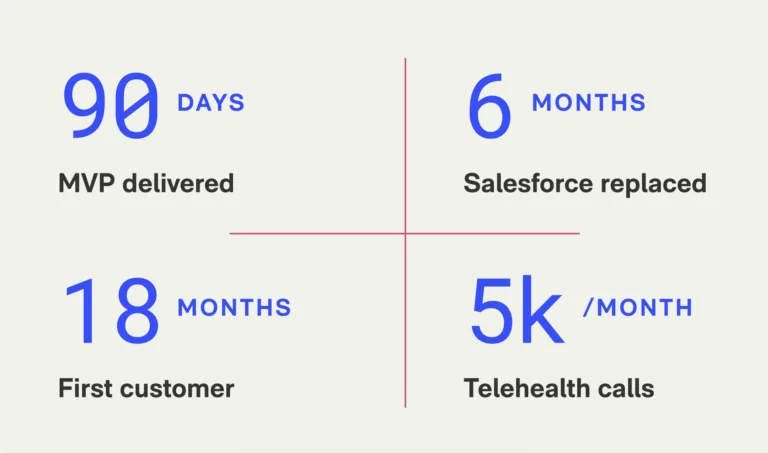
From internal pilot to commercial product in 18 months
The partnership didn't just deliver software — it transformed CHS's business model. What started as an internal innovation project became a standalone, revenue-generating product that CHS now licenses to facilities outside their own network.
New revenue stream created
15+ non-CHS facilities now pay SaaS licensing fees for NeverAlone, generating recurring revenue from what was originally an internal tool.
Salesforce replaced in 6 months
A purpose-built care management platform eliminated Salesforce licensing costs and the friction of adapting generic CRM workflows to clinical care coordination.
$2.8M grant funding secured
DS supported the proposal process that helped CHS and Easterseals win Indiana state funding to expand NeverAlone into IDD care.
1 patent filed
The partnership produced patentable innovation in virtual care delivery — intellectual property that belongs to CHS.
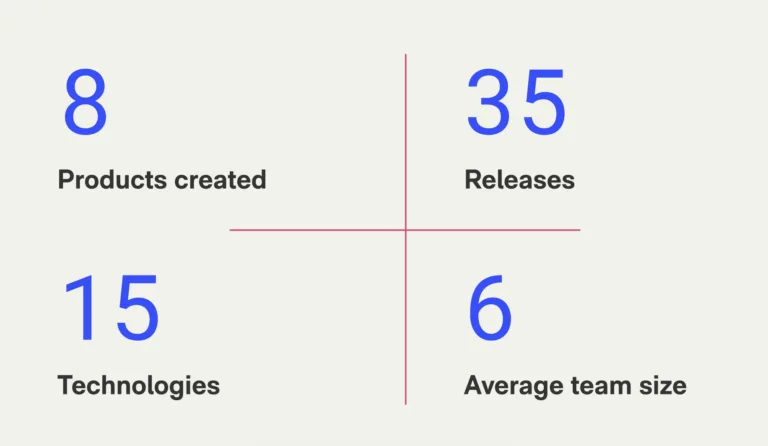
User interview hours
Steering committee meetings
Product releases
Telehealth calls per month
Eight populations, one platform
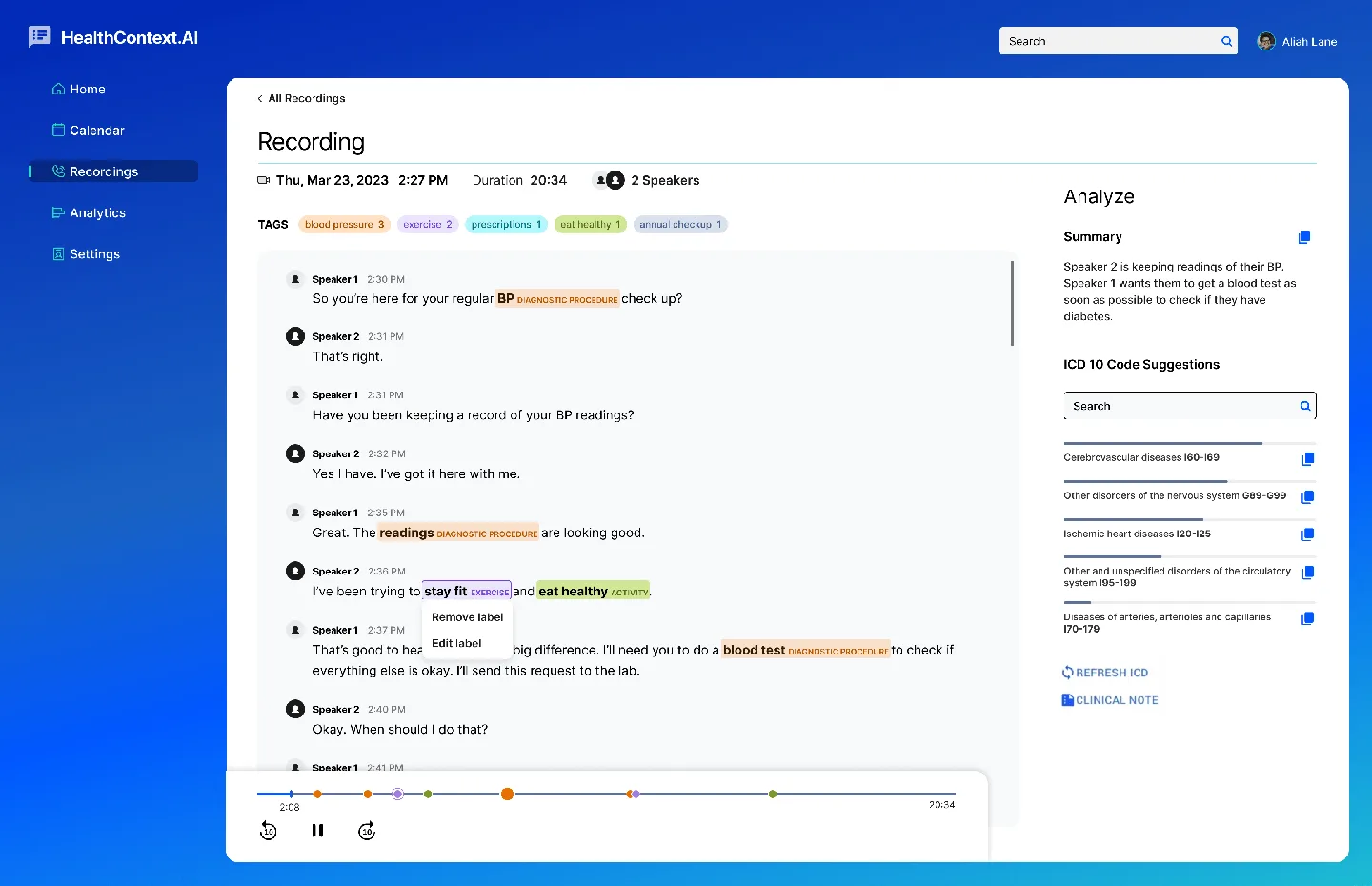
What started as a tablet for seniors now connects patients, families, care partners, clinicians, and administrators across every post-acute care setting — and integrates with HealthContext.AI for ambient clinical documentation.
Looking for an innovation partner, not just a vendor?
We embed with your team, learn your domain, and iterate together. That's how 90-day MVPs become commercial products.
Ready to build your own innovation partnership?
The NeverAlone model proves what's possible when a technology team embeds with your operations. Let's explore how this approach can work for you.
Or call: 404.654.3855