AI Delivery Center: Practical AI Roadmap for Medium-Sized Businesses
Start Small. Scale Smart. Deliver ROI.
Mid-sized businesses don't need massive infrastructure to get started. Automate the repetitive, support your teams, and act on data in real time with a structured roadmap tailored for you.
Schedule a Free AI Strategy Session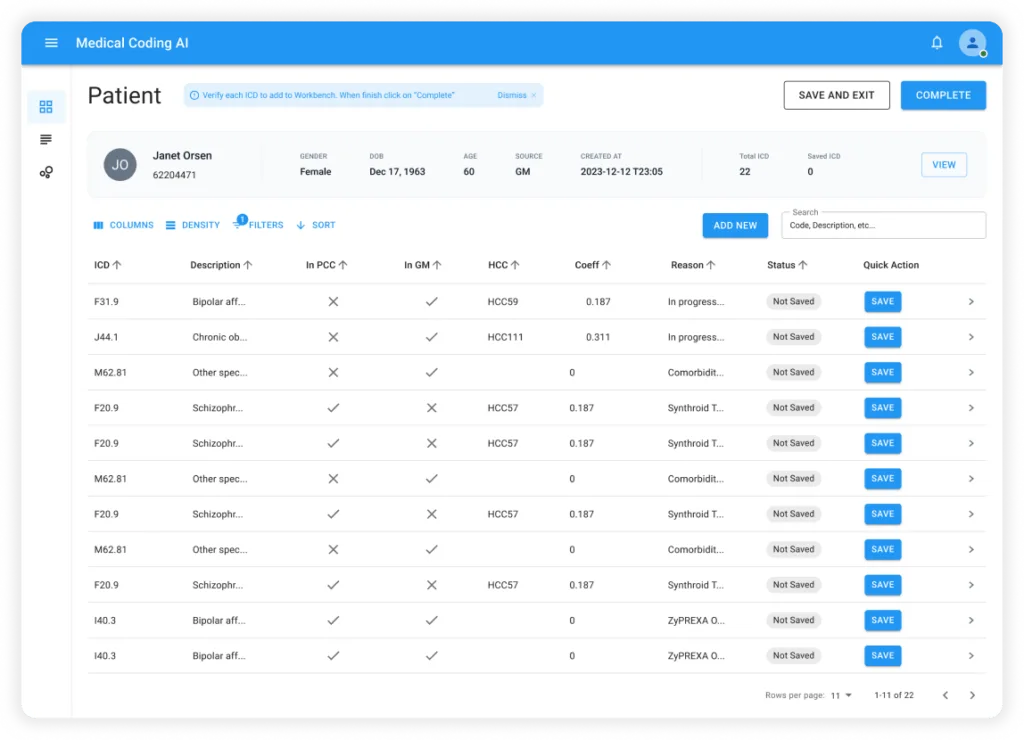
RAF Score (Coding AI) — Serving 23K+ patients by closing coding gaps, improving coordination, and achieving an impressive 20X recurring return
Assessment
AI Readiness Assessment
Your First Step Toward Practical, ROI-Driven AI Adoption.
Most medium-sized businesses know they need to get started with AI – but don't know where to begin. That's why we've designed a focused, four-week engagement to assess your current state, uncover high-impact opportunities, and chart a practical course forward. This isn't a theoretical strategy document. It's a hands-on, actionable plan aligned to your business goals, technology environment, and ROI expectations.
1
What It Is
What It Is
The AI Readiness Assessment is a 30-day consulting engagement led by our AI and product strategy team. We partner with your internal stakeholders across IT, operations, and business leadership to evaluate your environment, identify automation and intelligence opportunities, and create a phase-by-phase implementation roadmap tailored to your goals and constraints.
2
What You Get
What You Get
By the end of the engagement, you'll receive:
Current-State Analysis
- Inventory of existing systems, data sources, and AI-related initiatives
- Stakeholder interviews and business workflow review
- Identification of key pain points and bottlenecks
Opportunity Map
- Prioritized list of automation, AI, and augmentation use cases
- Categorized by cost-saving vs. revenue-generating potential
- Complexity, risk, and ROI estimation for each opportunity
Technical Feasibility Review
- Evaluation of data quality, system integrations, and model-readiness
- Assessment of your IT architecture and security constraints
- Buy vs. build recommendations based on use case types
Strategic Implementation Roadmap
- A 90-day launch plan (Phase 1: Foundation)
- Multi-phase roadmap aligned to our Practical AI Framework
Foundation → Integration → Optimization → Transformation
- Investment ranges and time estimates for each phase
- Suggested metrics and methods for tracking ROI
Executive Briefing & Next-Step Guidance
- 60-minute debrief presentation for stakeholders
- Key decisions and optional pilot initiatives
- Recommendations for team structure and capability building
3
Timeline
Timeline
Duration: 4 Weeks
Weekly Cadence:
- Week 1: Discovery & Stakeholder Interviews
- Week 2: Systems Audit & Opportunity Sizing
- Week 3: Technical Assessment & Draft Roadmap
- Week 4: Final Recommendations & Executive Debrief
4
Cost
Cost
Flat Fee: $15,000 – $45,000
(Cost varies slightly based on size of org and system complexity)
This fee can be applied toward your first implementation phase if you move forward with Digital Scientists.
5
Who It's For
Who It's For
This assessment is ideal for:
- Mid-sized companies with $20M–$500M revenue
- Innovation-minded leadership looking for near-term AI ROI
- Teams unsure where to begin or how to prioritize
- Organizations evaluating Microsoft Copilot, ChatGPT, or custom LLM applications
6
Why It Matters
Why It Matters
Starting with AI isn't about chasing the next trend – it's about solving real business problems with measurable returns.
The AI Readiness Assessment helps you:
- Avoid wasted time and spend on misaligned pilots
- Identify true quick wins with high business impact
- Align stakeholders on a unified, phased approach
- Build confidence in your AI journey
Our Framework
The Practical AI Roadmap
Our hands-on experience building AI into real products has shaped a structured, ROI-driven implementation approach. We've developed a four-phase delivery framework that balances speed, usability, and long-term value — ensuring measurable impact at every stage.

Foundation
Months 1–6
Focus: Internal Conversational AI + Quick Wins
Expected ROI: 15–25%
- • Internal ChatGPT-style system for company knowledge access
- • Document summarization and analysis capabilities
- • Email drafting and communication assistance
- • Basic workflow automation

Integration
Months 6–18
Focus: Process Automation + Customer-Facing AI
Expected ROI: 25–40%
- • Customer service AI agents
- • AI for financial operations and scheduling
- • CRM, ERP, and helpdesk integrations

Optimization
Years 2–3
Focus: Predictive Analytics + Advanced Automation
Expected ROI: 40–60%
- • Predictive maintenance & personalization
- • Business intelligence and real-time reporting
- • Custom AI models

Transformation
Years 3–5
Focus: Proprietary AI Capabilities + Autonomous Processes
Expected ROI: 60%+
- • Industry-specific AI products
- • Autonomous workflows
- • New AI-powered services





Case Studies
Leveraging AI for ROI

HealthContext.AI
An AI transcription service for telehealth encounter documentation
AI, Healthcare
RAF Score (Coding AI)
New Risk Adjustment Factor models for reliable scoring
AI, Healthcare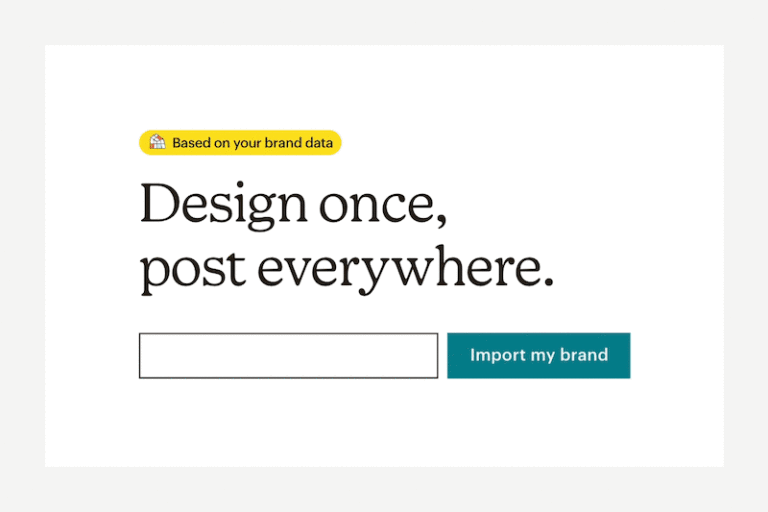
Mailchimp's Creative Assistant
AI-driven custom designs with the click of a button.
AI, UX/UI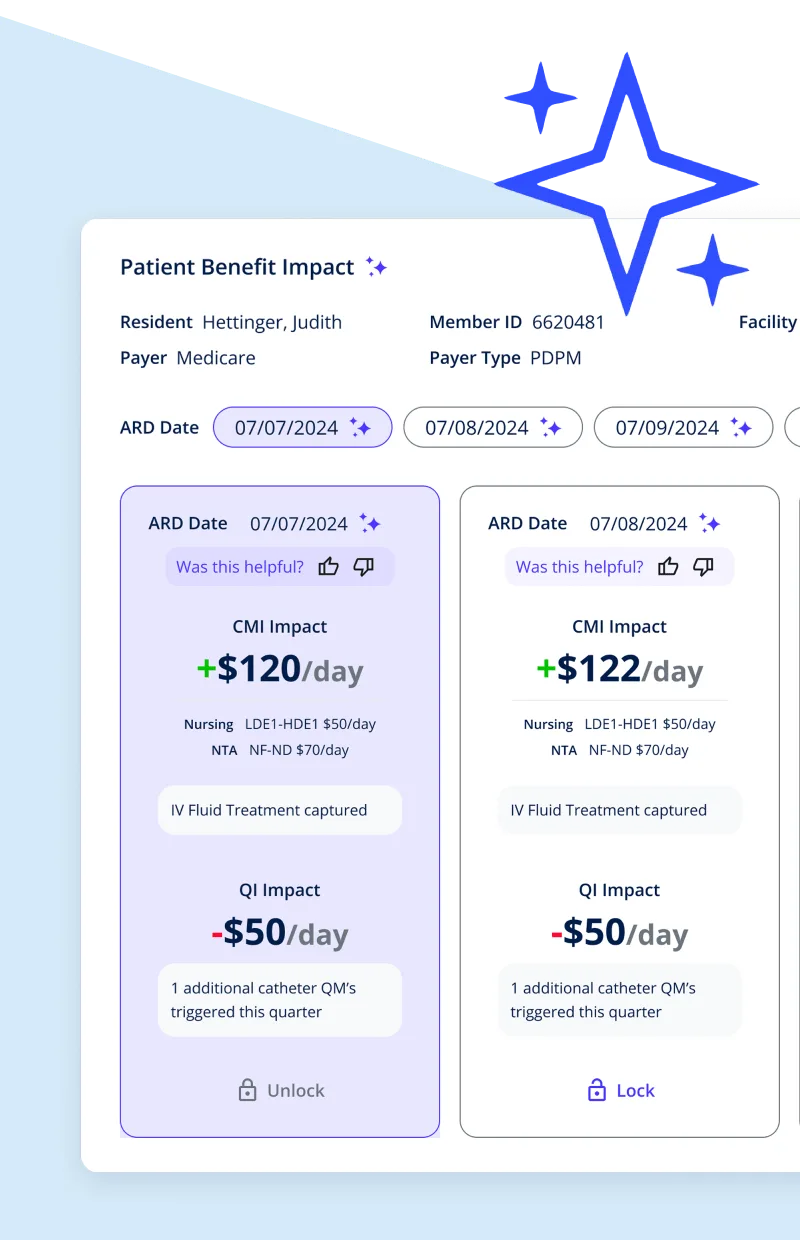
CommuniCare MDS Optimization
AI-driven MDS coding recovers $10M+ in PDPM revenue
AI, Healthcare
"Our ongoing relationship with Digital Scientists is critical to my efforts at Mailchimp – as we explore new experiences and technologies for our customers through machine learning and AI. Their team's maturity and ability to deliver while thinking deeply about complex problems helps us gain valuable perspective of what's possible."
CHRIS BEAUREGARD
Director of Product Management, Mailchimp
"By applying a robust machine learning model to our mobile application, Digital Scientists helped us create a scalable and accurate solution to improve the operating room experience for the anesthesia team and the patient. They are true collaborators."
JUSTIN SCOTT, M.D., FASA
Chief Executive Officer

"I would highly recommend Digital Scientists. Their ability to work seamlessly with us, understand our needs, and deliver solutions that drive our mission forward is exceptional. They have not just been a service provider, but a partner in our journey towards improving care for special needs individuals and vulnerable populations."
ROBERT HAGER
CEO of CommuniCare Advantage
FAQ
Frequently Asked Questions
1
What is AI software development?
What is AI software development?
AI software development within the realm of custom software development refers to the tailored creation of software solutions that incorporate elements of artificial intelligence tailored to specific business needs or challenges. Instead of using generic, off-the-shelf AI tools or platforms, custom AI software is designed to address unique requirements and use cases for a particular organization.
Here's a breakdown of what's typically considered under AI software development:
- Machine Learning (ML) Development: This is where algorithms are trained to learn from data. Custom software might involve training specific ML models to cater to a business's unique data and desired outcomes.
- Natural Language Processing (NLP): Building systems that can understand, interpret, and respond to human language in a way that's relevant to the specific needs of a business.
- Image & Video Recognition: Custom solutions for processing and interpreting visual data.
- Recommendation Systems: Custom solutions designed to incorporate specific business rules, unique data sources, or particular integration requirements.
- Predictive Analytics: Building models to forecast future events or outcomes based on historical data.
- Robotics Process Automation (RPA): Using AI to automate repetitive tasks.
- Expert Systems: Software that emulates the decision-making abilities of a human expert.
- Speech Recognition: Tailored solutions for transcribing or interacting with spoken language.
- Generative AI: Custom systems that can generate new content, whether it's text, images, or even music.
- AI-Integrated IoT Solutions: Developing Internet of Things (IoT) solutions that leverage AI for tasks like anomaly detection or predictive maintenance.
Custom AI software development often involves: Data Collection & Cleaning, Algorithm Selection & Training, Validation & Testing, Integration, and Maintenance.
2
What is the Business Opportunity for AI software?
What is the Business Opportunity for AI software?
The business opportunity for AI software is vast and continues to grow as the technology matures and becomes more integrated into various sectors. Companies that leverage AI effectively stand to gain competitive advantages, operational efficiencies, enhanced customer experiences, and even new revenue streams.
Business Opportunity for AI Software:
- Operational Efficiency: AI can automate repetitive tasks, optimize logistics, offer predictive maintenance, etc., to save time and costs.
- Personalization at Scale: AI enables businesses to provide personalized experiences to large numbers of users.
- Data-Driven Insights: AI can sift through massive datasets to extract actionable insights.
- Opening New Revenue Streams: New products or services can be developed based on AI capabilities.
- Risk Reduction: Predictive analytics can help in anticipating market changes, potential frauds, or cybersecurity threats.
- Enhanced Creativity: Generative AI can assist in content creation, design, and even R&D for product development.
When considering investment and ROI: Consider cost savings, revenue growth potential, risk reduction value, and long-term strategic positioning.
Businesses should start with a clear problem statement and then evaluate how AI might offer a solution. Pilot projects can be a good way to test potential ROI before scaling up.
3
What are the business challenges for custom AI applications?
What are the business challenges for custom AI applications?
Challenges in AI Software Development:
- Objective Definition & ROI Uncertainty: AI projects often start with broad objectives, making it challenging to predict the exact ROI.
- Data Issues: AI requires vast, quality data. Challenges include collection, storage, privacy concerns, and ethical considerations.
- Talent Shortage: AI necessitates a unique blend of expertise, from data science to domain knowledge.
- Integration & Scalability: Integrating AI with legacy systems is complex.
- Rapid Technological Evolution: The fast-paced nature of AI advancement can render solutions outdated quickly.
- Security & Ethical Concerns: AI systems introduce unique security vulnerabilities and can pose interpretability and bias issues.
- Cost & Development Time: AI projects can be expensive and time-consuming.
While both AI and traditional custom software projects present their sets of challenges, AI's experimental nature, heavy data dependency, and rapid technological evolution make it inherently more challenging. AI development requires a unique blend of expertise, has a more uncertain ROI, and poses unique ethical and security concerns.
4
What are the AI application technology challenges?
What are the AI application technology challenges?
Developing AI applications brings about a range of technological challenges:
- Data Quality and Quantity: Volume, variety, and veracity requirements for effective model training.
- Model Complexity: Architecture selection, overfitting/underfitting, and hyperparameter tuning.
- Computational Demands: Specialized hardware like GPUs or TPUs and scaling challenges.
- Interoperability and Integration: Legacy systems integration and model deployment into APIs.
- Model Explainability: Many advanced models act as black boxes, making decisions hard to interpret.
- Real-time Processing: Applications requiring instantaneous predictions demand optimized infrastructure.
- Security and Privacy: Adversarial attacks and data privacy regulations like GDPR.
- Model Drift and Maintenance: Constant monitoring and potential retraining as environments change.
- Resource Management: Efficiently managing computational resources in complex environments.
These challenges require a combination of domain expertise, advanced tools, and iterative methodologies to address effectively.
5
What skill sets and organizational strengths are required to drive custom AI applications?
What skill sets and organizational strengths are required to drive custom AI applications?
Driving custom AI applications successfully within an enterprise requires a mix of technical, domain-specific, and managerial skill sets:
1. Technical Skill Sets: Data Scientists, Machine Learning Engineers, Data Engineers, AI Researchers, Infrastructure Engineers, Software Developers, and DevOps/MLOps Engineers.
2. Domain-Specific Skill Sets: Domain Experts who understand the industry, and Data Analysts who explore data to extract insights.
3. Managerial and Cross-functional: Project Managers, AI Strategists, Business Analysts, Ethicists, Compliance Officers, and UI/UX Designers.
4. Organizational Strengths: Collaborative culture, continuous learning, strategic vision, resource allocation, and strong data governance.
Success with custom AI software development isn't solely about having the right technical talent. It's about having a holistic approach that combines domain expertise, strategic management, and a conducive organizational culture.
6
What can be difficult about delivering custom AI applications or AI software?
What can be difficult about delivering custom AI applications or AI software?
Delivering custom AI applications can be uniquely challenging because AI software operates probabilistically, meaning there's inherent uncertainty in outcomes. Key challenges include:
- Data Challenges: Insufficient training data, poor data quality, and data privacy/security concerns.
- Model Complexity: Overfitting issues and interpretability challenges with complex neural networks.
- Scalability: Deployment difficulties and latency issues for real-time applications.
- Changing Environments: Model drift causing performance degradation over time.
- Skillset Gaps: Interdisciplinary expertise requirements spanning multiple domains.
- Ethical and Bias Concerns: Models can inadvertently learn and perpetuate biases from training data.
- Higher Uncertainty: Undefined outcomes unlike traditional software with well-defined requirements.
- Resource Intensity: Substantial computational resources for training sophisticated models.
While the potential benefits of AI are enormous, the probabilistic nature of AI, combined with data, model, and resource challenges, makes AI projects uniquely challenging compared to traditional software development.
7
What risks are there with launching AI applications or AI Software?
What risks are there with launching AI applications or AI Software?
When launching an AI application, enterprises confront risks in three broad categories:
Business Risks: High initial investment, potential misalignment with business goals, and complex change management requirements.
Compliance and Security Risks: Data privacy concerns from heavy reliance on vast datasets, bias and fairness issues from biased training data, and the need for transparent, explainable AI decisions in regulated sectors.
External Technology Risks: Vendor dependency and lock-in, external data source integration challenges, infrastructure scalability issues, security concerns with externally hosted platforms, and regulatory compliance requirements across vendors.
While AI offers transformative potential, it's accompanied by multifaceted challenges. Harnessing AI's power requires a balanced approach that considers business strategy, compliance, and the nuances of technological intricacies.
8
What are the benefits of working with an experienced partner in AI application software development?
What are the benefits of working with an experienced partner in AI application software development?
Working with an experienced partner provides an array of benefits:
- Deep Technical Expertise: Wealth of knowledge from past projects, avoiding common technical pitfalls.
- Strategic Alignment: Guidance on aligning AI initiatives with broader business goals for higher ROI.
- Regulatory and Compliance Awareness: Best practices for data privacy, model transparency, and regulatory requirements.
- Robust Security Protocols: Expertise in deploying secure AI applications, reducing vulnerabilities.
- Change Management Expertise: Strategies for smoother AI adoption within organizations.
- Vendor Relations and Knowledge: Recommendations for the most reliable external tools and platforms.
- Quality Assurance and Testing: Rigorous testing protocols to ensure reliability and trustworthiness.
- Continued Support and Maintenance: Ongoing support to ensure AI applications remain updated and effective.
Collaborating with an experienced partner in AI application software development is akin to having a seasoned guide while navigating complex terrain. They not only bring expertise to the table but also provide invaluable insights and strategies that can significantly reduce the myriad risks associated with custom AI projects.
Next Step
Ready to See What's Possible?
$20,000. One week. A working prototype that proves whether your idea works — before you commit to a full build.
Since 2007 · 200+ products launched · One team, concept to scale