Modernizing a home health platform UI to accelerate private equity growth
Sandata needed a unified, modern design system across three legacy home health products, delivered in eight weeks to support a PE-driven digital transformation.

Products Unified
Design Sprints
WCAG Compliance
Design System
A leading home care technology provider needed a modern face
Sandata Technologies is a leading U.S. provider of home health technology solutions, serving home health agencies, state Medicaid programs, and managed care organizations across the country. Their platform processes millions of electronic visit verifications (EVV) annually and is the backbone of agency operations for scheduling, billing, payroll, and compliance.
With new private equity investment driving a digital transformation agenda, Sandata engaged Digital Scientists to rapidly modernize the user interface across their entire product suite. The goal was clear: create a single, cohesive design language that would unify three separate applications, SAM (Sandata Agency Management), EVV (Electronic Visit Verification), and AMP (Agency Management Portal), into a modern, intuitive experience worthy of the industry's leading technology.
This was not a ground-up rebuild. It was a strategic UI refresh grounded in healthcare UX design and research, designed to modernize the platform's appearance and usability without disrupting the powerful functionality that agencies depend on daily.

Client
Sandata Technologies
Industry
Home Health, Healthcare Technology
Services
UI Design, UX Recommendations, Design System, Style Guide, Alignment Workshop
Engagement
8 weeks (4 design sprints)
Method
"Digital Scientists did a great job for us. They were easy to work with, and their work was on-time and high quality. Everything went smoothly throughout the entire engagement. I'd highly recommend DS to other firms seeking a top-notch UX design team. Amazing job!"

Justin Jugs
Chief Product Officer, Sandata
Three products, three decades of UI debt
Sandata's products had evolved independently over many years. Each application had its own visual identity, navigation patterns, and interaction model. The result was a fragmented user experience that made the platform feel dated compared to modern competitors, despite having industry-leading functionality under the hood.
Dated Visual Design
SAM was originally designed around 2009 and felt old and uninspiring. The interface relied on dense table layouts, small type, and a color palette that hadn't been updated in over a decade.
Inconsistent UX
EVV, SAM, and AMP each used different navigation patterns, form layouts, and interaction models, forcing users who worked across products to relearn workflows.
Competitive Pressure
Competitors like AlayaCare were shipping polished, modern interfaces with rich dashboards and mobile experiences, raising buyer expectations in the home health market.
Three applications that needed one design language

SAM
Sandata Agency Management
Full-featured web application for agency management including scheduling, payroll, billing, compliance, and reporting. Originally designed circa 2009, the most dated of the three products.

EVV
Electronic Visit Verification
Core solution for verifying home visits have occurred. Relatively newer with a cleaner look, but lacking icons and visual hierarchy, felt almost too plain for power users.

AMP
Agency Management Portal
Lightweight version of SAM offered to smaller agencies. Shared the EVV design approach but ran on a different application stack, compounding the consistency problem.
A rapid design treatment, not a long research project
Sandata's leadership was clear about what they needed: modern design treatments that would feel fresh to customers, delivered quickly. This was heavily weighted toward visual design and interaction patterns rather than deep user research, the functionality was proven, the interface needed to catch up.
Digital Scientists structured the engagement as four design sprints over eight weeks, with stakeholder reviews at each milestone. The scope covered every major screen type in the product suite:
Navigation & sub-menus
Dashboard & KPIs
Search & faceted filters
CRUD & data entry forms
Multi-step workflows
Reports & analytics
Scheduling views
Billing & financial views
Technical Constraints
The design system had to work within Sandata's existing engineering environment. Every design decision was made with these constraints in mind:
ADA compliant, WCAG AAA color contrast on all text and components
Responsive design, tablet and desktop-optimized layouts
Angular-friendly, componentized patterns using Material Design components
Keyboard navigable, full keyboard support for power users
Real-time notifications, toast messages and alert patterns
Efficient interactions, minimal clicks to complete common tasks
Login experience: from bare to branded
The original SAM login was a minimal form floating on an empty page. The redesign introduced Sandata's refreshed brand identity with bold color blocking, modern typography, and clear visual hierarchy, setting the tone for the entire product experience from the first interaction.

Before: Sparse login with no brand presence

After: Branded login with modern visual identity
Dashboard: from empty grid to actionable hub
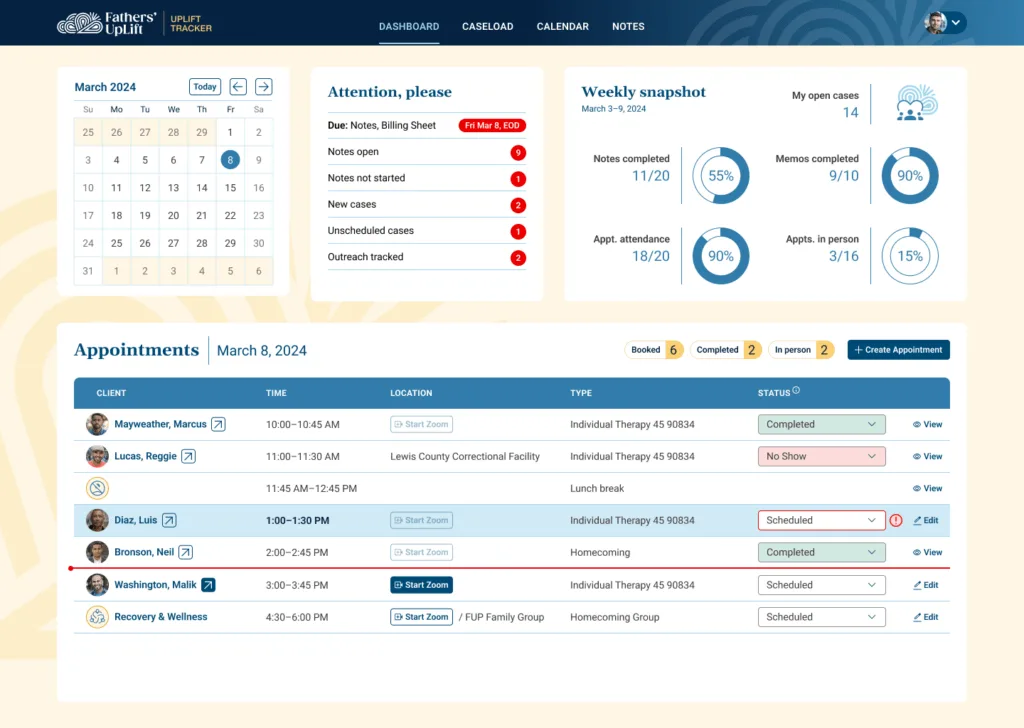
The legacy SAM dashboard presented users with mostly empty panels and a confusing tab structure. The redesigned dashboard welcomes users with a personalized greeting, at-a-glance activity summaries, quick access to their client roster with avatar indicators, an upcoming schedule view, a recent documents panel, and a personal notes section, all organized in a clear visual hierarchy with the new icon-driven sidebar navigation.

Before: Empty panels, no actionable content at a glance

After: Personalized hub with clients, schedule, and quick actions
Real-time notifications and streamlined client search
Two of the most impactful improvements were the addition of a real-time notification panel and a complete overhaul of the client search experience. Notifications slide out from the left sidebar, showing chronological updates with user avatars and timestamps. The client search replaced a dense form with 20+ fields with a clean, filterable data table with inline status indicators and faceted search.

Notification panel with chronological activity feed

Modern client search with faceted filters and data table
Client search: from form overload to clean data
The original Client Manager screen required users to navigate over 20 form fields before they could execute a search. The redesign collapsed this into an intuitive top-bar filter system with smart dropdowns, a prominent search button, and a clean data table with inline authorization dates and compliance indicators, reducing time to find a client from minutes to seconds.

Before: 20+ search fields with no visible results
After: Compact filters with instant results table
A unified component library built for scale
Digital Scientists delivered a comprehensive design style guide with development-ready specifications. The system was built on Material Design principles to align with Sandata's Angular development stack, ensuring every component could be implemented using standard Material UI components.
The design system established consistent patterns for typography, color, spacing, iconography, form elements, data tables, cards, modals, and navigation, all documented with pixel-precise specifications that Sandata's development team could implement across all three products without ambiguity.
Sprint reviews with stakeholders
Alignment workshop report
Products unified
WCAG compliance level

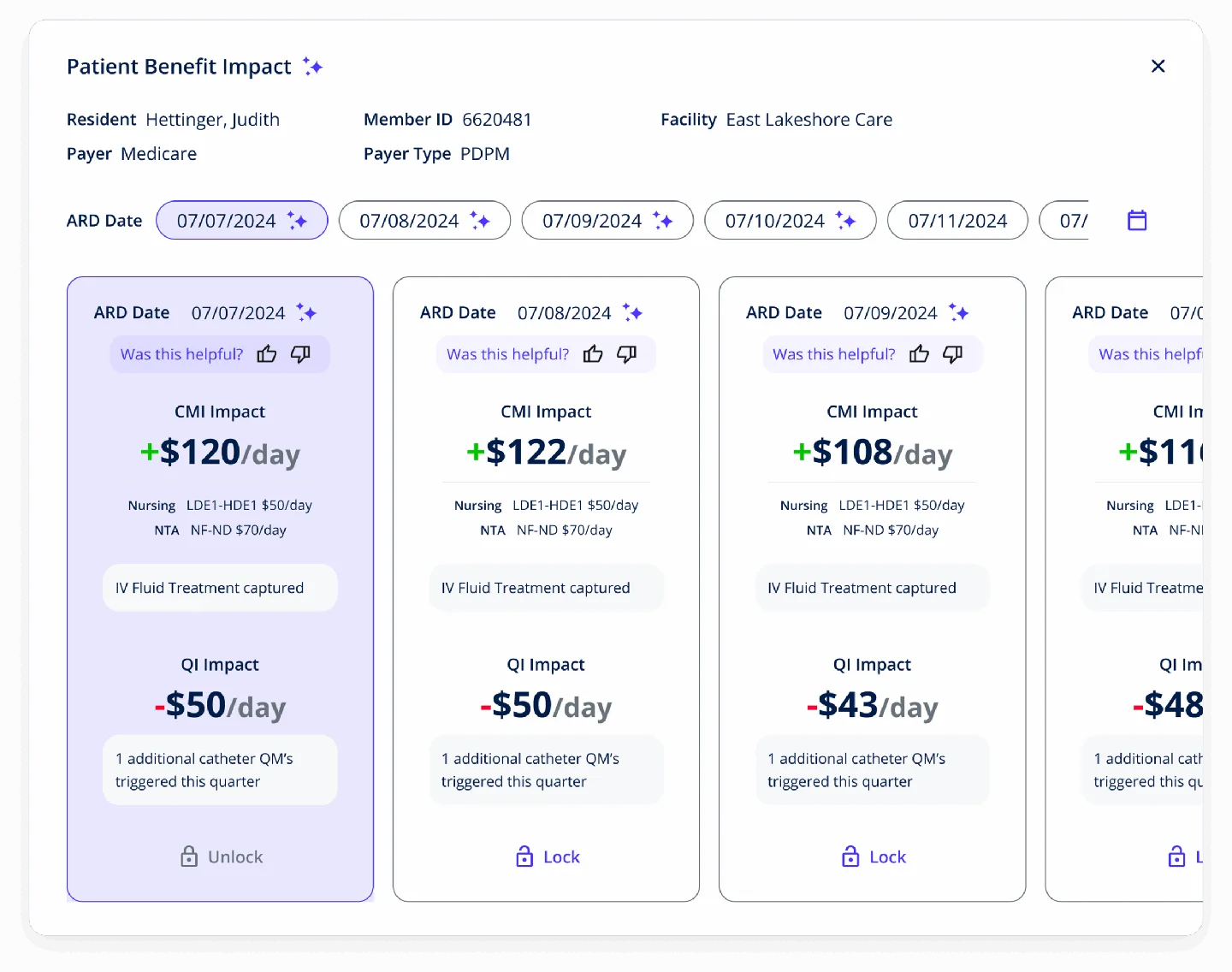
Before & after overview: the visual transformation at a glance
Raising the bar to match modern competitors
The home health technology market was rapidly evolving. Competitors like AlayaCare had invested heavily in modern, visually polished interfaces with rich KPI dashboards, clock-in maps, on-hold reports, and mobile caregiver apps. Sandata's PE investors understood that a modern UI was table stakes for retaining existing customers and winning new agency contracts.
Digital Scientists analyzed the competitive landscape as part of the alignment workshop, identifying design patterns and interaction standards that would position Sandata's refreshed UI as best-in-class for the home health market, not just catching up to competitors, but establishing new patterns for dashboard personalization and efficient data-dense workflows.

Competitive analysis: modern home health platforms setting user expectations
Two-phase delivery: design then assets
Digital Scientists structured the engagement in two clear phases to maximize speed and stakeholder alignment, with regular review checkpoints to ensure the designs met Sandata's vision.
Phase 1: Design Treatments
High-fidelity visual designs delivered as pixel-perfect mockups covering every major screen type. Each sprint ended with a stakeholder review where Sandata's product team provided feedback and approved direction.
- Alignment workshop to define design principles
- UI redesign for all major screen types
- 4 sprint reviews with stakeholder approval
Phase 2: Development Assets
Production-ready markup, images, and CSS delivered as implementation assets. The design style guide included precise specifications for Sandata's development team to build components in their Angular/Material stack.
- Design style guide with dev specifications
- Markup/images/CSS as deliverable assets
- Material Design component mapping
A modern, unified platform ready for the next chapter
During four sprints over eight weeks, Digital Scientists' design team created a single, modern design that streamlines the user experience across all of Sandata's products. The new UI delivers a cohesive look and feel driven by an intuitive experience that respects the depth and complexity of home health agency operations.
Refined navigation, icon-driven sidebar replaces dense horizontal menus, reducing cognitive load
Brand identity, consistent purple and gold color scheme reinforces Sandata's market presence
Customizable dashboard, personalized widgets for clients, schedules, documents, and notes
Quick action items, streamlined workflows to reduce click depth on common tasks
WCAG AAA compliance, color contrast of all text and components meets the highest accessibility standard

The redesigned platform on tablet, clean, professional, and accessible
What Digital Scientists delivered
Every deliverable was designed to be immediately actionable by Sandata's product and engineering teams, no ambiguity, no interpretation gaps.
Alignment Workshop Report
Documented design principles, competitive analysis, and stakeholder requirements that guided all design decisions.
UI Redesign
High-fidelity designs for every major screen type: login, dashboard, navigation, search, forms, workflows, scheduling, billing, and reports.
Design Style Guide
Comprehensive specification document with typography, colors, spacing, component patterns, and development-ready CSS/markup assets.
UX Recommendations
Interaction patterns and workflow optimizations beyond visual design, including navigation restructuring and search simplification strategies.
Component Library
Development-friendly patterns and treatments mapped to Angular Material Design components for consistent implementation across all three products.
Sprint Reviews
Four structured design review sessions with Sandata stakeholders, ensuring continuous alignment and buy-in throughout the engagement.
Ready to modernize your healthcare platform?
Digital Scientists helps healthcare technology companies transform legacy interfaces into modern, compliant, and user-friendly platforms. Let's discuss your next UI modernization project.