$10M PDPM revenue recovered. $2M in quality incentives. From two states.
CommuniCare Health Services-one of the nation's largest post-acute care providers-needed to optimize MDS assessments across their skilled nursing facilities. We built AI-powered tools that transformed PDPM revenue capture while improving quality scores.
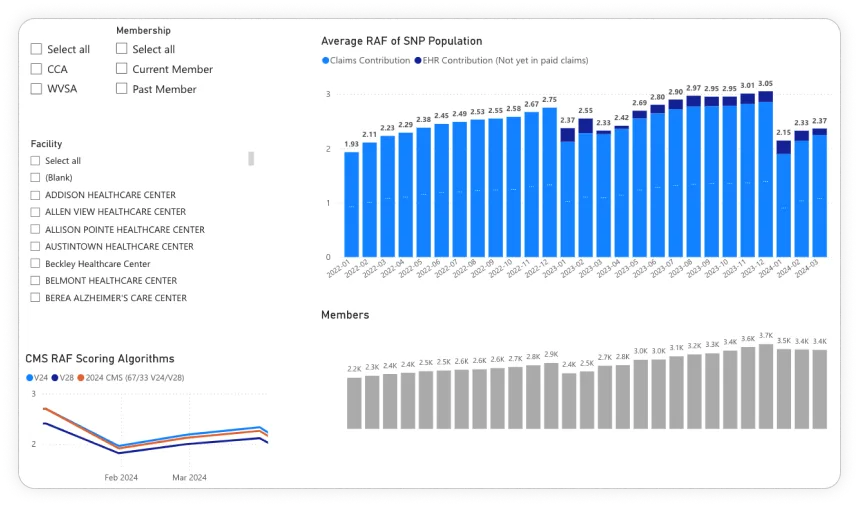
PDPM Revenue Recovered
Quality Incentives (Annual)
Five-Star QM Score
Time Savings Per Assessment
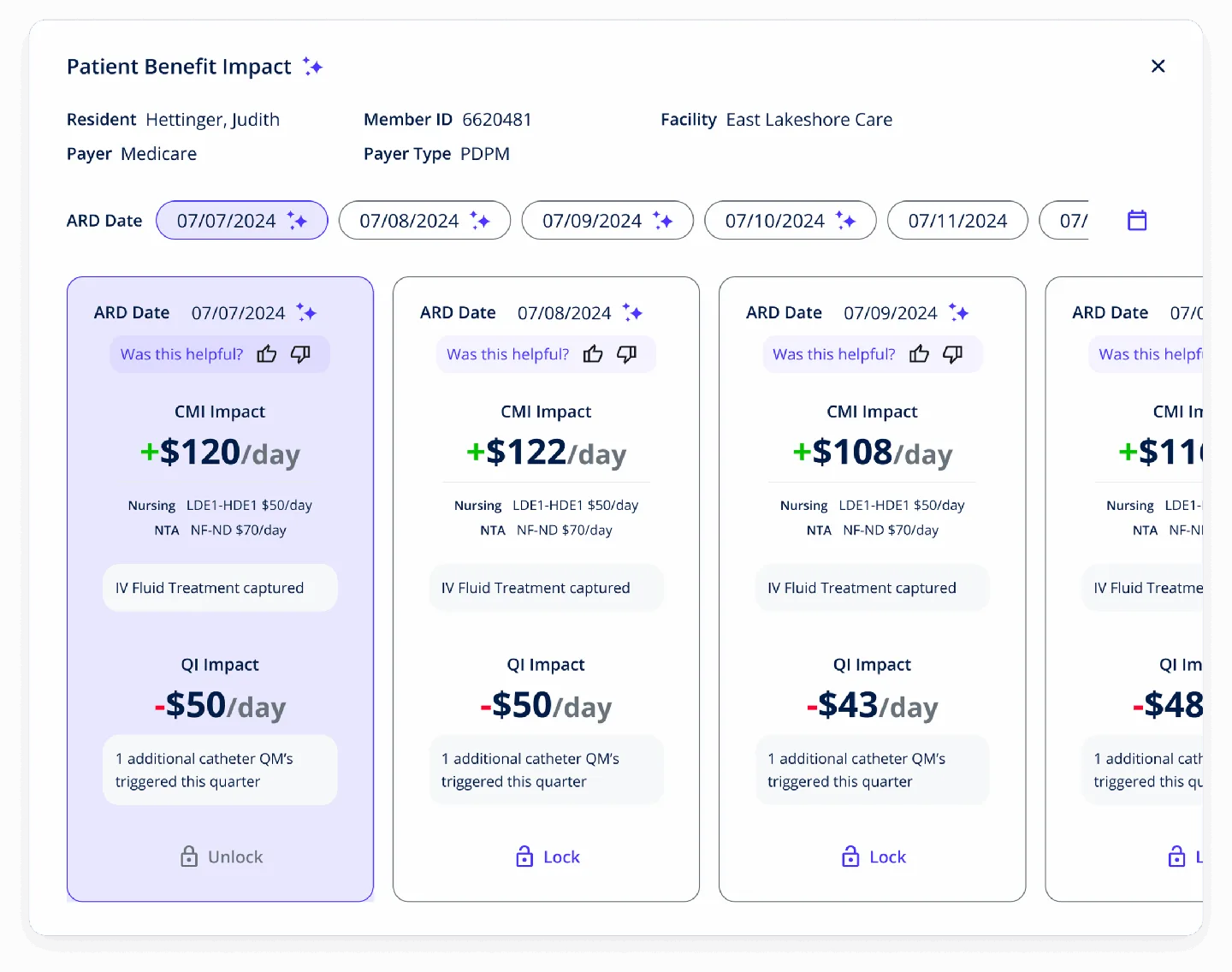
Millions in revenue leakage from incomplete MDS assessments.
CommuniCare's MDS coordinators were drowning. Each assessment took 3-4 hours, and with hundreds of residents across multiple states, they were missing diagnoses that directly impacted PDPM reimbursement.
The problem wasn't competence-it was capacity. Coordinators didn't have time to review every clinical note, lab result, and medication record for every resident. Diagnoses were being missed. Revenue was walking out the door.
Before DS
3-4 hours per MDS assessment
Manual review of clinical documentation, medications, lab results
Missed diagnoses everywhere
Not enough time to catch everything buried in the chart
Revenue leakage at scale
Hundreds of residents, millions in missed reimbursement
Quality scores suffering
Incomplete documentation affecting Five-Star ratings
AI-powered MDS assistant built with-not for-MDS coordinators.
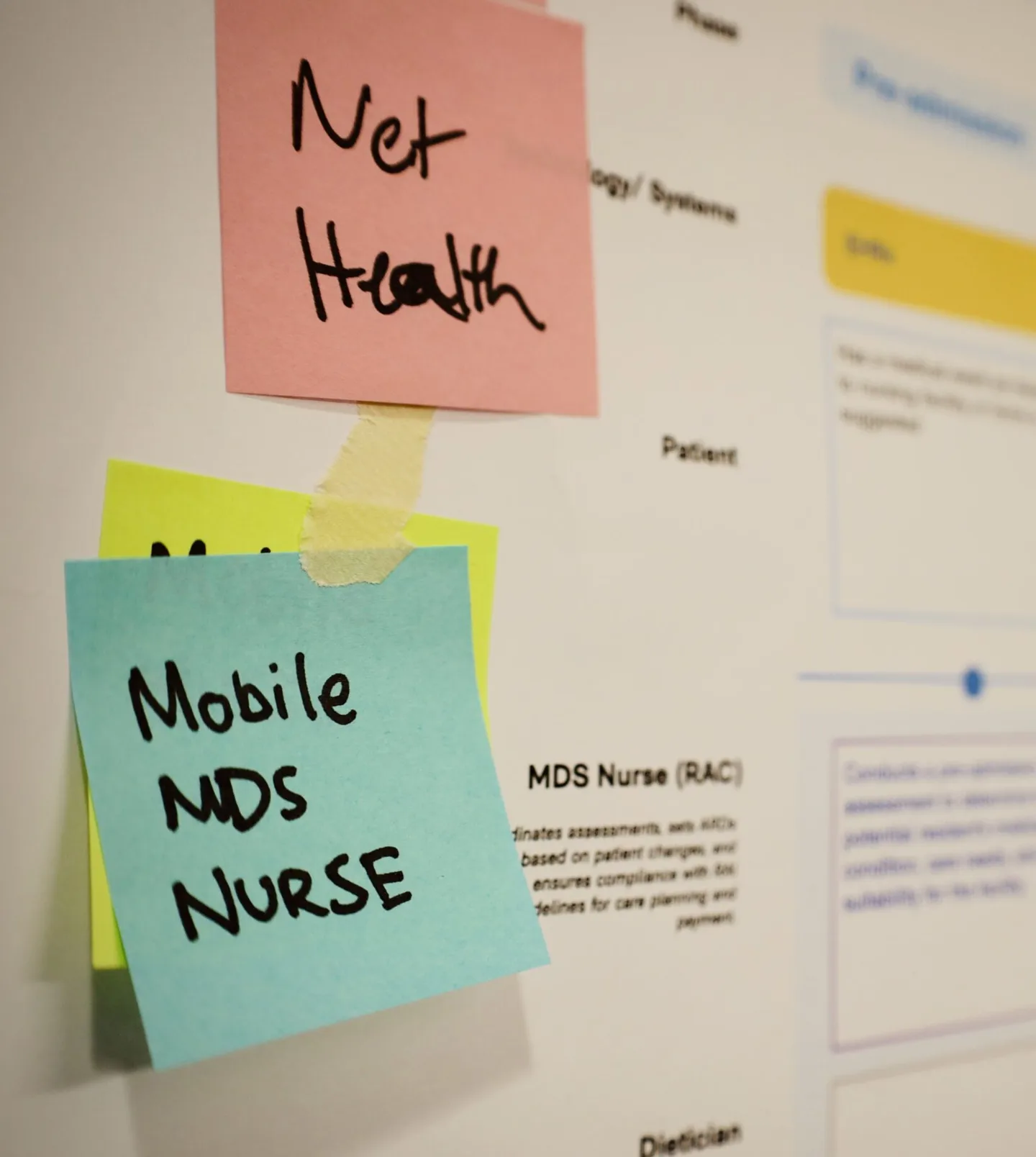
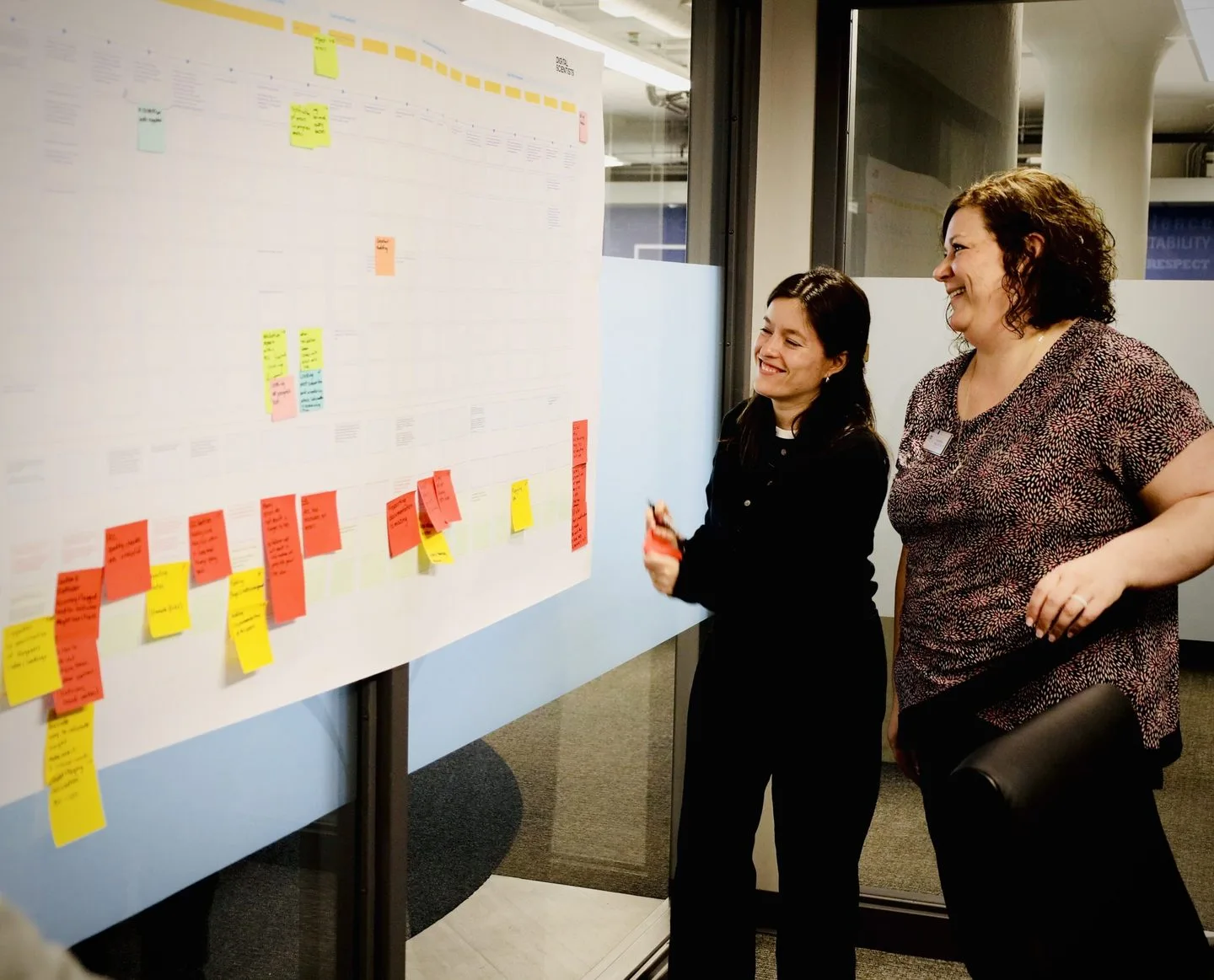
We didn't build an algorithm and hand it over. We embedded with CommuniCare's MDS team, shadowed their workflows, and co-designed a solution that actually fit how they work.
AI Diagnosis Recommendations
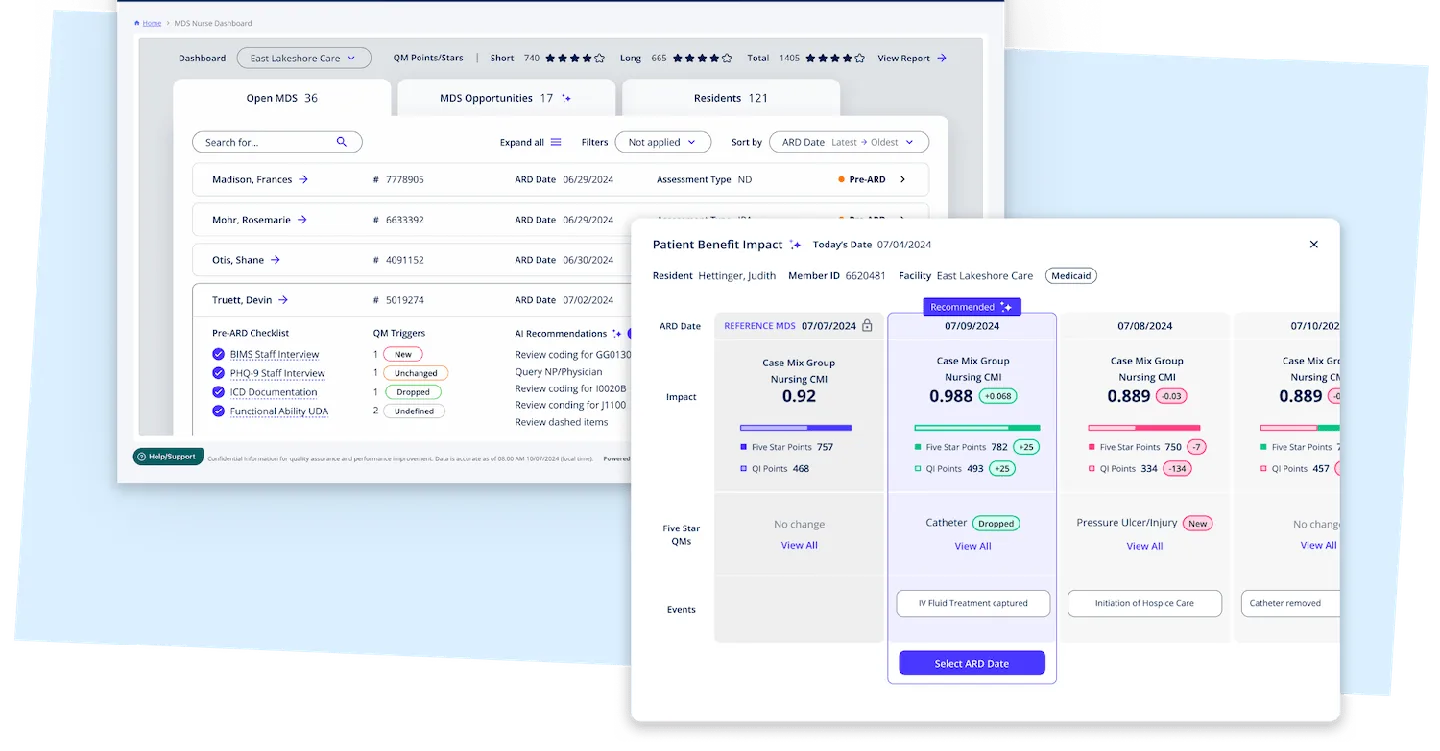
Our AI reviews clinical documentation, medications, and lab results to surface diagnoses that should be captured on the MDS. Every recommendation linked to supporting documentation-audit-ready from day one.
Pre-Submission Validation
Before MDS submission, AI flags potential errors, missing diagnoses, and inconsistencies. Catch problems before they become denials or audit findings.
Quality Analytics
Real-time visibility into quality measure performance across facilities. Identify improvement opportunities, track progress, and prepare for surveys.
How the complete value chain delivered $12M in results.
This wasn't just an AI project. It was a complete transformation-from messy data to measurable outcomes. Here's how each step contributed to success.
Data Foundation
Integrated clinical data from PointClickCare across multiple facilities. Cleaned and structured medication records, lab results, and clinical notes into AI-ready format.
Responsible AI Build
Built AI using peer-reviewed CMS scoring models. Every recommendation explainable and linked to source documentation. 90%+ diagnosis accuracy validated.
EHR Integration
Seamless PointClickCare integration. AI recommendations surface within existing workflow-no separate login, no duplicate data entry.
Co-Design
40+ hours shadowing MDS coordinators before writing code. Weekly feedback sessions throughout development. They own the solution because they helped create it.
Implementation
Phased rollout starting with pilot facilities. On-site go-live support. Rapid issue resolution. No "deploy and disappear."
Change Management
Training programs for MDS coordinators. Super-user identification. Resistance addressed head-on. Adoption from day one-not months later.
Ongoing Partnership
Continuous optimization based on CMS updates and CommuniCare feedback. System improves over time. Learning from their data creates competitive advantage.
Outcome Guarantee
$10M PDPM + $2M quality incentives-financial analyst calculated, not vendor estimates. Transparent reporting. Results that speak for themselves.
Financial analyst calculated. Not vendor estimates.
These numbers aren't projections or vendor marketing. They're validated results from CommuniCare's financial team, tracking actual PDPM reimbursement and quality incentive payments.
Financial Impact
From two states, annualized. Diagnoses previously missed now captured through AI-powered recommendations.
Annual quality incentive payments earned through improved quality measure performance.
Per patient benefit from more accurate case mix index classification.
Operational Impact
MDS coordinators spend less time hunting through charts, more time on clinical judgment.
Quality measure performance improved through better documentation and coding accuracy.
AI recommendations validated against clinical documentation with high accuracy.
40+ hours shadowing before writing code.
Most healthcare AI projects fail because they're built in conference rooms, not clinical settings. We took a different approach.
We embedded with MDS coordinators
Before writing a single line of code, our team spent 40+ hours shadowing MDS coordinators. Watching their actual workflow. Understanding their pain points. Learning their language.
We built for audit defense
Every AI recommendation is linked to supporting clinical documentation. When auditors ask "why did you capture this diagnosis?"-there's an answer ready. Defensible from day one.
We drove adoption, not just deployment
Change management isn't an afterthought. We trained coordinators, identified super-users, addressed resistance head-on. The solution works because people actually use it.
What's your MDS optimization opportunity?
If missed diagnoses are costing you millions in PDPM reimbursement, let's talk. 30-minute call to assess your opportunity.
Schedule Assessment CallRelated Insights
From Our Blog
An Essential Guide to Managing Software Development Risk and Maximizing ROI
Dec 23, 2025
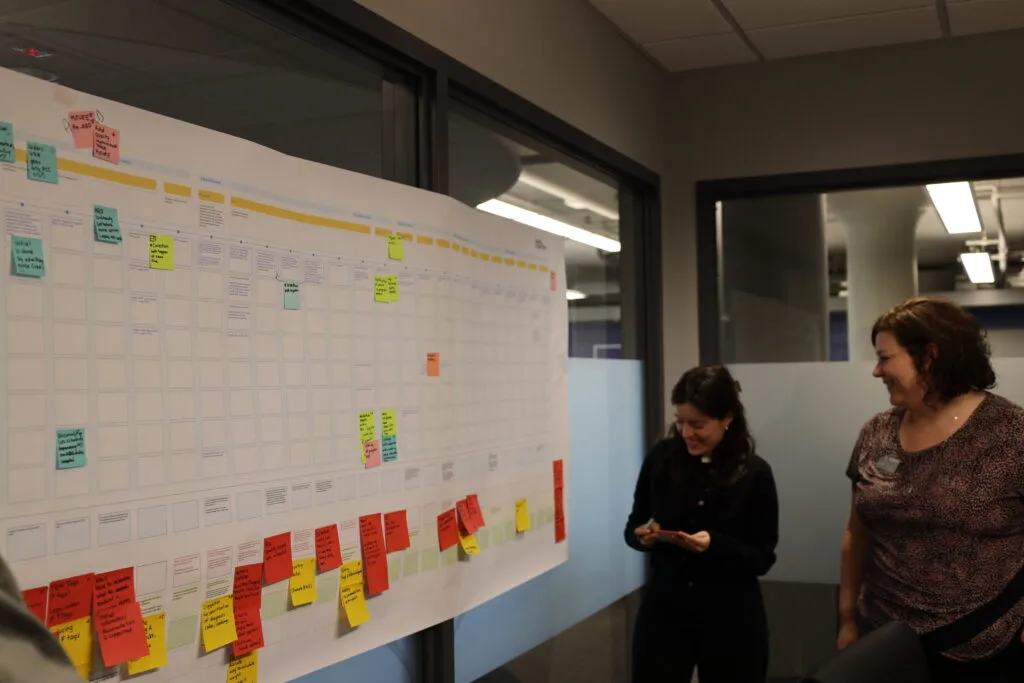
Designing With Gratitude: What Working With Nurses Taught Us About Building Human-Centered AI
Nov 03, 2025

Rebuilding the Essential Economy with AI Innovation
Jul 09, 2025