
Tracking brand perception with ML-powered sentiment analysis
Measure sentiment with machine learning to track, extract, and measure customer perceptions about your brand.
Tracking brand perception on social media with machine learning
A multinational company needed to monitor brand sentiment on Twitter by extracting and measuring customer opinions to inform advertising and marketing strategies. Online chatter is often poorly written, ambiguous, and laced with sarcasm, making traditional keyword-based analysis unreliable. The client needed a solution that could understand context and nuance at scale.
Digital Scientists built a real-time sentiment tracking system using a pre-trained LSTM (Long Short-Term Memory) neural network. The model ingests tweets referencing the client's brand and competitors via specific hashtags and handles, disambiguates the text, classifies each tweet as favorable or unfavorable, and aggregates the data into a dashboard that charts sentiment over time.
The entire solution, from data pipeline to trained model to interactive dashboard, was delivered in just one week, demonstrating Digital Scientists' ability to rapidly prototype ML solutions that deliver actionable business intelligence.
Client
Multinational Corporation (Confidential)
Industry
Consumer Brands, Marketing
Services
Machine Learning R&D, NLP / Sentiment Analysis, Data Engineering, Dashboard Development
Engagement
1-week rapid prototype
Method
Capabilities
Data & Dashboard Delivered
Pre-trained Neural Network
Tweet Tracking & Analysis
Measure brand sentiment
Online chatter can be poorly written and unclear, so our first task was to create a framework to disambiguate the tweets. We built a real-time tracker for tweets that used specific hashtags and handles, including tags that referenced our client's competitors.
After creating a framework to identify, clarify, and target relevant tweets, we analyzed those tweets to decide if they were positive (favorable) or negative (unfavorable). Once we quantified that data, we were able to chart customer sentiment about our client's brand versus customer sentiment about competitive brands over a period of time.
Jobs to be done
- Understand and measure subjective data
- Develop neural network model
- Extract and measure customer sentiments as favorable or unfavorable
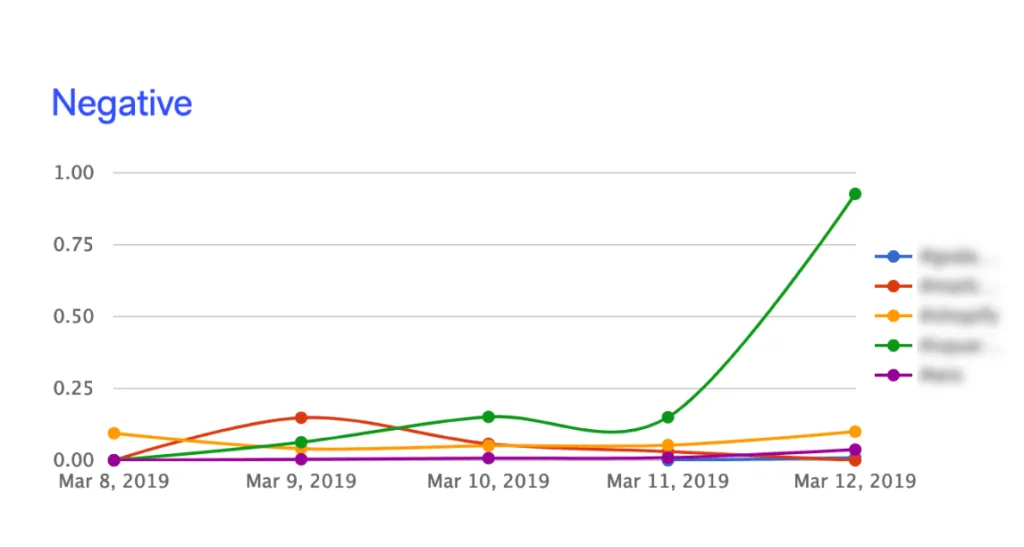
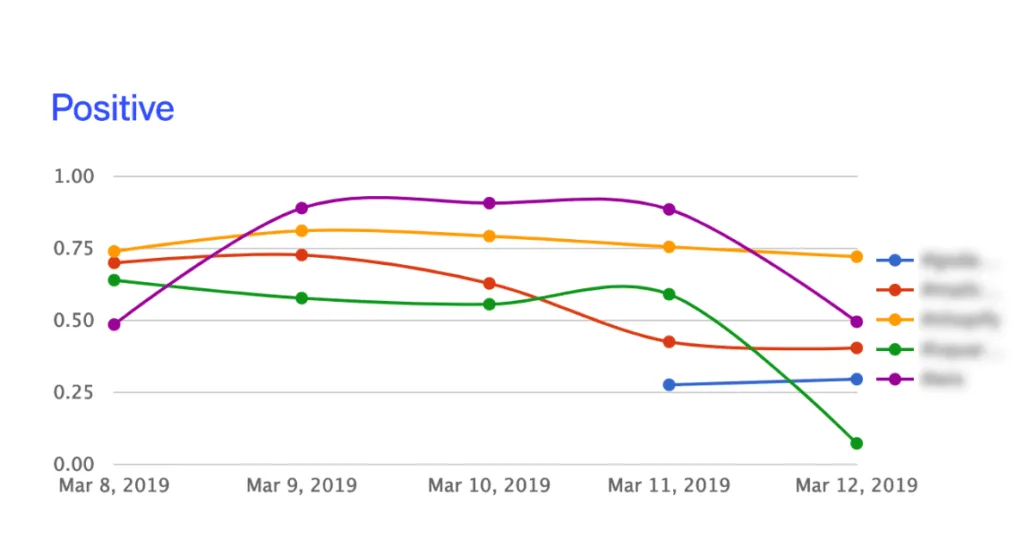
Data and model delivered in one week
This project's shining point was speed of prototyping. With extensive knowledge of APIs, developer tools, and potential models, we were able to deliver data and a dashboard to our client within one week.
Our Role
- Research & development
- Frontend dashboard to track trends
Platform
- Ruby on Rails
Deliverables
- Pre-trained LSTM-based solution
- Sentiment analysis chart over time
From raw tweets to actionable intelligence
The sentiment analysis pipeline required solving several interconnected challenges: real-time data ingestion, text disambiguation, classification accuracy, and visual reporting.
Data Ingestion
Real-time Twitter API integration tracking specific hashtags and handles, including competitor brand mentions, for continuous data collection.
Text Disambiguation
Custom preprocessing pipeline to handle misspellings, slang, sarcasm, and ambiguous language common in social media text.
LSTM Classification
Pre-trained Long Short-Term Memory neural network that classifies each tweet as favorable or unfavorable based on contextual word relationships.
Dashboard & Reporting
Ruby on Rails dashboard charting sentiment trends over time, comparing the client's brand perception against competitors in real time.
Ready to track your user sentiment?
Let's talk about how Digital Scientists can help with your next project.