Experiment · Flagship Offering
The Experiment
Functional Prototype · 5 Days
5 days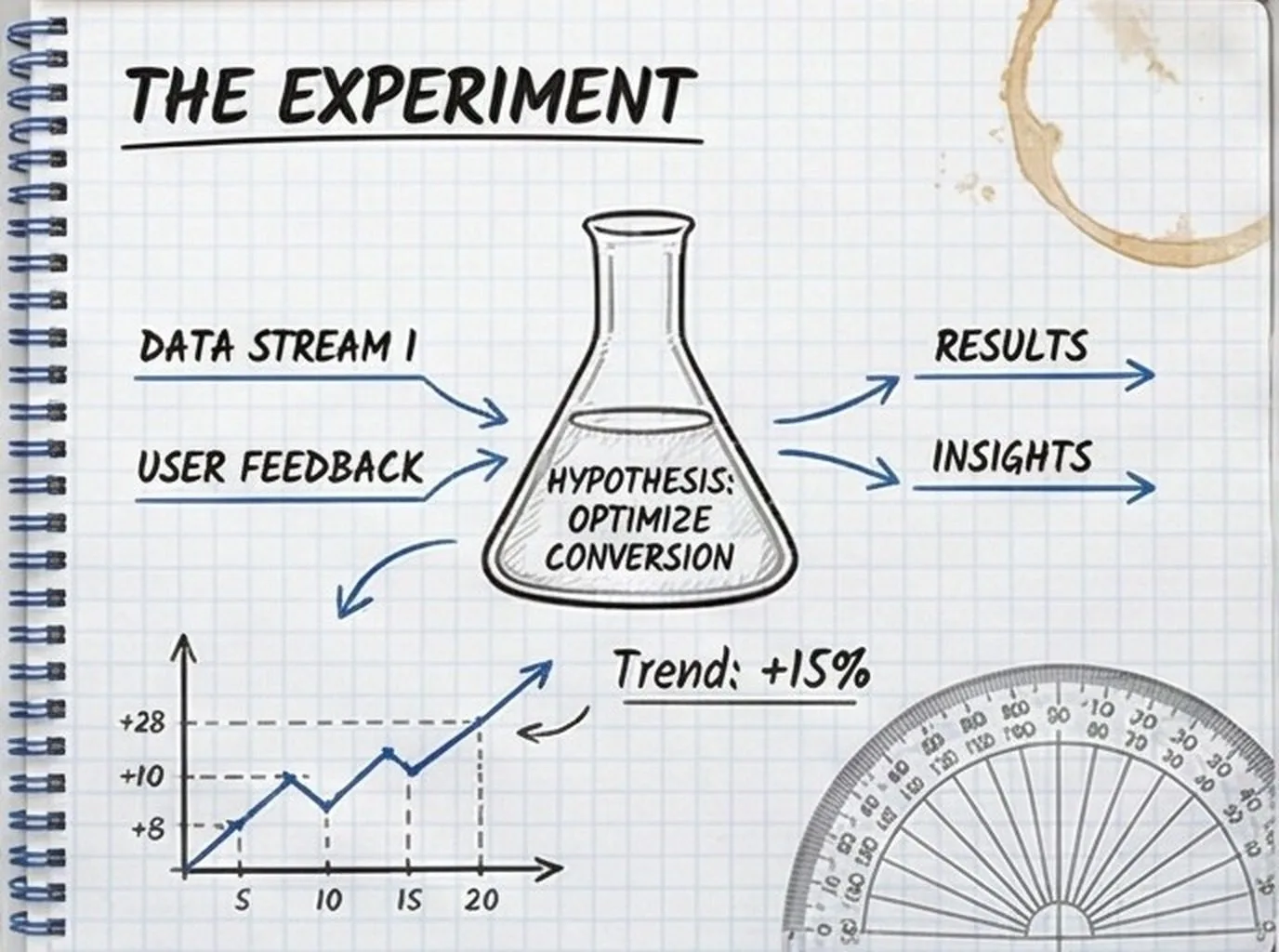
Evidence, not opinions.
The Experiment is our flagship offering. A cross-functional team of senior engineers, designers, and product strategists builds a working prototype of the riskiest part of your product in five days. Not wireframes. Not slide decks. Real code, tested with real users and real data. You get evidence you can show your board, your team, or your investors—and a clear recommendation on what to do next.
Most clients start here because it is the fastest way to de-risk a product investment. Instead of spending months debating feasibility, you spend one week proving it. Every Experiment ends with a live demo to your stakeholders and a concrete recommendation: build it, pivot it, or kill it.
The Experiment works for any product idea—AI-powered tools, workflow automation, mobile applications, data dashboards—anywhere there is a hypothesis worth testing before committing to a full build. If you are not sure where to start, a Working Session or Diagnostic can help you identify the right hypothesis to test.
Four deliverables. One week. A clear answer.
Everything you need to make an informed decision about your product investment.
Working Functional Prototype
Deployed software you can touch, test, and demonstrate to stakeholders. Built on your actual data and workflows, not dummy content.
Live Stakeholder Demo
A recorded walkthrough and live demo session so you can share the results with your board, investors, or executive team.
Technical Feasibility Assessment
Architecture decisions, what is real versus mocked, integration requirements, and a clear technical path for production development.
Build-or-Kill Recommendation
A clear recommendation with cost estimates for a production build. Build it, pivot the approach, or stop—with evidence to support the decision.
Five days. Three checkpoints. One answer.
You bring the problem. We bring the engineers, the tools, and the product judgment to prove whether it works.
Align & Scope
Define the hypothesis, lock scope, agree on success criteria. We start building that afternoon.
Build the Prototype
Engineers build working software on your actual data. Mid-week checkpoint to confirm direction and kill bad ideas early.
Test with Real Users
Put the prototype in front of real users or real data scenarios. Validate the hypothesis with evidence, not assumptions.
Demo & Recommend
Live demo to stakeholders. Recorded walkthrough. Technical assessment. Clear recommendation: build, pivot, or stop.
Your total time commitment: 8–12 hours across the week. Three touchpoints—kickoff, mid-week check, Friday demo.
“The biggest risk isn't spending money to find out. It's spending ten times more before you find out.”
The Experiment gives you a definitive answer in one week—build it, pivot it, or stop—so you invest with evidence, not hope.
This is right for you if…
The Experiment is designed for leaders who need proof before committing to a full product investment.
You have an idea but need proof
You believe a product or feature could transform your business, but you need working software—not a pitch deck—to justify the investment. The Experiment turns your hypothesis into a prototype your stakeholders can actually use.
Your board needs evidence, not slides
Decision-makers want to see it working before they approve the budget. The Experiment produces a live demo and recorded walkthrough that proves feasibility—not another strategy presentation.
You've been burned by a long build
Previous projects went over budget, over schedule, or got shelved entirely. The Experiment lets you validate feasibility in one week with a fixed scope—before committing to a six-figure production build.
Ready to prove your idea in five days?
30 minutes. No pitch. We'll help you figure out if The Experiment is the right starting point—or recommend a Working Session or Diagnostic if you need more clarity first.
Start Your Experiment →